Spanish course A2-B1Spanish words
by DuoCards
*Affirmative imperative*
There are various forms of the imperative ("imperativo") in Spanish that we use: *tú, nosotros, usted, vosotros/ustedes*. In this course, we will learn how to form the imperative for *tú* and *vosotros*. The rest of the pronouns has a different form and we will explain it in the following course.
Examples in Spanish for "tú" (the form is the same as for the third person in the present tense) and "vosotros" (the form is made by removing "r" of the verb and adding "d")
*Regular verbs:*
"Hablar" - "habla x hablad"
"Escribir" - "escribe x escribid"
"Comer" - "come x comed"
There are also irregular forms in the imperative that you have to remember.
The most common ones:
"Hacer" - "haz/haced el ejercicio." (do the exercise)
"Poner" - "pon/poned en la mesa" (put on the table)
"Salir" - "sal/salid de la casa" (leave the house)
"Decir" - "di/decid la verdad" (tell the truth)
"Tener"- "ten/tened cuidado" (be careful)
Be careful:
"Irse" - "vete" (tú) x "idos" (vosotros/as)

¡Salid de aquí!
Get out of here!
¡Salid de aquí inmediatamente!

¡Entra!
Come in!
¡Entra por aquí!

¡Idos ya!
Go now!
¡Idos rápido!

la alegría
the joy
Este tipo de música siempre me llena de alegría.

¡Vive con más alegría!
Live with more joy!

¡Haz tus deberes!
Do your homework!
¡Hazlo ahora mismo!

duro
hard
El examen fue muy duro.

¡Trabajad duro!
Work hard!
¡Trabajad más!

¡Mirad!
Look!
Mirad, aquí está mi amiga.

¡Sigue!
Keep going!
Sigue todo recto.

¡Ayuda a tus amigos!
Help your friends!
¡Ayuda! ¡Socorro!

¡Pon!
Put it!
Pon la llave sobre la mesa.

¡Bebe!
Drink!
¡Bebe más agua!

¡Sé bueno!
Be good!
¡Sé bueno con los demás!

tener cuidado
be careful
¡Ten cuidado con el perro!

¡Ten cuidado!
Be careful!
Ten cuidado, es peligroso.
*Negative imperative*
The formation of the negative form of the imperative ("imperativo negativo") in Spanish is easier than the affirmative. The endings are very similar to the present tense but with a little vowel change.
The -ar verbs have the same endings as the -er verbs in the present tense.
The -er and -ir verbs have the same endings as the -ar verbs in the present tense.
"Ser" (to be) - "no seas" (tú) x "no seáis" (vosotros/as)
"Dar" (to give) - "no des" (tú) x "no déis" (vosotros/as)

¡No hables!
Don't speak!
¡No hables en alta voz!

¡No comamos!
Let's not eat!
¡No comamos en este sitio!

tener miedo
to be afraid
Tengo miedo de las arañas.

¡No tengas miedo!
Don't be afraid!
No tengas miedo, todo saldrá bien.

discutir
to argue
Discutimos sobre el proyecto en la reunión.

¡No discutas!
Don't argue!
¡No discutas con tu padres!

¡No pidas!
Do not ask for!
¡No pidas nada!

¡No salgamos!
Let's not go out!
¡No salgamos esta noche!

el pasillo
the hall
El baño está al final del pasillo.

¡No corras en el pasillo!
Don't run in the hall!
*Direct object pronouns in Spanish*
"me, te, lo/las, nos, os, los/las"
These pronouns are used in Spanish to replace nouns used as direct objects in written and spoken communication. A direct object is a way of focusing the verb on a specific something or someone.
*People and animals*
"Llamaron a mi madre." (They called my mother.) - "La llamaron." (They called her.)
*Things, objects and ideas*
"Juan tiró la pelota." (Juan threw the ball.) - "La tiró." (Juan threw it.)

respetar
to respect
Hay que respetar las reglas.

Las respeto muchísimo.
I respect them very much.
Son mujeres increíbles. Las respeto muchísimo.

Los compré en una tienda muy cara.
I bought them in a very expensive shop.
¿Dónde conseguiste esos pantalones tan elegantes? - Los compré en una tienda muy cara.

No te ví en la reunión.
I didn't see you at the meeting.
No te ví en la reunión ayer.

Nos invitaron a una fiesta.
They invited us to a party.
Ayer nos invitaron a una fiesta.

La necesito ahora.
I need it now.
La necesito ahora mismo.

extrañar
to miss
Extraño a mi familia.

José me extraña.
José misses me.
José me extraña cada día.

esperar
to wait
Espero en que todo salga bien.

Os espero en Málaga.
I look forward to seeing you in Malaga.
*Indirect object pronouns in Spanish*
me, te, le (or 'se' if there is another third person pronoun in the sentence), nos, os, les (or 'se')
You can find the indirect object in a sentence by asking yourself to whom or for whom an action was done.
For example, to find the indirect object in the following sentence, you could ask yourself *For whom did Gabriel buy a rose?* The answer is *For Anita.*
Therefore, the indirect object is "Anita", and the matching indirect object pronoun is "le".
"Gabriel le compró una rosa a Anita." (Gabriel bought a rose for Anita.)
"Gabriel le compró una rosa." (Gabriel bought a rose for her.)
The indirect object pronoun always goes before the direct object pronoun.

Me dijo que no se encuentra bien.
He told me that he is not feeling well.

tirar la pelota
to throw the ball
Tira la pelota a su hijo.

Samuel le tiró la pelota.
Samuel threw him the ball.

el cuadro
the painting
El cuadro de mi abuela está colgado en la pared.

Me regalaron este cuadro.
They gave me this painting as a gift.
Me regalaron este cuadro en mi cumpleaños.

un favor
a favour
Hazme un favor, gracias.

Luís te da todo.
Luís gives you everything.

Le pide un favor.
He asks for a favour.

No lo he escrito.
I have not written it.
No lo he escrito, aún.
*Indirect and indirect object (pronoun) + imperative form*
*Positive*
We put the pronouns after the imperative form, the pronouns goes after the verb, forming a single word.
"Juan, hazlo!" (Do it.)
"Háblame!" (Talk to me.)
*Negative*
We put "no" before the indirect object, the pronouns goes before the verb.
"Juan, no lo hagas." (Juan, don't do it.)
"No me hables." (Don't talk to me.)
*Be careful !*
When we use both types of pronoun, the indirect object one goes first and then the direct object one.
"Dame el bolso a mí. → Dámelo." Give the bag to me. → Give me it.
"No me des el bolso a mí → No me lo des." Don't give the bag to me. → Don't give me it.
The indirect object pronoun le changes to "se" when it goes before the direct object pronouns "lo, la, los, las".
"Compra un bañador al doctor Macías. → Cómpraselo." Buy a swimming costume for Dr Macías. → Buy it for him.
"No compres un bañador al doctor Macías. → No se lo compres." Don't buy a swimming costume for Dr Macías. → Don't buy it for him.

¡No me lo mandes!
Don't send it to me!
¡No me lo mandes! Ayer fue tarde.

¡Hazlo!
Do it!
Hazlo rápido por favor.

¡Dámela!
Give it to me!
¡Dame el dinero!

castigar
to punish
Los padres castigaron a su hijo.

¡No los castigues!
Do not punish them!

¡Perdóneme!
Excuse me!
Perdóneme, ¿puede decirme dónde está la estación de tren?

¡Explícamelo!
Explain it to me!
¡Explícamelo, por favor!

¡Cómpralo!
Buy it!
Cómprame este regalo, por favor.

el azúcar.
the sugar
¿Me puedes pasar el azúcar, por favor?

¡No le eches más azúcar!
Don't add any more sugar!
¡No lo compres!
Don't buy it from them!

¡Pruébala!
Try it!
¡Pruébala porqué está muy rica!
*Give advice*
To give advice, you can use these phrases:
"Es necesario + infinitivo"
"Es importante + infinitivo"
"Es conveniente + infinitivo"
e.g. "Es necesario beber menos café."
You can also use the imperative and other already-known expressions to give it:
*Tienes que + inf.*
*Hay que + inf.*
*Puedes + inf.*
e.g. "Tienes que visitar este museo."

comer sano
to eat healthy
Es muy importante comer sano.

de vez en cuando
once in a while, from time to time
De vez en cuando hago deporte.
por lo menos
at least
Te puedes quedar con la casa, pero por lo menos déjame el perro.
Es necesario dormir por lo menos 8 horas al día.
It is necessary to sleep at least 8 hours a day.

conveniente
convenient, advisable, recommended
Es conveniente no usar el celular antes de acostarse.

mantener
to keep
Es importante mantener una rutina.

Es necesario tener buenas relaciones con los demás.
It is necessary to have good relations with others.
Es necesario tener buenas relaciones con los demás.

la rutina
the routine
Hay que tener una rutina diaria.

ser persistente
to be persistent
Tienes que ser persistente para ver los resultados.

pasar las vacaciones
to spend the holidays
No tienes que pasar las vacaciones con tu madre.
*Pretérito Indefinido - Verbos REGULARES*
The *pretérito indefinido* is used in Spanish to express actions that people did or that happened during a specific and finished period.
So, for instance, we use it with these words "marcadores temporales" : *ayer, la semana pasada, el mes pasado, el año pasado, hace 2 años, en febreo, en 2020.*
*HABLAR*
yo "hablé"
tú "hablaste"
él/ella/usted "habló"
nosotros/as "hablamos"
vosotros/as "hablasteis"
ellos/ellas/ustedes "hablaron"
*COMER*
yo "comí"
tú "comiste"
él/ella/uste "comió"
nosotros/as "comimos"
vosotros/as "comisteis"
ellos/ellas/ustedes "comieron"
*VIVIR*
yo "viví"
tú "viviste"
él/ella/usted "vivió"
nosotros/as "vivimos"
vosotros/as "vivisteis"
ellos/ellas/ustedes "vivieron"
la semana pasada
last week
La semana pasada fui al cine.

el investigador
the researcher
El investigador estudió bastante.

anteanoche
the night before last
Anteanoche nevó.

yo y mi novio comimos
me and my boyfriend ate
Ayer yo y mi novio comimos en un restaurante italiano.

Vivieron dos años en Madrid.
They lived in Madrid for two years.

el verano pasado
last summer
Conocí a mi novia el verano pasado.
tomar unas tapas
to have some tapas
El fin de semana tomé unas tapas.

el espectáculo
the show
Me gustó el espectáculo que vimos el martes.

anoche
last night
Anoche tuvo una idea.

de sol a sol
from sunrise to sunset (all day)
Trabajo de sol a sol para poder pagar mis facturas.

La semana pasada trabajé de sol a sol.
Last week I worked from sunup to sundown.
*Pretérito Indefinido - Verbos IRREGULARES I.*
These are the most common ones:
*IR/SER*
yo "fui"
tú "fuiste"
él/ella/usted "fue"
nosotros/as "fuimos"
vosotros/as "fuisteis"
ellos/ellas/ustedes "fueron"*
*TENER*
yo "tuve"
tú "tuviste"
él/ella/usted "tuvo"
nosotros/as "tuvimos"
vosotros/as "tuvisteis"
ellos/ellas/ustedes "tuvieron"
*VER*
yo "vi"
tú "viste"
él/ella/usted "vio"
nosotros/as "vimos"
vosotros/as "visteis"
ellos/ellas/ustedes "vieron"

chula
cool
¡Qué chula es tu mascota!

la película
the movie
Vamos al cine a ver la película de terror.

Anoche vimos una película muy chula.
Last night we watched a very cool movie.
se fueron
they left
Se fueron justamente después.

la idea
the idea
¿Tuviste alguna idea para el proyecto?

Aquel día tuviste mucha suerte.
You were very lucky that day.

contar un chiste
tell a joke
¿Quieres contar un chiste?

Tuvimos que contar un chiste.
We had to tell a joke.
Tuvimos que contar un chiste a nuestros amigos.

aquel día
on that day
Aquel día fue muy bueno y divertido.

fui con ella
I went with her
Fui con ella al parque.
*Pretérito Indefinido - IRREGULAR Verbs II.*
*HACER*
yo "hice"
tú "hiciste"
él/ella/usted "hizo"
nosotros/as "hicimos"
vosotros/as "hicisteis"
ellos/ellas/ustedes "hicieron"
*DECIR*
yo "dije"
tú "dijiste"
él/ella/usted "dijo"
nosotros/as "dijimos"
vosotros/as "dijisteis"
ellos/ellas/ustedes "dijeron"
*QUERER*
yo "quise"
tú "quisiste"
él/ella/usted "quiso"
nosotros/as "quisimos"
vosotros/as "quisisteis"
ellos/ellas/ustedes "quisieron"

hacer las paces
to make peace
Ayer hicimos las paces con los vecinos.
los planes
the plans
El viernes me dijiste tus planes para hoy.
el esfuerzo
the effort
Le costó mucho esfuerzo concentrarse en el trabajo.

Todo el esfuerzo lo hice yo.
All the effort was made by me.
Todo el esfuerzo lo hice yo para el proyecto.

la cafetería
coffe shop
Voy a la cafetería a tomar un café.

Miguel no quiso venir a la cafetería.
Miguel did not want to come to the coffee shop.

hace tres días
three days ago
Hace tres días quise darme un beso.

hacer una ruta
making a route
Yo y mi padre hicimos una ruta.

me pareció bien
I thought it was good
El curso me pareció bien.
*Pretérito Indefinido - verbos IRREGULARES III.*
*PODER*
yo "pude"
tú "pudiste"
él/ella/usted "pudo"
nosotros/as "pudimos"
vosotros/as "pudisteis"
ellos/ellas/ustedes "pudieron"
*PONER*
yo "puse"
tú "pusiste"
él/ella/usted *"puso"
nosotros/as "pusimos"
vosotros/as "pusisteis"
ellos/ellas/ustedes *"pusieron"
*DAR*
yo "di"
tú "diste"
él/ella/usted "dio"
nosotros/as "dimos"
vosotros/as "disteis"
ellos/ellas/ustedes "dieron"

no pude ir
I couldn't go
El martes no pude ir a ver a mis amigos.

dar una charla
to give a speech
Dio una charla sobre la importancia de la educación.

el comportamiento
the behavior
Tu comportamiento me puso en peligro.

tanto
so much
Ya no puedo comer tanto como antes.

el ruido
the noise
Había tanto ruido en la fiesta que no podía hablar con ella.

No pudo caminar.
He was unable to walk.
No pudo caminar toda la semana.

independizarse
to become independent
Me quiero independizar de mis padres.

el mando a distancia
the remote control
Nos dieron el mando a distancia.
*Las fiestas*
A lot of Spanish holidays but also a lot of holidays that are celebrated in South America are linked to traditions and religion.
*In Spain*
Each autonomous community (" la comunidad autónoma" in Spain has its own festivities.
One of the most fun "fiesta" takes place in Valencia, it is called "La Tomatina" and it is a food fight festival with tomatoes ("los tomatos").
The seven days leading up to Easter Day are called "la Semana Santa" (Holy Week). All over Spain, it is a week of spectacular street processions called "las procesiones".
In Spain it's a common practice for people to attend church on Christmas Eve after their grand Christmas dinner for the "misa del gallo" at midnight. But Christmas is not over until January 6th. Children in Spain receive gifts from "Los Reyes Magos".
*In Mexico*
The Day of the Dead (el Día de los Muertos), is a Mexican holiday where families welcome back the souls of their deceased relatives ("dan la bienvenida a las almas de sus parientes fallecidos") for a brief reunion that includes food, drink and celebration.

la Navidad
Christmas
¡Feliz Navidad!

el muñeco de nieve
the snowman
Quiero hacer un muñeco de nieve.

la Pascua
the Easter
Durante la Pascua decoramos los huevos.

los fuegos artificiales
the fireworks
Los fuegos artificiales fueron espectaculares.

el evento
the event
El evento de esta noche es una fiesta de cumpleaños.

Nochevieja
New Year's Eve
Compré las uvas para Nochevieja en el mercado.

Las Fallas
Las Fallas
Las Fallas se celebran en Valencia.

Los Reyes Magos
The Three Wise Men
Los nombres de los tres reyes magos son Melchor, Gaspar y Baltasar.

el carnaval
the carnival
El carnaval será el domingo que viene.

el disfraz
the costume
Me gusta usar un disfraz de vampiro en Halloween.

la corrida
the bullfight
No me gusta nada ver la corrida.

los toros
the bulls
Los toros son unos animales muy peligrosos.

la Semana Santa
the Holy Week
La Semana Santa es una fiesta cristiana.

espectacular
amazing
La vista desde la cima de la montaña es espectacular.

el Día de los Muertos
the day of the dead
El Día se los Muertos es una fiesta que se celebra en México.

la calavera
the skull
Las calaveras de azúcar son una tradición.
*Food and drinks III.*
"Algunos tipos de especies" (Some types of species)
- "azafrán" (saffron)
- "jengibre" (ginger)
- "albahaca" (basil)
-"canela" (cinammon)

la zanahoria
the carrot
Las zanahorias son ricas en vitamina A.

la pera
the pear
¿Quieres una pera para el postre?
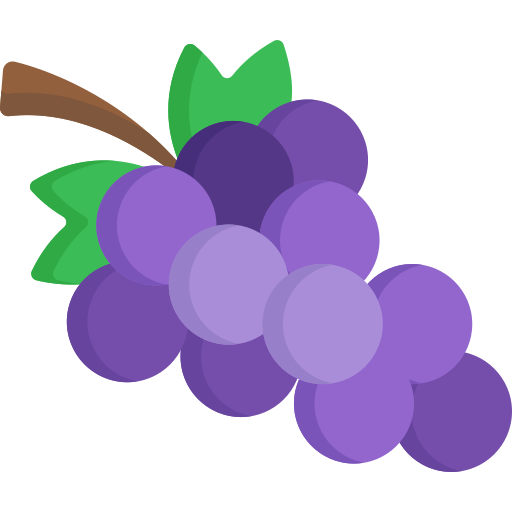
la uva
the grape
El vino se hace con la uva.

el pimiento
the pepper
Voy a hacer una tortilla con pimiento verde.

la sal
the salt
Agrega un poco de sal a la sopa.

la pimienta
the pepper
La receta de la salsa lleva pimienta.

la berenjena
the eggplant
Me gusta la berenjena asada.

las setas
the mushrooms
Las setas de cardo son muy sabrosas.

sabroso
tasty
Este pastel está muy sabroso.

la espinaca
the spinach
La espinaca es rica en hierro.

el melocotón
the peach
Voy a hacer una tarta de melocotón para el postre.
*Useful verbs II.*
"cortar" and "tajar"
- has the same meaning, e.g.: "Corto/tajo la verdura." (I cut/chop the vegetables.)
"irse" x "ir"
- sometimes people have issues with "ir" and "irse" because they seem to be and mean the same.
"IR"
In Spanish, we use ir to express destination. In other words, this verb allows us to express that a person is going from one place to another, is the direct translation of *to go*.
e.g. "Voy a la casa de Liz." (I’m going to Liz’s house.)
"IRSE"
- also expresses movement, but in this case, we use this verb to say that a person is leaving or departing from a place. On top of this, ‘irse’ is a reflexive verb while ‘ir’ is a standard verb, as a result, irse always needs to work with reflexive pronouns. This verb can be translated as: *to leave, to depart, to go or to go away*.
e.g. "Mañana nos vamos a España de vacaciones." (Tomorrow we’re going (departing) to Spain on vacation.)

pronunciar
to pronounce
¿Cómo se pronuncia esta palabra?

producir
to produce
El sol produce vitamina D en la piel.

entregar
to deliver
Por favor, entrega este paquete en la oficina de correos.

averiguar
to find out
¿Puedes averiguar a qué hora sale el próximo tren?

rechazar
to reject
No puedo rechazar esta oferta.
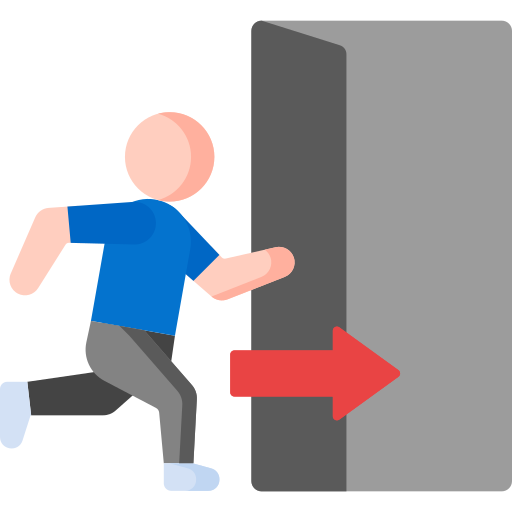
irse
to leave
¿Te vas de vacaciones?

modificar
to modify
Quiere modificar su proyecto también.

pasarlo bien
to have fun
Espero que te hayas divertido y hayas pasado bien en la fiesta.

pintar
to paint
Me gusta pintar cuadros en mi tiempo libre.

cortar
to cut off
El peluquero me cortó el pelo ayer.
equivocarse
to make a mistake
Me equivoqué al decir tu nombre.
*Prepositions II.*
There is no difference between the preposition "dentro" and "en" in the sense of when something is inside.

hacia arriba
upward
Sube hacia arriba por las escaleras.

hacía abajo
downwards
Ponlo hacía abajo.

después
later
Después de la escuela, voy a casa.

hecho a mano
handmade
Este collar está hecho a mano.

a cause de
on account of
No salimos a cause de la lluvia.

lejos de
far from
No está lejos de aquí.
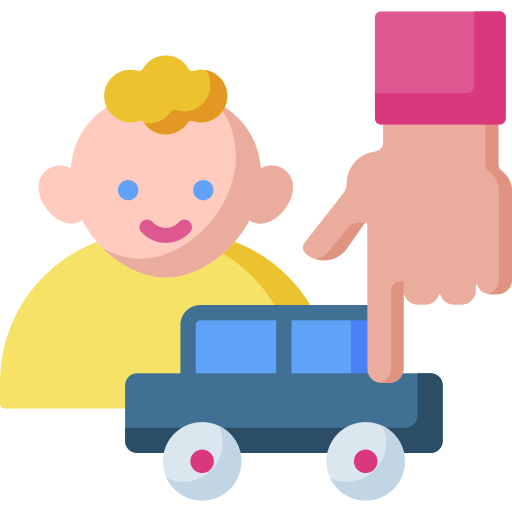
junto con
together with
Fue detenido junto con su hijo.

Hasta ahora no ha llamado nadie.
So far no one has called.
por debajo de
below
Nadamos por debajo del puente.

por encima de
above
El avión volaba por encima de las nubes.
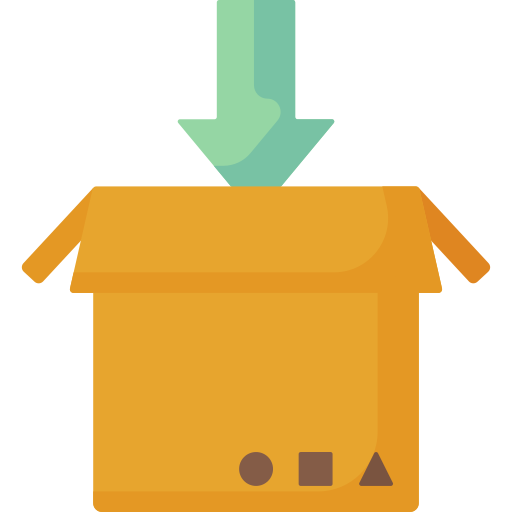
dentro
within
El gato está dentro de la caja.
*Adverbs III.*
"También" / "Tampoco"
They are used when you are agreeing with what someone says or to show that you do the same thing or feel the same way.
We use "también" to show agreement with a positive statement.
e.g. Yo estudio italiano. - Yo, también. (I study Italian. - Me, too.)
We use "tampoco" to show agreement with a negative statement.
e.g. No quiero nadar. - Yo, tampoco. (I do not want to swim. - Me neither.)

demasiado
too
Está demasiado caliente.

bastante
quite
El exámen fue bastante difícil.

en seguida
right away
Lo haré en seguida.

tampoco
neither
No tengo dinero. - Yo tampoco.
también
also
¿Tú también vas a la fiesta?

sólo
just
Sólo tengo un lápiz.

jamás
never
Jamás he estado en Japón.

casi
almost
Casi llegamos a la cima de la montaña.

despacio
slowly
Maneja despacio por la calle.

lejos
far
La tienda está lejos de aquí.

cerca
close
El banco está cerca.
*Simple conditional*
It is formed by taking the infinitive of the whole verb without deleting anything and putting the ending after it, which is also the same for all three conjugations.
*Hablar*
yo "hablaría"
tú "hablarías"
él/ella/usted "hablaría"
nosotros/as "hablaríamos"
vosotros/as "hablaríais"
él/ella/ustedes "hablarían"
We use this verb tense when
1. we want to express a wish usually using these verbs: "gustar", "querer", "desear", "apetecer", "encantar".
"Me gustaría ir a México." I would like to go to Mexico.
but also with other verbs:
"Qué hambre tengo! Me comería cualquier cosa." I'm so hungry! I would eat anything.
2. we want to give some advice:
"Yo que tú, no lo haría." I wouldn't if I were you.
3. we want to express politeness
"Me podría decir cómo llegar a la estación de tren?" Could you tell me how to get to the train station?
4. we want to express assumptions about the past.
"No vino a la clase. Se quedaría dormida." She didn't come to class. She slept in.
*Irregular verbs*
TENER - "tendr-"
VENIR -"vendr-"
PODER - "podr-"
QUERER - "querr-"
SABER - "sabr-"
DECIR - "dir-"
importar
to import
¿Te importaría si fumo?

romper con alguien
to break up with someone
Querría romper con ella.

me gustaría
I would like
Me gustaría ir al cine esta noche.

Querría ser cantante.
I would like to be a singer.

apetecer
to crave
Me apetecería comer un helado ahora mismo.

el sueldo
the salary
¿Me dirías tu sueldo?

tú podrías
you could
Tú podrías hacerlo.

vosotras vendríais
you would come
Quizás vosotras vendríais.

¿Me dejaría su coche, por favor?
May I borrow your car, please?
lo haría
I would
Por ti, lo haría.

nosotros sabríamos
we would know
Nosotros sabríamos los resultados.

deber
should
Deberías estudiar para el examen.
*Types of trees and flowers*
"Las flores se pueden comprar en la florería." (Flowers can be purchased at the flower shop.)
"Los árboles se pueden comprar en centro de jardinería." (Trees can be bought at the garden centre.)

el tulipán
the tulip
En primavera hay muchos tulipanes.

la raíz
the root
Las raíces de este árbol son muy profundas.

la rama
the branch
El árbol tiene muchas ramas.

la hoja
the leaf
Esta hoja es verde.

el olivo
the olive tree
El olivo es un árbol muy común en España.

la palmera
the palm tree
Veo una palmera gigante.

regalar
to give a present
Le regalo una rosa.

la rosa
the rose
Me regalaron una rosa roja.

el girasol
the sunflower
Los girasoles son flores muy bonitas.

el pino
the pine
El pino es un árbol de hoja perenne.

el desierto
the desert
El desierto de Atacama es muy conocido.

En el desierto no hay flores ni árboles.
There are no flowers or trees in the desert.
*Some typical Spanish food and dishes*
What Spanish people usually eat for breakfast? (examples)
"las galletas con leche" (cookies with milk)
.. and during a break?
"un bocadillo con queso y jamón" (a sandwich with cheese and ham)
...and for lunch?
"el gazpacho" (typical soup made of tomatoes and cucumber)
and dinner?
"la tortilla" (Spanish omelette made from eggs, potatoes and onions, it is not the Mexican style tortilla)

la paella
the paella
La paella sin pollo no me gusta.
las tapas
the tapas
Vamos a tomar unas tapas esta tarde.

el turrón
the almond nougat
En Navidad se come mucho turrón.

el pulpo a la gallega
the Galician octopus
En Galicía se cocina el pulpo a la gallega.

el jamón ibérico
the Iberian ham
El jamón ibérico es un poco caro.

el queso manchego
the manchego cheese
El queso manchego se hace con leche de oveja.

las patatas bravas
the patatas bravas
Las patatas bravas son mis favoritas.

los churros
the churros
Le gusta comer los churros con chocolate.

el chorizo
the chorizo sausage
El chorizo picante es mi favorito.

las gambas al ajillo
the garlic prawns
Pido unas gambas al ajillo.

la crema catalana
the crema catalana
Quiere preparar la crema catalana.