TOEFL Practical Vocabulary

Interactive flashcards for learning vocabulary

Englishmoderateby __lili__
Flashcards: 1745 / 5

Save words from this page and practise them with flashcards in DuoCards. How does it work?

Celestial
The telescope allowed us to observe various celestial bodies in the night sky.
Orbit
The satellite maintains a stable orbit around the Earth.
Galaxy
Our solar system is located within the Milky Way galaxy.
Gravity
Gravity is the force that keeps planets in their respective paths.
Atmosphere
The planet's atmosphere is composed primarily of nitrogen and oxygen.
Phenomenon
A solar eclipse is a rare astronomical phenomenon.
Constellation
Ancient sailors used the position of each constellation to navigate the seas.
Radiation
Stars emit various forms of radiation throughout their life cycles.
Telescope
Astronomers use a powerful telescope to study distant nebulae.
Asteroid
Many asteroids are found in the belt between Mars and Jupiter.
Magnitude
The magnitude of a star indicates its brightness as seen from Earth.
Supernova
A supernova occurs when a massive star reaches the end of its life.
Extraterrestrial
Scientists are searching for signs of extraterrestrial life on other planets.
Velocity
The velocity of the comet increased as it approached the sun.
Nebula
A nebula is a giant cloud of dust and gas in space.
Cosmic
Cosmic rays are high-energy particles that travel through space.
Eclipse
A lunar eclipse happens when the Earth passes between the sun and the moon.
Trajectory
Engineers calculated the precise trajectory of the spacecraft.
Luminous
The luminous gas clouds were visible even with a small telescope.
Observatory
The observatory is located on a high mountain to avoid light pollution.
Astronomical
Astronomer
Astrophysics
Astrology
Deviate
Cosmos (universe)
Cosmology
Infinite
Body (heavenly body)
Globe
Terrestrial
Navigation (astronavigation)
Stellar
Dwarf star
Nebula (nebulae, nebulas)
Nebular / Nebulous (hypothesis)
Plan sphere
Galaxy (Milky Way)
Observable
Cluster
Solar
Solar system
🪷The surface of Mars shows a wide range of geologic features, including huge volcanoes—the largest known in the solar system—and extensive impact cratering
Solar corona
Solar radiation
Planet
🪷 The great height of Martian volcanoes is a direct consequence of the planet’s low surface gravity
Planetoid (asteroid)
Revolve
Twinkle
Naked eye
Mercury
Venus
🪷 It is no accident that Maxwell Mons on Venus and the Hawaiian shield volcanoes on Earth rise to about the same height
Earth
🪷 similar to those found on shield volcanoes on Earth 🪷 Earth and Venus have similar surface gravity
Mars
🪷 The surface of Mars shows a wide range of geologic features
Jupiter
Saturn
Uranus
Neptune
Pluto
Spin
Satellite
Lunar
🪷 The ejecta surrounding the lunar crater is just what one would expect
Meteor
Meteor shower
Meteoroid
impact craters formed by meteoroids falling in from space
Meteorite
🪷 primarily by meteoritic erosion. ⚠️ نکته: در متن Meteorite نیامده، بلکه صفت آن یعنی meteoritic آمده است. • meteorite = شهاب‌سنگ • meteoritic = مربوط به شهاب‌سنگ
Comet
Space (outer space)
Spacecraft (spaceship)

GEOGRAPHY

Geographer
Hemisphere
Northern and southern hemispheres
Eastern and western hemispheres
Parallel
Latitude
Temperate latitudes
Longitude
Horizon
Equator
Tropics
Arctic
Antarctic (Antarctica)
Expedition
Zone
Time zone
The meeting is scheduled for 3 PM in my time zone, but it will be 10 AM in yours.
Topography
Plain
Lowland
Basin
Cavern (cave)
Subterranean (underground)
Coastland
Island
Continental island
Coral island
Islet
Peninsular
Continent
Continental shelf
Ranges
Valley
Canyon
Strait
Channel
Gulf
Survey
Elevation
The elevation of the mountain is over 3,000 meters above sea level.
Altitude
Remote-sensing
Many countries rely on remote-sensing data to manage their natural resources effectively.
Terrain
Terrestrial heat (geothermal; heat of the earth's interior)
Terrestrial magnetism (geomagnetism)

GEOLOGY
Geologist (geologician)
A geologist examines rocks and minerals to understand how the Earth's surface has changed over time.
Geologic age (geological time)
Scientists use evidence from rocks and fossils to determine the geologic age of different layers of the Earth
Geochronology
Geochronology allows researchers to estimate the precise age of rocks by analyzing radioactive elements.
Geoscience (earth science)
Geoscience combines several scientific disciplines to explain the physical processes that shape the Earth
Crust
The Earth's crust is the thin outer layer on which continents and oceans are located.
Continental crust
Continental crust is generally thicker and less dense than oceanic crust.
Oceanic crust
Oceanic crust is continuously created at some underwater volcanic regions and destroyed at subduction zones
Layer (stratum; strata)
Each layer of sediment may preserve evidence about the environmental conditions that existed when it was formed
Mantle
Although the mantle is mostly solid, its extremely high temperatures allow some regions to flow slowly over geological time.
Core
The Earth's core consists mainly of iron and nickel and is divided into a solid inner core and a liquid outer core.
Plate
A tectonic plate can move several centimeters per year as a result of forces beneath the Earth's surface
Plate tectonics
براساس این نظریه زمین از ۷-۸ صفحه تشکیل شده که خوده این صفحه ها به صفحات کوچکتر تقسیم می شود The theory of plate tectonics explains how the movement of large plates causes earthquakes, mountain formation, and volcanic activity
Fault
When stress causes rocks to break and move along a fault, an earthquake may occur.
Disintegration (decomposition)
The disintegration of rocks can occur when repeated changes in temperature cause them to expand and contract.
Erosion
Erosion caused by rivers and wind gradually removes soil and rock from the Earth's surface.
Fossil
Rock
Sedimentary rock
Metamorphic rock
Quartz
Limestone
Marble
Granite
Magma
مواد مذاب درون زمین Magma consists of molten or partially molten material located beneath the Earth's surface.
Prospect
Geologists conduct a prospect of an area to determine whether valuable mineral resources may be present
Sounding
Scientists used sounding techniques to measure the depth of the lake and construct an accurate map of its bottom.
Mine
Mineral
Ore
Ore is extracted from the Earth when it contains enough valuable material to make mining economically practical.
Deposit
The region contains a large mineral deposit that formed through geological processes over millions of years
Platinum
Copper
Aluminum
Zinc
Nickel
Mercury (quicksilver)
Gem
Diamond
Emerald
Ruby
Glacier
Glacial
Glacial epoch (age, period)
Glacial drift
Iceberg
Ice sheet
Frigid (refrigerated; freezing)
Thaw (melt)
When temperatures rise in spring, frozen soil begins to thaw, releasing water into nearby rivers and lakes.
Retreat
The retreat of a glacier is often associated with rising temperatures and changes in precipitation.
Terminate (end)
A volcanic eruption may terminate suddenly when the pressure beneath the Earth's surface decreases.
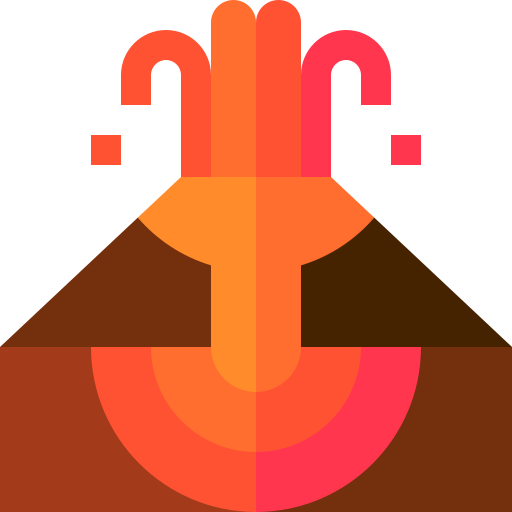
Volcano
Active volcano
Extinct volcano
Eruption
Crater
The crater of a volcano is often located around the opening through which lava and gases escape.
Lava
Scoria
Scoria is a lightweight volcanic rock containing numerous gas-filled holes created during an eruption.
Volcanic
Earthquake (quake; tremor; seism)
Seismology
Seismology helps scientists study earthquakes by analyzing the waves that travel through the Earth.
Hypocenter (focus)
The hypocenter is the point beneath the Earth's surface where an earthquake begins.
Earthquake wave (seismic; shock wave)
Cataclysm
Cataclysm a large-scale and violent event in the natural world. large volcanic eruption or asteroid impact can produce a cataclysm that dramatically changes the Earth's environment.

Learning with DuoCards

What is DuoCards?

DuoCards is a language-learning app that helps you build vocabulary with flashcards. You can save words you want to learn and practise them over time.

How do I learn with this set?

Browse the flashcards to see the words and their translations. Select Card picker and choose the words you want to learn. Then create a free account to save your words and practise them.

How do I practise my words?

You'll see a flashcard with a word and a hidden translation. Guess what it means, then tap to check your answer. DuoCards repeats the words you find difficult.

Do I need an account, and is learning free?

You can browse this page without an account. A free account lets you save words and track your progress. The free plan has limits, and Premium offers additional features.