Spanish Course B1-B2Spanish words
*Subjunctive*
The Spanish subjunctive or "subjuntivo" can be used to refer to both the present and the future. It is a special verb form that indicates subjectivity or unreality. In this course we will learn "presente de subjuntivo" because there is also "pretérito imperfecto" and "pretérito perfecto".
It can be used in a variety of ways to express:
1. negative imperatives
2. various expressions of feelings and emotions (negative and positive)
3. in various subordinate clauses
- relational sentences
- sentences with "que"
- temporal sentences
- conditional sentences
- adjectival clauses
Whether or not the subjunctive is used for present or future instances depends on time words. Here are two examples:
"Puede que Cristina esté en clase ahora." (present – ahora)
It’s possible that Cristina is in class now.
"Mi hermano quiere que mañana le ayude con los deberes." (future – tomorrow)
My brother wants me to help him with his homework tomorrow.
Regular verbs:
*HABLAR*
"yo hable""
"tú hables"
"él/ella/usted hable"
"nosotros/as hablemos"
"vosotros/as habléis"
"ellos/ellas/ustedes hablen"
*COMER*
"yo coma""
"tú comas"
"él/ella/usted coma"
"nosotros/as comamos"
"vosotros/as comáis"
"ellos/ellas/ustedes coman"
*VIVIR*
"yo viva""
"tú vivas"
"él/ella/usted viva"
"nosotros/as vivamos"
"vosotros/as viváis"
"ellos/ellas/ustedes vivan"

yo hable
I speak
Me alegro que hable.

él venda
he sells
Me sorprende que él venda estas cosas.

¡No leas!
Don't read!

yo cocine
I cook
Qué lástima que no cociné.

nosotras escribamos
we write
No creo que nosotras lo escribamos.

ellos canten
they sing
Me aburre que ellos canten.

¡Viva España!
Long live Spain!

usted estudie
you study
No creo que usted estudie.

nosotras aprendamos
we learn
Quizás nosotras lo aprendamos.

vosotros toméis
you take
Ojalá vosotros toméis buena decisión.

Es necesario que prestes atención.
You need to pay attention.
*Irregular verbs I.*
Many verbs have irregular forms of the "subjuntivo" in the present tense. However, if you are already familiar with other tenses of the Spanish verb, then the following irregular forms will not cause you any surprise:
*TENER*
"yo tenga"
"tú tengas"
"él/ella/usted tenga"
"nosotros/as tengamos"
"vosotros/as tengáis"
"ellos/ellas/ustedes tengan"
"VENIR - venga,..."
"CONOCER - conozca,..."
"DECIR - diga,..."
"HACER - haga,.."
"PONER - ponga,..."
"SALIR - salga,..."
"ENTENDER - entienda,..."
"CONTAR - cuente,..."
"SENTAR - sienta,..."
"DORMIR - duerma,..."
"SEGUIR - siga,..."

usted entienda
you understand
Es probable que usted no lo entienda.
ellos hagan
they do
Es necesario que ellos lo hagan.

vosotras digáis
you can
Prefiero que vosotros lo digáis.

No cuentes conmigo.
Count me out.

vosotros veáis
you see
Es precioso que veáis la verdad.

tú vengas
you come
Quiero que vengas al cine conmigo.
ella salga
she goes out
Es terrible que salga.
usted duerma
you sleep
No quiero que usted duerma toda la tarde.

tú tengas
you have
No me gusta que tengas que hacer este trabajo.
ella conozca
she knows
Espero que ella lo conozca.

él haga
he does
Espero que mañana haga buen tiempo.

Buscamos a alguien que pueda resolver problemas.
We are looking for someone who can solve problems
*Irregular verbs II.*
Let's take a look at some of the most imporant total irregular verbs:
"DAR" – "dé, des, dé, demos, deis, den"
"IR" – "vaya, vayas, vaya, vayamos, vayáis, vayan"
"SABER" – "sepa, sepas, sepa, sepamos, sepáis, sepan"
"HABER" – "haya, hayas, haya, hayamos, hayáis, hayan"
"ESTAR" – "esté, estés, esté, estemos, estéis, estén"
"SER" – "sea, seas, sea, seamos, seáis, sean"
"CABER" - "quepa, quepas, quepa, quepamos, quepáis, quepan"

usted sepa
you know
Es importante que usted sepa la verdad.
ellos sean
they are
No creo que sean raros.

Me encantaría que sepan todo.
I would love them to know everything.

yo dé
I give
Es malo que dé otras posibilidades.

él esté
he is
Es posible que el perro esté enfermo.

él quepa
he fits
Me da miedo que el armario no quepa.

vosotros seáis
you are
Es verdad que vosotros seáis simpáticos.

nosotros vayamos
we go
Me apetece que vayamos juntos.

nosotros demos
we give
Prohíbo que demos el dinero.

ella sea
she is
Busco a gente que sea amable.

A los niños les gusta que haya algo rico de postre.
Children like to have something tasty for dessert.
tú estés
you are
Me alegro de que estés aquí.
*Human body II.*
Typical Spanish expressions with body parts:
"hablar por los codos" - to speak a lot
"dejarse la piel" - to work really hard on something
"estar hasta las narices" - to be fed up with someone /something
"ser uña y carne" - to be always together

el intestino
the intestine
Tiene problemas graves con su intestino.

el cuello
the neck
Debes mantener el cuello recto.

las uñas
the nails
Se pinta las uñas.

los codos
the elbows
Apoya los codos en la mesa.

el rostro
the face
El rostro de mi abuela es muy arrugado.
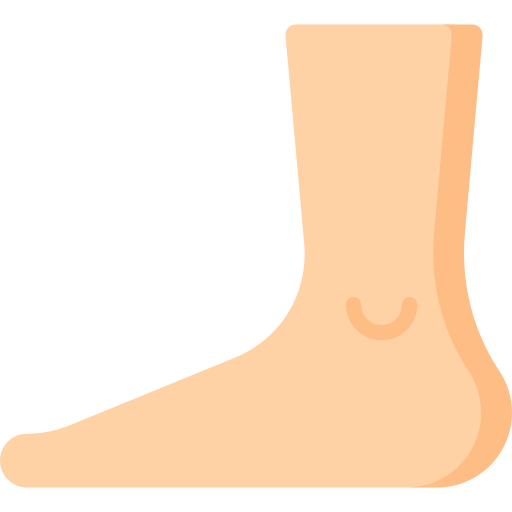
el tobillo
the ankle
Me torcí el tobillo al jugar.

el pecho
the chest
Levanta el pecho y respira profundo.
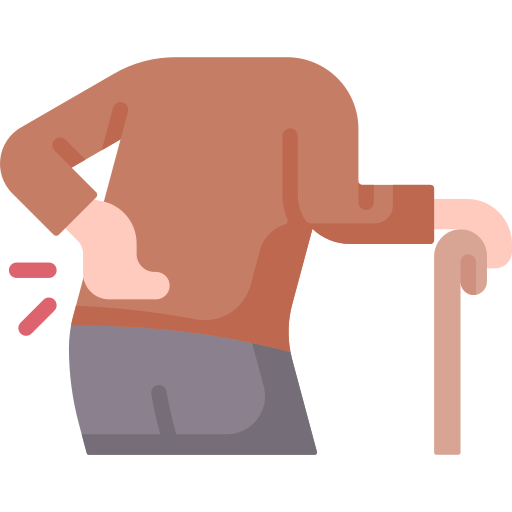
la espalda
the back
Se dio la vuelta de espaldas.
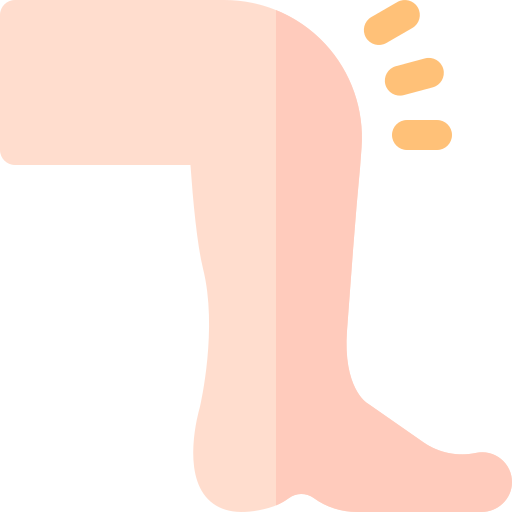
la rodilla
the knee
Se lastimó la rodilla jugando fútbol.

la cadera
the hip
Me duele la cadera.
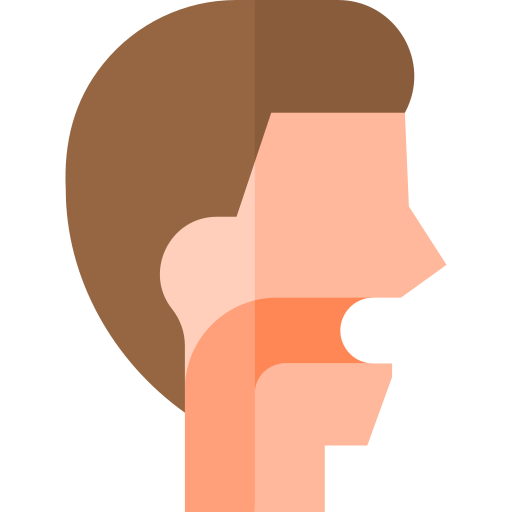
la garganta
the throat
Me duele la garganta.
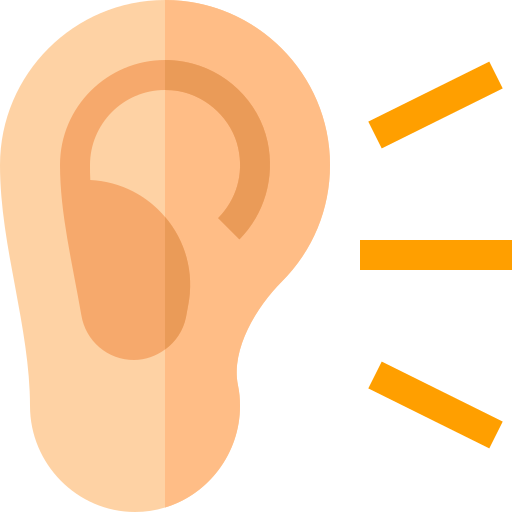
los oídos
the ears
Es importante cuidar los oídos cuando se expone a ruidos fuertes.

el hombro
the shoulder
Le di un golpe en el hombro.
*Office suplies*
If you work in an office ("la oficina"), I'm sure there have been times when you couldn't find an office item.
Do you know where these items are sold? ("¿Sabes dónde se venden estos artículos?")
"Se veden en las papelerías." (They are sold in stationers' shops.)

el teclado
the keyboard
Por favor, escribe tu nombre en el teclado.

la grapadora
the stapler
La grapadora se quedó sin grapas.

la goma
the rubber
Por favor, dame una goma para borrar este error.

el pegamento
the glue
¿Dónde está el pegamento?

la chincheta
the drawing pin
Usa chinchetas para colgar las fotos en el corcho.

el marcador
the highlighter
Me gusta usar diferentes colores de marcadores.
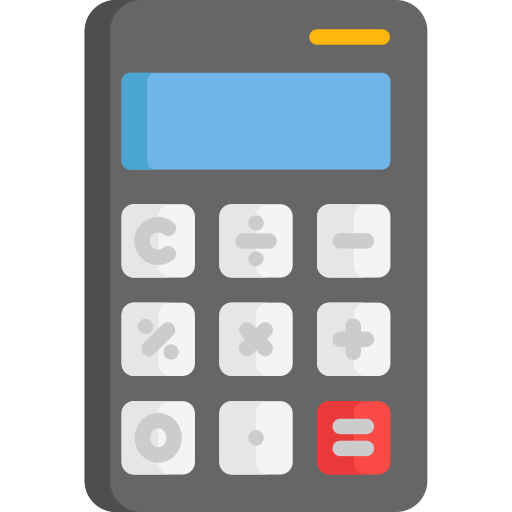
la calculadora
the calculator
¿Tienes una calculadora que pueda usar?

el corcho
the notice board
Voy a poner una nota en el corcho del tablón.

la impresora
the printer
Necesito imprimir este documento.

el sujetapapeles
the paper clip
Ayer me compré unos sujetapapeles.

el dispensador de cinta
the tape dispenser
Pásame el dispensador de cinta, por favor.

el sacapuntas
the pencil sharpener
El sacapuntas es de color verde.

la carpeta
the folder
Guarda el archivo en la carpeta de documentos.
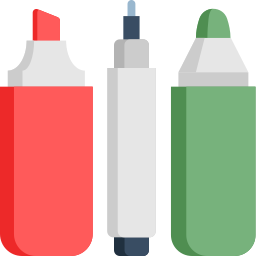
los rotuladores
the markers
No tengo ningún rotulador.
*Subjunctive - Will, desire, orders, doubts, uncertainty, probability and expressing an opinion*
A very common structure that triggers the subjunctive is:
"verbo + que + subjuntivo"
Here is a list of common verbs:

ojalá que
I hope that
Ojalá que llueva mañana

esperar que
to expect that
Espero que no tengas más deudas.

desear que
to wish that
Deseo que me hable más.

evitar que
to prevent
Evitamos que llamen.

es hora que
it is time that
Es hora que se casen.

negar que
to deny that
Niego que no mienta.

querer que
to want that
Quieremos que nos den más tranquilidad.
preferir que
to prefer that
Prefires que no te llamen.

pedir que
to ask that
Pido que sea más lento.

exigir que
to require that
Exigen que digan la verdad.
*Subjunctive - Emotions and Reactions*
The subjunctive is used after expressions of emotion and reactions to something. Remember that the subjunctive is found in the subordinate clause of sentences that contain a change of subject from the main clause to the subordinate clause.
A very common structure that triggers the subjunctive is:
"es + adjectivo + que + subjuntivo"
e.g. "Es injusto que no vayamos." (It is unfair for us not to go.)

es justo que
it is fair that
Es justo que no vaya.
tener miedo de que
be afraid that
Tiene miede de que pierda todo.

es raro que
it is rare that
Es raro que no lo tenga.

me molesta que
it bothers me that
Me molesta que nos paguen poco.

no me importa que
I don't care what
No me importa que lo hagan.
Temo que lo haga.
I'm worried he's gonna do it.

es bueno que
it is good that
Es bueno que sienta emociones.

me sorprende que
I am surprised that
Me sorprende que no cuenten mentiras.

me gusta que
I like that
Me questa que cocinen.

es triste que
it is sad that
Es triste que no sean novios.

Nos alegramos de que asistáis.
We are looking forward to your attendance.
*Subjunctive or indicative ? I.*
The difference between the subjunctive and the indicative lies in the speaker’s intention:
The *indicative* is the default mood; the speaker is making a standard statement or question.
e.g.:
"¿Lograré dominar el subjuntivo?"
the speaker offers no indication of their own feelings or interpretation; they are simply posing a question
The *subjunctive* mood indicates subjectivity; the speaker is expressing their own perception of something. Subjunctive clauses almost always follow an expression or main clause that signals subjectivity.
e.g.:
"Dudo que pueda aprenderlo todo en una sesión."
dudo que indicates the speaker’s feelings
A sentence in the subjunctive does not comment on or question whether a piece of information is true or false; instead, it expresses the speaker’s attitude towards it.
With some words you can use *both of them* but some are used only for *indicative* (I) or *subjunctive* (S) form.
*Both of them* - "quizás, tal vez, esperar, acaso, posiblemente, probablemente"
*Only I form* - "a lo mejor, igual, menos mal"
*Only S form* - "es posible/imposible, puede (ser) que, es probable/improbable"
Let's practice our cards and then we'll get to the second part!

quizás
maybe
Quizás vaya al cine esta noche.

posiblemente
possibly
Posiblemente vaya al cine esta noche.
tal vez
perhaps
No sé si podré ir a la fiesta, tal vez tenga que trabajar.

a lo mejor
maybe
A lo mejor mañana llueve.

menos mal
goodness
Menos mal que no llovió durante la excursión.

es improbable
is unlikely
Es improbable que no tenga dinero.
*Subjunctive or indicative ? II.*
And some of them changes depending on the positive/negative form:
"Es evidente que" (S) - "No es evidente que" (I)
"Es obvio que" (S) - "No es obvio que" (I)
"Es verdad que" (S) - "No es verdad que" (I)
"Está claro que" (S) - "No está claro que" (I)
And these do not change in any form:
"(No) es natural que, (No) es normal que, (No) es lógico que, (No) es bueno/malo que" (always S)

está claro que
it is clear that
Está claro que tenga dinero.

no está claro que
is not clear that
No está claro que quiere irse.

Es lógico que se parezcan.
It is logical that they look alike.

es verdad que
it is true that
No es verdad que estudie inglés.
es evidente que
it is clear that
No es evidente que le guste.

es normal que
it is normal that
Es normal que quiera divertirse.
*In the garden*
"En el jardín"
Be careful at these words:
"La escalera" could mean "the ladder" or "the stairs".
"El banco" could mean "the bank" or "the bench".

el cubo
the bucket
Compró un cubo de madera.

la manguera
the hose
Usa la manguera para limpiar el patio.

la carretilla
the wheelbarrow
Usé la carretilla para transportar los ladrillos.

el banco
the bench
Me siento en el banco del parque.

el patio
the backyard
Me gusta pasar tiempo en el patio de mi casa.

la valla
the fence
La casa tiene una valla alrededor.

la escalera
the ladder
¡Cuidado! La escalera está resbaladiza.

la barbacoa
the barbecue
Vamos a hacer una barbacoa en el jardín.

el parterre
the flowerbed
Me encanta pasear por el parterre.

el jardinero
the gardener
El jardinero está podando los arbustos.

podar
to cut off
Debes podar las ramas secas del árbol.
*Parts of the body - animals*
"la cola" - this word has different meanings:
1. a tail of an animal
2. the queue
3. the glue
4. the traffic jam
5. the line
"Formar/hacer cola" - to line up ("Hice cola en la caja para pagar mis compras.")

la cola
the tail
El gato movía la cola de un lado a otro.

el cuerno
the horn
El toro tiene dos cuernos.

la pata
the paw
El perro tiene una pata rota.

la ala
the wing
El murciélago bate sus alas para volar.

la pluma
the feather
La pluma de esta ave es muy bonita.

la melena
the mane
El león tiene una melena muy larga y hermosa.

la joroba
the hump
El camello tiene una joroba.

el hocico
the snout
El perro tiene el hocico mojado.

el colmillo
the fang
El león tiene unos colmillos muy afilados.

la trompa
the trunk
El elefante tiene una trompa larga.
*The cinema*
Are you able to understand a short article ("el artículo") about cinema?
Read the article and learn some new vocabulary:
"El cine tiene el valor en sí mismo de ser transmisor de dramas humanos. Desde sus inicios, los relatos que cuenta el cine han afectado a generaciones de personas mediante sus argumentos, sus contenidos, sus imágenes y sus ideas. El cine es cultura popular, arte y espectáculo."
"el valor" - the value
"trasmisor de dramas humanos" - a transmitter of human dramas
"los inicios" - the beginnings
"mediante" - through
"los relatos" - the stories
"los contenidos" - the contents
"el espectáculo" - the spectacle

la película de terror
the horror movie
Me gusta ver la película de terror con mis amigos.

la película romántica
the romantic film
Hay una nueva película romántica en los cines.

la película de ciencia ficción
the science fiction film
Me encanta esta película de ciencia ficción.

emitir
to broadcast
Emiten una película infantil.

la película de dibujos animados
the cartoon film
A mis nietos les gustan las películas de dibujos animados.
la película de acción
the action movie
¿Vamos al cine a ver una película de acción?

la película de suspense
the thriller
Tengo miedo a ver este película de suspense.

la pantalla
the screen
La película se proyecta en la pantalla del cine.

el avance
the trailer
He visto el avance del musical y no me ha gustado.

la intriga
the intrigue
La intriga no se resuelve hasta el final.

los asientos
the seats
No hay asientos libres.
*The enviroment II.*
"La energías se pueden dividir en energías renovables y no renovables."
(Energy can be divided into renewable and non-renewable energy.)
*Proverb* ("El refrán"):
"La Tierra no es una herencia de nuestros padres sino un préstamo de nuestros hijos."
(The Earth is not an inheritance from our parents but a loan from our children.)

la capa de ozono
the ozone layer
La capa de ozona es cada vez más pequeňa.

las placas solares
solar panels
Han instalado unas placas solares.

la energía eólica
the wind energy
En Austria producen mucha energía eólica.

la gasolina
the petrol
La gasolina tiene un precio muy alto.

la energía nuclear
the nuclear energy
Tengo miedo de la energía nuclear.

el carbón
the coal
La mina de carbón cerró hace unos años.

el gas
the gas
¿Tienes gas en casa?

la energía solar
the solar energy
Usamos la energía solar.

la energía geotérmica
the geothermal energy
En nuestro país no se usa la energía geotérmica.

la biomasa
the biomass
Quiero leer algo sobre la biomasa.
*Direct and indirect style I.*
"Estilo directo (ED) e indirecto (EI)"
Direct and indirect style are two forms of communication that serve to reproduce a message. In indirect style, the narrator uses his or her own voice, while in indirect, the message is quoted verbatim.
*Direct style*
e.g.:
"Me voy a mi casa." - Lucas.
To use the direct style with this message, we must reproduce the message verbatim:
Lucas dice: "Me voy a mi casa."
*Indirect style*
e.g.:
"Ahora (yo) tengo muchas cosas que hacer en mi trabajo." Luis
To change the sentence to indirect speech, we eliminate the 1st person and speak of Luis in the 3rd person. This includes all verb conjugations, determiners, possessives, etc.
"Luis dice que ahora tiene muchas cosas que hacer en su trabajo."
Perfect! We'll get to part two in a minute.

la tutora
the tutor
Soy vuestra tutora. - Dijo que era su tutora.
la liga
the league
Yo dije que el día anterior había empezado la liga.

Dijo que él no tenía hambre.
He said he was not hungry.

delicioso
delicious
Beatriz dijo que aquel zumo estaba delicioso.

la forma
the form
“La Tierra tiene una forma esférica.” - Mi abuelo.

la compañía
the company
“Mañana te llamaremos.”- La compañía

utilizar
to use
Dijo que debes utilizar el cinturón de seguridad en el coche.
*Direct and indirect style II.*
These are some of the most common temporal and spatial units in direct style and their adaptation to indirect style:
"hoy (ED) - aquel / ese día (EI)"
e.g.:
"Hoy no tengo ganas de jugar." - Pepe
"Pepe dijo que ese día no tenía ganas de jugar."
"ayer, la semana pasada, año pasado, etc. (ED) - el día, semana, año anterior (EI)"
"ahora (ED) - en ese momento (EI)"
In order to adapt the indirect style to the indirect style, it is necessary to know what changes the verb tenses undergo:
"presente - imperfecto"
"pr. perfecto - pr. pluscuamperfecto/pr. indefinido"
"imperfecto - imperfecto"
"futuro - condicional"

aquel día
that day
Mi abuelo dijo que aquel día fue muy especial.

la política
the politics
Manuel dijo que Nelson Mandela es una persona muy importante para la política.

el contrato
the contract
Paula dijo que tiene un contrato indefinido en esa empresa desde hace tres años.

el internet
the internet
Enrique dijo que ese día no tenían internet.

Dolores dijo que en ese momento no estaba en casa.
Dolores said she was not at home at the time.
ponerse en forma
to get fit
Mi tío dijo que al año siguiente se iba a poner en forma.
*Health and disease*
"La salud y las enfermedades"
You've already learned the vocabulary of the human body and a few words you can use in the hospital.
Let's learn a few types of doctors and deparments:
"el neurólogo - la neurología"
"el urólogo - la urología"
"el pediatra - la pediatría"
"el oftalmólogo - la oftalmología"

tener náuseas
to have nausea
Tuve náuseas en al autobús.

recetar
to prescribe
El médico me recetó antibióticos para mi infección.
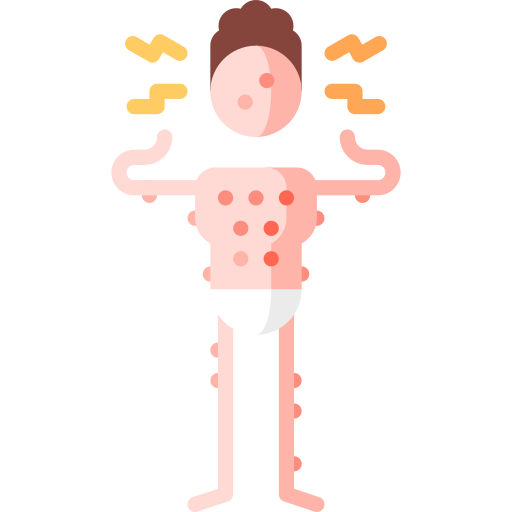
la varicela
the chickenpox
Mis hijos tienen varicela.

tener un infarto
to have a heart attack
Nuestro vecino tuvo un infarto.

el dolor de cabeza
the headache
Mi madre tiene dolor de cabeza.

el insomnio
the insomnia
El insomnio es un trastorno del sueño común.

tener depresión
to have depression
Después del divorcio tiene depresión.
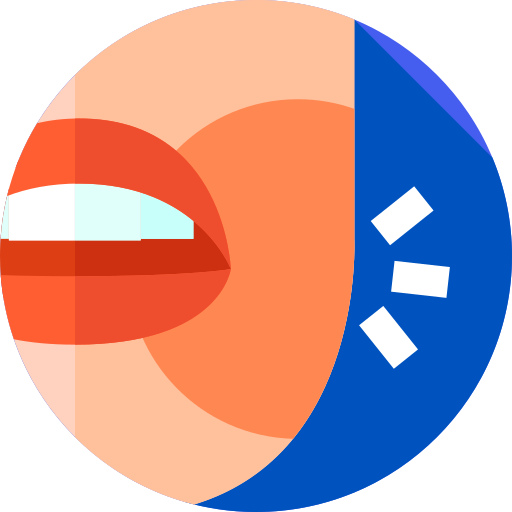
el dolor de muelas
the toothache
Tengo dolor de muelas y necesito ir al dentista.

estornudar
to sneeze
Él siempre estornuda cuando tiene alergias.

la quemadura
the burn
Aplica crema para las quemaduras.

el calmante
the painkiller
Por favor, necesito unos calmantes.

el tratamiento
the treatment
El médico le recetó un tratamiento para su enfermedad.
*Public orden*
"El orden público"
You may hear or see these words, for example, in a newspaper or television report. Let's take a look at some interesting vocabulary.
e.g.:
"las esposas" means handcuffs but it is also a plural form of "la esposa" (wife)
"el testigo" means witness
"la prueba" means prove
"el/la preso/a" means prisoner
"el/la carterista" means a person who steals from people's pockets, it is from the word "la cartera" that means "the wallet"
Saying:
"La ocasión hace el ladrón." (The occasion makes the thief.)
It is a saying that means that if you keep an eye on your things, you are less likely to lose them.

el asalto
the assault
El asalto fue muy violento.

el acusado
accused
El hombre fue acusado de robo.

robar
to steal
Él robó mi cartera.

la seguridad
the security
El aeropuerto tiene estrictas medidas de seguridad.

el fraude
the fraud
Hicieron un fraude.

el comunicado
the message
Nos enviaron un comunicado.

el preso
the prisoner
Quieren hablar con el preso.

la comisaría
the police station
Fui a la comisaría para denunciar el robo de mi bicicleta.

detener
to stop/to arrest
Detuve el coche en el semáforo.

el ladrón
the thief
La policía detuvo al ladrón.

defender
to defend
Debemos defender nuestros derechos.

el carterista
the pickpocket
Vieron a unos carteristas en el metro.
*Subjuntive expressions*
Here are some expressions we always use with "el subjuntivo". Take a look at them.

en caso de que
in the event that
En caso de que llueva, lleva un paraguas.

sin que
without
No puedo salir sin que mi madre me dé permiso.

con tal de que
as long as
Estudiaré toda la noche con tal de que apruebe el examen.

para que
what for
Salimos temprano para que no lleguemos tarde.

antes de que
before
Voy a cocinar antes de que llegue mi familia.

lo que sea
whatever
Entra en la tienda y compra lo que sea.

pase lo que pase
come what may
Pase lo que pase, no mires atrás.

como sea
anyhow
Tenemos que ganar este partido como sea.
*Verbal periphrasis*
A verbal periphrasis also known as a verbal structure, is a grammatical structure that consists of two or more verbs that take on a new meaning when used together.
We divide them in 3 catogeries. Verbal periphrasis with:
1. the infinitive "acabar de", e.g.: "Acaba de hacerlo." (He has just done so.)
2. with a gerund "seguir" - e.g.:"Siguó estudiando." (He kept on studying.)
3. with a participle "dar por" - e.g. " Los damos por terminado." (Los damos por terminado.)

deber de
must be
Debe de ser muy rico.

estar a punto de
to be on the verge of
Estoy a punto de salir de casa.

dejar de
to stop to
Dejé de fumar hace un año.

estar en vía de
to be on the way to
El trabajo está en vía de desarrollarse.

venir de
to finish to do something
Vengo de hablar con ella.

terminar de
to finish
Terminará de hacerlo la próxima semana.

llevar + gerundio
to have been
Llevo cinco semanas estudiando chino.

venir + gerundio
to continue to do something
Siempre me viene diciendo algo.
resultar + participio pasado
to be (result of an action)
Resultó herido.

quedarse + gerundio
to remain in the course of a particular activity
Se quedó viendo la película.

dejar + participio pasado
to leave behind, to make (somehow)
Me dejó sorprendido.
*The passive voice I.*
"La voz pasiva", is formed by the verb ser (conjugated) + *the past participle* of the main verb. Let's see how a sentence in voz activa can turn into passive.
e.g.:
"Mis abuelos construyeron esta casa." (active)
(My grandparents built this house.)
"Esta casa fue construida por mis abuelos." (passive)
(This house was built by my grandparents.)
Notice that the verb in the first sentence ("construyeron"), is conjugated in the past tense.
To turn it into the passive voice, we conjugate ser in the past tense ("fue") and add the past participle of the main verb ("construída"), agreeing with the subject ("esta casa").
Let's now dive in by practicing with the cards, and we'll be back soon with the second part!

La puerta fue abierta.
The door was opened.

la impaciencia
the impatience
Sus libros son esperados con impaciencia.

la galería
the gallery
La galería fue inaugurada el año pasado.

de todo tipo
of all kinds
Este año se llevan vaqueros de todo tipo.
avisar
to warn
La policía de Bruselas fue avisada ayer.

el departamento
the apartment
Los departamentos son rentados.

En Cuba se habla español.
Spanish is spoken in Cuba.
*The passive voice II.*
"El sujeto agente"
What was previously the subject of the sentence in active ("mis abuelos") is now what is called "el sujeto agente" (passsive), and it is preceded by "por".
e.g.:
"Mi hermano escribe muchos poemas." (active)
(My brother writes lots of poems.)
"Muchos poemas son escritos por mi hermano." (passive)
(Lots of poems are written by my brother.)
"La policía ha arrestado al sospechoso." (active)
(The police have arrested the suspect.)
"El sospechoso ha sido arrestado por la policía." (passive)
(The suspect has been arrested by the police.)

La casa fue pintada por los pintores.
The house was painted by the painters.

la carrera
the race
La carrera es ganada por el caballo más rápido.

los testimonios
the testimonies
Los testimonios han sido recogidos por la policía.

la votación
the vote
El director fue elegido por votación secreta.

el autor
the author
Estos libros fueron escritos por mi autor favorito.

paseado
strolled
El perro es paseado por Juan.

los castores
the beavers
Los diques fueren hechos por los castores.