Pre-intermediate Italian CourseItalian words
by DuoCards
*Benvenuto/a!*
Before we dive into new and exciting grammar and vocabulary topics, let’s warm up with a quick review of what you most probably already know. 🙂
Let’s get started! 💪🇮🇹

L'aereo è veloce.
The plane is fast.
Arriviamo presto. L'aereo è veloce.

troppo caldo
too hot
In Italia fa troppo caldo durante l'estate.
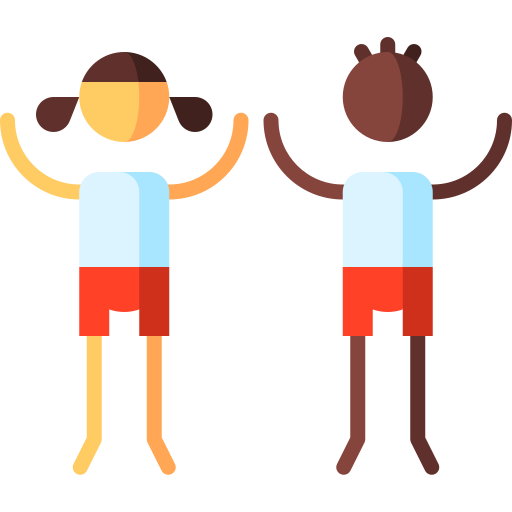
i bambini felici
happy children
I bambini felici vanno a scuola per la prima volta.
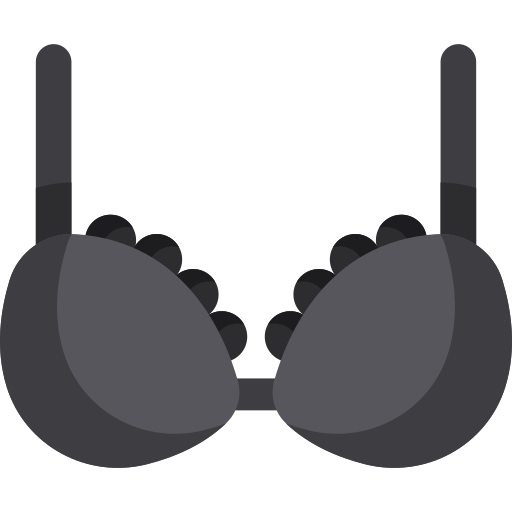
un reggiseno
a bra
Ho bisogno di comprare un nuovo reggiseno, questo è troppo stretto.
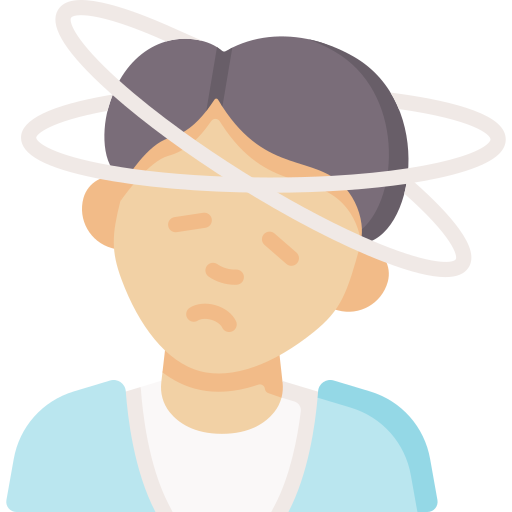
Mi sento male.
I feel sick.
Ho bevuto troppo vodka, mi sento male.

un bagaglio
a baggage
Ho dimenticato il mio bagaglio alla stazione.
essere in ritardo
to be late
Mio fratello è sempre in ritardo.

due banane
two bananas
Stamattina ho mangiato due banane.

pigro
lazy
Lei è molto sportiva ma noi siamo pigri, non ci piace lo sport.
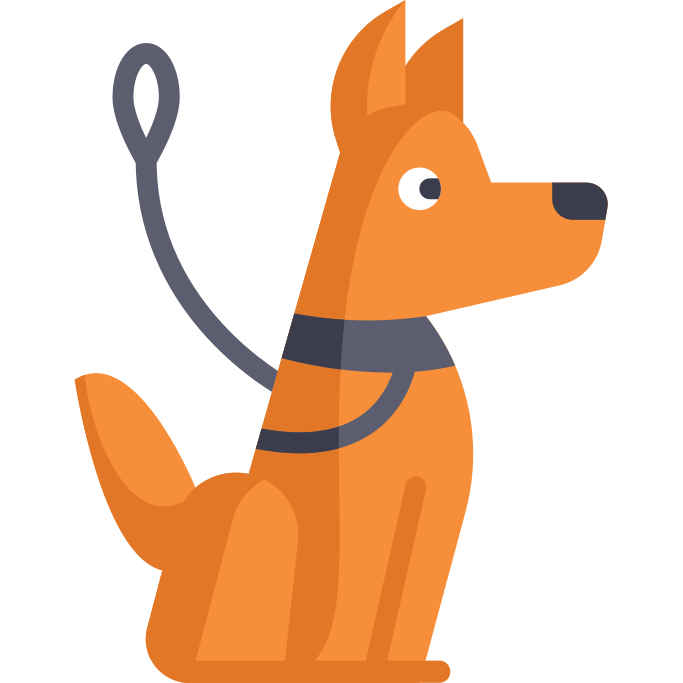
Il tuo cane è molto grande.
Your dog is very big.
Il tuo cane è molto grande, invece il mio cane è piccolissimo.

Andate all'estero?
Are you going abroad?
Cosa fate quest'estate? Andate all'estero?

I negozi sono aperti.
The shops are open.
I negozi sono aperti dalle 8 alle 12.

L'uomo è innamorato.
The man is in love.
Marco è innamorato di Laura.

quindici rose
fifteen roses
Mi ha regalato quindici rose per il mio compleanno.

Cosa fa stasera, signora?
What are you doing tonight, madam?
Cosa fa stasera, signora? Posso invitarla a cena?

Il pranzo è pronto.
Lunch is ready.
Bambini, venite! Il pranzo è pronto.
*Irregular verbs in passato prossimo*
Since you are able to form the past tense already, let us have a look at some verbs that form the past participle *irregulary*:
"aprire - aperto" (to open)
"chiudere - chiuso" (to close)
"dire - detto" (to say)
"essere - stato" (to be)
"fare - fatto" (to do)
"mettere - messo" (to put)
"leggere - letto" (to read)
"prendere - preso" (to take)
"rispondere - risposto" (to respond)
"scrivere - scritto" (to write)
"vincere - vinto" (to win)
"vedere - visto" (to see)

Hai scritto una lettera.
You wrote a letter.
Hai scritto una lettera a tua madre?

hanno chiuso
they closed
Hanno chiuso le finestre perché pioveva troppo.

un ghiaccio
an ice
L'auto ha slittato sulla strada ghiacciata.

Avete visto...?
Have you seen...? (plural)
Avete visto il film?

mettere
to put
Metti il tuo cellulare nella tasca!

queste scarpe
these shoes
Queste scarpe sono le mie scarpe preferite.
Ho preso un caffé.
I had coffee.
Ho preso un caffè veloce con Luca e sono tornato a casa.

Ha aperto la porta.
She opened the door.
Ha aperto la porta, ma non c'era nessuno.
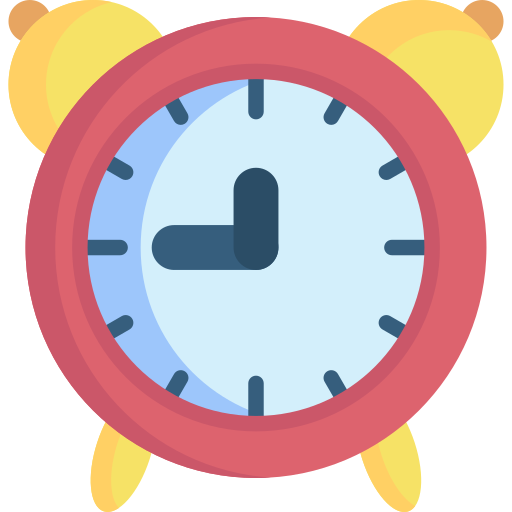
Sono le dodici meno un quarto.
It is 11:45.
Sono le dodici meno un quarto, sono pronto per pranzo.

hanno scritto
they wrote
Hanno scritto una lettera al loro amico.

Avete letto il giornale ieri?
Have you read the newspaper yesterday?
Avete letto il giornale ieri? Hanno scritto di un omicidio avvenuto a Roma.

Mi hai detto solo bugie.
You told me nothing but lies.
Non ti posso credere più, mi hai detto solo bugie.

Ho messo la torta nel forno.
I put the cake in the oven.
Ho messo la torta nel forno. Sarà pronta tra 30 minuti.

Non hanno risposto al telefono.
They did not answer the phone.
Che cosa hanno fatto Luigi e Pietro ieri? Non hanno risposto al telefono.

Il negozio ha aperto tardi.
The shop opened late.
Volevo comprare le mele alla mattina ma il negozio ha aperto tardi.

coraggioso
brave
Mi piace la mia ragazza perché è molto coraggiosa.
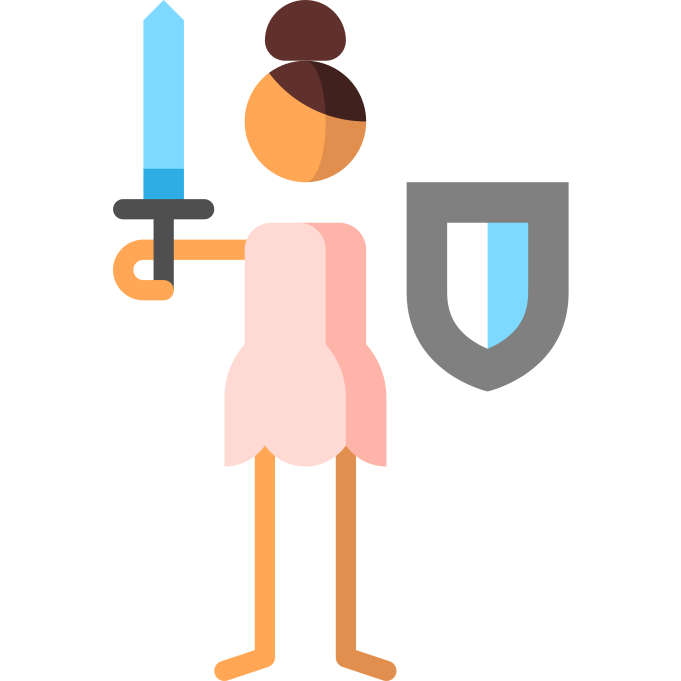
Siete stati molto coraggiosi.
You were very brave.
Grazie per salvarmi, siete stati molto coraggiosi.

la gara
a race
La gara di ciclistica è stata cancellata.

vincere
to win
Ho vinto la gara.

Non ha letto la mia lettera.
He did not read my letter.
Non ha letto la mia lettera e quindi non sa dell'incidente.

Ho vinto la gara.
I won the race.
Sono tanto felice perché ho vinto la gara.

una gonna
a skirt
Ho bisogno di una nuova gonna per l'ufficio.

Abbiamo fatto il letto.
We made the bed.
Abbiamo fatto il letto prima di partire.
*Reflexive verbs II*
You already know a little about how *reflexive verbs* work in Italian from the first course. Now let's look at them in more detail, learn some new ones and learn how to use them correctly.
As has been already said, in Italian, reflexive verbs are formed by adding a reflexive pronoun to *the end of the infinitive verb*. Let's practise this conjugation with the verb "lavarsi" (to wash oneself):
The reflexive pronouns are:
(io) "mi lavo"
(tu) "ti lavi"
(lui/lei) "si lava"
(noi) "ci laviamo"
(voi) "vi lavate"
(loro) "si lavano"
When conjugating a reflexive verb, the reflexive pronoun is placed before the verb, and the verb is conjugated to match the subject.
For example: "Io mi lavo" (I wash myself) or "Io non mi lavo" (I do not wash myself).

lavarsi
to wash oneself
Mi lavo ogni giorno.

Ci siamo lavati le mani.
We washed our hands.
Ci siamo lavati le mani prima di pranzo.
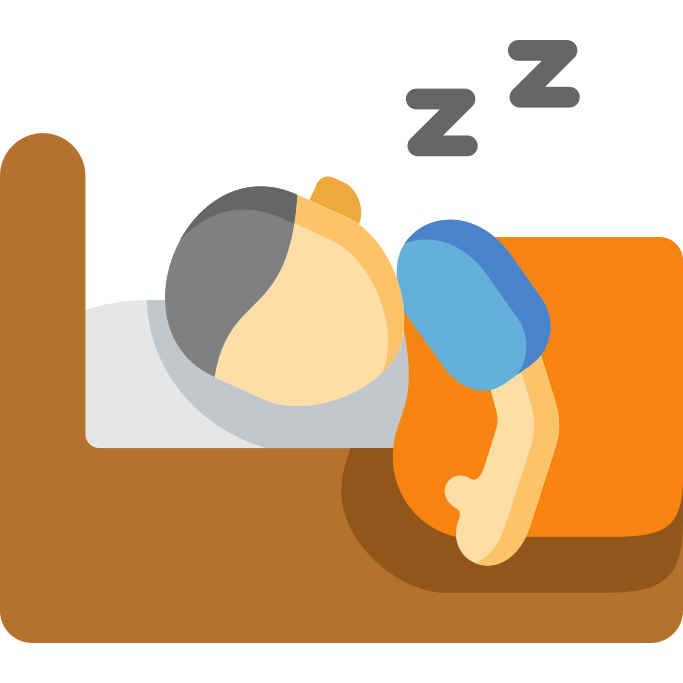
addormentarsi
to fall asleep
Quando guardiamo un film mia moglie si addormenta sempre.

Si addormentano tardi.
They fall asleep late.
Si addormentano tardi quando guardano un film.

svegliarsi
to wake up
Luigi si sveglia alle sei.

alzarsi
to get up
Mi sveglio alle sei ma mi alzo alle sette.
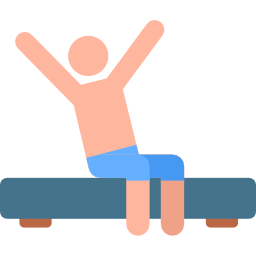
Mi alzo alle sette ogni mattina.
I get up at seven every morning.
Mi alzo alle sette ogni mattina perché devo lavorare.

pettinarsi
to comb one's hair
Mario non si pettina i capelli mai.

Ti pettini sempre con cura.
You always comb your hair carefully.
Ti pettini sempre con cura.

innamorarsi
to fall in love
Romeo si è innamorato di Giulia.

Si innamora spesso.
He often falls in love.
Si innamora spesso di persone affascinanti.

sbagliato
wrong
Bevo la bevanda sbagliata.

vestirsi
to get dressed
Ti vesti quello vestito rosso che mi piace?

Mi vesto sempre di giallo.
I always wear yellow.
Mi vesto sempre di giallo perché mi piace il sole.
*Reflexive verbs in the past tense*
By now you're quite skilled at using reflexive verbs in the present tense. But what about the past? When using "reflexive verbs in passato prossimo", you need to follow a specific structure.
Let's work with the verb "lavarsi" (to wash oneself). The past tense of "lavare" is "lavato".
Now add the *auxiliary verb* "essere" (to be) to form the compound tense. The reflexive pronoun comes before the auxiliary verb.
For example: "sono" (I am) or "sei" (you are). Now you have "sono lavato".
But that's not enough, because we're working with a reflexive verb "lavarsi", right? So you have to add a personal pronoun: "mi", "ti", "si", "ci", ... etc. This will give you the correct form.
For example: "Mi sono lavato." (I washed myself.)
And as always, make sure that the past participle matches with the gender and number of the subject. For example, "mi sono lavato" (I washed myself) for a male subject and "mi sono lavata" (I washed myself) for a female subject.
Remember that reflexive verbs in the *passato prossimo* tense describe actions that someone did to themselves in the past. Practice using them to express various activities and events. Buona fortuna!
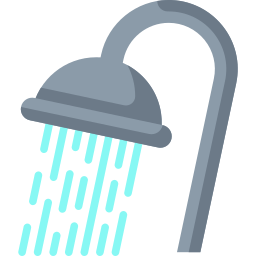
Mi sono lavato.
I washed myself.
Mi sono lavato la mattina, ora vado subito a dormire.

Si sono divertiti.
They enjoyed themselves.
Gli amici si sono divertiti alla festa.

un frigorifero
a refrigerator
Metto sempre il latte nel frigorifero dopo averlo usato per evitare che si rovini.

Vi siete dimenticati.
You have forgotten.
Vi siete dimenticati le chiavi in casa?
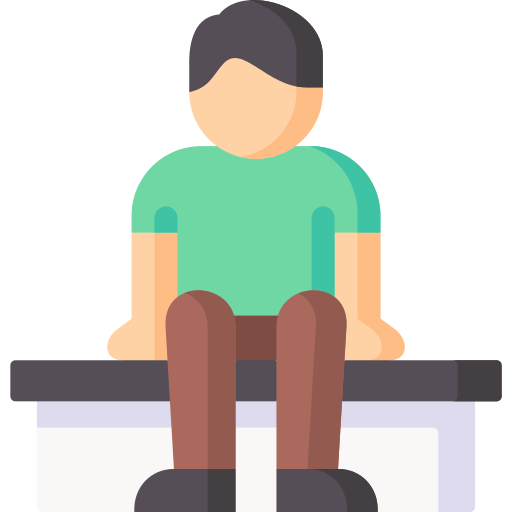
Mi sono seduto.
I sat down.
Mi sono seduto in prima fila alla conferenza.
Ci siamo riposati.
We rested.
Dopo la gara, ci siamo riposati a casa.

questi pantaloni
these trousers
Dovrei prendere questi pantaloni? Ti piaciono?
Mi sono divertita.
I had fun.
Ho ballato e mi sono divertita alla festa.

Si sono sporcati.
They got dirty.
I bambini si sono sporcati di cioccolato.
una camicetta
a blouse
Indossa una camicetta bianca per l'intervista di lavoro.

Vi innamorate facilmente?
Do you fall in love easily?
Vi innamorate facilmente delle persone che non conoscete?

gli uffici importanti
the important offices
Nel centro di Milano, ci sono molti uffici importanti.

Vi siete preparati?
Have you prepared yourselves?
Vi siete preparati per l'incontro importante?
*Direct object pronouns*
Direct object pronouns specifically replace a sentence’s *direct object*. For example, the noun "ragazza" in the sentence "io vedo la ragazza" (I see the girl) is the direct object.
We can replace this direct object "ragazza" by saying "io la vedo" (I see her) where "la" is the direct object pronoun.
The position of the direct object pronoun is also important. We put them *before the conjugated verb*.
Here we have the forms:
"io - mi"
("mi vedi" - you see me)
"tu - ti"
("ti vedo" - I see you)
"lei - la"
("la vedo" - I see her)
"lui - lo"
("lo vedo" - I see him)
"Lei - La" (the formal you)
("La vedo, signorina" - I see you, miss)
"noi - ci"
("ci vedi" - you see us)
"voi - vi"
("vi vedo" - I see you (plural))
"loro - li" (for masculine nouns)
("li vedo" - I see them - guys)
"loro - le" (for feminine nouns)
("le vedo" - I see them - girls)
The negative "non" comes before the pronoun: "Io non ti amo" (I do not love you)

Ti accompagniamo.
We're coming with you.
Aspetta! Ti accompagniamo.

Lo inviti alla festa?
Are you inviting him to the party?
Perché stai parlando con Giulio? Lo inviti alla festa?

Mi hai cercato?
Did you look for me?
Dove sei stato? Mi hai cercato?

accompagniare
to accompany
Ci accompagniate, per favore, ragazzi?
La voglio invitare a cena, signora.
I want to invite you to dinner, ma'am.
La voglio invitare a cena, signora. Ha tempo stasera?

un impiego
an employment
Cerco un nuovo impiego nel settore della comunicazione.

Vi incontro domani, signori.
I will meet you tomorrow, gentlemen.
Grazie per avermi chiamato. Vi incontro domani, signori.

La trovi simpatica?
Do you find her nice?
Odio Laura, ma tu la trovi simpatica, vero?

l'estate
summer
In estate mi piace mangiare gelato

Li conosciamo.
We know them.
Questi ragazzi sono molto bravi, li conosciamo da scuola.

Non la mangiamo.
We do not eat it (f.).
Avete solo la pizza? Non la mangiamo. Non avete il risotto?
la mezzanotte
midnight
Tutti dormono a mezzanotte.
Le ha mangiate tutte.
He ate them (f.) all.
Dove sono le pizzette? Le ha mangiate tutte il mio cane.

Ti amo.
I love you.
Ti amo con ardore.
*Il futuro semplice*
A future simple tense is truly simple to use. There are endings that are added to the verb in the infinitive without its last letter *dormir + ending*
There is just one tricky part:
verbs in the first class *-are* change *a* to *e* and only after that can you add the ending of the future *parlAre: parlEr + ending*
The endings are the same for all the classes of verbs:
"io parlerò" (I'll speak) / "prenderò" (I'll take) / "dormirò" (I'll sleep)
"tu parlerai" (you'll speak) / "prenderai" (you'll take) / "dormirai" (you'll sleep)
"lui/lei parlerà" (he/she will speak) / "prenderà" (he/she will take) / "dormirà" (he/she will sleep)
"noi parleremo" (we'll speak) / "prenderemo" (we'll take) / "dormiremo" (we'll sleep)
"voi parlerete" (you'll speak) / "prenderete" (you'll take) / "dormirete" (you'll sleep)
"loro parleranno" (they'll speak) / "prenderanno" (they'll take) /"dormiranno" (they'll sleep)
The negative is formed by adding "non" in front of the verb.
We use the future simple sense to:
1) talk about the future ("Nell'estate andremo in vacanza.")
2) express incertainty or doubts ("È buio fuori, sembra molto tardi… Che ore saranno?")

Lei dormirà bene oggi.
She will sleep well today.
Lei dormirà bene oggi, ha fatto tante cose.

Quella cravatta lì, quanto costa?
That tie over there, how much is it?
Quella cravatta lì, quanto costa? Quella cravatta rossa costa 20 euro.

finire
to finish, end
Finiremo i compiti più tardi.

Quando finirai il tuo lavoro?
When will you finish your work?
Quando finirai il tuo lavoro? Voglio vederti stasera.

Dormirete almeno sei ore ogni notte?
Will you sleep at least six hours every night?
Dormirete almeno sei ore ogni notte in vacanza? Non dimenticare l'importanza del sonno.
cominciare
to start
La gara comincerà alle otto.

Comincerò la dieta domani.
I will start the diet tomorrow.
Comincerò la dieta domani, oggi è il mio compleanno.

Faremo tutto ciò che possiamo.
We will do everything we can.
Faremo tutto ciò che possiamo, non avere paura.

telefonare
to call
Non mi telefoni mai.
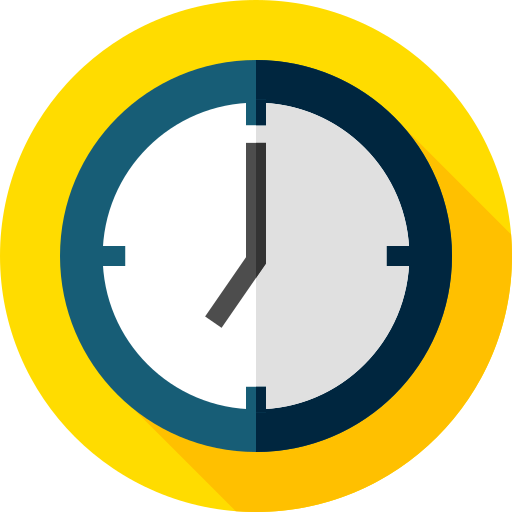
Sono le sette di mattina.
It is 7 am.
Che ore sono? Sono le sette di mattina.
Fra poco telefonerò a Elisa.
I will phone Elisa shortly.
Fra poco telefonerò a Elisa e le dirò le notizie.

fra poco
in a little while, soon
Fra poco ci vedremo!

la primavera
spring
Questa primavera è stata molto piovosa.

Mangeranno alle otto.
They will eat at eight o'clock.
Sono italiani, non hanno fame ancora. Mangeranno alle otto.
*Articulated prepositions*
*Buon lavoro!* Now, you may have noticed that you can work with prepositions much more in Italian than in English. To help you understand, let's have a look at articulated prepositions.
In Italian, "preposizioni articolate" combine prepositions (like "in," "a," "con") and definite articles (such as "il," "la," "i," "le") to form single words. They show specific relationships between nouns and other words in a sentence.
For instance, instead of saying "in the house," you'd use "nella casa" (in + the) to indicate location inside the house.
These combined words depend on the gender and number of the noun they're connected to.
More examples? *Non problema!*
"Al parco." (To the park.)
"A" (to) and "il" (the) combine to form "al" to show direction or movement toward the park.
"Sulla tavola." (On the table.)
"Su" (on) and "la" (the) together make "sulla" to express location on the table.

dall'amico
to the friend
I'm going to the friend's place.
nel caffé
in the coffee
Mi piace mettere lo zucchero nel caffè.

l'autunno
autumn
In autunno le foglie degli alberi cambiano colore.

al mare
to the sea
Andiamo al mare in estate con tutta la famiglia.

un avvocato
a lawyer
L'avvocato difende i clienti in tribunale durante i processi legali.

sulla spiaggia
on the beach
Ci sono tanti ristoranti sulla spiaggia.

negli Stati Uniti
in the United States
Parte della nostra famiglia vive negli Stati Uniti.

cattivo tempo
bad weather
Il cattivo tempo ha causato il rinvio dell'evento.

una camera da letto
a bedroom
I nostri genitori hanno la camera da letto al secondo piano.

nella vetrina
in the showcase
Ho visto un bel vestito nella vetrina al centro.

sul tavolo
on the table
Cosa c'è sul tavolo?
Ci avete visti?
Did you see us?
Abbiamo fatto la verticale, ci avete visti?
*Irregular verbs in futuro semplice*
As always, there are some verbs that form the future tense irregularly, let's have a look at them!
"andare - andrò" (to go)
"avere - avrò" (to have)
"aprire - aprò" (to open)
"dovere - dovrò" (to must)
"essere - sarò" (to be)
"potere - potrò" (to be able to)
"rimanere - rimarrò" (to stay)
"sapere - saprò" (to know)
"vedere - vedrò" (to see)
"venire - verrò" (to come)
"volere - vorrò" (to want)
The time has come to practice them! :)
Verranno alle sette.
They will come at seven o'clock.
Verranno alle sette, potete cominciare senza di loro.
dopodomani
the day after tomorrow
Ci vediamo dopodomani!
una mezz’ora
half an hour
Sono le due e mezzo. (It's 2:30)

Sarai al lavoro dopodomani?
Will you be at work the day after tomorrow?
Sarai al lavoro dopodomani? Ci sarà l'incontro con l'investitore.

Il ristorante aprà alle 9.
The restaurant will open at 9 a.m.
Il ristorante aprà alle 9 domani per i festeggiamenti.

Non avremo tempo.
We will not have time.
Non possiamo venire alla tua festa. Non avremo tempo sabato prossimo.

un parente
a relative
Lucia e Marco sono i miei cugini, siamo parenti.

Ci saranno tutti i miei parenti.
All my relatives will be there.
Non voglio andare alla festa, ci saranno tutti i miei parenti.

Rimarrà sempre a casa della mamma.
He will always stay at his mother's house.
Ha 30 anni e lavora ma rimarrà sempre a casa della mamma.

essere in tempo
to be on time
Io sono sempre in tempo.

Andrete con noi?
Will you go with us?
Andremo alla cinema. Andrete con noi?
*Indirect object pronouns*
Indirect object pronouns specifically replace the *indirect object* of a sentence. For example, the noun "ragazza" in the sentence "io scrivo alla ragazza" (I write to the girl) is the indirect object. If the verb is followed by the preposition *a*, the object is indirect.
We can replace the indirect object "ragazza" with "io le scrivo" (I write to her), where "le" is the indirect object pronoun.
The position of the indirect object pronoun is the same as the direct object pronoun. We put it *before the conjugated verb*.
Here we have the forms:
"io - mi"
("mi scrivi" - I write to me)
"tu - ti"
("ti scrivo" - I write to you)
"lei - le"
("le scrivo" - I write to her)
"lui - gli"
("gli scrivo" - I write to him)
"Lei - Le" (the formal you)
("La scrivo, signorina" - I write to you, Miss)
"noi - ci"
("ci scrivo" - I write to us)
"voi - vi"
("vi scrivo" - I write to you (plural))
"loro - gli" (for masculine and feminine nouns)
("gli scrivo" - I write to them)
The negative "non" comes before the pronoun: "Io non ti scrivo." (I do not write you)

Gli ho telefonato.
I phoned him.
Ho telefonato ai miei genitori. Gli ho telefonato cento volte ma non rispondono.

Vi abbiamo mandato una lettera.
We sent you (Pl.) a letter.
Abbiamo mandato una lettera a voi. - Vi abbiamo mandato una lettera.

un comodino
a bedside table
Metto sempre il mio libro sul comodino prima di dormire.

la verità
the truth
Per dire la verità, non sto bene.

Le ho detto la verità, signore.
I told you the truth, sir.
Ho detto la verità a Lei. - Le ho detto la verità.

nuvoloso
overcast
La settimana prossima sarà molto nuvolosa.

una cartina
a map
Non sono molto brava a leggere la cartina.

Mi hanno dato la cartina.
They gave me the map.
Hanno dato la cartina a me. - Mi hanno dato la cartina.

dare
to give
Mi dai una mano, per favore?
Verrò alle undici e mezzo di sera.
I will come at 11:30 p.m.
Verrò alle undici e mezzo di sera. Non mi aspettate.

Non gli interessa.
He is not interested.
A Marco, gli interessa la musica? No, non gli interessa.

Ci importano i prezzi.
We care about prices.
I prezzi importano a noi. - Ci importano i prezzi.

il prezzo
the price
Il prezzo per la gonna era troppo alto.

piacere
to like
Mi piace la lingua italiana.

Ti piace l'Italia?
Do you like Italy?
A te, ti piace l'Italia? - Ti piace l'Italia?
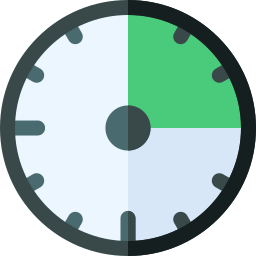
un quarto
a quarter
Sono le sette e un quarto. (It's 7:15)
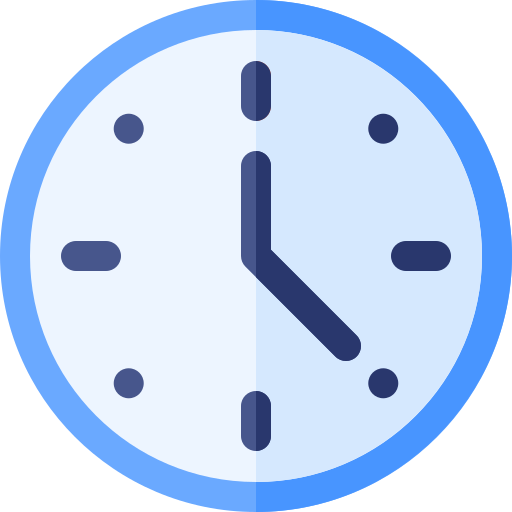
Ci vediamo alle dodici e venti.
See you at 12:20.
Ci vediamo alle dodici e venti. Non vedo l'ora!

un treno
a train
Abbiamo acquistato i biglietti del treno online.

alle sette
at seven o'clock
Ceniamo tutti i giorni alle sette.
*Numbers from 20 to 200*
Now that you know how to use the basic numbers in Italian, let's have a look at how the numbers from 20 to 1000 work.
*20 to 99:*
From 20 to 99, Italian numbers follow a straightforward pattern. You start with the tens place and then add the ones place.
For example: "venti" (20) combines "vent" (twenty) with "i" (and) and the ones place, like "uno" (one), to make "ventuno" (21).
This pattern continues up to "novantanove" (99), where "novanta" (ninety) is combined with "nove" (nine).
That's what you call tens in Italian:
"20 - venti"
"30 - trenta"
"40 - quaranta"
"50 - cinquanta"
"60 - sessanta"
"70 - settanta"
"80 - ottanta"
"90 - novanta"
"100 - cento"
*100 to 199:*
For numbers between 100 and 199, you begin with the word "cento" (hundred) and then add the ones and tens places.
For exampla: "centoventuno" (121) combines "cento" (hundred) with "ventuno" (21).

due cento
two hundred
Ho trovato duecento euro per strada.

trenta
thirty
Ci sono trenta studenti in classe.

un medico
a doctor
Il medico visiterà i suoi pazienti domani mattina.
settanta
seventy
Ho mangiato una pizza con settanta peperoni.

centonovantanove
one hundred and ninety-nine
Questo edificio è alto centonovantanove metri.

uno scrittore
a writer
Lo scrittore pubblica libri e articoli su vari argomenti letterari.
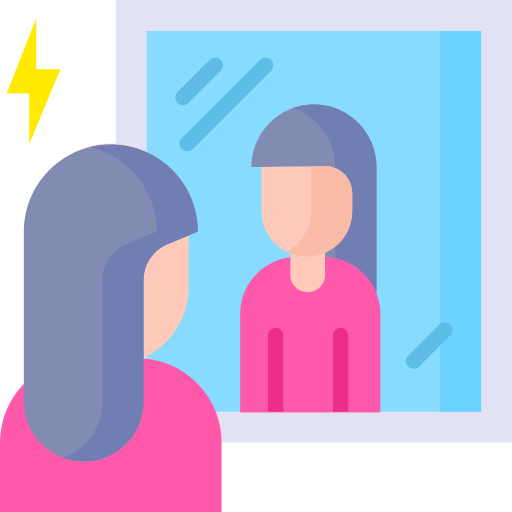
uno specchio
a mirror
Mi guardo sempre allo specchio prima di uscire di casa.

cento
hundred
Questo libro ha cento pagine interessanti.

un maglione
a jumper
Mi piace indossare un maglione caldo in inverno.

trecentosessantadue
three hundred and sixty-two
Il mio amico ha vinto trecentosessantadue euro alla lotteria.

un architetto
an architect
L'architetto progetterà un grattacielo moderno per il centro urbano.

ottantasette
eighty-seven
Mia nonna ha ottantasette anni.
*Talking about weather*
As everywhere, weather is a common topic of conversation in Italy, so it is useful to know how to talk about it in Italian.
Firstly, you can ask: "Che tempo fa oggi?" (What's the weather today?)
*Basic phrases:*
"È" (It is): Used to describe *weather conditions*.
For example: "È caldo" (It's hot).
"Fa" (It is): Use "fa" to describe a specific weather.
E.g.: "Fa freddo" (It's cold).
"C'è" (There is): Say "C'è" for "there is" in time.
For example: "C'è il sole" (It's sunny).
"Piove" (It's raining): From the verb "piovere" (To rain).
For example: "Piove oggi." (It is raining today).
*Seasons:* primavera, estate, autunno and inverno
"In primavera i fiori sbocciano e gli uccelli cantano." (In spring, the flowers bloom and the birds sing.)
"In estate ci godiamo il sole e il mare." (In summer, we enjoy the sun and the sea.)
"In autunno le foglie cambiano colore e cadono dagli alberi." (In autumn, the leaves change color and fall from the trees.)
"In inverno facciamo passeggiate sulla neve e beviamo cioccolata calda." (In winter, we take walks in the snow and drink hot chocolate.)
*Sky, temperature or conditions:*
"Il cielo è sereno e c'è il sole." (The sky is clear and it is sunny).
"Ci sono molte nuvole oggi." (Today there are many clouds).
"Che temperatura fa oggi?" (What is the temperature today?).
Once you know the basics and have built up your vocabulary, you will no longer be afraid of small talk.

sereno
sunny / clear
Il cielo è sereno oggi.

una neve
a snow
La neve rende tutto magico d'inverno.

freddo
cold
Il freddo pungente ci ha sorpresi.

un cappotto
an overcoat
Ho comprato un cappotto nuovo.
caldo
hot
Questo clima caldo è ideale per una giornata al mare.

una temperatura
a temperature
La temperatura è scesa sotto lo zero.

umido
wet
L'aria è molto umida oggi.
cinquantuno
fifty-one
Oggi ho camminato cinquantuno passi in più del solito.

una tempesta
a storm
Una tempesta si avvicina dalla costa.

una cintura
a belt
Ho perso peso e devo comprare una cintura più piccola.

una precipitazione
a precipitation
La precipitazione è prevista per domani.

un vento
a wind
Il vento soffia forte oggi.

piovere
to rain
Oggi sta piovendo molto.

un tuono
a thunder
Ho sentito un tuono, stanotte.

un fulmine
a lightning
Improvvisamente, un fulmine lo colpì.

una sciarfa
a scarf
Mi avvolgo in una sciarpa per proteggermi dal freddo.
nevicare
to snow
Nevica molto oggi.
*Basic conjunctions*
Although you probably already know some of the most common conjunctions because we have been using them since the beginning, I believe it is time to have a look at them in a more orderly way. Here are some of the most commonly used Italian conjunctions:
"e" (and)
"Io e mio fratello andiamo al cinema." (My brother and I are going to the cinema)
"o" (or)
"Preferisci il caffè o il tè?" (Do you prefer coffee or tea?)
"ma" (but)
"Mi piace il gelato, ma sono intollerante al lattosio." (I like ice cream, but I'm lactose intolerant)
"perché" (because)
"Non sono venuto alla festa perché mi sento male." (I didn't come to the party because I'm feeling sick)
"se" (if)
"Se piove, resteremo a casa." (If it rains, we will stay home)
"anche" (also)
"Anche io voglio venire alla festa." (I also want to come to the party)
"quindi" (so/therefore)
"Ho finito il lavoro, quindi posso andare a casa." (I finished work, so I can go home)
Easy, right? Let's practice!

io e te
you and me
Io e te siamo amici da tanto tempo.

Prendete il treno o l'aereo?
Do you take the train or the plane?
Prendete il treno o l'aereo? Io andrei in aereo.

un arcobaleno
a rainbow
Dopo la pioggia, è apparso un bellissimo arcobaleno nel cielo.

il pane e il latte
bread and milk
Ho bisogno di comprare il pane e il latte.

Il film era interessante ma troppo lungo.
The film was interesting, but too long.
Il film era interessante ma troppo lungo, mi ha deluso.

comprare
to buy
Compro sempre il pane fresco dal panettiere.

deludere
to disappoint
Ho deluso i miei genitori quando ho deciso di lasciare l'università.

Non vado in palestra perchè sono stanca.
I'm not going to the gym because I am tired.
Non vado in palestra perché sono stanca. Mi sono addormentata troppo tardi.
una palestra
a gym
Vado in palestra ogni mattina alle 6.

anch'io
me too
Anch'io studio l'italiano, quindi possiamo studiare insieme.

Se hai bisogno di aiuto, chiedimi pure.
If you need help, just ask me.
Se hai bisogno di aiuto, chiedimi pure. Non devi vergognare.

un ombrello
an umbrella
Porto sempre con me un ombrello in caso di pioggia.
Ho preso il treno sbagliato, quindi arriverò in ritardo.
I took the wrong train, so I will be late.
Ho preso il treno sbagliato, quindi arriverò in ritardo. Verrò circa alle 12:30.
*Numbers from 200 to 1000 and beyond*
You may have realised that you already know a lot of Italian numbers and that there's not much more to learn. So let's do it now!
*200 to 999:*
The pattern for numbers between 200 and 999 is similar to English. You start with the hundreds place, add "cento" (hundred), then the tens and ones places.
For example: "duecento" (200) combines "due" (two) with "cento" (hundred).
"Settecentonovantotto" (798) combines "sette" (seven), "cento" (hundred), "novanta" (ninety), and "otto" (eight).
*1000:*
The word for "thousand" in Italian is "mille." You can use it to express one thousand.
*Beyond 1000:*
For numbers greater than 1000, you can use "mille" (thousand) followed by the numbers from 1 to 999.
For instance, "duemila" (2000) is formed by combining "due" (two) with "mila" (thousand). "Trecentomilatrecentoventicinque" (3335) combines "trecento" (three hundred), "mila" (thousand), and "trecentoventicinque" (325).
Great job! Now back to practise!
ottocento
eight hundred
L'aereo è atterrato dopo ottocento chilometri di volo.

duemilacinquecento
two thousand five hundred
Questo pacchetto pesa duemilacinquecento grammi.

una calza
a sock
Le calze colorate sono divertenti da indossare.

fare la spesa
do the shopping
Oggi non ho fatto la spesa perché non avevo tempo.
tremilasettecentosessantacinque
three thousand seven hundred and sixty-five
Ho scritto tremilasettecentosessantacinque parole nel mio saggio.

una cravatta
a tie
Indossa sempre una cravatta al collo quando va al lavoro.

duecentotre
two hundred and three
Ho ricevuto duecentotre messaggi oggi.

cinquecentocinque
five hundred and five
Il mio conto in banca ha cinquecentocinque euro e ventinove centesimi.
pianificare
to plan
Ho pianificato una vacanza in Italia.
seicentuno
six hundred and one
Il museo ospita seicentouno opere d'arte, tra cui cinquanta sculture.

cielo coperto
overcast sky
Era una mattina buia, con nuvole e cielo coperto.

settecentocinque
seven hundred and five
Il volo ha una durata di settecentocinque minuti.

ventoso
windy
È una giornata ventosa.

Il libro ha trecentocinque pagine.
The book has three hundred and five pages.
Il libro ha trecentocinque pagine. È piuttosto lungo per me.
*Formal imperative*
You already learned how to create and use the informal imperative, now let's see how to give orders/requests or directions to people who *you do not know* or to whom you speak in a *formal context*.
*How to form it?* This applies to regular verbs:
Verbs ending with *-ARE* ("parlare")
"Lei parli!" (speak!)
"Lei non parli!" (don't speak!)
Verbs ending with *-ERE, -IRE* ("vedere / dormire")
"Lei risponda! / Lei dorma!" (answer! / sleep!)
"Lei non risponda! / Lei non dorma!" (don't answer! / don't sleep!)
There are of course the *irregulars*:
"Avere" (to have)
"Lei abbia!"
"Essere" (to be)
"Lei sia!"
"Fare" (to do/make)
"Lei faccia!"
"Dare" (to give)
"Lei dia!"
"Dire" (to say)
"Lei dica!"
If you want to make your orders more polite, it is possible to follow them with words such as: "per cortesia/per piacere/La prego" (all translated as please) or "se non disturbo" (if I am not disturbing).

Dia a me!
Give it to me! (formal)
Dia a me il documento, per favore. Devo archiviarlo con gli altri documenti.

Sia paziente.
Be patient. (formal)
Sia paziente, risolveremo il problema.

una nave
a ship
Siamo saliti sulla nave e siamo partiti per l'isola.
Non sia così pessimista.
Don't be so pessimistic. (formal)
Non sia così pessimista, le cose andranno meglio.

chiacchierare
to chat
Stasera voglio solo chiacchierare con le mie amiche.

Beva un po' d'acqua.
Drink some water. (formal)
Beva un po' d'acqua, fa caldo oggi.
Scriva il suo nome qui.
Write your name here. (formal)
Scriva il suo nome qui. Devo registrare il suo nome per il corso di formazione.

una cortesia
a courtesy, kindness
Volevo farti la cortesia di dirtelo.

Parli piano, per cortesia.
Speak softly, please.
Parli piano, per favore. Non voglio disturbare gli altri passeggeri.

piano
slowly, quietly
Parliamo piano, perché i bambini stanno dormendo. Andiamo piano perché ho mal di stomaco.

Non scriva.
Do not write. (formal)
Non scriva su questo foglio, è il documento originale.

un ingegnere
an engineer
L'ingegnere costruirà un nuovo ponte nella città.
un foglio
a sheet
Potete girare il foglio e cominciare a scrivere.

fare attenzione
to be careful, to pay attention
Ricordate di fare attenzione a zucchero bianco, lieviti e farine raffinate.
un guanto
a glove
I guanti sono essenziali per proteggere le mani dal freddo.
Per piacere, faccia attenzione!
Please, be careful! (formal)
Faccia attenzione! Questo è un incrocio pericoloso.

un'incrocio
an intersection
Devi girare a sinistra all'incrocio e poi continuare dritto per un chilometro.

Non venga.
Don't come. (formal)
Non venga in ufficio oggi, è chiuso per lavori di ristrutturazione.
*Ordinals in Italian*
Ordinals are *numbers that express the order or sequence of things*. In Italian they are used to describe the position of something in a series. Here is a list of the basic ordinals:
"primo" = 1°
"secondo" = 2°
"terzo" = 3°
"quarto" = 4°
"quinto" = 5°
"sesto" = 6°
"settimo" = 7°
"ottavo" = 8°
"nono" = 9°
"decimo" = 10°
"undicesimo" = 11°
"dodicesimo" = 12°
"tredicesimo" = 13°
"quattordicesimo" = 14°
"quindicesimo" = 15°
"sedicesimo" = 16°
"diciassettesimo" = 17°
"diciottesimo" = 18°
"diciannovesimo" = 19°
"ventesimo" = 20
"ventunesimo" = 21°
And like many other Italian things, ordinals must agree in gender and number with the noun they refer to. This means that the ending of the ordinal can change depending on whether the noun is masculine, feminine, singular or plural.
For example: "Primo piatto." (First course.) "Seconda lezione." (Second course.)
primo piano
first floor
Il nostro apartamento è al primo piano.

rispondere
to reply
Posso rispondere alla tua domanda?

settimo compleanno
seventh birthday
Il nostro cane compie il suo settimo compleanno oggi.

terzo anno
third year
È il terzo anno che vado in vacanza in Spagna.

un'attrice
an actress
L'attrice recita in film, serie televisive e produzioni teatrali.

quinto libro
fifth book
Ho completato il mio quinto libro questo mese.
dodicesimo mese
twelfth month
Il dodicesimo mese dell'anno è dicembre.

sedicesimo anniversario
sixteenth anniversary
Oggi è il sedicesimo anniversario della nostra azienda.

nuotare
to swim
Tu nuoti molto bene.

gestire
to handle
La società deve gestire le sue risorse in modo efficiente.

ventesima volta
twentieth time
È la mia ventesima volta a Parigi. È la mia città preferita.
trentesimo giorno
thirtieth day
Oggi è il trentesimo giorno del mese.

le mutande
underpants
Non dimenticare di cambiare le mutande ogni giorno.
*Dates in Italian*
Writing dates in Italian follows a specific format that may differ slightly from English. Here's a simple guide to help you understand how to write dates in Italian.
*Day-Month-Year Format:* In Italian, the standard format for writing dates is day-month-year (giorno-mese-anno). For example: January 1st, 2023, is written as "1 gennaio 2023."
In writing, months are often *abbreviated*:
"gennaio (Gen.)" = January
"febbraio (Feb.)" = February
"marzo (Mar.)" = March
"aprile (Apr.)" = April
"maggio (Mag.)" = May
"giugno (Giu.)" = June
"luglio (Lug.)" = July
"agosto (Ago.)" = August
"settembre (Sett.)" = September
"ottobre (Ott.)" = October
"novembre (Nov.)" = November
"dicembre (Dic.)" = December
When writing the *day of the month*, use ordinal numbers (e.g., "1st," "2nd," "3rd") which you learned in the previous lesson.
For example: "15 maggio 2023" or "15 Mag. 2023." (May 15th, 2023)

gennaio
January
Oggi è il 1 gennaio 2023, il Capodanno.

il 5 marzo
on March 5th
Partiremo il 5 marzo 2024 per le vacanze.

Il mio compleanno è il 10 febbraio.
My birthday is on February 10th.
Il mio compleanno è il 10 febbraio. Ho ventotto anni.

prendere un caffè
to have a coffee
Mi piace prendere un caffè al bar con gli amici.
dicembre
December
Il Natale si festeggia il 25 dicembre.

i pantaloni
trousers
Ho bisogno di comprare dei pantaloni nuovi.

giugno
June
La conferenza avrà luogo il 15 giugno 2024.
un soggiorno
a living room
Abbiamo un grande soggiorno con camino.

un inverno
a winter
In inverno spesso nevica qui.

scherzare
to joke
Non scherzare con me!
maggio
May
La data di inizio del nuovo progetto è il 25 maggio 2025.
ventiquattresimo episodio
twenty-fourth episode
Questo è il ventiquattresimo episodio della serie.
*Expressing needs*
Now, that you're already an accomplished speaker, it's also neccesary to know how to express your needs. And this works a little differently in Italian.
You can express your need with the phrase "avere bisogno" (to have a need). All you have to do is to use the correct conjugation of the verb "avere", and a preposition "di". By saying "ho bisogno di..." you're expressing something like "I have a need for...".
For example:
"Ho bisogno di acqua." (I need water.)
"Abbiamo bisogno di mangiare." (We need to eat.)
"Ho bisogno di parlarti un minuto." (I need to talk to you for a minute.)
"Ha bisogno di sapere cosa succede." (She needs to know what's going on.)
Ho fame.
I am hungry.
Ho fame. Quando manegremo?

un volo
a flight
Ho preso il volo per Parigi la scorsa settimana.

una valigia
a suitcase
Hai già preparato la valigia per il viaggio?

Lei ha bisogno di riposarsi.
She needs to rest.
Lei ha bisogno di riposarsi. È andata a letto.

Loro hanno bisogno di parlare con te.
They need to talk to you.
Loro hanno bisogno di parlare con te. Quando hai tempo?

una giacca
a jacket
Ho dimenticato la giacca a casa, fa troppo freddo.

il 25 aprile
25th April
Il 25 aprile è la Festa della Liberazione in Italia.
Ho bisogno di una pausa.
I need a break.
Ho lavorato molto, ho bisogno di una pausa.
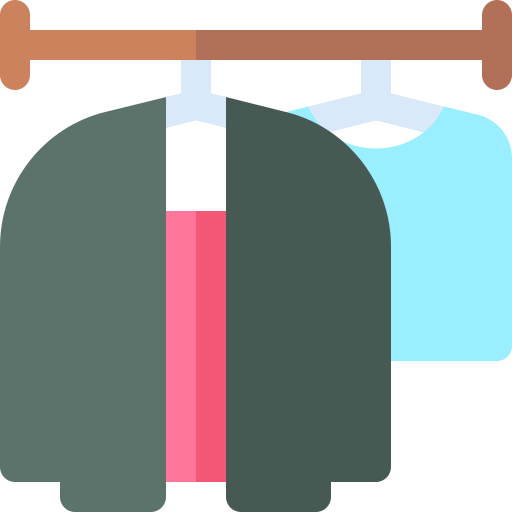
un armadio
a wardrobe
Ho bisogno di un armadio più grande per sistemare tutti i miei vestiti.

Noi abbiamo bisogno di andare al supermercato.
We need to go to the supermarket.
Noi abbiamo bisogno di andare al supermercato. Qual è il più vicino?

fare una passeggiata
to take a walk
Ho bisogno di fare una passeggiata per rilassarmi.
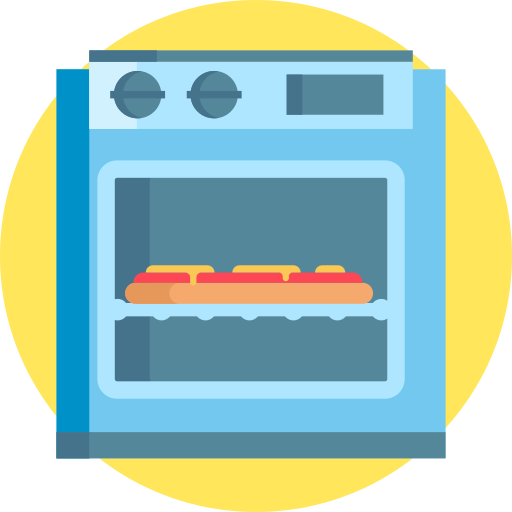
un forno
an oven
Il profumo dei biscotti appena sfornati dal forno riempie la casa.
Avete bisogno di aiuto?
Do you need help?
Avete bisogno di aiuto? Sembrate persi.

truccarsi
to put on makeup
Mi trucco ogni mattina prima di uscire di casa.
passare il tempo
to spend time
Passo il tempo libero leggendo libri o guardando film.

Ho bisogno di un nuovo telefono.
I need a new phone.
Ho bisogno di un nuovo telefono ma non ho i soldi.
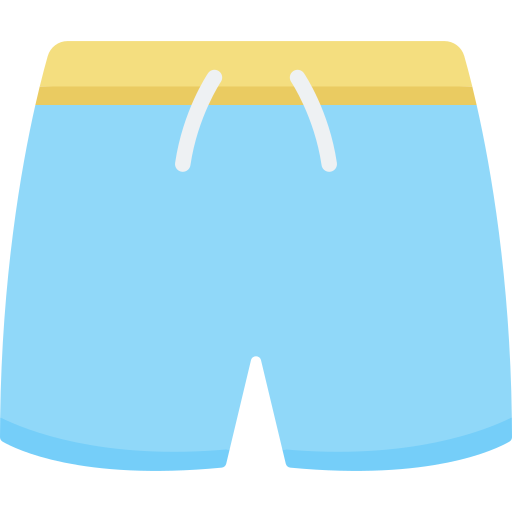
i pantaloni corti
shorts
In estate, mi piace indossare pantaloni corti per stare fresco.