Course for absolute beginners II.French words
by DuoCards
*French indefinite articles*
As you already know, French indefinite article has three forms: *un/une/des*, which are used depending *on the gender and number they are referring to*.
masculine: "un"
feminine: "une"
plural: "des"
*But in what situations do we use French indefinite articles?*
- We use them when speaking about general nouns that are not clearly defined by the speaker.
- They are also used to refer to just one of something.
- They correspond to the English articles 'a', 'an', and 'some'.
Let's practice it a bit more!

une belle fille
a beautiful girl
Elle est une belle fille.

gentil (m)
kind / nice
Delphine est gentille et intelligente.

C'est une femme.
She is a woman.

C'est un gentil garçon.
He is a kind boy.
Il est très gentil.

une femme et un homme
a woman and a man
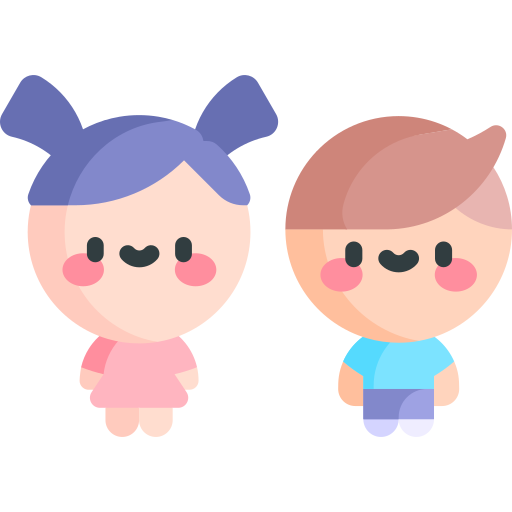
Nous sommes des enfants.
We are children.

acheter
buy
J'achète une baguette.

Achète des oignons.
Buy some onions.

Je mange un yaourt.
I'm eating a yoghurt.

une voiture
a car

J'ai une petite voiture.
I have a small car.

J’ai une bonne idée.
I've got a good idea.
J’ai une bonne idée. Écoute !

Tu veux une orange ?
Would you like an orange?
Tu veux une orange ? Non, merci.
*Definite articles:*
Let's also revise the French definite article!
Masculine:
"Le" - le garçon
Feminine:
"La" - la maison
Before the *vowel* or *mute h* we use in singular:
"l'" - l'animal; l'amie; l'hôpital

La femme est belle.
The woman is beautiful.
La femme blonde est tres belle.

un gentil garçon et de gentils parents
a nice boy and nice parents

le garçon a un chien
the boy has a dog
Le garçon a un grand chien.

le chat et le cheval
the cat and the horse
Le chat et le cheval sont des animaux différents.

les enfants aiment les animaux
the children love animals
En général, les enfants aiment les animaux.

Les animaux sont mignons.
The animals are cute.

le cheval est grand
the horse is big

L'hôpital dans notre ville est grand.
The hospital in our town is big.
*The most important French verb TO BE*
*See below the personal pronouns first*
I ... "je / j'"
You ... "tu"
he/she ... "il/elle"
We ... "nous"
You ... "vous"
They (m/f) ... "ils/elles"
*Now have a look at present tense of the verb TO BE* "être" *used with the personal pronouns*
"je suis"
"tu es"
"il est" "elle est" "on est"
"nous sommes"
"vous êtes"
"ils sont"

Je suis une fille.
I'm a girl.
Je suis allemand.

Tu es un garçon.
You are a boy. (informal)
Tu es un garçon intelligent.

C'est un homme.
He is a man.
Il est anglais.

Elle est une femme.
She is a woman.
Elle est portugaise.

Nous sommes des parents.
We are parents.
Nous sommes des parents responsables.

Vous êtes des enfants.
You are kids. (plural)
Vous êtes chinois.

Ils sont une famille
They are a familly.
Ils sont une famille merveilleuse.

Elles sont des femmes.
They are women.
Elles sont des femmes gentilles.

intelligent
intelligent
Mon père est intelligent, ma mère est intelligente.
*The second most important verb in French is TO HAVE*
"Avoir" most often expresses *ownership* or *possession*. It is also used to talk about somebody's *age*.
"j'ai"
"tu as"
"il a" "elle a"
"nous avons"
"vous avez"
"ils ont"

avoir
to have

une pomme
an apple

J'ai une pomme.
I have an apple.
J'ai une pomme.

J'ai une fille.
I have a daughter.
Tu as des enfants.
You have kids.

un fils
a son
Mon fils est très intelligent.

Elle a deux fils.
She has two sons.

Nous avons un père.
We have a father.

Vous avez une mère.
You (all) have a mother.

Ils ont des parents.
They have parents.
Ils ont des parents merveilleux.

Elles ont un frère.
They (F) have one brother.

Ma mère a trois enfants.
My mother has three kids.

J'ai deux soeurs.
I have two sisters.
J'ai deux sœurs et un frère.
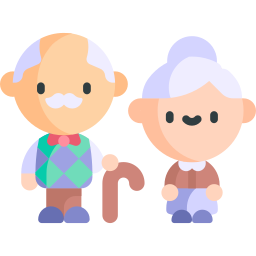
J'ai des grands-parents.
I have grandparents.
*French verbs ending in -ER*
*In French, the I. verb class endings (for verbs ending with -ER) are the following:*
je... *-e*
tu... *-es*
il... *-e*
nous... *-ons*
vous... *-ez*
ils/elles... *-ont*
*... and see now how they are used with an example verb:*
"Parler" (speak)
"Je parle"
"Tu parles"
"Il / Elle / On parle"
"Nous parlons"
"Vous parlez"
"Ils / Elles parlent"

parler
to speak
Elle parle le français et l’anglais.

Il parle français.
He speaks French.
Il parle français couramment.

regarder
to watch; to look at
Elle regarde les enfants qui s’amusent.

Elle regarde sa mère.
She is looking at her mum.
Elle regarde sa mère partir au travail.

aimer
to like / to love
Laurence aime son frère.

Il aime sa grand-mère.
He loves his grandmother.

adorer
to love / to adore
Nous adorons ce film.

Elle aime son copain.
She loves her boyfriend.

jouer
to play
Il joue au foot.

jouer au football
to play football

chercher
to search/to pick up
Elle cherche un emploi.

Je cherche mon portable.
I am looking for my phone.
Est-ce que tu peux m'aider à chercher mon portable ?

trouver
to find
Je trouve que cette chanson est très belle.

la solution
the solution
La solution est évidente.

J'ai trouvé la solution.
I have found the solution.

étudier
to study
Elle étudie à l'université.
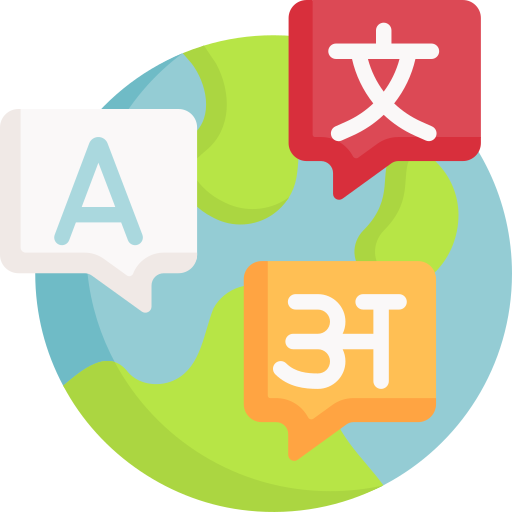
les langues étrangères
the foreign languages
J'apprends les langues étrangères.

Ils étudient les langues étrangères.
They study foreign languages.
Ils étudient l'anglais et l'espagnol à l'école.
*The French preposition TO*
The French preposition "à" (to) changes to *au* when followed by masculine nouns and pronouns:
"au cinéma" (to the cinema)
"au théâtre" (at the theatre)
*à* plus *le* = "au"

Il est au cinéma.
He is in the cinema.
Il est au cinéma avec ses amis.

Je suis à la maison.
I am at home.
Je suis à la maison avec ma famille.

Ils sont à l'école.
They are in school.
Ils sont à l'école primaire.

l'université (f)
the university
Je suis étudiant à l'université de Montréal.
Elle étudie à l'université.
She is studying at university.

la ville
the city
Tu habites dans quelle ville ?

habiter
to live
J'habite à Marseille.

Elles habitent à Bruxelles.
They live in Brussels.

Il habite au Havre.
He lives in The Havre.

Ils vont au zoo.
They are going to the zoo.
*The French preposition FROM*
In French, the preposition "de" changes its form depending on whether it is followed by a masculine or a feminine noun. The form changes as follows:
de + l' = "de l'"
de + la = "de la"
de + le = "du"
de + les = "des"

faire du sport
to play sports
Il fait du sport ce matin.

vouloir
to want
Je veux une pizza.

l'eau
the water
Je nage dans l'eau.

Nous voulons de l'eau.
We want some water.
Nous voulons de l'eau fraîche.

Je veux une tasse de café.
I want a cup of coffee.

la glace
the ice-cream
Je vais manger une glace.

L'enfant veut de la glace.
The child wants ice cream.
Je vais acheter de la glace pour les enfants.
Elle aime parler des langues étrangères.
She likes to speak foreign languages.
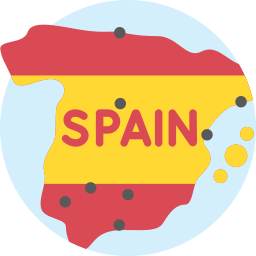
Il vient d'Espagne.
He comes from Spain.

Cela me fait du bien.
This makes me feel good.
*Another very important French verb - DO*
*"Faire" is an irregular verb, see how it is conjugated:*
"je fais"
"tu fais"
"il fait"
"nous faisons"
"vous faites"
"ils font"

faire
to do
Je fais mes devoirs.

le sport
the sport
Le sport est bon pour la santé.

Tu fais du sport?
Do you do sports?

Je fais du jogging.
I go jogging.

Elle fait du yoga.
She does yoga.

Il fait de la natation.
He swims.
Il fait de la natation tous les jours.

Nous faisons de l'escalade.
We are climbing.

Vous faites du ski.
You ski. (plural)

Elles font de la danse.
They do dance. (F)

Ils font des arts martiaux.
They do martial arts.
*Referring to people and objects saying THIS/THAT IS and THESE/THOSE ARE*
The form *C'est* and *Ce sont* is used to identify or present something or someone. If the person or object we are referring to is singular, we use "C'est". If the subject is plural, we use "Ce sont".

C'est super!
That's great!
C'est super de te revoir!

C'est intéressant!
It's interesting!

C'est mon ami Pierre.
This is my friend Pierre.

C'est mon amie Julie.
This is my friend Julie.

C'est l'ami de ma sœur.
It's my sister's friend.
C'est l'ami de ma sœur. Il est très gentil.

C'est la cousine de Jean.
This (She) is Jean's cousin.

Ce sont les cousins de Marie.
These are Marie's cousins.

Ce sont les collègues de Charlotte.
These are Charlotte's colleagues.

Ce sont les chats de ma mère.
These are my mother's cats.
*Basic numbers 1 to 20*
See how to write and pronounce the first twenty numbers in French

un
one

deux
two
Deux heures.

trois
three
Trois heures.

quatre
four

cinq
five
six
six
sept
seven
huit
eight
Huit heures.

neuf
nine
Neuf heures.

dix
ten
dix ans

onze
eleven

douze
twelve
Douze heures.

treize
thirteen
quatorze
fourteen
Quatorze heures.

quinze
fifteen

seize
sixteen

dix-sept
seventeen
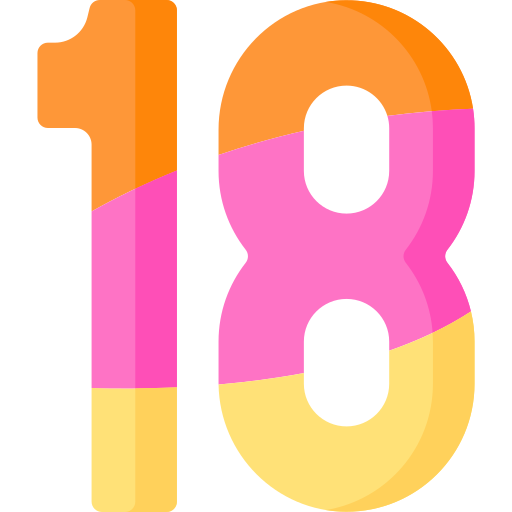
dix-huit
eighteen

dix-neuf
nineteen
Dix-neuf enfants.

vingt
twenty
Vingt heures.

J'ai dix-neuf ans.
I am nineteen years old.

Ma sœur a quinze ans.
My sister is fifteen years old.

Mon frère a quatorze ans.
My brother is fourteen years old.

Mon cousin a treize ans.
My cousin is thirteen years old.
*Basic negative form*
To create a negative sentence in French, the basic structure is: *ne + verb + pas*.
In simple sentences, we always put *ne* in front of the verb and *pas* right after it. However, in spoken French, you will often not hear the *ne*, as the French don't use it in fluent French, so always listen for the *pas* in their negative sentences.
Notice also, that in front of a verb starting with a vowel, the "ne" is shortened to *n'*
Let's have a look at a few examples now.

Je ne trouve pas de solution.
I can't find a solution.

Ma sœur n'a pas huit ans.
My sister is not yet eight.

Elle ne fait pas de sport.
She doesn't do sports.

Il n'a pas de cousin.
He has no cousin.

Nous n'habitons pas en France.
We do not live in France.

Elle n'est pas française.
She is not French.

Ma grand-mère n'aime pas le cinéma.
My grandmother doesn't like the cinema.

Je n'aime pas le sport.
I don't like sport.

Je n'ai pas d'animaux de compagnie.
I don't have any pets.
*French demonstrative adjectives*
*Demonstrative adjectives* point out or specify a *particular person, object, or idea*.
French demonstrative adjectives, "ce/cette/ces" always *precede a noun* and *agree with the noun in gender and in number*. "Ce" becomes "cet" before masculine singular nouns that start with a *vowel* or *mute h*. Plural "ces" is the same for masculine and feminine.
*masculine singular followed by a consonant...CE:*
"ce garçon" "ce livre"
*masculine singular followed by a vowel... CET:*
"cet ami" "cet homme"
*feminine singular... CETTE:*
"cette fille" "cette chaise" "cette adresse"
*masculine and feminine plural... CES:*
"ces parents" "ces livres" "ces chaises" "ces hommes" "ces addresses"
The choice of the correct adjective "ce/cet/cette/ces" depends on what follows - a masculine vs. feminine noun; a singular vs. plural, starting with a vowel vs. a consonant? Let's have a look...

Cet homme est mon oncle.
This man is my uncle.

Cette dame est ma grand-mère.
This lady is my grandmother.
Ces enfants sont les fils de Marie.
These children are the sons of Mary.

Ce monsieur est le père de Julie.
This man is Julie's father.

Cette fille est la copine de Simon.
This girl is Simon's girlfriend.

Ces amies ne parlent pas anglais.
These friends (F) do not speak English.
Ces amies ne parlent pas français.
Ce garçon joue au foot.
This boy plays football.
Je regarde cette femme.
I look at this woman.

Ce livre est intéressant.
This book is interesting.

Cet homme est mon père.
This man is my father.

Ces gens habitent à Paris.
These people live in Paris.

Ces maisons sont belles.
These houses are beautiful.