
Course for beginners (A1/A2)English words
by DuoCards
*Welcome to the Beginners Course!*
This course will guide you through the basics and help you start using English in everyday situations! You’ll learn how to form sentences, use essential tenses, and expand your vocabulary with practical words you can use every day.
Before we dive in, let’s warm up with a few useful words and phrases to get you started!

to change
I need to change my clothes.
to improve
I want to improve my English skills.

I want to improve my English.
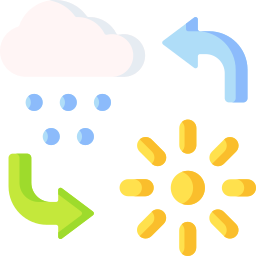
The weather can change quickly.
to forget
She forgot to call her friend.
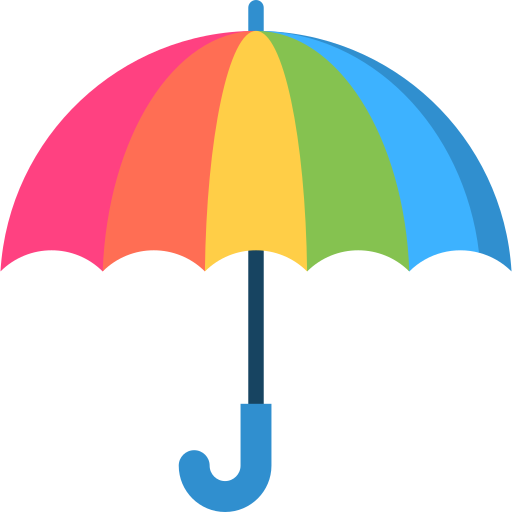
Don’t forget your umbrella.
an umbrella
I always carry an umbrella in my bag.
I changed my job last year.
I always forget my keys.
to prefer
I prefer tea to coffee.
to need
I need a pencil to write my homework.
I need help.
I need help with my math homework.
*Welcome to the beginner course!*
Let's start with the verb "can". Use "can" to talk about a *possibility* or *ability.* Always use can with another verb.
You can use "can" to form short answers like in this example:
"Can you speak English?" - "Yes, I can."
"I can" = I can do something. / I know something is possible for me, for example: "I can dance very well."

I can do it!
I have studied hard for the exam, and I can do it!

Can you?
Can you do that for me?

Yes, you can!
Can I do it? - Yes, you can!

to repeat
Can you repeat it after me?
I can't speak Spanish.
I can't speak Spanish very well.
They can sing.
My friends can sing all the popular songs.
Can you see
Can you see the man over there?
*Can in negative*
To make a negative, add "not" after can to make one word (can not = can't).
Let's learn new verbs!
"to repeat"
"to sing"
"to swim"
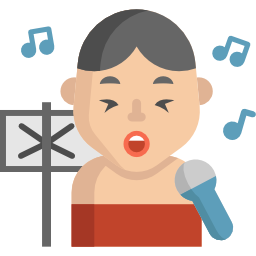
He can't sing.

to sing
I love to sing.
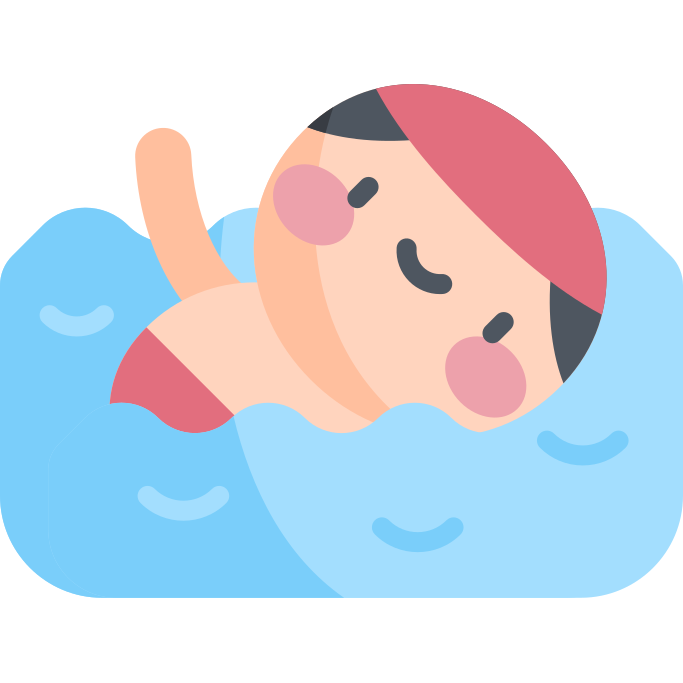
to swim

He can't swim.
He can't swim, so he prefers to stay by the pool.
Can you repeat it, please?
They can swim, but I can't.
*Object pronouns*
An object pronoun refers to the person or thing *affected by an action.* It normally comes after a verb or preposition.
For example:
"I spend a lot of time with my family. I love them so much." (*Them* replaces *my family*.)
The object pronouns are:
"me"
"you"
"him"
"her"
"us"
"them"
I love you.
I love you very much.

Can you see him?
Can you see him standing over there?
to tell
Can you tell me what you think?
Tell me.
Tell me what you see.

Tell me what you think.
Tell me what you think about the idea.
to ask
People always ask questions.
about
I am thinking about you.
Ask her about them.
Ask her about her day.
The book is about us.
They made a movie about us.
*Present continuous tense*
We use the present continuous tense when we talk about something that is happening right now.
Use the auxiliary verb "to be" in its correct form and add the ending *-ing* to the verb.
"He is sleeping."
"You are eating."
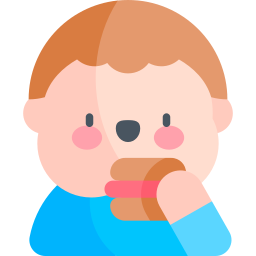
My brother is eating.
My brother is eating a pizza.
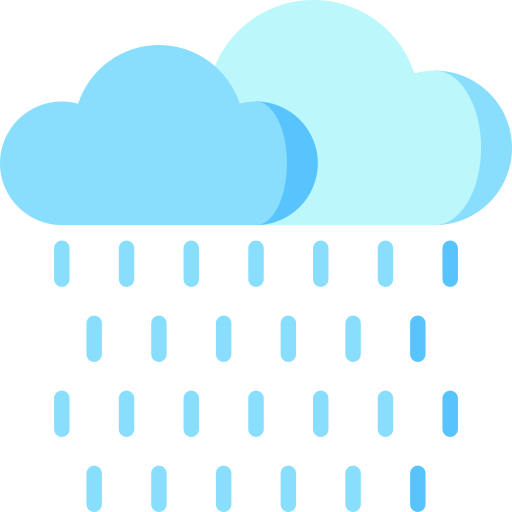
It is raining.
It is raining today.
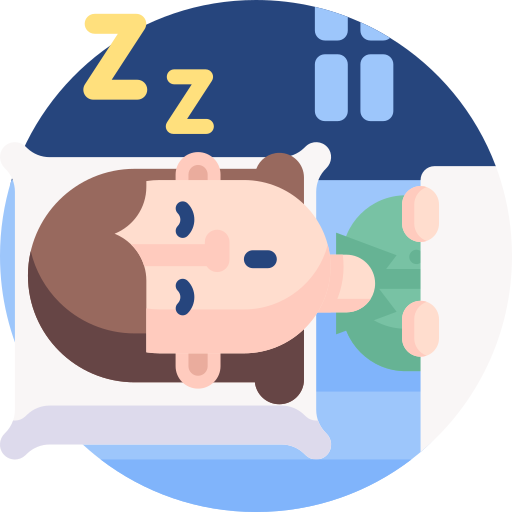
to sleep
She is sleeping.
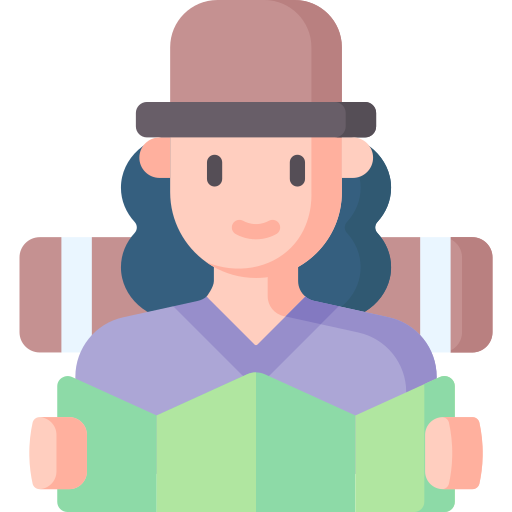
to travel
I love to travel to new places.
They are traveling.
to fight
My brothers are fighting.
My brothers are fighting.
My brothers are fighting.

to draw
He can draw a map.

the picture
The picture is beautiful.
My children are drawing a picture.
She is drawing a picture.
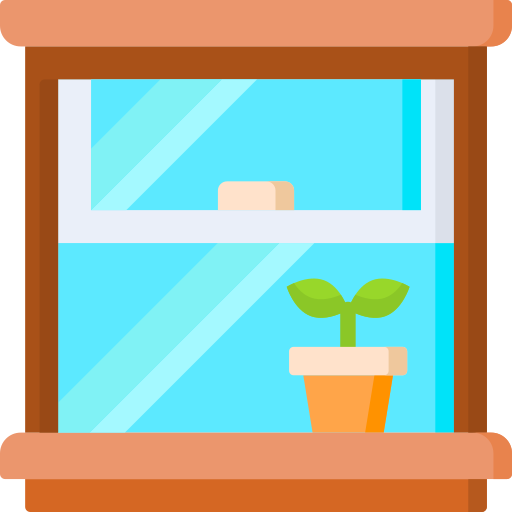
the window
Open the window, please.
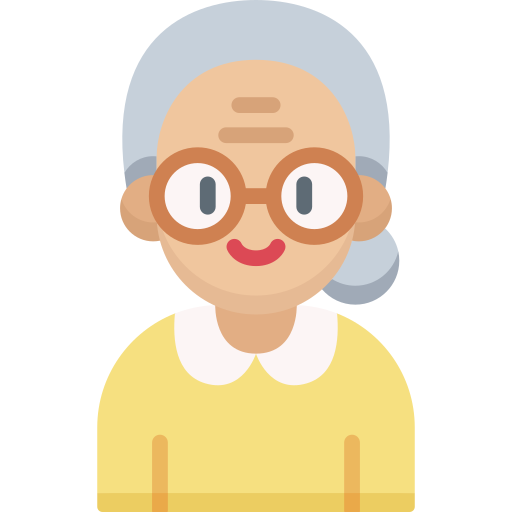
grandma
My grandma is very nice.
to look out of the window
My grandma is looking out of the window
*Endings sometimes change*
Sometimes, the ending of the verb changes in the present continuous tense.
When a verb ends in *e*, drop the *e* and add *-ing*: "make" - "making"
When a *one-syllable verb ends in vowel + consonant*, double the final consonant and add *ing*: "swim" - "swimming"
When a verb ends in *vowel + consonant with stress on the final syllable*, double the consonant and add *ing*: "begin" - "beginning"
Do *not double the consonant* of words with *more than one syllable* if the stress is not on the final syllable: "remember" - "remembering"

We are making progress!
Are we making progress?
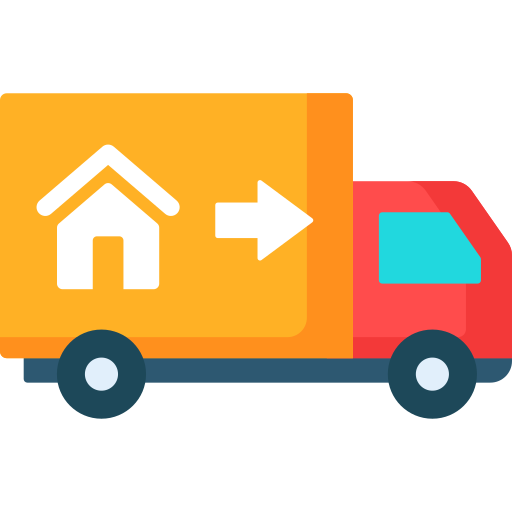
to move
He is moving to Spain.
We are moving.
We are moving next summer.
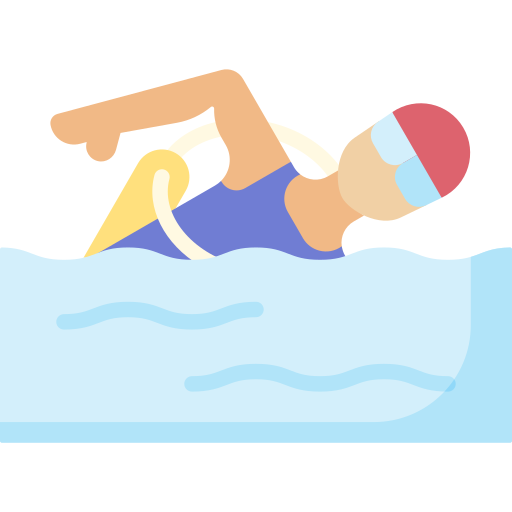
She is swimming.
She is swimming in the sea.

to begin with
We should begin with the hardest task.

I'm beginning with this.
I'm beginning with this task.
to get worse
The weather is starting to get worse.

It's getting worse.
Unfortunately, it's getting worse.
*Present continuous - negation and question*
To form negation, place "not" before the main verb.
"He is not sleeping."
"You are not eating."
Make a question by putting *am, is,* or *are* *in front of the subject*.
"Is he sleeping?"
"Are you eating?"
He is not sleeping.
He is not sleeping right now.

right now
The children aren't sleeping right now.

to shop
I am not shopping right now.
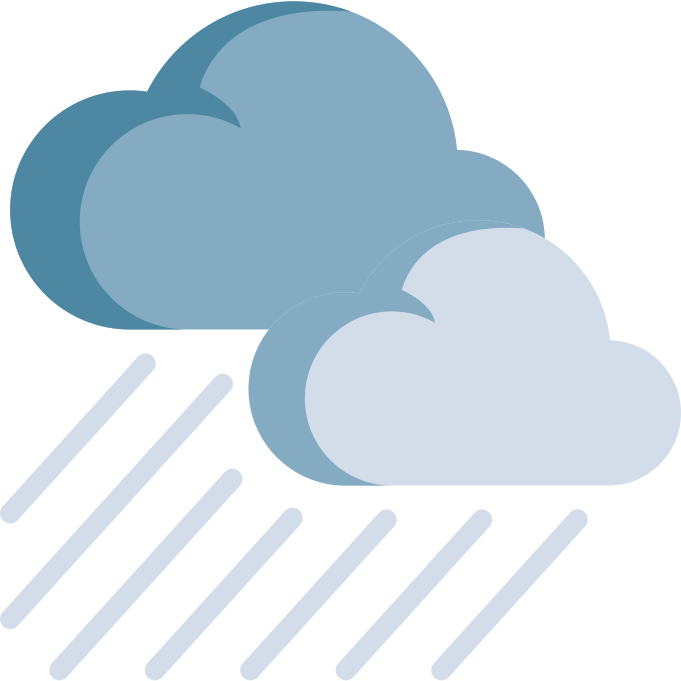
Is it raining?
Is it raining there?
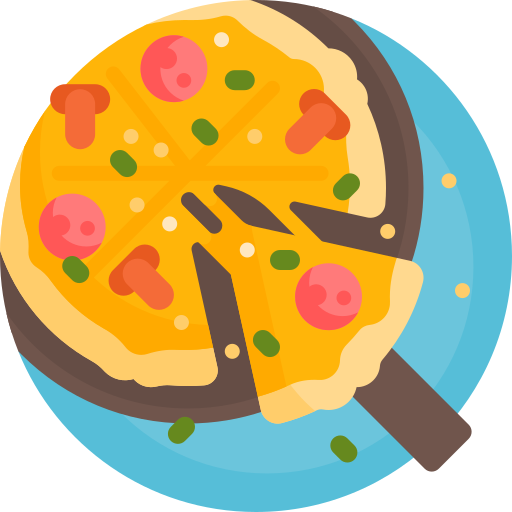
to make a pizza
I'm not making a pizza, I'm making pasta.

Is he making progress?
Is she getting worse?
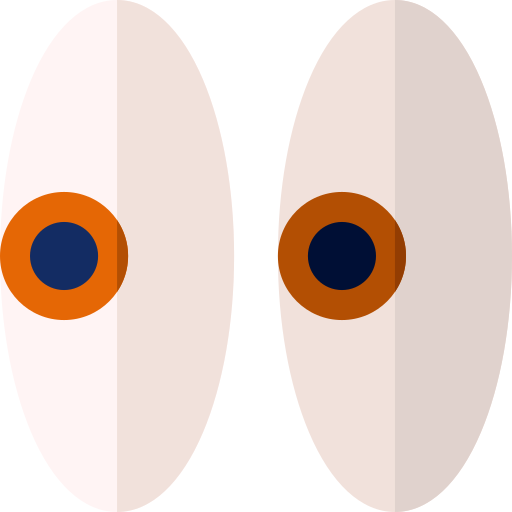
to look
Are you looking?
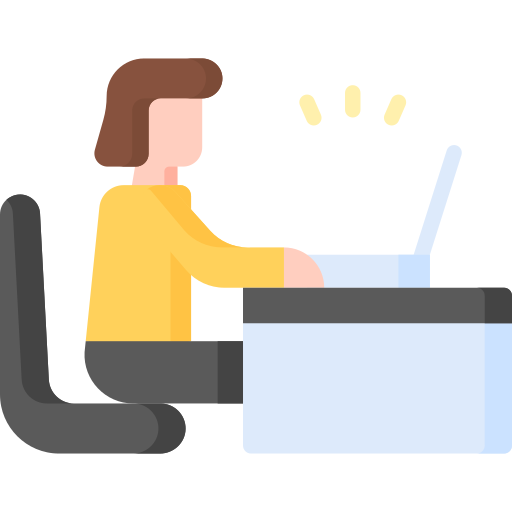
to work
They are not working.
Are you beginning right now?
*Present simple tense vs. Present continuous tense*
You already know that we use the present simple tense when we talk about *something repetitive* or about our *habits* and *what we like*.
"I go to the gym every week."
"I like pizza."
We use the *present continuous tense* when we talk about something that is happening *right now.*
Signal words with present continuous: "right now", "now", "at the moment", "today"
"He is singing right now."
"We are at school at the moment."
I like these shoes.
I've been wearing these shoes for months and I still like them.
every day
I go to school every day.
Do you go to work every day? - Yes l go to work every day.

to study for an exam
I am not studying for the exam now.

a lot
Do you study a lot? - Yes I study lot.

to listen
I like to listen to my favorite songs in the car.
Are you listening to me?
to fall
Do not fall!

the star
Look at the star.
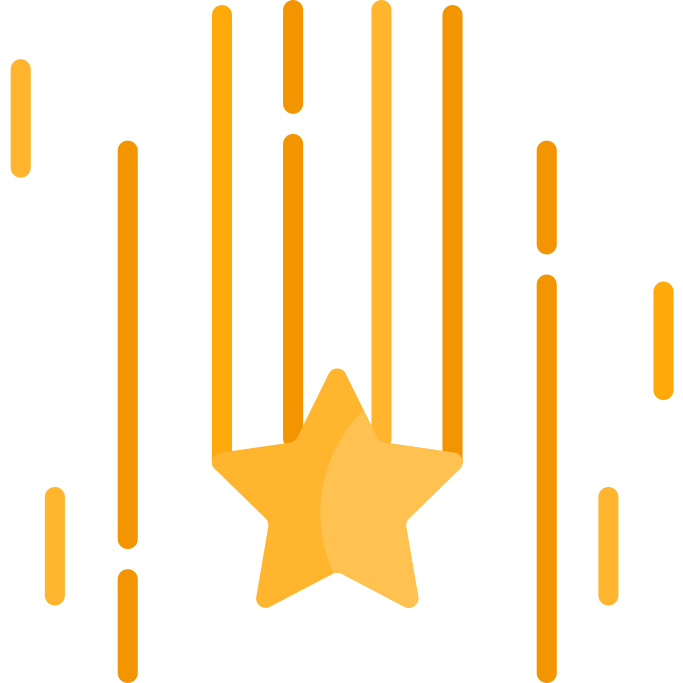
A star is falling down!
Look! A star is falling down!
They are working now.
Does it snow often here?
to drive
My mother is driving to work right now.
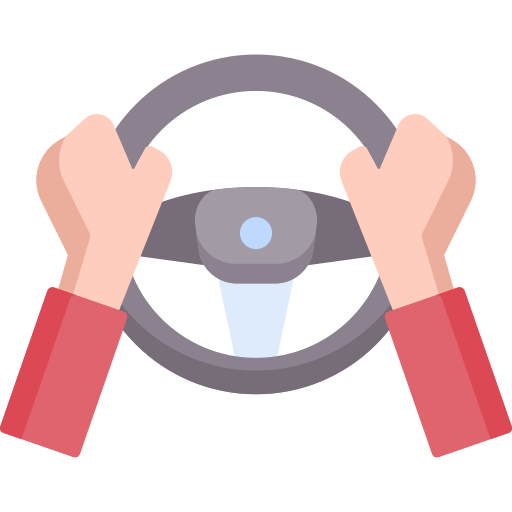
I'm driving right now.
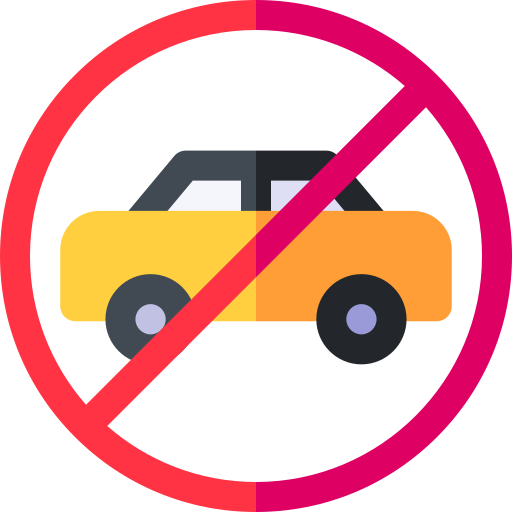
I don't drive.
I don't drive when I'm sleepy.
*Cardinal Numbers*
Cardinal numbers are normally used when you:
count things: "I have two brothers."
give your age: "I am ten years old."
give your telephone number: "My phone number is two-six-three, three-eight-four-seven."
give years: "It happened in nineteen seventy-five (1975)."
1 - "one"
2 - "two"
3 - "three"
4 - "four"
5 - "five"
6 - "six"
7 - "seven"
8 - "eight"
9 - "nine"
10 - "ten"
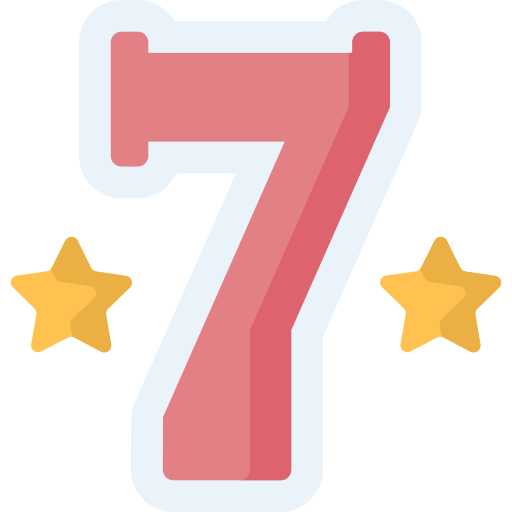
I am seven years old.
How old are you?
five apples
There are five apples in the kitchen.
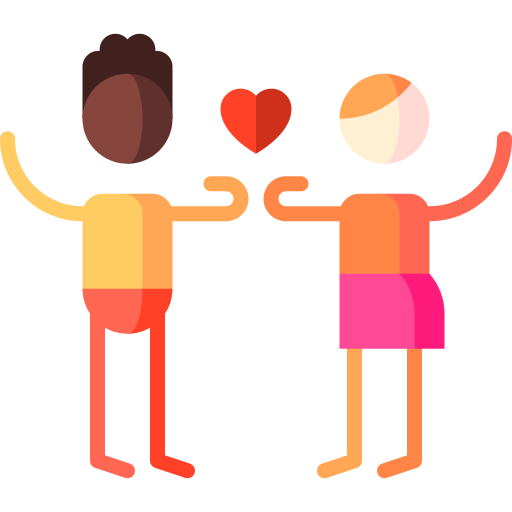
siblings
Do you have any siblings?
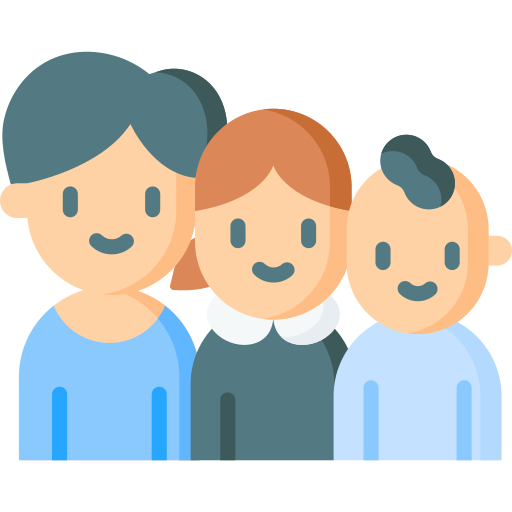
How many siblings do you have?
I don't have any siblings.
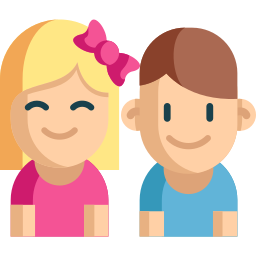
sister
I have one sister.
in two weeks
They are going to visit us in two weeks.

He is leaving in two weeks.
the piece
a piece of cheese
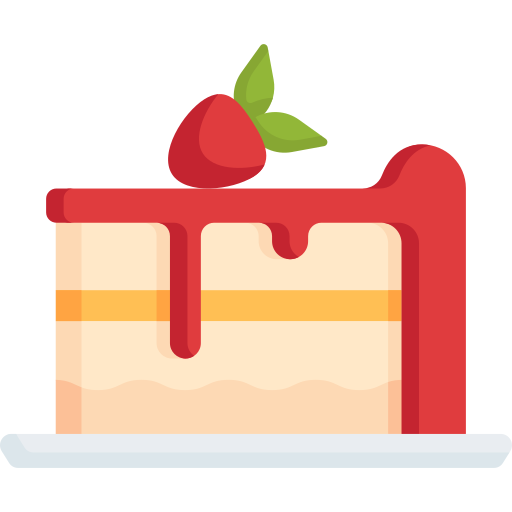
Can you give me one piece?
Can you give me one piece of cake?
*Comparative and superlative forms of adjectives*
To make comparisons, you need to use comparative and superlative forms of adjectives. For example:
"tall" - "taller" - "the tallest"
"small" - "smaller" - "the smallest"
*Comparative* is used when we compare some qualities and want to say that something has better / worse quality, we use *superlative* when we want to express that it is the best of all.
*Remember to add the definite article when forming a superlative form.*
Use "than" with a *comparative adjective* when comparing two things or people.

smaller
The dog is smaller than the cat.
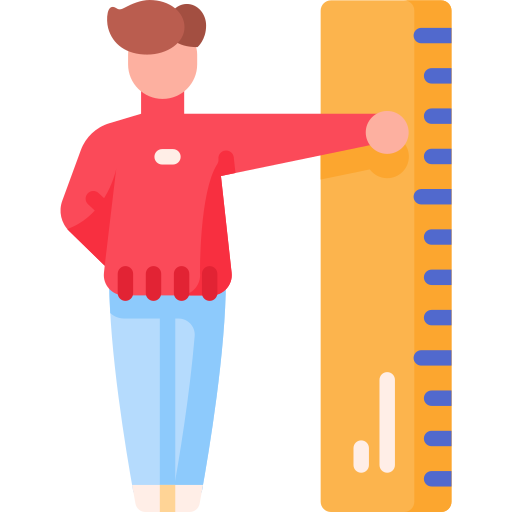
taller
I'm taller than you.
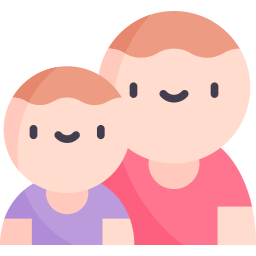
taller than me
My brother is taller than me.
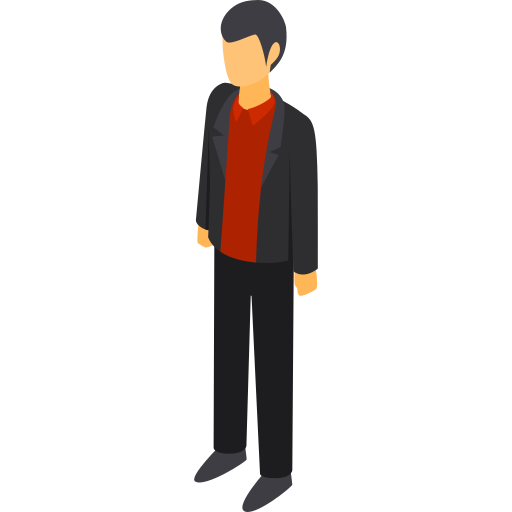
My father is taller than you.
puppy
The smallest puppy is so cute.
to look younger
You look younger than your age.
You look younger.
the youngest person
The youngest person in the room.
hard
She works hard.

We work harder.
We work harder than before.

the hardest thing
What's the hardest thing in life?
*Comparison of short adjectives*
(one-syllable adjectives and two-syllable adjectives ending in -y)
Comparative: add the ending *-er*: "smaller"
Superlative: add the ending *-est* and the article *the* before the adjective: "the smallest"
*Double the last letter* if the adjective ends in consonant, vowel, consonant:
"big" - "bigger" - "the biggest"
*Change Y to I* when the adjective is ending in consonant + Y
"funny" - "funnier" - "the funniest"
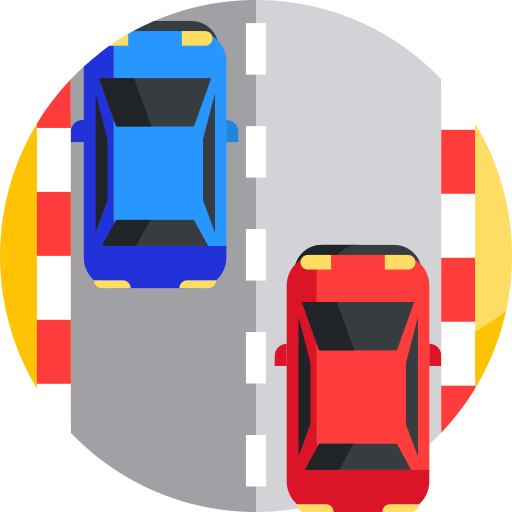
My car is faster than yours.
funny
I like funny people.
the joke
She could laugh and joke with her colleagues.
This is the funniest joke in the world.
big
Big eyes are beautiful.
Our house is bigger than yours.
hot
It was hot inside the hall.

This is the hottest chilli pepper.

nice
We had a nice time.

the place
The garden is a peaceful place.
We are moving to a nicer place.
wet
He slipped on the wet rock.

the world
He tries to save the world.

What is the wettest place in the world?
*Comparison of long adjectives*
(2 syllable adjectives - all except those ending in -y and adjectives of 3 or more syllables)
To form a comparative, add MORE before the basic form "more beautiful"
To form a superlative, add the definite article and the word MOST before the basic form "the most beautiful"
"It's more useful than you think."
"That's the most complicated exam!"
She is the most beautiful woman.
more beautiful
You are more beautiful than before.

expensive
That's the most expensive house.
This T-shirt is more expensive than the other one.
This book is more interesting than that one.
useful
Aspirin is useful for headaches.
It's more useful than you think.
Reading books is more useful than you think.
stressful
This job is very stressful.

It is the most stressful exam.

money
I counted the money before putting it in my wallet.

important
Your support is very important to me.
delicate
His health is very delicate.
(Jeho zdraví je velmi citlivé.)
Health is more important than money.
interesting
It was an interesting debate.

movie
a movie star

This movie is more interesting.
This movie is more interesting than the book.
clever
She is a clever and studious young woman.

My brother is the most clever person.
My brother is the most clever person I know.
*Irregular adjectives*
We must memorize the forms of irregular adjectives.
"good" - "better" - "the best"
"bad" - "worse" - "the worst"
"far" - "farther/further" - "the farthest/furthest"
"little" - "less" - "the least"
"much" - "more" - "the most"
"It will get better soon."
"She is the best teacher in the world!"
I feel much better now.
Thanks for asking, I feel much better now.
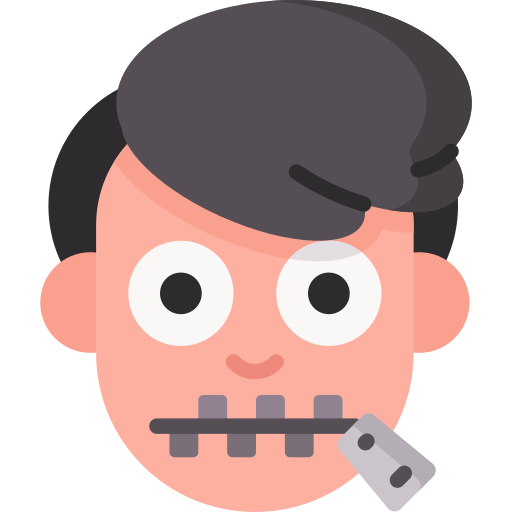
the silence
The silence lasted for about a minute.
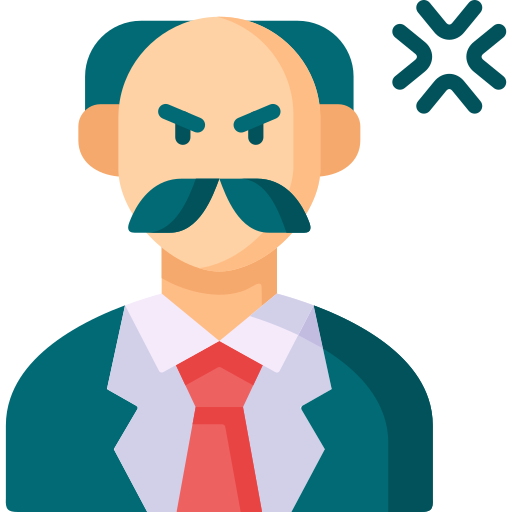
the anger
Anger showed in his face.
His silence was worse than his anger.
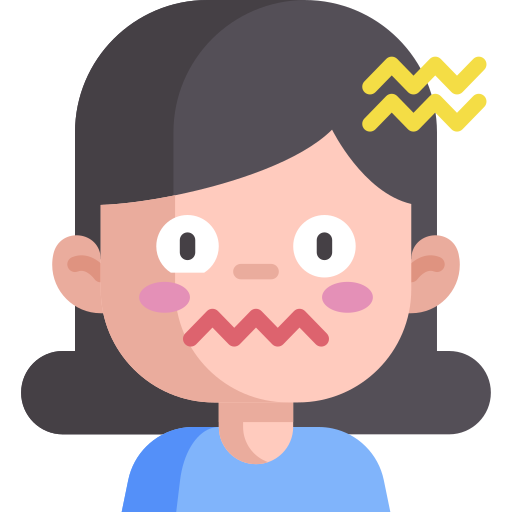
nervous
He is very nervous about the performance.
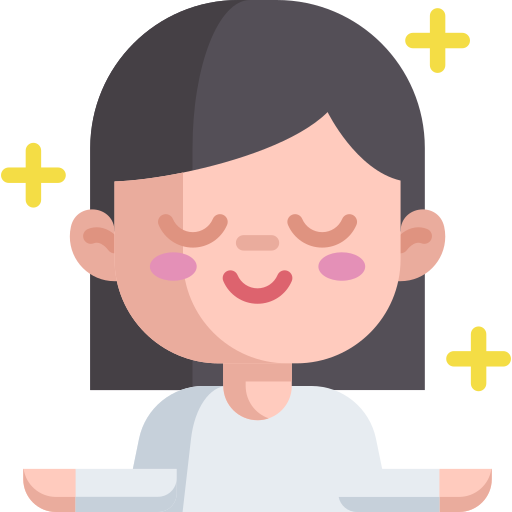
I feel less nervous.
I feel less nervous after meditation.
singer
Who is your favourite singer?
My sister is the best singer.

far
It was not too far away.

to expect
We expect the best.
She walked farther than she expected.
I thought the store was just around the corner, but I ended up walking farther than I expected.
*Phrases in past simple tense*
The past simple tense is used to talk about completed actions in the past. To form the past simple tense, you usually add "-ed" to the base form of regular verbs. For example:
"She walked to the store"
"He watched TV last night."
"to talk" - "talked"
"to walk" - "walked"
"to watch" - "watched"
"to cook" - "cooked"
"to visit" - "visited"
We talked.
We talked about it last night.
I walked there
I walked there for hours
together
Children play together.
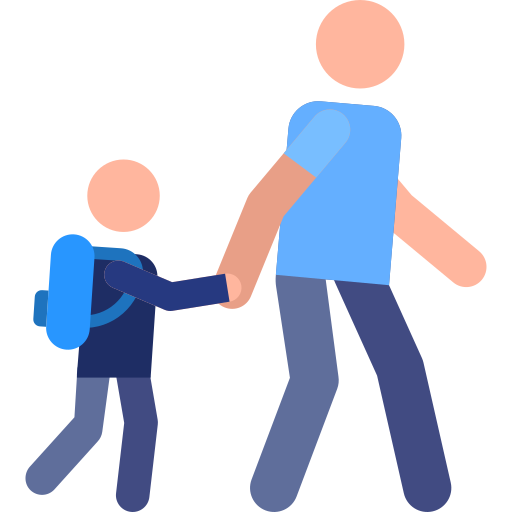
They walked together.
They walked together to school.
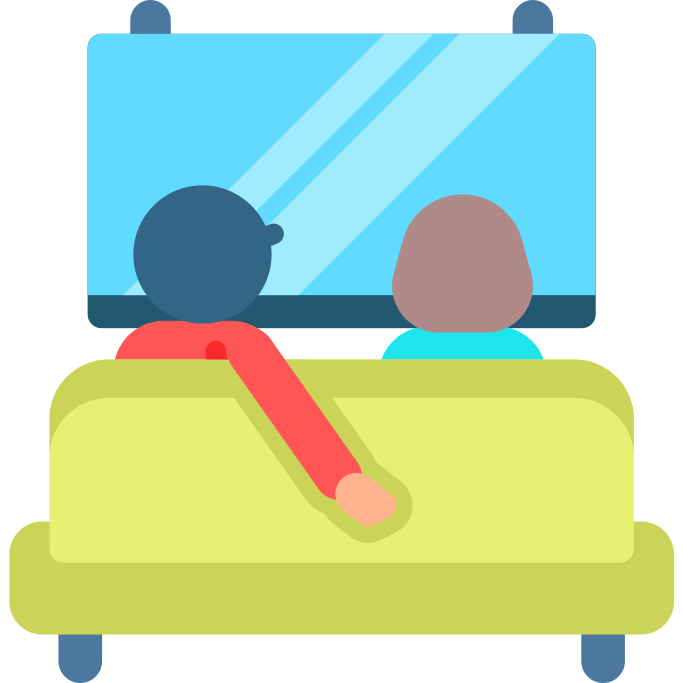
We watched TV together.
We watched TV together yesterday.
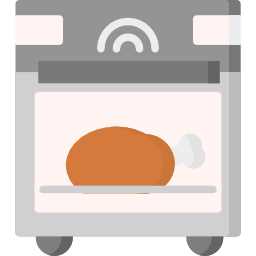
to cook dinner
My mum cooked dinner for me.
She cooked dinner.
She cooked dinner for the children.

to visit
You can visit us later.
He visited us for dinner.
I visited my grandparents for the weekend.
*Irregular past simple tense forms*
There are a lot of irregular past tense forms in English that you need to remember. Let's take a look at two important verbs and their past simple tense forms!
"to do" - "did" - "I did my homework."
"to make" - "made" - "I made pizza."
We did it!
the dinner
What's for dinner?
She made dinner.
She made him a simple dinner.
Children did the homework.

to make an effort
We have to make an effort.
to finish
We are finishing soon.
I made an effort to finish my work.

the jam
My mom made a delicious jam.

from
She made jam from the apples.
She made jam from the apples.
*Past simple of TO BE*
For singular subjects, the simple past tense of *be* is "was". For plural subjects (and singular you), the simple past tense is "were".
"I was at school yesterday."
"You were at home."
In negative sentences, add the adverb *not* and put it *after the word was/were*. Remember that most of the time the shortened form is used in negative sentences: "wasn't" = "was not" / "weren't" = "were not".
"I wasn't at school yesterday."
"You weren't at home."
I was there.
I was there yesterday.

at home
You weren't at home when I came.
We were happy.
We were happy while we were together.
They were together.
They were together all night.
tired
I was very tired this morning.
He was tired.
He was tired yesterday.
She was at school.
She was at school yesterday.

to be sure
I'm not sure about it.
I wasn't sure about it.
yesterday
The children were at school yesterday.
*Reflexive pronouns*
We often use reflexive pronouns when the subject and the object of a verb are the same. Also when we want to point out that we (or someone else) did something.
Singular: "myself" (I) "yourself" (you) "himself" (he) "herself" (she) "itself" (it)
Plural: "ourselves" (we) "yourselves" (you) "themselves" (they)
"I did it myself."
"We did it ourselves."
"I cut myself."
I made the pizza myself.
He was impressed that I made the pizza myself instead of ordering takeout.
to hear
He did not want to hear it.
Do you hear yourself?
themselves
They did the homework themselves.

to ourselves
We have the house to ourselves.
to talk
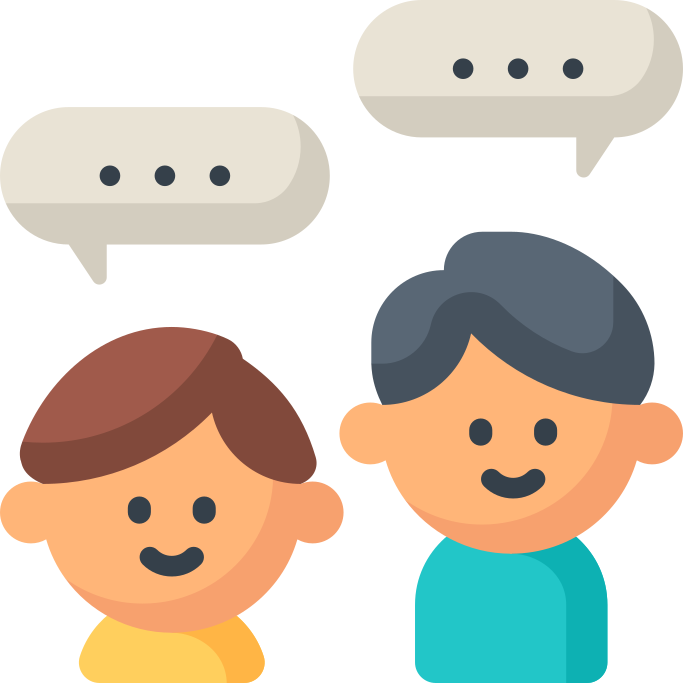
The two are talking.

He talks to himself.
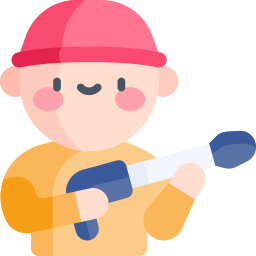
I washed the car myself.

to wish
We wish for peace.
Wish yourself good luck.
*Talking about Time*
We use these prepositions of time: "at", "in", and "on".
We use "at" to give a specific time: "at 3 o'clock", "at noon", "at the moment"
We use "in" for months, years, centuries, and long periods: "in winter", "in April", "in 1990"
We use "on" for days and dates: "on Monday", "on the 6th of March"
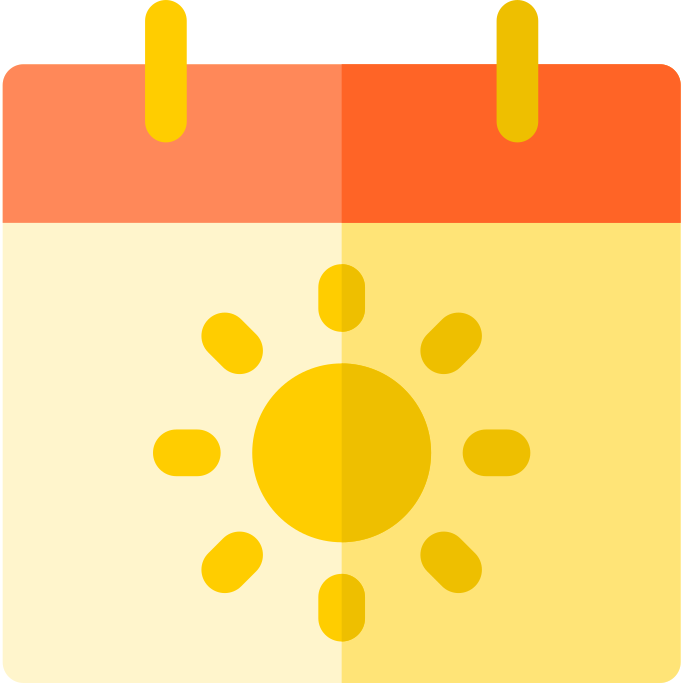
on Sunday
Do you want to go out on Sunday?

at the moment
I'm not in the office at the moment.
necessary
It's not necessary for you to be here.

At the moment it's not necessary.
at 3 o'clock
The class starts at 3 o'clock.
in summer
The sun shines in summer.
It rains a lot in autumn.
I was born in ...
I was born in 1999.
*Future - GOING TO*
Expresses a plan or intention that has already been decided or a logical prediction for the future.
Signal words:
"in one year"
"next week"
"next year"
"next month"
"tomorrow"
"soon", etc.
"I am going to meet my friend next week."
"They are going to talk about his future tomorrow."
I am going to leave tomorrow.
to miss (sth)
Do not miss this!
They are going to miss the bus.
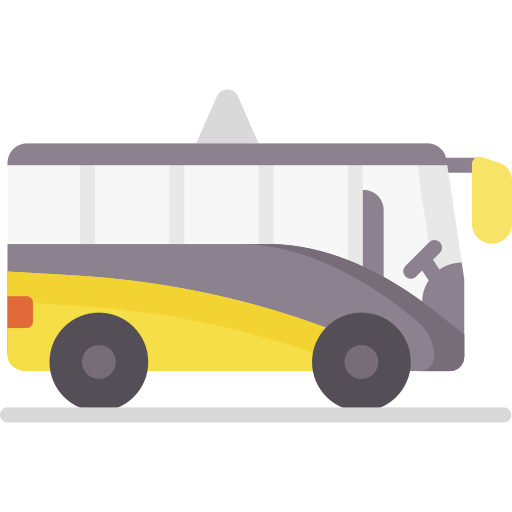
They are going to miss the bus.
to talk about
We are going to talk about it.
soon
I will be home soon.
I'm going to go soon.
to meet
I'm going to meet my friends.
next week
We are going to leave next week.

I am going to see a doctor tomorrow.
*Future - questions and negation*
To form negation, simply add "not" before "going to":
"We are not going to sleep tonight."
To form a question, switch the subject with the verb "to be":
"Are you going to be there?"
Are you going to be there?
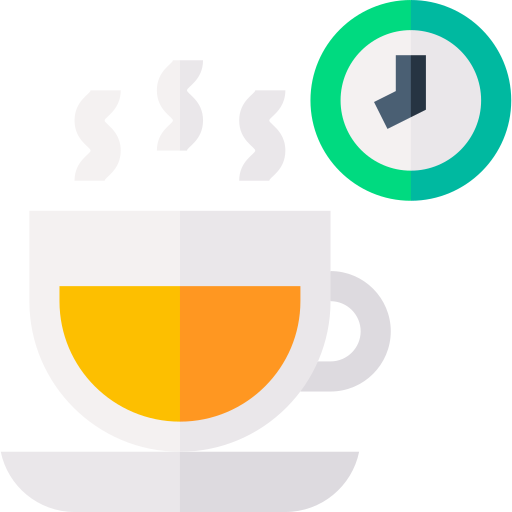
the tea
Do you drink tea?
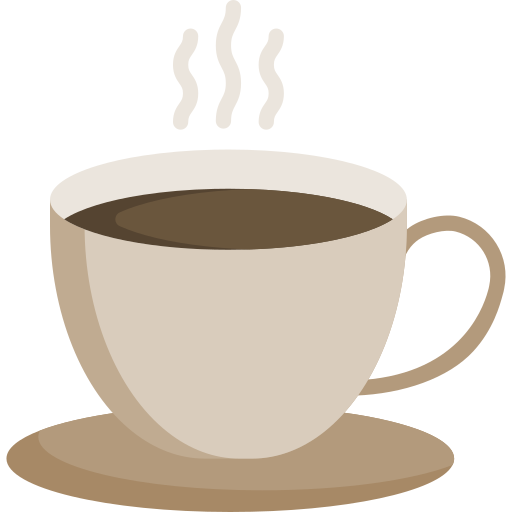
the coffee
I want a cup of coffee.
Are you going to drink coffee or tea?

to believe
I believe in destiny.
You are not going to believe this.
to buy
Buy me a bread, please.
the motorcycle
He drives a motorcycle.
or
Do you prefer coffee or tea?
Are you going to buy a car or a motorcycle?
*Adverbs*
An adverb is a word that modifies (describes) a verb, an adjective, another adverb, or even a whole sentence, for example: "very", "really", "too", etc.
Examples:
"He is very tall."
"I really like him."
"The dress is too expensive."
"Fortunately, I brought an umbrella."
very
You look very tired.
Thank you very much!
almost
She is almost perfect.

to like
I like this movie.
I really like you.
I just wanted to tell you that I really like you.
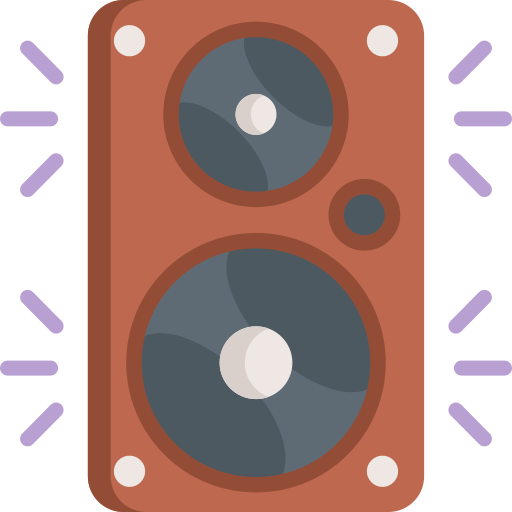
too loud
The music is too loud.

It's too expensive.
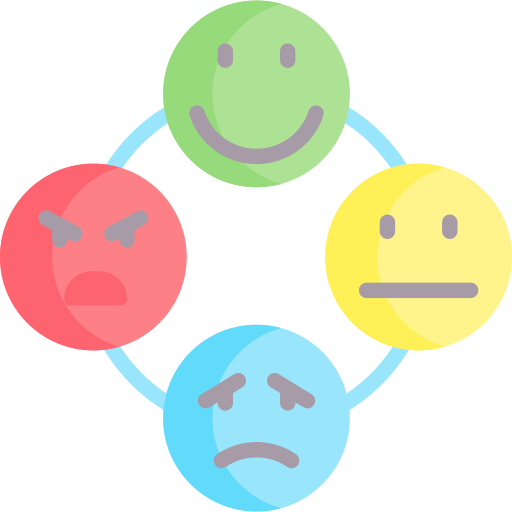
to feel
How do you feel?
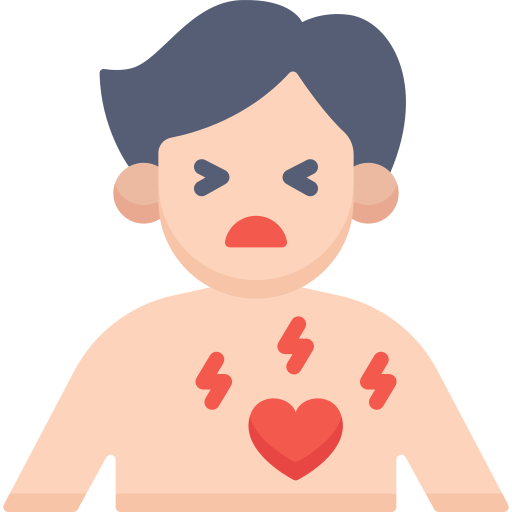
I feel bad.
I feel bad about what happened.
fortunately
Fortunately, I did my homework.

You study hard.

See you very soon!