
Course for beginners II (A1/A2)English words
by DuoCards
*Welcome to the Course for Beginners II!*
Let’s start with the verbs "to do" and "to make." They are often confused, so let’s learn how to use them correctly.
"Do" usually refers to the *action*, while "make" generally refers to the *result.*
You can for example "do homework", "do the shopping", or "do yoga", but you "make lunch", "make plans", or "make friends".
to make friends
I want to make friends at my new school.
a promise
Keep the promise!
to make a promise
He made a promise to his parents.
once a week
She does yoga once a week.

I do my hair.
I have a shower, I do my hair, and I get dressed.

a suggestion
I have a suggestion for our project.
to make a suggestion
May I make a suggestion?
He made a joke.
He made a joke about his sister’s new hairstyle.
I make my bed.
I make my bed every morning.

You did well.
You did well in your exams.
to make plans
Let’s make plans for tomorrow.
*Will tense*
You've already learned the Future tense GOING TO. Now let's take a look at the *Futur Simple tense*, often called the *will tense*.
*Will* is used for things that we decide to do now. (Rapid Decisions)
*Going to* is used to refer to events that have been *previously planned.*
The structure of the Future Simple tense is *subject + WILL + main verb*
e.g.: "You will open the door."
In negative sentences, we contract with won't: *will not = won't*
e.g.: "She won't do it."
For question sentences, we exchange the subject and WILL.
e.g.: "Will you open the door?"
Remember, the modal auxiliary will is invariable, which means *it doesn't change its form by the person.*

I will do it.

We will see.
Are you going to the party tonight? - We will see.
She won't be there.
She won't be there for the meeting tomorrow.
to arrive
Will they arrive by noon?
He will arrive late.
He will arrive late to the meeting.
on time
I'm always on time.

Will you arrive on time?

an umbrella
I will bring an umbrella.

I will take an umbrella.
It will rain today.

Will you open the window?
*I'm used to it!*
*Be used to* means *be familiar with* or *be accustomed to*.
*The structure* of the sentence is: *subject + main verb BE + used to + object*
"I am used to hard work."
"Are you used to fast food?"
Note that if the object involves a verb, we use the *-ing form*.
"I'm used to speaking in public."
"He's used to getting up early."
"Are you used to eating spicy food?"

I'm used to it.
They're used to watching TV in the evening.
fast
This car is fast.

I'm used to eating fast.
I'm used to waking up early.
the noise
What is that noise?

I am used to lots of noise.
to get up early
I usually get up early.
He's used to getting up early.

I'm used to working late.
to watch TV
Do you want to watch TV?

in the evening
They are used to working in the evening.

They're used to watching TV in the evening.

a brand
Brand is the image of the product in the market.

She's used to buying this brand.

Are you used to cold?
*'To be used to' is not 'used to'*
There's a difference between *be used to* and *used to*. We use *used to + infinitive* to talk about a *repeated action or state in the past* that is no longer true.
"I used to come here as a child."
"Did you use to come here as a child?"
"She used to eat meat, but now she's a vegetarian."

We used to be friends.
I saw my old friend at the store today. We used to be friends, but we haven't talked in years.
I used to get up early.
When I was a child, I used to get up early to play outside.

to work as
He works as a waiter.
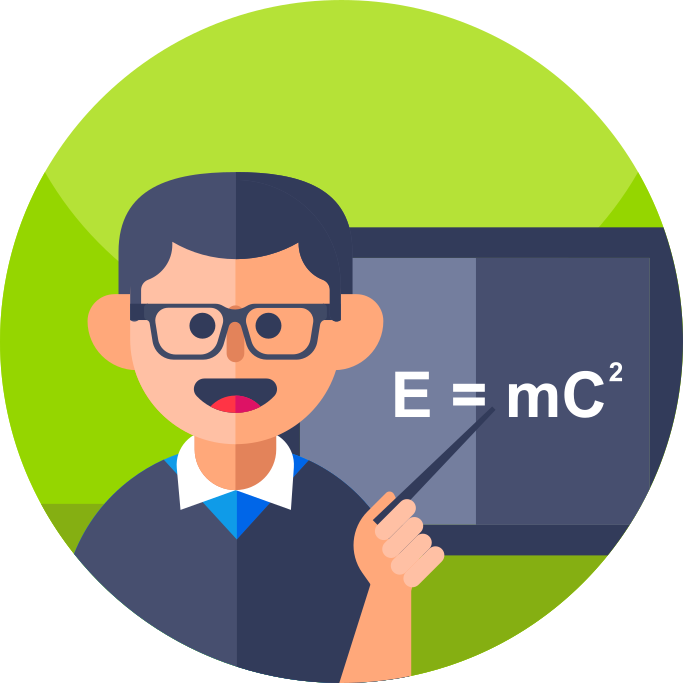
I used to work as a teacher.
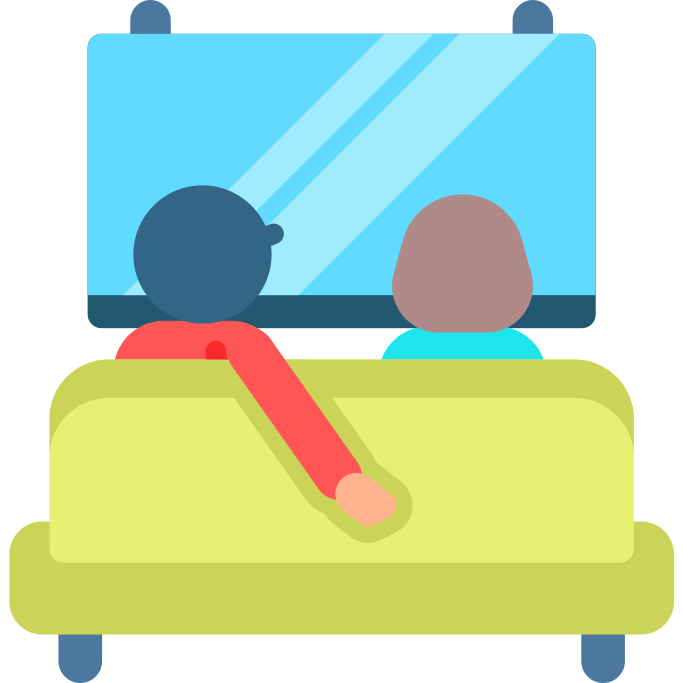
They used to watch TV in the evening.
to smoke
Do you smoke?
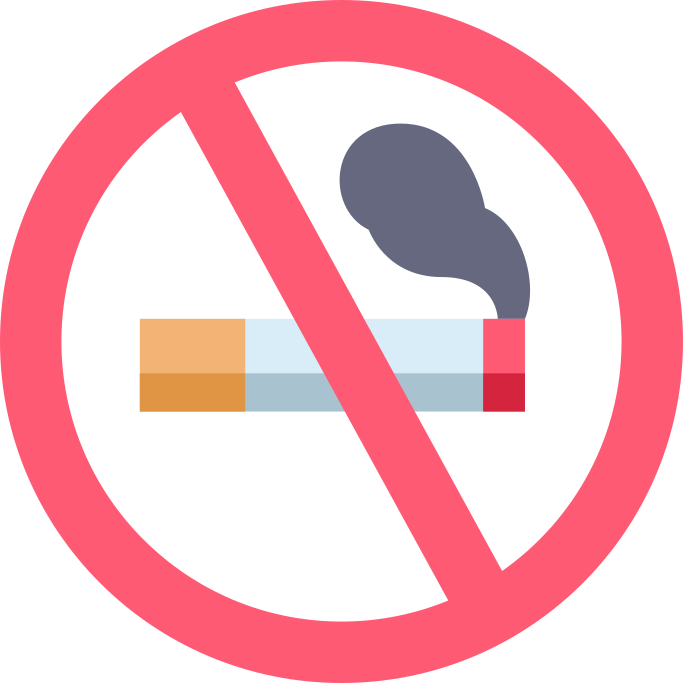
I used to smoke.

She used to buy this brand.
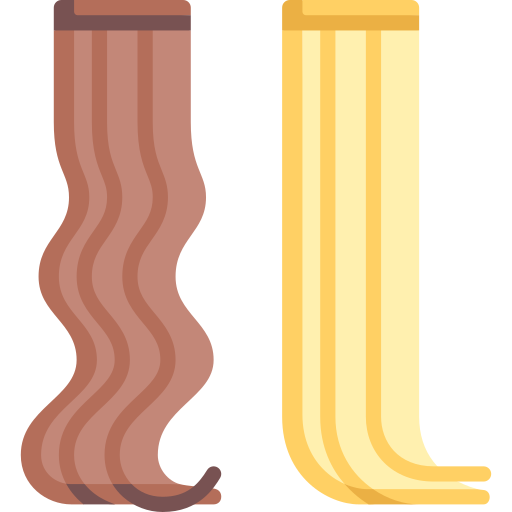
long hair
I have long hair and he has short hair.

He used to have long hair.
*Adverbs of frequency*
We use adverbs of frequency to say *how often we do things, or how often things happen.*
"always"
"usually"
"often"
"sometimes"
"occasionally"
"hardly ever"
"never"
They are usually *before the main verb*, or *between the auxiliary and the main verb*. But they come *after the verb to be*. We can use some adverbs of frequency *at the beginning or end* of a sentence for emphasis.
"He is always smiling."
"Sometimes I stay up late."
"I cook Indian occasionally."

always
The sun always rises in the east.
I always do my homework.
Do you always come here?
usually
He usually arrives home about one o'clock.

He's usually on time.
They usually watch TV in the evening.
often
He often goes for long walks by himself.
You often ask me for help.
sometimes
Sometimes I want to do things on my own.

Sometimes we go to school by bus.
Do you sometimes smoke?

never
He is never ill.
I never smoke.
I never get up early.

You always smile.
hardly ever
I hardly ever eat breakfast in the morning.

They hardly ever play outside during winter.
*In, on or at?*
*In*, *on*, and *at* are all examples of prepositions that serve multiple purposes. They are capable of showing a relationship to both time and place, depending on how you use them.
First let's look at these three prepositions as *prepositions of time*.
"In" is usually used to represent an unspecific amount of time or a more general time period that isn’t specific.
e.g.: "I like to swim in the summer."
"On" refers to a specific date.
e. g.: "I’ll be home on Sunday."
"At" indicates a specific time.
e. g.: "The movie starts at 7."
on Monday
I'll call you on Monday.
I will come on Monday.
on the weekend
I won't work on the weekend.
on the 15th
I go to the dentist on the 15th.

on the 15th of April
What are you doing on the 15th of April?
She comes on the 15th of April.
She comes to visit me on the 15th of April.
in winter
In winter there's ice and snow.

to go skiing
We go skiing every year.

I go skiing in winter.
in the morning
We'll talk in the morning.
I was born in 1996.
in the future
In the future I want to be a millionaire.

The movie starts at 7.
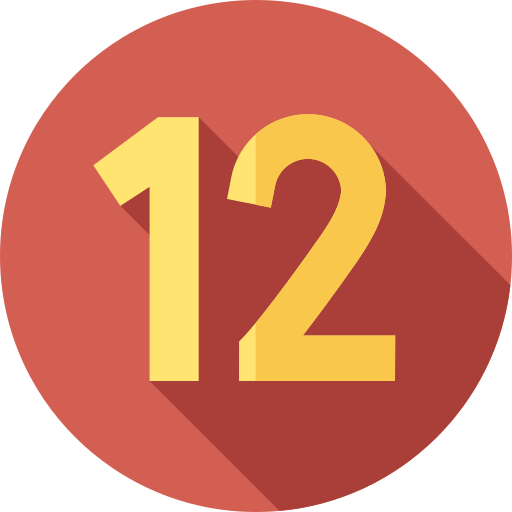
Meet me at 12.

at the moment
I'm not available at the moment.
not at the moment
*At home or in the cinema?*
"In", "on" and "at" as prepositions of place:
*In* usually refers to something being inside an enclosed space of some kind, or in a larger space.
"in the car"
"in France"
"in the center"
*On* usually indicates that something is situated on top of something else, or somewhere more specific in a larger area.
"on the table"
"on Main Street"
*At* can be used to show a certain point. It is the most specific of the three prepositions to indicate a specific place.
"at the library"
"at the store"

at home
I wasn't at home.
Are you at home?
I stay at home on the weekend.

at the store
I have to buy something at the store.

We're at the store at the moment.
in the car
She's sitting in the car and waiting.
He is sitting in the car.

I live in Germany.

Meet me at 12 in the center
on the table
The book is on the table.
The keys are on the table.
on the field
The players are on the field.
They are on the football field.
*Past simple – questions*
We can use past simple questions to ask about the past. Use "did" and the *verb*, but *don't change the verb to the past form.* This is because "did" already shows the past, so the main verb stays in its infinitive form.
"Did you have a nice weekend?"
"Did they finish their homework?"
We can make past tense questions by using *the question word + did*.
"What did you do?"
"Where did he go?"
Did you do it?
Did you do your homework? - Yes, I did.
What did you do?
What did you do? - I didn't do anything.

Did he stay?
Did he stay at home?
Did you smoke?
Did you smoke yesterday?

Where did you buy it?
Where did you buy this dress?
Did they arrive on time?
When did they arrive?
When did they arrive? - They arrived yesterday.

Did she watch TV?
Did she watch TV yesterday? - No, she didn't.
Where did you live?
Where did you live? - I lived in Germany for five years.
*Indefinite pronouns*
"Something" and "anything" has the same meaning and refer to *some thing/inanimate object*, but one is used in positive sentences and the other in negative.
"Something" means a thing that is unknown. It is used in *positive sentences.*
"Anything" means a thing of *any kind.* Use it in *questions* and *negative sentences.* It can also be used to mean "I don't mind."
something
We always buy something to eat.
something to eat
I will bring something to eat.

something else
I will do something else tonight.

Anything else?
Do you need anything else?
more than anything
I love you more than anything.
Is there anything I can do?
Is there anything I can do for you?
to miss
I miss you.

Something is missing.
Something is missing here.
I will do anything.
I will do anything to make things better.

Let's do something.
Let's do something this weekend!
*How would you describe yourself?*
What are your strengths and weaknesses? Let's learn some useful words to describe your (or someone else's) personality!

She's funny.

easy-going
She is very easy-going.
friendly
They were friendly to me.

generous
She is generous with her money.
honest
I'm always totally honest with you.
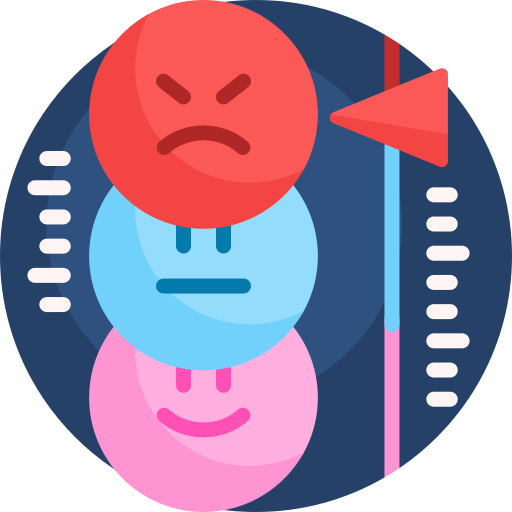
moody
She is so moody!
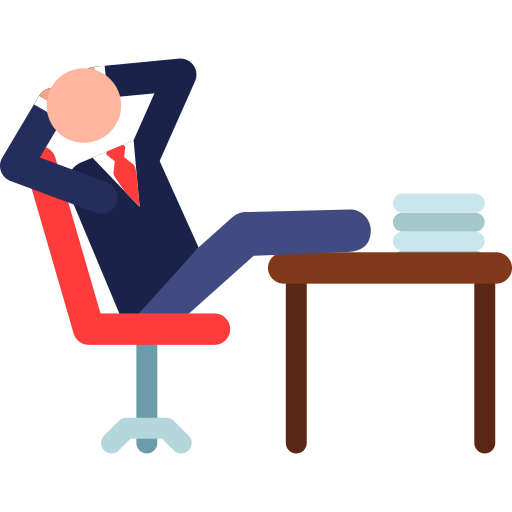
lazy
He was too lazy to cook.

polite
The comment was polite and reasonable.

shy
I was pretty shy at school.
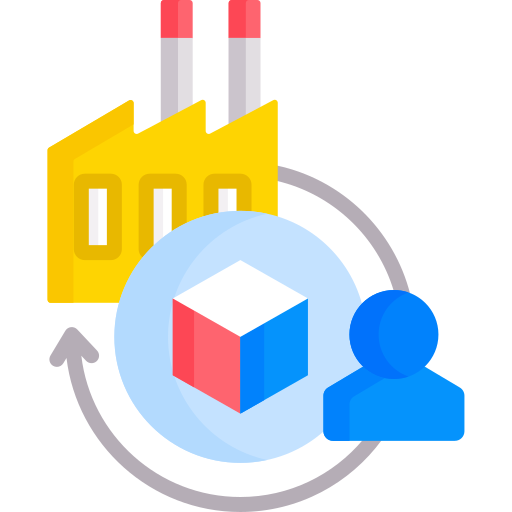
hard-working
The students are hard-working.

wise
She seems kind and wise.
*Stative verbs*
Stative verbs are used for activities that we (or objects) cannot actively perform (by moving the body, etc.). *Stative verbs do not change their states.*
Some of the stative verbs are: "know", "like", "seem", "love", "have", "want", "see"

I know!
I know you are right.

Do you know him?
Do you know him well?

to love
We love this movie.

She loves her cat.
She loves her cat more than anything.
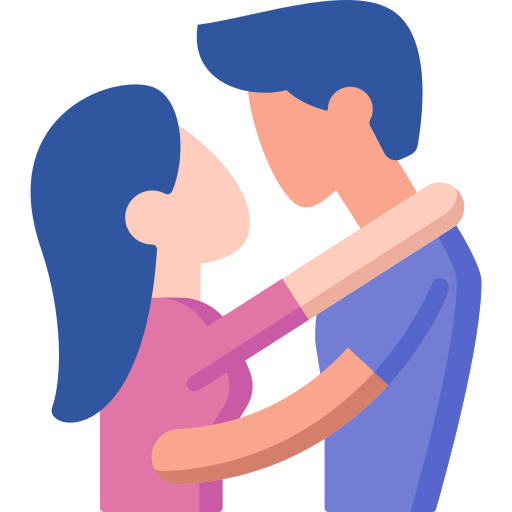
Do you love me?
Do you love me more than anything?
to hate
Why do you hate me so much?

the spinach
Spinach is very healthy.

They hate spinach.
My children hate spinach.

to want
I want to go with you.
Do you want a coffee?
Do you want a coffee or a tea?
I want to go.
I want to go to the center.

He seems nice.
I just met Sarah’s brother yesterday. He seems nice.
It seems easy.
This exercise seems easy.
*I like learning English!*
With the verb "like" there are two ways of putting a verb after it.
"LIKE" + "to" + infinitive
"I like to sleep."
"LIKE" + *verb* + "ing"
"I like sleeping."
In general there isn’t a difference in meaning, though we sometimes use the infinitive ("TO "+ VERB) to talk about habits or choices. However, using a VERB+"ING" is more common than using an infinitive.

I like dancing.

to read
I read a book about war.

I like reading.
I like reading in bed at night.

I like to read in the evening.
to go to the gym
Does he like going to the gym?
I don’t like getting up early.

Do you like watching TV?
to wait
I'm waiting for you.
I don't like waiting.
I don't like waiting for the bus.

She likes cooking.
I like to cook Asian food.
to take a selfie
I love to take a selfie when I travel.
We like taking selfies.
I like learning English.
"I speak English well."
"Well" is an adverb. Use "well" to *describe a verb, adjective, or another adverb.*
Let's learn some useful adverbs!

very well
You speak English very well.

She can dance well.
a little
You're going a little fast.
I speak a little Spanish.
Do you speak Spanish? - I speak a little Spanish.
a little time
I need a little more time.
unfortunately
Unfortunately, she can’t come to the party.
to be closed
Is the store closed?
Unfortunately, it is closed.
Unfortunately, the shop is closed today.

We have a lot to do.
We have a lot to do this week.

the money
How much money did you get?

a lot of money
He made a lot of money.
*An important A*
Sometimes, a single letter can change the meaning completely! "A little" means *some* but when you just say "little" (without an *a*), it has a negative meaning.
Look at this example:
"Have you got any money?"
A: "Yes, a little." (I have some money, a small amount.)
B: "No, very little." (not much/almost nothing)
The same rule goes for the word "few". We use "a little" with *singular uncountable nouns.* We use "a few" with *plural countable nouns.*
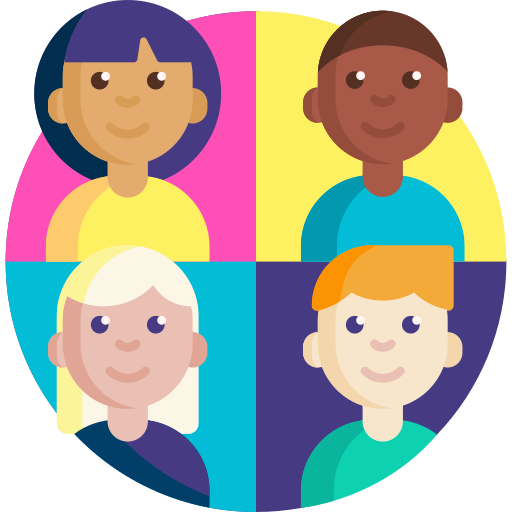
a few friends
I have a few friends, so I'm not lonely.
few friends
She has few friends, so she's quite lonely.
a jar
I put the cookies in a jar.
a few jars of jam
I have a few jars of jam in the cellar.
a little cream and sugar
I always enjoy a little cream and sugar in my coffee.
a little extra time
We have a little extra time this afternoon; do you want to watch a movie?
a choice
You always have a choice.

few people
Few people came to the party.
to remember
I remember her well.

a few things to remember
Here are a few things to remember before you go on vacation.
*Zero conditional*
This conditional is used when the result *will always happen.* It's used for general truths and unchangeable facts. In zero conditional sentences, the tense in *both parts of the sentence is the simple present.*
Here are some examples:
"If people eat too much, they get fat."
"If babies are hungry, they cry."
"If it rains, the grass gets wet."
If you eat too much, you get fat.
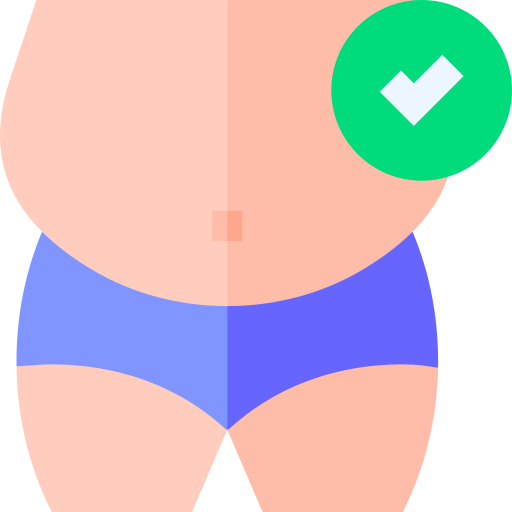
to get fat
If people eat too much, they get fat.
to be ill
the peanuts
Do you like peanuts?
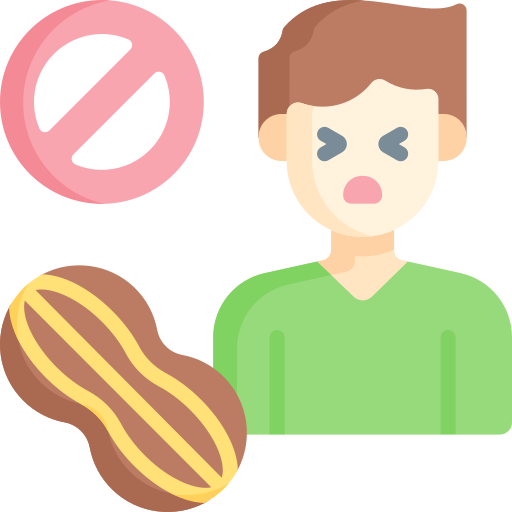
If I eat peanuts, I am sick.

to boil
If water reaches 100 degrees, it boils.

to get wet
If you stand in the rain, you get wet.

If you heat ice, it melts.
If you put ice in the sun, it melts quickly.
to melt
The snow is starting to melt.
*Past simple of can and can’t*
The past simple of "can" is "could" so you can say: "I could swim when I was five."
The past simple of "can't" is "couldn't" like in this example: "I couldn’t sing as a child."
Besides, you can use "could" and "couldn't" to make polite requests.
For example: "Could you help me carry these bags?"

Could you help me?
Could you help me carry these bags?
to carry a bag
He couldn't help me carry my bag.
I couldn't do it.
They could speak English.
They could speak English before they went to school.

to try
I am trying to help you.
Could you try?
Could you at least try?

to play chess
Could you play chess last year? - Yes, I could.
I couldn't eat peanuts.
I couldn't eat peanuts when I was a child.
Could you bring me a coffee?
Yes, I could.
Could you bring me a coffee? - Yes, I could.
*How to use the preposition by*
The word "by" is very common in English. It can be used in lots of different situations and contexts.
Here are some examples:
1. "by" + place*: "The house stands by the river."
2. "by" + method of transport*: "I go to work by car."
3. "by" + method of communication*: "Please confirm the order by email."
4. "by" + -ing verb*: "Turn on the radio by pressing the button."

by train
We went to Manchester by train.

Do you travel by plane?
Do you travel by plane when you go on vacation?
by the sea
I want to live in a house by the sea.

He lives by the sea.
He lives by the sea in a small house.

by phone
I will speak to him by phone.
to press
I need to press the button to start the machine.
by pressing the button
Turn on the radio by pressing the button.

to confirm
Please confirm the order by email.

Can I pay by credit card?
by tomorrow
Please send us the payment by tomorrow.
Could you do it by tomorrow?

You learn by practicing with Memo.