
Course for beginners (A1/A2)
Explanations and vocabulary practice
Sections: 21
- Welcome to the Beginners Course!
- Welcome to the beginner course!
- Can in negative
- Object pronouns
- Present continuous tense
- Endings sometimes change
- Present continuous - negation and question
- Present simple tense vs. Present continuous tense
- Cardinal Numbers
- Comparative and superlative forms of adjectives
- Comparison of short adjectives
- Comparison of long adjectives
- Irregular adjectives
- Phrases in past simple tense
- Irregular past simple tense forms
- Past simple of TO BE
- Reflexive pronouns
- Talking about Time
- Future - GOING TO
- Future - questions and negation
- Adverbs
Save words from this page and practise them with flashcards in DuoCards. How does it work?
This course will guide you through the basics and help you start using English in everyday situations! You’ll learn how to form sentences, use essential tenses, and expand your vocabulary with practical words you can use every day.
Before we dive in, let’s warm up with a few useful words and phrases to get you started!







Let's start with the verb can. Use can to talk about a possibility or ability. Always use can with another verb.
You can use can to form short answers like in this example:
Can you speak English? - Yes, I can.
I can = I can do something. / I know something is possible for me, for example: I can dance very well.


To make a negative, add not after can to make one word (can not = can't).
Let's learn new verbs!
to repeat
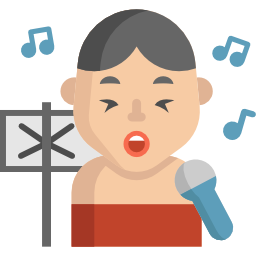
to sing
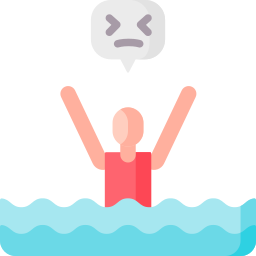
to swim


An object pronoun refers to the person or thing affected by an action. It normally comes after a verb or preposition.
For example:
I spend a lot of time with my family. I love them so much. (Them replaces my family.)
The object pronouns are:
me
you
him
her
us
them


We use the present continuous tense when we talk about something that is happening right now.
Use the auxiliary verb to be in its correct form and add the ending -ing to the verb.
He is sleeping.
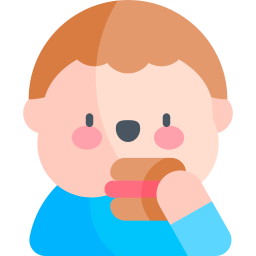
You are eating.


Sometimes, the ending of the verb changes in the present continuous tense.
When a verb ends in e, drop the e and add -ing: make - making
When a one-syllable verb ends in vowel + consonant, double the final consonant and add ing: swim - swimming
When a verb ends in vowel + consonant with stress on the final syllable, double the consonant and add ing: begin - beginning
Do not double the consonant of words with more than one syllable if the stress is not on the final syllable: remember - remembering





To form negation, place not before the main verb.
He is not sleeping.
You are not eating.
Make a question by putting am, is, or are in front of the subject.
Is he sleeping?
Are you eating?


You already know that we use the present simple tense when we talk about something repetitive or about our habits and what we like.
I go to the gym every week.
I like pizza.
We use the present continuous tense when we talk about something that is happening right now.
Signal words with present continuous: right now, now, at the moment, today
He is singing right now.
We are at school at the moment.




Cardinal numbers are normally used when you:
count things: I have two brothers.
give your age: I am ten years old.
give your telephone number: My phone number is two-six-three, three-eight-four-seven.
give years: It happened in nineteen seventy-five (1975).
1 - one
2 - two
3 - three
4 - four
5 - five
6 - six
7 - seven
8 - eight
9 - nine
10 - ten




To make comparisons, you need to use comparative and superlative forms of adjectives. For example:
tall - taller - the tallest
small - smaller - the smallest
Comparative is used when we compare some qualities and want to say that something has better / worse quality, we use superlative when we want to express that it is the best of all.
Remember to add the definite article when forming a superlative form.
Use than with a comparative adjective when comparing two things or people.






(one-syllable adjectives and two-syllable adjectives ending in -y)
Comparative: add the ending -er: smaller
Superlative: add the ending -est and the article the before the adjective: the smallest
Double the last letter if the adjective ends in consonant, vowel, consonant:
big - bigger - the biggest
Change Y to I when the adjective is ending in consonant + Y
funny - funnier - the funniest




(2 syllable adjectives - all except those ending in -y and adjectives of 3 or more syllables)
To form a comparative, add MORE before the basic form more beautiful
To form a superlative, add the definite article and the word MOST before the basic form the most beautiful
It's more useful than you think.
That's the most complicated exam!




We must memorize the forms of irregular adjectives.
good - better - the best
bad - worse - the worst
far - farther/further - the farthest/furthest
little - less - the least
much - more - the most
It will get better soon.
She is the best teacher in the world!


The past simple tense is used to talk about completed actions in the past. To form the past simple tense, you usually add -ed to the base form of regular verbs. For example:
She walked to the store
He watched TV last night.
to talk - talked
to walk - walked
to watch - watched
to cook - cooked
to visit - visited




There are a lot of irregular past tense forms in English that you need to remember. Let's take a look at two important verbs and their past simple tense forms!
to do - did - I did my homework.
to make - made - I made pizza.








For singular subjects, the simple past tense of be is was. For plural subjects (and singular you), the simple past tense is were.
I was at school yesterday.
You were at home.
In negative sentences, add the adverb not and put it after the word was/were. Remember that most of the time the shortened form is used in negative sentences: wasn't = was not / weren't = were not.
I wasn't at school yesterday.
You weren't at home.






We often use reflexive pronouns when the subject and the object of a verb are the same. Also when we want to point out that we (or someone else) did something.
Singular: myself (I) yourself (you) himself (he) herself (she) itself (it)
Plural: ourselves (we) yourselves (you) themselves (they)
I did it myself.
We did it ourselves.
I cut myself.




We use these prepositions of time: at, in, and on.
We use at to give a specific time: at 3 o'clock, at noon, at the moment
We use in for months, years, centuries, and long periods: in winter, in April, in 1990
We use on for days and dates: on Monday, on the 6th of March


Expresses a plan or intention that has already been decided or a logical prediction for the future.
Signal words:
in one year
next week
next year
next month
tomorrow
soon, etc.
I am going to meet my friend next week.
They are going to talk about his future tomorrow.


To form negation, simply add not before going to:
We are not going to sleep tonight.
To form a question, switch the subject with the verb to be:
Are you going to be there?


An adverb is a word that modifies (describes) a verb, an adjective, another adverb, or even a whole sentence, for example: very, really, too, etc.
Examples:
He is very tall.
I really like him.
The dress is too expensive.
Fortunately, I brought an umbrella.






Learning with DuoCards
What is DuoCards?
DuoCards is a language-learning app that helps you build vocabulary with flashcards. You can save words you want to learn and practise them over time.
How do I learn with this course?
Browse the explanations and vocabulary in each section. Select Card picker and choose the words you want to learn. Then create a free account to save your words and practise them.
How do I practise my words?
You'll see a flashcard with a word and a hidden translation. Guess what it means, then tap to check your answer. DuoCards repeats the words you find difficult.
Do I need an account, and is learning free?
You can browse this page without an account. A free account lets you save words and track your progress. The free plan has limits, and Premium offers additional features.