
Yeni başlayanlar için kurs (A1/A2)İngilizce kelimeler
by DuoCards
*Welcome to the Beginners Course!*
Bu kurs, sizi temel konularda yönlendirecek ve İngilizceyi günlük durumlarda kullanmaya başlamanıza yardımcı olacak! Cümle kurmayı, temel zamanları kullanmayı ve her gün kullanabileceğiniz pratik kelimelerle kelime dağarcığınızı genişletmeyi öğreneceksiniz.
Başlamadan önce, sizi başlatacak birkaç faydalı kelime ve ifadeyle ısınalım!

to change
değiştirmek
I need to change my clothes.

to improve
geliştirmek için
I want to improve my English skills.

I want to improve my English.
İngilizcemi geliştirmek istiyorum.

The weather can change quickly.
Hava hızla değişebilir.
to forget
unutmak
She forgot to call her friend.

Don’t forget your umbrella.
Şemsiyeni unutma.

an umbrella
bir şemsiye
I always carry an umbrella in my bag.
I changed my job last year.
Geçen yıl işimi değiştirdim.

I always forget my keys.
Anahtarlarımı her zaman unutuyorum.
to prefer
tercih etmek
I prefer tea to coffee.

to need
ihtiyacı olmak
I need a pencil to write my homework.

I need help.
Yardıma ihtiyacım var.
I need help with my math homework.
*Başlangıç kursuna hoş geldiniz!*
"can" fiili ile başlayalım. Bir *olasılık* veya *yetenek* hakkında konuşmak için "can" kullanın. Can fiilini her zaman başka bir fiille birlikte kullanın.
Bu örnekte olduğu gibi kısa cevaplar oluşturmak için "can" adresini kullanabilirsiniz:
"Can you speak English?" - "Yes, I can."
"I can" = Bir şey yapabilirim. / Bir şeyin benim için mümkün olduğunu biliyorum, örneğin: "I can dance very well."

I can do it!
Bunu yapabilirim!
I have studied hard for the exam, and I can do it!

Can you?
Yapabilir misin?
Can you do that for me?

Yes, you can!
Evet, yapabilirsin!
Can I do it? - Yes, you can!

to repeat
tekrarlamak
Can you repeat it after me?

I can't speak Spanish.
İspanyolca bilmiyorum.
I can't speak Spanish very well.

They can sing.
Onlar şarkı söyleyebilirler.
My friends can sing all the popular songs.
Can you see
Görüyor musun?
Can you see the man over there?
*Negatif olabilir*
Olumsuz yapmak için can kelimesinden sonra "not" ekleyerek tek kelime yapın (can not = can't).
Yeni fiiller öğrenelim!
"to repeat"
"to sing"
"to swim"

He can't sing.
O şarkı söyleyemez.

to sing
şarkı söylemek
I love to sing.

to swim
yüzmek

He can't swim.
Yüzme bilmiyor.
He can't swim, so he prefers to stay by the pool.

Can you repeat it, please?
Tekrar edebilir misiniz, lütfen?

They can swim, but I can't.
Onlar yüzebiliyor ama ben yüzemiyorum.
*Nesne zamirleri*
Bir nesne zamiri *bir eylemden etkilenen* kişi veya şeyi ifade eder. Normalde bir fiil veya edattan sonra gelir.
Örneğin:
"I spend a lot of time with my family. I love them so much." (Them*, *my family* yerine geçiyor.)
Nesne zamirleri şunlardır:
"me"
"you"
"him"
"her"
"us"
"them"

I love you.
Seni seviyorum.
I love you very much.

Can you see him?
Onu görebiliyor musun?
Can you see him standing over there?

to tell
söylemek
Can you tell me what you think?

Tell me.
Anlat bana.
Tell me what you see.

Tell me what you think.
Ne düşündüğünü bana söyle.
Tell me what you think about the idea.

to ask
sormak
People always ask questions.

about
hakkında
I am thinking about you.

Ask her about them.
Onları ona sor.
Ask her about her day.

The book is about us.
Kitap bizim hakkımızda.
They made a movie about us.
*Şimdiki zaman
Şu anda olan bir şey hakkında konuşurken şimdiki zaman kipini kullanırız.
Yardımcı fiili "to be" yi doğru biçimde kullanın ve fiile -ing *ekini* ekleyin.
"He is sleeping."
"You are eating."

My brother is eating.
Erkek kardeşim yemek yiyor.
My brother is eating a pizza.

It is raining.
Yağmur yağıyor.
It is raining today.

to sleep
uyumak
She is sleeping.

to travel
seyahat etmek
I love to travel to new places.
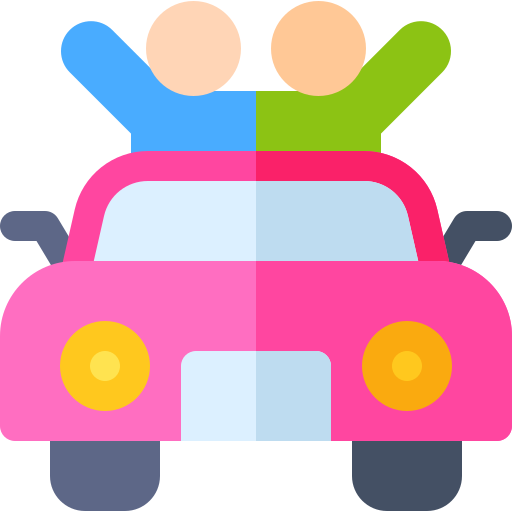
They are traveling.
Yoldalar.

to fight
savaşmak, dövüşnek, kavga etmek
My brothers are fighting.
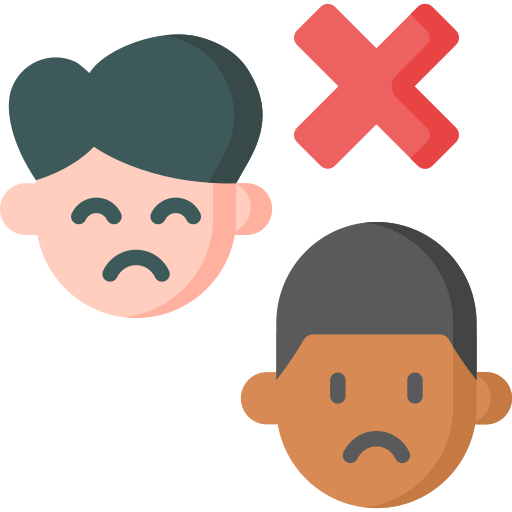
My brothers are fighting.
Kardeşlerim dövüşüyor
My brothers are fighting.

to draw
çizmek
He can draw a map.

the picture
resim
The picture is beautiful.

My children are drawing a picture.
Çocuklarım resim çiziyor.
She is drawing a picture.

the window
pencere
Open the window, please.

grandma
babaanne
My grandma is very nice.
to look out of the window
pencereden dışarı bakmak
My grandma is looking out of the window
*Sonlar bazen değişir*
Bazen fiilin sonu şimdiki sürekli zamanda değişir.
Bir fiil *e* ile bittiğinde, *e'yi* bırakın ve *-ing* ekleyin : "make" - "making"
*Tek heceli bir fiil sesli harf + ünsüz ile bitiyorsa* , son ünsüz harfi ikiye katlayın ve *ing* ekleyin: "swim" - "swimming"
Bir fiil *sesli harf + ünsüz ile son hecede vurgu yapılarak* sona erdiğinde, ünsüz harfi ikiye katlayın ve *şunu* ekleyin: "begin" - "beginning"
Vurgu son hecede değilse, *birden fazla heceli kelimelerin sessiz harflerini* *ikiye katlamayın* : "remember" - "remembering"

We are making progress!
İlerleme kaydediyoruz!
Are we making progress?

to move
taşınmak
He is moving to Spain.

We are moving.
Taşınıyoruz.
We are moving next summer.

She is swimming.
Yüzüyor.
She is swimming in the sea.

to begin with
başlamak gerekirse
We should begin with the hardest task.

I'm beginning with this.
Bununla başlıyorum.
I'm beginning with this task.
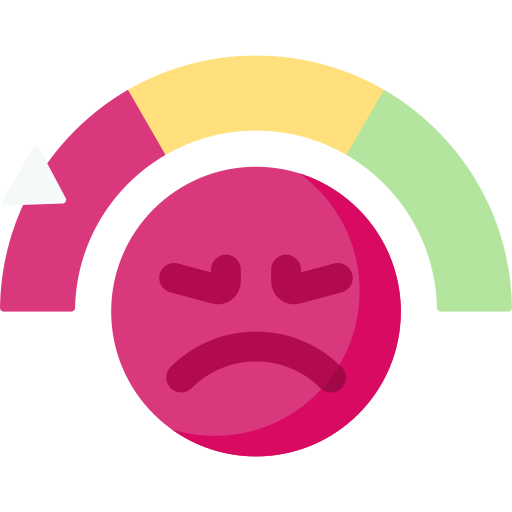
to get worse
kötüleşmek
The weather is starting to get worse.

It's getting worse.
Gittikçe kötüleşiyor.
Unfortunately, it's getting worse.
*Şimdiki zaman - olumsuz ve soru*
Olumsuzluk oluşturmak için,ana fiilden önce "not" yerleştirin.
"He is not sleeping."
"You are not eating."
*Öznenin önüne* *am, is* veya *are* koyarak bir soru oluşturun.
"Is he sleeping?"
"Are you eating?"

He is not sleeping.
O uyumuyor.
He is not sleeping right now.

right now
şu anda
The children aren't sleeping right now.

to shop
alışveriş yapmak
I am not shopping right now.

Is it raining?
Yağmur mu yağıyor?
Is it raining there?

to make a pizza
pizza yapmak
I'm not making a pizza, I'm making pasta.

Is he making progress?
İlerleme kaydediyor mu?
Is she getting worse?
Durumu kötüleşiyor mu?
to look
bakmak
Are you looking?

to work
çalışmak
They are not working.
Are you beginning right now?
Şu an mı başlıyorsun?
*Şimdiki basit zaman vs. Şimdiki sürekli zaman*
*Tekrar eden bir şeyden* , *alışkanlıklarımızdan* ve *nelerden hoşlandığımızdan* bahsederken şimdiki zamanı kullandığımızı zaten biliyorsunuz.
"I go to the gym every week."
"I like pizza."
*Şu anda* olan bir şeyden bahsederken *şimdiki zamanı* kullanırız.
Şimdiki zaman ile sinyal sözcükleri: "right now", "now", "at the moment", "today"
"He is singing right now."
"We are at school at the moment."

I like these shoes.
Bu ayakkabıları beğendim.
I've been wearing these shoes for months and I still like them.

every day
her gün
I go to school every day.
Do you go to work every day? - Yes l go to work every day.

to study for an exam
sınava hazırlanmak
I am not studying for the exam now.

a lot
çok
Do you study a lot? - Yes I study lot.

to listen
dinlemek
I like to listen to my favorite songs in the car.
Are you listening to me?
Beni dinliyor musun?
to fall
düşmek
Do not fall!

the star
yıldız
Look at the star.

A star is falling down!
Bir yıldız kayıyor!
Look! A star is falling down!
They are working now.
Şu an çalışıyorlar.

Does it snow often here?
Buraya sık sık kar yağar mı?
to drive
araba sürmek
My mother is driving to work right now.

I'm driving right now.
Şu anda araba sürüyorum.
I don't drive.
Ben (araç) sürmem.
I don't drive when I'm sleepy.
*Kardinal Sayılar*
Kardinal sayılar normalde şu durumlarda kullanılır:
şeyleri sayın: "I have two brothers."
yaşınızı belirtin: "I am ten years old."
telefon numaranızı veriniz: "My phone number is two-six-three, three-eight-four-seven."
Yıllarını ver: "It happened in nineteen seventy-five (1975)."
1 - "one"
2 - "two"
3 - "three"
4 - "four"
5 - "five"
6 - "six"
7 - "seven"
8 - "eight"
9 - "nine"
10 - "ten"
I am seven years old.
Yedi yaşındayım.
How old are you?
Kaç yaşındasın?

five apples
beş elma
There are five apples in the kitchen.

siblings
kardeşler
Do you have any siblings?

How many siblings do you have?
Kaç kardeşin var?

I don't have any siblings.
Hiç kardeşim yok.

sister
kız kardeş, abla
I have one sister.

in two weeks
iki hafta içinde
They are going to visit us in two weeks.

He is leaving in two weeks.
İki hafta içinde gidiyor.

the piece
parça
a piece of cheese

Can you give me one piece?
Bana bir tane verebilir misin?
Can you give me one piece of cake?
*Sıfatların comperativr ve superlative biçimleri*
Karşılaştırma yapmak için sıfatların karşılaştırma ve üstünlük hallerini kullanmanız gerekir. Örneğin:
"tall" - "taller" - "the tallest"
"small" - "smaller" - "the smallest"
Bazı nitelikleri karşılaştırdığımızda ve bir şeyin daha iyi/daha kötü olduğunu söylemek istediğimizde *comperative*, en iyisinin olduğunu ifade etmek istediğimizde ise *superlative* kullanırız.
*Superlative bir form oluştururken kesin artikel eklemeyi unutmayın.*
İki şeyi veya kişiyi karşılaştırırken *karşılaştırma sıfatıyla* birlikte "than" kullanın.

smaller
daha küçük
The dog is smaller than the cat.
taller
daha uzun
I'm taller than you.

taller than me
benden daha uzun
My brother is taller than me.

My father is taller than you.
Babam senden daha uzun.
puppy
köpek yavrusu
The smallest puppy is so cute.

to look younger
genç görünmek
You look younger than your age.

You look younger.
Daha genç görünüyorsunuz.

the youngest person
en genç kişi
The youngest person in the room.
hard
sertçe
She works hard.

We work harder.
Daha sıkı çalışıyoruz.
We work harder than before.

the hardest thing
en zor şey
What's the hardest thing in life?
*Kısa sıfatların karşılaştırılması*
(tek heceli sıfatlar ve -y ile biten iki heceli sıfatlar)
Karşılaştırmalı: sonuna *-er* ekleyin: "smaller"
Üstünlük: sıfatın önüne *-est* ekini ve *the* ekleyin: "the smallest"
*Sıfat ünsüz, sesli harf, ünsüzle bitiyorsa son harfi tekrar edin*:
"big" - "bigger" - "the biggest"
Sıfat ünsüz + Y ile bitiyorsa *Y'yi I olarak değiştirin*
"funny" - "funnier" - "the funniest"
My car is faster than yours.
Benim arabam seninkinden daha hızlı.
funny
eğlenceli, komik
I like funny people.

the joke
şaka
She could laugh and joke with her colleagues.

This is the funniest joke in the world.
Bu, dünyadaki en komik şaka.

big
büyük
Big eyes are beautiful.

Our house is bigger than yours.
Bizim evimiz sizinkinden daha büyük.
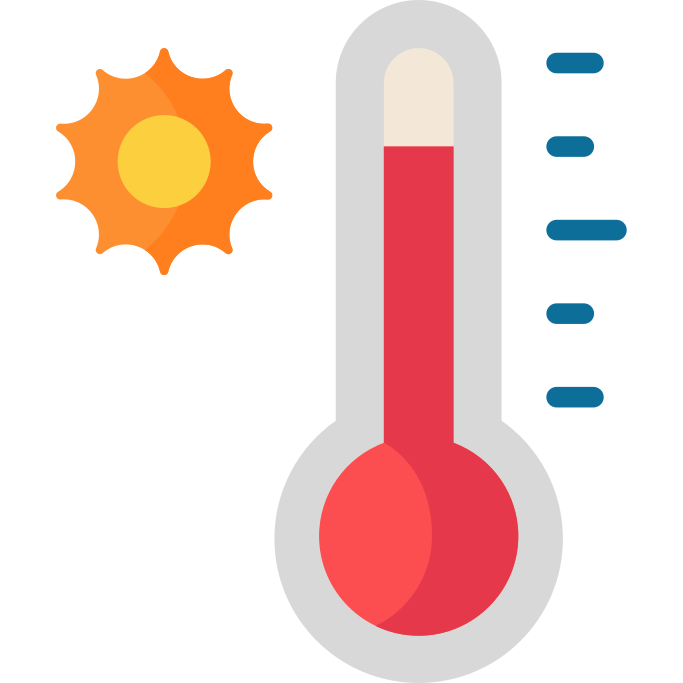
hot
sıcak
It was hot inside the hall.

This is the hottest chilli pepper.
Bu en acı biberdir.

nice
güzel, iyi
We had a nice time.

the place
yer
The garden is a peaceful place.

We are moving to a nicer place.
Daha güzel bir yere taşınıyoruz.

wet
ıslak
He slipped on the wet rock.

the world
dünya
He tries to save the world.

What is the wettest place in the world?
Dünyanın en yağışlı yeri neresidir?
*Uzun sıfatların karşılaştırılması*
(2 heceli sıfatlar -y ile bitenler ve 3 veya daha fazla heceli sıfatlar hariç tümü)
Karşılaştırmalı form oluşturmak için temel formun önüne MORE ekleyin "more beautiful"
Üstünlük belirtmek için temel biçimin önüne the ve MOST sözcüğünü ekleyin."the most beautiful"
"It's more useful than you think."
"That's the most complicated exam!"

She is the most beautiful woman.
O, en güzel kadındır.

more beautiful
daha güzel
You are more beautiful than before.

expensive
pahalı
That's the most expensive house.

This T-shirt is more expensive than the other one.
Bu tişört diğerinden daha pahalı.
This book is more interesting than that one.

useful
işe yarar, faydalı
Aspirin is useful for headaches.

It's more useful than you think.
Düşündüğünden daha yararlı.
Reading books is more useful than you think.
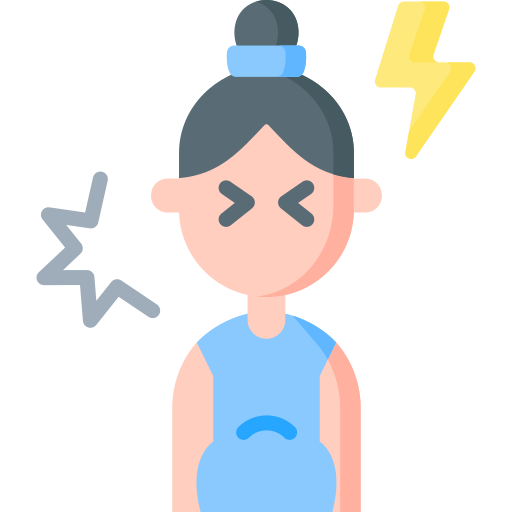
stressful
stresli
This job is very stressful.

It is the most stressful exam.
En stresli sınav.

money
para
I counted the money before putting it in my wallet.

important
önemli
Your support is very important to me.

delicate
hassas
His health is very delicate.
(Jeho zdraví je velmi citlivé.)

Health is more important than money.
Sağlık paradan daha önemlidir.

interesting
ilginç
It was an interesting debate.

movie
film
a movie star

This movie is more interesting.
Bu film daha ilginç.
This movie is more interesting than the book.

clever
zeki
She is a clever and studious young woman.

My brother is the most clever person.
Abim en zeki insandır.
My brother is the most clever person I know.
*Kuralsız sıfatlar*
Kuralsız sıfatların şekillerini
ezberlemeliyiz.
"good" - "better" - "the best"
"bad" - "worse" - "the worst"
"far" - "farther/further" - "the farthest/furthest"
"little" - "less" - "the least"
"much" - "more" - "the most"
"It will get better soon."
"She is the best teacher in the world!"
I feel much better now.
Şimdi çok daha iyi hissediyorum.
Thanks for asking, I feel much better now.

the silence
sessizlik
The silence lasted for about a minute.

the anger
öfke
Anger showed in his face.
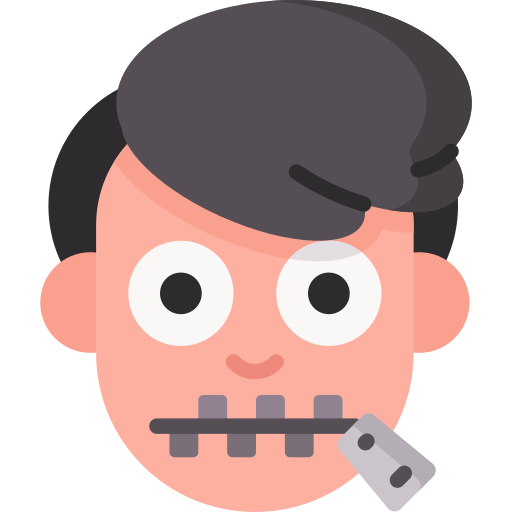
His silence was worse than his anger.
Sessizliği öfkesinden daha kötüydü.
nervous
gergin
He is very nervous about the performance.

I feel less nervous.
Daha az gergin hissediyorum.
I feel less nervous after meditation.

singer
şarkıcı
Who is your favourite singer?

My sister is the best singer.
Kız kardeşim en iyi şarkıcıdır.

far
uzak
It was not too far away.

to expect
beklemek, ummak
We expect the best.
She walked farther than she expected.
Beklediğinden daha uzağa yürüdü.
I thought the store was just around the corner, but I ended up walking farther than I expected.
*Geçmiş basit zamandaki ifadeler*
Geçmişte tamamlanmış eylemlerden bahsederken geçmiş basit zaman kullanılır. Basit geçmiş zamanı oluşturmak için genellikle düzenli fiillerin temel biçimine "-ed" eklemesi yaparsınız. Örneğin:
"She walked to the store"
"He watched TV last night."
"to talk" - "talked"
"to walk" - "walked"
"to watch" - "watched"
"to cook" - "cooked"
"to visit" - "visited"
We talked.
Konuştuk.
We talked about it last night.
I walked there
Oraya yürüdüm.
I walked there for hours

together
birlikte
Children play together.

They walked together.
Birlikte yürüdüler.
They walked together to school.

We watched TV together.
Birlikte televizyon izledik.
We watched TV together yesterday.
to cook dinner
akşam yemeği pişirmek
My mum cooked dinner for me.

She cooked dinner.
Akşam yemeğini pişirdi.
She cooked dinner for the children.

to visit
ziyaret etmek
You can visit us later.

He visited us for dinner.
Akşam yemeği için bize uğradı.
I visited my grandparents for the weekend.
*Kuralsız geçmiş basit zaman formları*
İngilizcede hatırlaman gereken pek çok düzensiz geçmiş zaman biçimi vardır. İki önemli fiile ve bunların geçmiş basit zaman biçimlerine bir göz atalım!
"to do" - "did" - "I did my homework."
"to make" - "made" - "I made pizza."

We did it!
Başardık!
the dinner
akşam yemeği
What's for dinner?

She made dinner.
Akşam yemeğini o hazırladı.
She made him a simple dinner.

Children did the homework.
Çocuklar ödevi yaptı.

to make an effort
çaba göstermek
We have to make an effort.

to finish
bitirmek
We are finishing soon.

I made an effort to finish my work.
İşimi bitirmek için çaba sarf ettim.

the jam
reçel
My mom made a delicious jam.

from
itibaren
She made jam from the apples.

She made jam from the apples.
Elmalardan reçel yaptı.
*TO BE'nin geçmiş basiti*
Tekil özneler için *be'nin* basit geçmiş zamanı şöyledir "was". Çoğul özneler (ve tekil siz) için basit geçmiş zaman şöyledir "were".
"I was at school yesterday."
"You were at home."
Olumsuz cümlelerde *not* zarfını ekleyin ve *was/were sözcüğünden sonra* koyun. Olumsuz cümlelerde çoğu zaman kısaltılmış biçimin kullanıldığını unutmayın: "wasn't" = "was not"/ "weren't" = "were not".
"I wasn't at school yesterday."
"You weren't at home."
I was there.
Oradaydım.
I was there yesterday.

at home
evde
You weren't at home when I came.

We were happy.
Mutluyduk.
We were happy while we were together.

They were together.
Beraberlerdi.
They were together all night.
tired
yorgun
I was very tired this morning.

He was tired.
Yorgundu.
He was tired yesterday.

She was at school.
Okuldaydı.
She was at school yesterday.

to be sure
emin olmak
I'm not sure about it.
I wasn't sure about it.
Bundan pek emin değildim.

yesterday
dün
The children were at school yesterday.
*Dönüşlü zamirler*
Bir fiilin öznesi ve nesnesi aynı olduğunda sıklıkla dönüşlü zamirleri kullanırız. Ayrıca bizim (veya bir başkasının) bir şey yaptığımızı belirtmek istediğimizde.
Tekil: "myself" (I) "yourself" (you) "himself" (he) "herself" (she) "itself" (it)
Çoğul: "ourselves" (we) "yourselves" (you) "themselves" (they)
"I did it myself."
"We did it ourselves."
"I cut myself."
I made the pizza myself.
Pizzayı kendim yaptım.
He was impressed that I made the pizza myself instead of ordering takeout.
to hear
duymak
He did not want to hear it.

Do you hear yourself?
Ağzından çıkanı kulakların duyuyor mu?

themselves
kendileri
They did the homework themselves.

to ourselves
kendimize
We have the house to ourselves.
to talk
konuşmak
The two are talking.

He talks to himself.
Kendi kendine konuşuyor.

I washed the car myself.
Arabayı kendim yıkadım.

to wish
dilemek
We wish for peace.

Wish yourself good luck.
Kendine iyi şanslar dile.
*Zaman hakkında konuşmak*
Şu zaman edatlarını kullanırız: "at", "in", ve "on".
Belirli bir zaman vermek için "at" kullanırız: "at 3 o'clock", "at noon", "at the moment"
Aylar, yıllar, yüzyıllar ve uzun süreler için "in" kullanırız: "in winter", "in April", "in 1990"
Günler ve tarihler için "on" kullanırız: "on Monday", "on the 6th of March"
on Sunday
pazar günü
Do you want to go out on Sunday?

at the moment
şu anda
I'm not in the office at the moment.
necessary
gerekli
It's not necessary for you to be here.

At the moment it's not necessary.
Şu an için buna gerek yok.
at 3 o'clock
saat 3'te
The class starts at 3 o'clock.
in summer
yazın
The sun shines in summer.

It rains a lot in autumn.
Sonbaharda çok yağmur yağar.

I was born in ...
...'da doğdum.
I was born in 1999.
*Gelecek GOING TO*
Halihazırda kararlaştırılmış bir planı, niyeti veya gelecek için mantıklı bir tahmini ifade eder.
İşaret kelimeleri:
"in one year"
"next week"
"next year"
"next month"
"tomorrow"
"soon", vesaire.
"I am going to meet my friend next week."
"They are going to talk about his future tomorrow."
I am going to leave tomorrow.
Yarın ayrılıyorum.

to miss (sth)
kaçırmak, özlemek
Do not miss this!
They are going to miss the bus.

They are going to miss the bus.
Otobüsü kaçıracaklar.

to talk about
hakkında konuşmak
We are going to talk about it.

soon
yakında
I will be home soon.

I'm going to go soon.
Yakında gideceğim.
to meet
buluşmak
I'm going to meet my friends.
next week
gelecek hafta
We are going to leave next week.

I am going to see a doctor tomorrow.
Yarın doktora gideceğim.
*Gelecek - sorular ve olumsuz*
Olumsuzluk oluşturmak için "going to" öncesine "not" eklemeniz yeterlidir.
"We are not going to sleep tonight."
Soru oluşturmak için özneyi fiille değiştirin "to be":
"Are you going to be there?"

Are you going to be there?
Orada olacak mısın?

the tea
çay
Do you drink tea?

the coffee
kahve
I want a cup of coffee.

Are you going to drink coffee or tea?
Kahve mi içersiniz yoksa çay mı?

to believe
inanmak
I believe in destiny.
You are not going to believe this.
Buna inanmayacaksın.
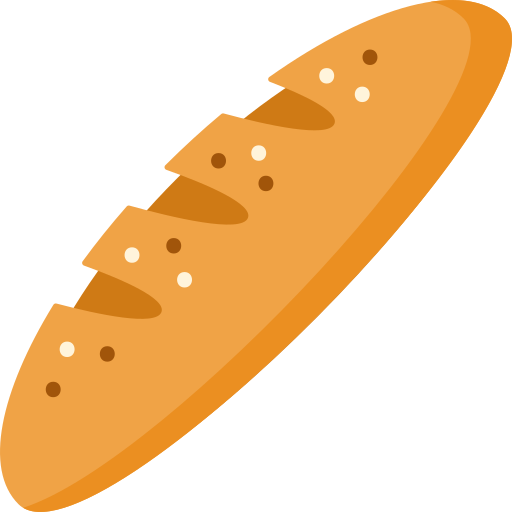
to buy
satın almak
Buy me a bread, please.
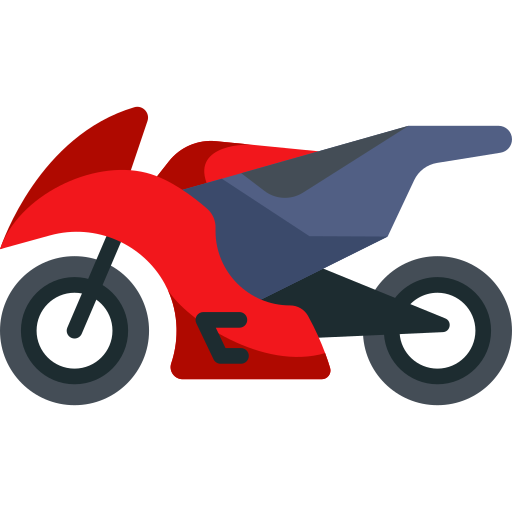
the motorcycle
motosiklet
He drives a motorcycle.

or
veya
Do you prefer coffee or tea?
Are you going to buy a car or a motorcycle?
Araba mı alacaksın motosiklet mi?
*Zarflar*
Zarf, bir fiili, bir sıfatı, başka bir zarfı ve hatta bir cümlenin tamamını değiştiren (tanımlayan) bir kelimedir; örneğin: "very", "really", "too", vb.
Örnekler:
"He is very tall."
"I really like him."
"The dress is too expensive."
"Fortunately, I brought an umbrella."
very
çok
You look very tired.

Thank you very much!
Çok teşekkür ederim!

almost
hemen hemen, neredeyse
She is almost perfect.

to like
hoşlanmak
I like this movie.

I really like you.
Seni gerçekten seviyorum.
I just wanted to tell you that I really like you.
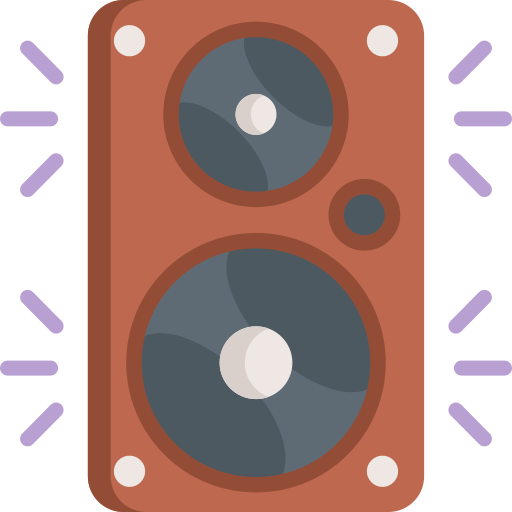
too loud
çok yüksek sesli
The music is too loud.

It's too expensive.
Bu çok pahalı.
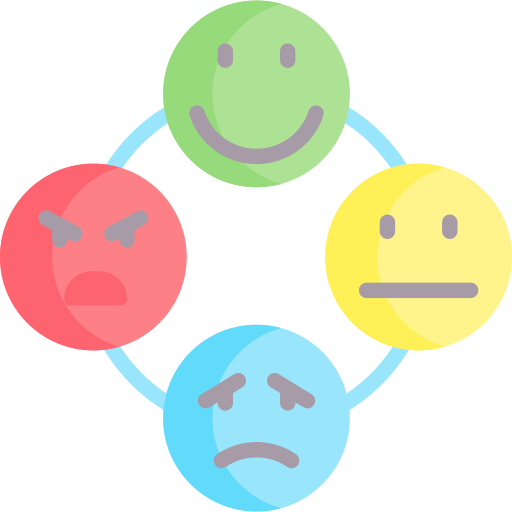
to feel
hissetmek
How do you feel?

I feel bad.
Kendimi kötü hissediyorum.
I feel bad about what happened.

fortunately
neyse ki
Fortunately, I did my homework.

You study hard.
Sıkı çalışıyorsun.

See you very soon!
Çok yakında görüşürüz!