
Course for absolute beginners (A1)
Explanations and vocabulary practice
Sections: 27
- Welcome to the course for complete beginners!
- Where are you from?
- The verb TO BE
- One coffee, please!
- Indefinite and definite articles
- When do we use AN instead of A?
- Present simple
- Endings change sometimes
- Asking for directions
- Time expressions in present simple tense
- The verb TO HAVE
- Three main auxiliary verbs
- The verb TO DO
- Meeting new people
- Questions
- Questions with TO BE
- WH questions
- HOW questions
- Negatives
- Describe a person
- Plurals
- Section 22
- Section 23
- Demonstrative pronouns
- Weather talk
- Possessive pronouns
- Expressing possession
Save words from this page and practise them with flashcards in DuoCards. How does it work?
This course will guide you through the basics of English. It will help you understand fundamental grammar while introducing useful phrases and key vocabulary for everyday situations.
We'll start with essential expressions, such as greetings and thanking others. Let's go!










It is important to know how to say where you are from. You can answer in two ways:
I am from...
I come from...
Where are you from?
I am from Spain. or I come from Spain.











Take a look at the forms of the verb TO BE in the first three persons:
Here is how it goes:
I am
you are
he/she/it is
Notice that I is always capitalized.







Did you come across a cozy café on your travels? Let's learn how to order coffee or ask for the bill.













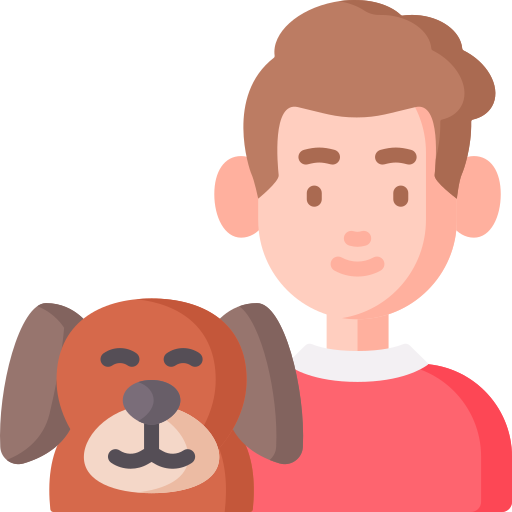
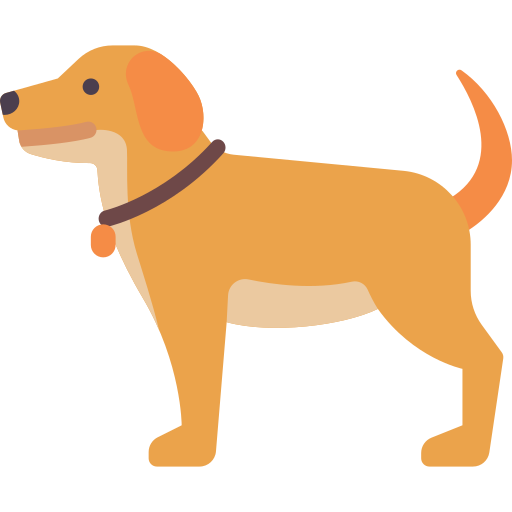
a dog - We use the indefinite article when we're not talking about a specific thing. We also use the indefinite article when we are talking about something for the first time.
For example: There is a dog.
Indefinite articles are only used for singular words, plurals do not have an indefinite article.
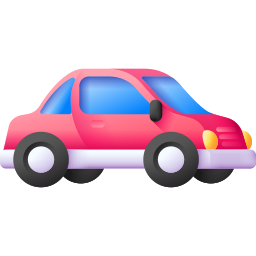
the car - We use the definite article when we refer to something or someone we have already mentioned before or when it is clear from the context what or who are we talking about.
For example:
The car is big.
The dog that attacked me ran away.







If a word begins with a consonant, we use the form a. If a word begins with a vowel sound, we use the form an.
a pen
an apple






Usage: When we want to express habits, repeated actions, general truths, emotions, and wishes.
In English, all persons have the same form, except for the 3rd person singular.
In most cases, the suffix -s is added in the 3rd person singular:
I live in Prague.
My sister lives in London.







If the verb ends with -y which follows a consonant, for the 3rd person singular we remove -y and add -ies:
I study English.
He studies English.
We add the suffix -es in the 3rd person singular if the verb ends in -sh, -ch, -x, -o, -ss, -zz:
I wash my hands.
He washes his hands.








If you get lost while traveling or are unsure about something, don’t hesitate to ask the locals. It’s a great way to practice the language. Here are a few phrases to help you handle it with ease.
















Use these expressions to specify when or how often you do something.
often
usually
sometimes
always
never
every day/week/year/









Since this verb is irregular, there are two ways of writing it in the present: have or has, and deciding to use one or the other depends on the subject of the sentence.
I have you have he/she/it has we have you have they have






Do, be and have are three main auxiliary verbs in English. You already know the verb to have and the singular of to be.
For the plural subject pronouns you only need to remember one form of the verb to be which is are. That's easy, right?
I am
you are
he is / she is/ it is
we are
you are
they are











The verb to do can function as an auxiliary verb as well as a main verb! Here is how we conjugate the verb to do:
I do
you do
he/she/it does
we do
you do
they do








In this section, we’ll explore how to introduce ourselves and ask questions to learn more about others.











We can use do to make question forms. When the subject is he, she or it, we add DOES at the beginning to make the affirmative sentence a question. Notice that the letter S at the end of the verb in the affirmative sentence (because it is in third person) disappears in the question.
Here are some examples:
Do you work here?
Do you like chocolate?
Does she speak Spanish?
Does it work?
These questions can be answered with yes or no.
In questions that use do/does it is possible to give short answers to direct questions as follows:
Do you speak English? - Yes, I do.








Most questions are formed by changing the word order in the sentence.
Basic sentence: subject + am/is/are She is from Spain.
Question: am/is/are + subject Is she from Spain?





These questions cannot be answered yes or no. The rules of question formation are the same like those above, except that an extra question word appears at the beginning ( what, why, where, when, whom, whose, how)
Where is he? - He is here.
What do they like? - They like pizza




How can be used with other words to make different types of questions, for example:
how far, how long, how many.
Besides those, how can be used with adjectives to make questions for example:
How difficult is it?
How old is he?






We make negatives by putting not after the verb. If there are two verbs in the sentence, we always put not after the first one. Just like in these example sentences:
We do not work here.
She does not speak English.
They are not here.
I am not your friend.
Hint: don't is the short form of do not, just like aren't is a short form of are not and isn't of is not.









Let’s learn how to describe a person using the verbs to have and to be that you already know, along with some practical adjectives.





The plural is mostly formed simply by adding the ending -S to the noun.
For example:
a girl - girls
a song - songs
If the word ends in ‑s, ‑sh, ‑ch, ‑x, or ‑z, we add -ES
a bus - buses
If the word ends in a Y following a consonant, we change the Y to an I and add -ES
a strawberry - strawberries
There are also some irregular plurals, for example:
a child - children
a woman - women
a man - men







There is / There are
These phrases express that something is somewhere:
A positive sentence:
There is a dog.
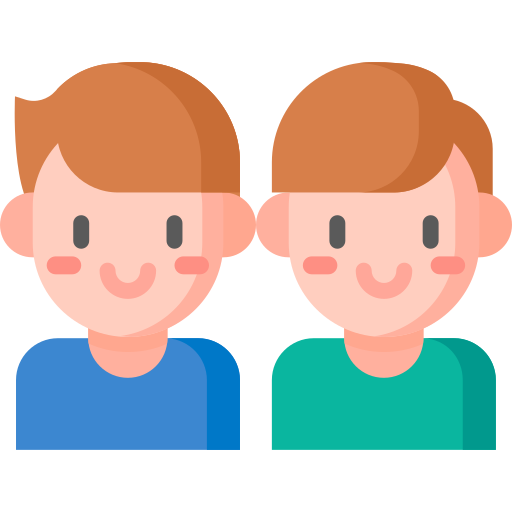
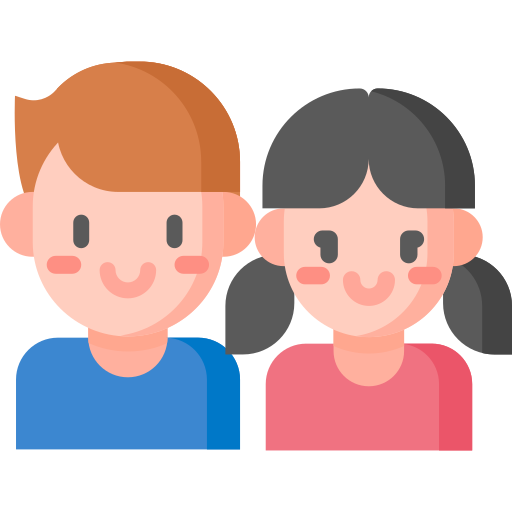
There are two boys.
Question: Is there a house? Answer: Yes, there is./No there is not.
Question: Are there trees in the garden? Answer: Yes, there are./ No, there are not.
Negative:
There is not a problem.
There are no trees in the garden.












SOME / ANY
We use some in positive sentences for countable plural nouns (when we don't know the exact amount) and for uncountable nouns.
I have some flowers
There is some milk in the fridge
We use any in negative sentences and questions.
I do not have any flowers.
Is there any milk?












THIS/THESE - Used when the object being pointed to is close.
this book - singular
these books - plural
THAT/THOSE - Used when the object we are pointing at is farther away.
that book - singular
those books - plural











Weather is a topic that's often discussed, as it changes almost every day. Let's look at some useful phrases so you can talk about what's happening outside!😉










Dependent - they stand before the word they are connected to and they never occur independently.
my, your, his, her, its, our, your, their
This is my car.
Independent - can stand alone in a sentence or behind a noun
mine, yours, his, hers, its, ours, yours, theirs
This car is mine.






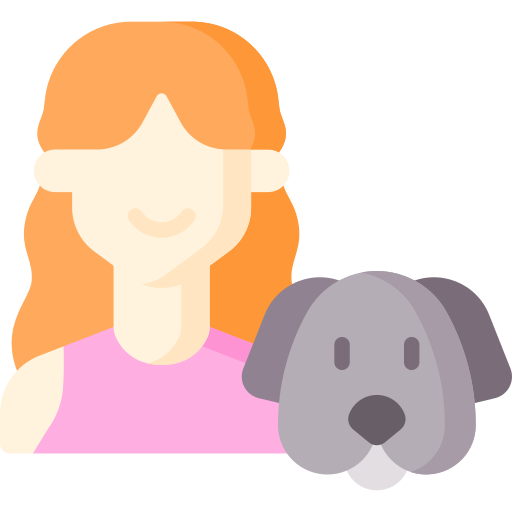
We add 's when the things are owned by people, but it can also be used with animals, organizations, and even some time expressions.
This is my sister's dog.
What are the government’s plans?
Today’s news.
In plural we add only apostrophe (') without s:
Our sisters' dresses are long.


Learning with DuoCards
What is DuoCards?
DuoCards is a language-learning app that helps you build vocabulary with flashcards. You can save words you want to learn and practise them over time.
How do I learn with this course?
Browse the explanations and vocabulary in each section. Select Card picker and choose the words you want to learn. Then create a free account to save your words and practise them.
How do I practise my words?
You'll see a flashcard with a word and a hidden translation. Guess what it means, then tap to check your answer. DuoCards repeats the words you find difficult.
Do I need an account, and is learning free?
You can browse this page without an account. A free account lets you save words and track your progress. The free plan has limits, and Premium offers additional features.