
Yeni başlayanlar için kurs (A1)İngilizce kelimeler
by DuoCards
*Yeni başlayanlar için kursa hoş geldiniz!*
Bu kurs size İngilizcenin temelleri konusunda rehberlik edecektir. Temel dilbilgisini anlamanıza yardımcı olurken, günlük durumlar için yararlı ifadeleri ve anahtar kelimeleri tanıtacaktır.
Selamlaşma ve teşekkür etme gibi temel ifadelerle başlayacağız. Hadi gidelim!

Hello!
Merhaba!
Hello and welcome to the course.

My name is...
Benim adım...
My name is Paul.

Thank you!
Teşekkür ederim
Thank you for your help!

please
lütfen
Could you please help me with my homework?

How are you?
Nasılsın?
How are you today?

I am fine.
İyiyim!
How are you? - I am fine!

Excuse me?
Efendim?
Excuse me, are you John?

I don't understand.
Anlamıyorum.

sorry
özür dilerim
I'm sorry.

a name
bir isim
What is your name?
What's your name?
Adın ne?

good
iyi
The weather is good.

bad
kötü
The weather is bad.

Goodbye!
Hoşça kalın!
Goodbye! I hope to see you soon.
*Nerelisin sen?*
Nereli olduğunuzu nasıl söyleyeceğinizi bilmek önemlidir. İki şekilde cevap verebilirsiniz:
"I am from..."
"I come from..."
"Where are you from?"
"I am from Spain." veya "I come from Spain."
Where are you from?
Nerelisiniz?
Where are you from? - I am from Germany.

I am from ...
...'lıyım
Where are you from? - I am from France.

I come from...
...'lıyım / ...'dan geliyorum
I come from Canada.

Coffee, please.
Bir kahve lütfen.
Can I get a coffee, please?

Yes, please!
Evet, lütfen!
Would you like some water?
- Yes, please!

the friends
arkadaşlar
I like my friends.

Yes or no?
Evet mi, hayır mı?
Do you want to go to the park? Yes or no?

to like
hoşlanmak / sevmek
I like ice cream.

also
de, ayrıca
Juan is also from Chile.

small
küçük
Ukraine is not small.

big
büyük
Canada is big.

a country
bir ülke
I like my country.

I am from a small country.
Küçük bir ülkeden geliyorum.
Peter is from a big country.
*OLMAK fiili*
"TO BE" fiilinin ilk üç şahıstaki biçimlerine bir göz atın:
Şöyle olacak:
"I am"
"you are"
"he/she/it is"
"I" adresinin *her zaman büyük harfle* yazıldığına dikkat edin.

You are beautiful.
Çok güzelsin.
Everyone thinks you are beautiful.

He is a man.
O bir erkektir.
He is a tall man.
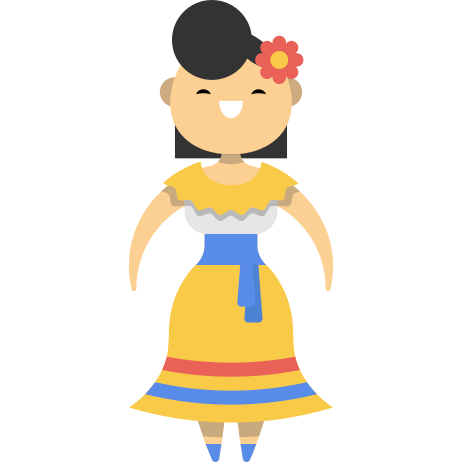
She is a woman.
O bir kadındır.
She is a beautiful woman.

to live in
içinde yaşamak
We live in a big house.

You live in a house.
Bir evde yaşıyorsun.
I live in a house with my family.

Are you Paul?
Paul musunuz?
Excuse me, are you Paul?

I am not Paul. I am John.
Ben Paul değilim. Ben John'um.

my friend
arkadaşım
You are my best friend.

He is my friend.
O benim arkadaşım.
He is my best friend.
I am fine, thank you.
İyiyim, teşekkür ederim.
I'm good, thanks.
*Bir kahve lütfen!*
Seyahatlerinizde şirin bir kafeye mi rastladınız? Nasıl kahve sipariş edileceğini veya hesap isteneceğini öğrenelim.

coffee with milk
sütlü kahve
Can I have a coffee with milk, please?
a café
bir kafe
A woman in the café asked for a coffee.

Can I see the menu, please?
Menüyü görebilir miyim, lütfen?

How much is it?
Ne kadar?
How much is the coffee, please?

One cappuccino, please.
Bir cappuccino, lütfen.
Can I have one cappuccino, please?

tea
çay
I would like a cup of tea, please.

a cup of tea with sugar
şekerli bir bardak çay
Can I have a tea with sugar, please?

a coffee to go
al-götür kahve
I'll have a coffee to go, please.

Can I have a coffee to go?
Bir kahve alabilir miyim, paket olsun?

a cake
bir pasta
Can I have a slice of cake?

Can I also get a slice of cake, please?
Ben de bir dilim pasta alabilir miyim, lütfen?

It was delicious!
Harikaydı!
The cake was delicious!

Can I have the bill, please?
Hesabı alabilir miyim, lütfen?

a bank card
banka kartı
Can I pay by card, please?

cash
nakit
They only accept cash.

Can I pay by card?
Kartla ödeyebilir miyim?

Sorry, we only accept cash.
Üzgünüz, sadece nakit kabul ediyoruz.
*Belirsiz ve kesin tanımlar*
"a dog"- Belirli bir şeyden bahsetmediğimizde belirsiz tanım kullanırız. Bir şeyden ilk kez bahsederken de belirsiz tanım kullanırız.
Örneğin: "There is a dog."
Belirsiz tanımlar sadece tekil kelimeler için kullanılır, *çoğulların belirsiz tanımları yoktur.*
"the car"- Daha önce bahsettiğimiz bir şeye veya bir kişiye atıfta bulunduğumuzda veya bağlamdan ne veya kimden bahsettiğimiz açıkça anlaşıldığında kesin edatı kullanırız.
Örneğin:
"The car is big."
"The dog that attacked me ran away."

a dog
bir köpek
I want to have a dog.

a man
bir adam
There is a man.

a woman
bir kadın
A woman in the café ordered a cappuccino.

and
ve
A mother and a child.

a man and a dog
bir adam ve bir köpek
I can see a man and a dog.

a child
bir çocuk
The woman has a child.

to play
oynamak
The children play football outside.

The child plays.
Çocuk oyun oynuyor.
The child plays with the car.

a garden
bahçe
We have a big garden.
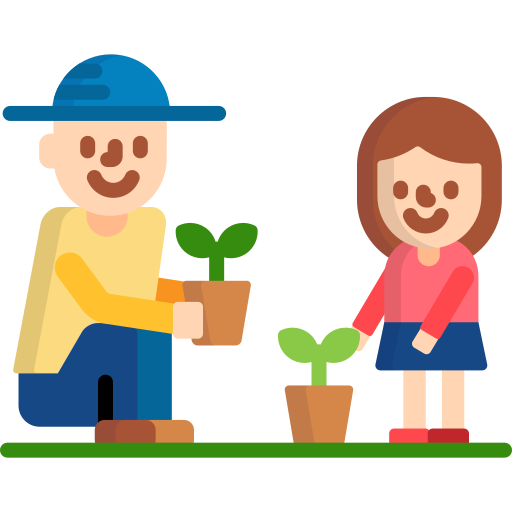
They play in the garden.
Bahçede oynuyorlar.
Every afternoon, the children play in the garden.
*Ne zaman A yerine AN kullanırız?*
Bir kelime bir ünsüzle başlıyorsa "a" formunu kullanırız. Bir kelime sesli harfle başlıyorsa "an" şeklini kullanırız,
"a pen"
"an apple"

an apple
bir elma
There is an apple.

to eat
yemek
The man is eating an apple.

He eats an apple.
O bir elma yiyor.
He eats an apple every day.

an hour
bir saat
I had to wait for more than an hour.

It's a boy
O bir erkek

a teacher
bir öğretmen
I like my teacher.

She is a teacher.
O bir öğretmendir.
*Geniş zaman*
Kullanımı: Alışkanlıkları, tekrarlanan eylemleri, genel doğruları, duyguları ve istekleri ifade etmek istediğimizde.
İngilizce'de, şahıslar aynı kalıba sahiptir.
Çoğu durumda, *-s* eki 3. tekil şahısta eklenir:
"I live in Prague."
"My sister lives in London."

I drink
içiyorum
I drink coffee every day.

He eats healthy.
Sağlıklı beslenir.
He eats healthy to stay fit and strong.

You eat pizza.
Pizza yiyorsun.
I eat cake.

she sleeps
o uyuyor
She sleeps 8 hours a day.

we go
gidiyoruz
We go to the cinema once a month.
She goes alone.
Kendi başına gidiyor.
She goes alone to the store.

I read
okurum
I read a book every night before bed.

He reads a book.
Kitap okuyor.

They read a lot.
Çok okurlar.
They read a lot of books.
*Sonlar bazen değişir*
Fiil bir ünsüz harften sonra gelen *-y* ile bitiyorsa, 3. tekil şahıs için *-y'yi* kaldırır ve *-ies'i* ekleriz:
"I study English."
"He studies English."
*Fiil -sh* , *-ch* , *-x* , *-o* , *-ss* , *-zz* ile bitiyorsa 3. tekil şahısta *-es* son ekini ekleriz :
"I wash my hands."
"He washes his hands."

She studies a lot.
Çok ders çalışıyor.
She studies a lot to get good grades.
He studies English.
İngilizce çalışıyor.
to watch
izlemek
We watch the movie in the class.

a movie
bir film
The action scenes were not bad in the movie.

He watches movies.
Film izler.

She watches the dog.
Köpeğe bakar.
She watches the dog every Friday.

to wash
yıkamak
I always wash my hands.

She washes the car.
Arabayı yıkıyor.
She washes the car every Saturday.

He washes his hands.
Ellerini yıkıyor.

The boy washes the apple.
Çocuk elmayı yıkıyor.
*Yol tarifi istemek*
Seyahat ederken kaybolursanız veya bir şeyden emin değilseniz, yerel halka sormaktan çekinmeyin. Bu, dil pratiği yapmak için harika bir yoldur. İşte bunu kolaylıkla halletmenize yardımcı olacak birkaç cümle.

Where is the bus station?
Otogar nerede?
Do you know where the nearest bus station is?

bus station
otogar
The bus station is located near the park.

an airport
bir havalimanı
How much is a ticket to the airport?

Which bus goes to the airport?
Hangi otobüs havalimanına gider?
Excuse me, which bus goes to the airport?

a train
bir tren
The train arrives at 3 PM.

How do I get to the train station?
Tren istasyonuna nasıl gidebilirim?
I’m lost. How do I get to the train station?
I got lost.
Kayboldum.
I got lost. Can you help me?

Can you help me?
Bana yardım edebilir misiniz?

a shuttle bus
servis otobüsü
Is there a shuttle bus to the airport?

Where is the public bathroom?
Halka açık tuvaletler nerede?

right
sağ
Please turn right at the next corner.

left
sol
Turn left at the corner.

straight
doğrudan
Go straight, then turn left.
Go straight and then turn left.
Düz gidin ve sonra sola dönün.

a street
bir sokak
She walked down the street.

the end of the street
sokağın sonu
We need to walk to the end of the street to find the bus stop.

Turn right at the end of the street.
Sokağın sonunda sağa dönün.

Where can I find a taxi?
Taksiyi nerede bulabilirim?
Excuse me, where can I find a taxi?

to show
göstermek
I will show you my favorite café.

Can you show me on the map?
Bunu bana harita üzerinde gösterebilir misiniz?
Can you show me on the map where the nearest restaurant is?

How long does it take to get there?
Oraya varmak ne kadar sürer?
Can you tell me how long it takes to get to the airport?
*Şimdiki zamanda zaman ifadeleri*
Bir şeyi ne zaman veya ne sıklıkta yapacağınızı belirtmek için bu ifadeleri kullanın.
"often"
"usually"
"sometimes"
"always"
"never"
"every day/week/year/"

usually
genellikle
He usually arrives home at about one o'clock.
every day
her gün
I study every day.

I go to school every day.
Her gün okula giderim.
I go to school every day by bus.

on Saturday
Cumartesi günü
What do you usually do on Saturday?

always
her zaman
The sun always rises in the east.

a year
bir yıl
He is four years old.

to travel abroad
yurt dışına seyahat etmek
We travel abroad every year.

often
sıklıkla
We often go to the cinema.

a month
bir ay
July is my favourite month.

He never says hi.
Hiç selam vermez.
I always say hi to him, but he never says hi back.

to smoke
sigara içmek
My grandparents smoke every day.

She never smokes.
Asla sigara içmez.
My sister is very health-conscious. She never smokes.
I practice English every day.
Her gün İngilizce pratiği yapıyorum.
I practice English every day by reading books, watching movies, and speaking with native speakers.
*SAHİP OLMAK fiili*
Bu fiil düzensiz olduğundan, şimdiki zamanda yazmanın iki yolu vardır: "have" veya "has", bunlardan hangisinin kullanılacağı cümlenin öznesine bağlıdır.
"I have"
"you have"
"we have"
"you have"
"they have"
"he/she/it has"
We have two dogs.
İki köpeğimiz var.
We have two dogs, a golden retriever and a poodle.

I have a child.
Bir çocuğum var.
You have a child.
You have a car.
Bir araban var.
You have a big car.

He has it.
Ona sahip.
She has a book.

The teacher has a book.
Öğretmenin bir kitabı var.
I have a book.

an aunt
bir teyze
My aunt has a small garden.
My aunt has three children.
Halamın üç çocuğu var.
My aunt has three children and they all have different personalities.

an uncle
amca
My uncle has a small house.

My uncle has a small restaurant.
Amcamın küçük bir restoranı var.

beautiful eyes
güzel gözler
You have beautiful blue eyes.
She has beautiful eyes.
Güzel gözleri var.
He has beautiful eyes.
*Üç temel yardımcı fiil*
"Do", "be" ve "have" İngilizce'deki üç temel *yardımcı fiildir*. "to have" ve "to be" fiilini zaten biliyorsunuz.
*Çoğul özne zamirleri* için "to be" fiilinin yalnızca bir biçimini hatırlamanız gerekir, "are": Bu kolay, değil mi?
"I am"
"you are"
"he is"/ "she is"/ "it is"
"we are"
"you are"
"they are"

You are my best friend.
Sen benim en iyi arkadaşımsın.
I don't know what I would do without you. You are my best friend.

I am happy.
Mutluyum.
I am happy for you.

a colour
bir renk
What is your favorite colour?

Red is a beautiful colour.
Kırmızı güzel bir renktir.

a student
bir öğrenci
He is a very good student.

very good
çok iyi
He is a very good boy.

My sister is a very good student.
Kız kardeşim çok iyi bir öğrencidir.

He is a good boy.
O iyi bir çocuk.

They are my friends.
Onlar benim arkadaşlarım.
They are my friends from school.

We are here.
Buradayız.
We are here to see my uncle.

We are from Austria.
Avusturyalıyız.
We are from Austria. Where are you from?
*YAPMAK fiili*
"to do" fiili hem yardımcı fiil hem de ana fiil olarak işlev görebilir! İşte "to do" fiilini nasıl çekimlediğimiz:
"I do"
"you do"
"he/she/it does"
"we do"
"you do"
"they do"

I do it.
Onu yaparım
It's good to exercise—I do it every day to stay healthy.

You do it.
Sen yaparsın.
You do it very well.

she does
o yapıyor
She does her homework every day.

a homework
bir ödev
I do my homework everyday.

We do the homework.
Ev ödevi yaparız.
We do the homework after school.

a lot
çok
I cook a lot.

yoga
yoga
She does yoga to relax.

They do a lot of yoga.
Çok fazla yoga yapıyorlar.
*Yeni insanlarla tanışmak*
Bu bölümde, kendimizi nasıl tanıtacağımızı ve başkaları hakkında daha fazla bilgi edinmek için nasıl sorular soracağımızı keşfedeceğiz.
What is your name?
Adın ne?
Hi! What is your name?

My name is Peter.
Benim adım Peter.

Nice to meet you!
Tanıştığımıza memnun oldum!

My name is Mary. And yours?
Benim adım Mary. Ya senin?
How old are you?
Kaç yaşındasın?

I am 29 years old.
29 yaşındayım.
I am 29 years old. And you?

Where do you come from?
Nerelisiniz?
I come from Egypt. Where do you come from?

Where do you live?
Nerede yaşıyorsunuz?
When I met my new friend, I asked, "Where do you live?"
What are your hobbies?
Hobileriniz nelerdir?

I like reading.
Kitap okumayı severim.
like reading in the evenings.

I love sports.
Sporu seviyorum.
I love sports, especially basketball.

I like traveling.
Seyahat etmeyi severim.
I like traveling to new places every summer.

What is your job?
Mesleğiniz nedir?
I’m a dentist. What do you do for a living?

What do you do for living?
Ne işle uğraşıyorsunuz?
I'm curious, what do you do for a living?

I am an engineer.
Ben bir mühendisim.
I am a mechanical engineer.

I work as a teacher.
Öğretmen olarak çalışıyorum.
I work as a teacher in a primary school.
*Sorular*
*Soru formları* oluşturmak için "do" kullanabiliriz. Konu *he, she* ya da *it* olduğunda olumlu cümleyi soru haline getirmek için başına *DOES* ekleriz. *Olumlu cümlede fiilin sonundaki S harfinin (üçüncü kişide olduğu için) soruda kaybolduğuna dikkat edin.*
İşte bazı örnekler:
"Do you work here?"
"Do you like chocolate?"
"Does she speak Spanish?"
"Does it work?"
Bu sorulara *evet ya da hayır* şeklinde cevap verilebilir.
*Do/does* kullanılan sorularda doğrudan sorulara şu şekilde kısa yanıtlar vermek mümkündür:
"Do you speak English?" - "Yes, I do."

Does it work?
Çalışıyor mu?
Does it work for you?

to rain
yağmur yağmak
It rains often here.

Does it rain?
Yağmur mu yağıyor?
Does it rain often here?

an ice cream
bir dondurma
Chocolate ice cream is the best!

Do you like ice cream?
Dondurma sever misin?

Do you speak English?
İngilizce biliyor musunuz?
Do you speak English? - Yes, I do.

Does she have a cat?
Onun bir kedisi var mı?
Does she have a cat? - Yes, she does.
siblings
kardeşler
I have two siblings.

Do you have siblings?
Hiç kardeşin var mı?
Do you have siblings? - No, I don't.

Do you play soccer?
Futbol oynar mısın?
Do you play soccer? - Yes, I do.
*TO BE ile ilgili sorular*
Soruların çoğu cümledeki *kelime sırası değiştirilerek* oluşturulur.
Temel cümle: özne + am/is/are "She is from Spain."
Soru: am/is/are + özne "Is she from Spain?"

Are you all right?
İyi misin?
Are you all right? - Yes, I am.
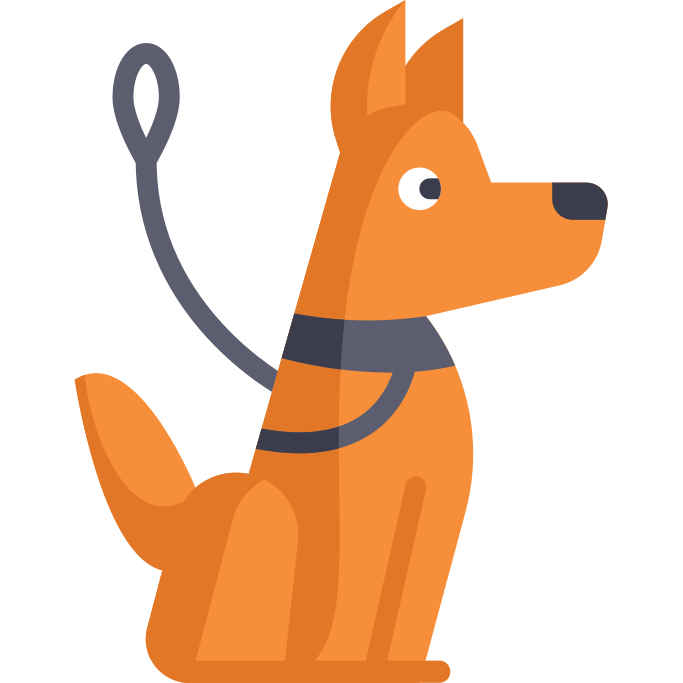
Is it your dog?
Senin köpeğin mi?

Am I right?
Haklı mıyım?
I think the meeting is at 3 PM. Am I right?

Is he from England?
İngiltereli mi?
Is he from England or France?
Is she a teacher?
O bir öğretmen mi?

Are they siblings?
Onlar kardeş mi?
Are they siblings or not?

at home
evde
We stay at home.

Are they at home?
Evdeler mi?

true
doğru, gerçek
a true story

Is it true?
Bu doğru mu?
Is it true? - Yes, it is.
*WH soruları*
Bu soruların cevabı evet veya hayır olamaz. Soru oluşturma kuralları, başında fazladan bir soru kelimesinin görünmesi dışında yukarıdakilerle aynıdır ("what", "why", "where", "when", "whom", "whose", "how")
"Where is he?"- "He is here."
"What do they like?"- "They like pizza"

Where are you?
Neredesin?
Where are you right now?

Who is it?
Kim o?
When the phone rang, I asked, "Who is it?

It's my mother.
Bu benim annem.
Who is it? - It's my mother.

to work
çalışmak
Where does your sister work?

Why are you here?
Neden buradasın?
Why are you here now?
What time is it?
Saat kaç?
What time is it, please? Are we late?
When does the movie start?
Film ne zaman başlıyor?
When does the movie start? - It starts in two hours.

How far is the cinema?
Sinema ne kadar uzaklıkta?
How far is the cinema from here?
*HOW soruları*
"How" farklı türde sorular oluşturmak için başka kelimelerle birlikte kullanılabilir, örneğin:
"how far", "how long", "how many".
Bunların yanı sıra, soru yapmak için *sıfatlarla* kullanılabilir, örneğin:
"How difficult is it?"
"How old is he?"
How much?
Ne kadar?
How much does the car cost?

the ticket
bilet
The ticket is too expensive.
How much is the ticket?
Bilet ne kadar?
How much is it?

old
yaşlı
The old man is very kind.

young
genç
He is very young.

How old is your sister?
Kız kardeşin kaç yaşında?
How old is she? - She is very young.

How far is the park?
Park ne kadar uzaklıkta?
How far is the park from here?

How many apples do you want?
Kaç tane elma istiyorsunuz?

How long is the movie?
Film ne kadar sürüyor?

How often?
Ne sıklıkla?
How often do you cook?

How often do you travel?
Ne sıklıkla seyahat edersiniz?
How often do you travel during the summer?
*Negatifler*
Fiilin arkasına "not" koyarak olumsuz cümle yaparız. Cümlede iki fiil varsa her zaman "not"u ilkinin arkasına koyarız. Tıpkı bu örnek cümlelerde olduğu gibi:
"We do not work here."
"She does not speak English."
"They are not here."
"I am not your friend."
*İpucu: don't, do not'un kısa biçimidir* ; tıpkı *aren't*'in *are not*'un ve *is't*'in *is not*'un kısa biçimi olması gibi.
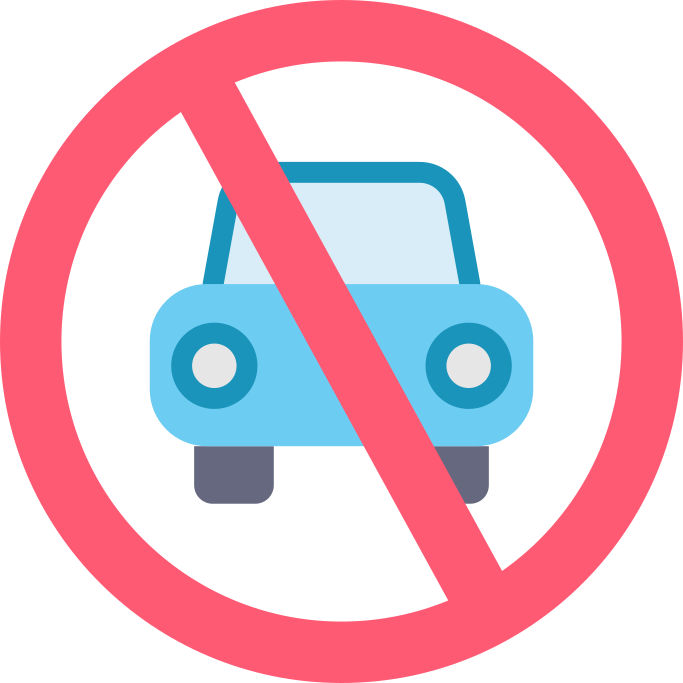
I do not drive.
Ben sürmem.
I do not drive the bus.

He doesn't work.
O çalışmıyor.

angry
kızgın
He is angry.

We aren't angry.
Kızgın değiliz.

not bad
fena değil
The movie is not bad.

The food is not bad.
Yemek fena değil.
The food is not bad at the restaurant.

I don't like pizza.
Ben pizza sevmem.

We don't like ice cream.
Dondurma sevmeyiz.

at school
okulda
She isn't at school.

She isn't at school.
O okulda değil.
Where is she? She isn't at school.

They aren't at home.
Evde değiller.

I don't play the piano.
Piyano çalmıyorum.

to speak
konuşmak
Do you speak English?
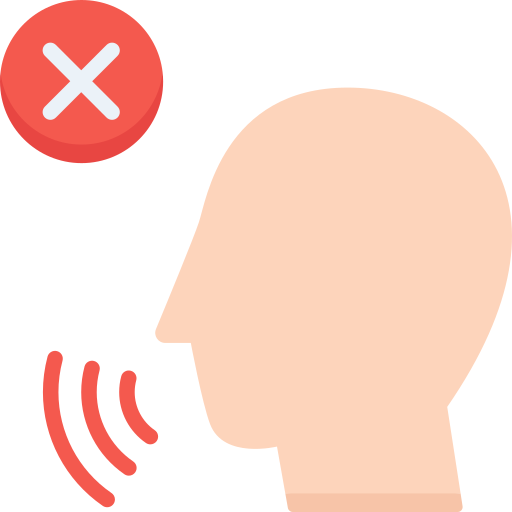
We do not speak English.
İngilizce konuşmuyoruz
We don't speak English.
*Bir kişiyi tanımlayın*
Bazı pratik sıfatlarla birlikte zaten bildiğiniz "to have" ve "to be" fiillerini kullanarak bir kişiyi nasıl tarif edeceğinizi öğrenelim.

He has long hair.
Onun uzun saçları var.
He has long beautiful hair.

She is very tall.
O çok uzun boylu.
His sister is very tall.

He's younger than she is.
O, ondan daha genç.
Her brother is younger than she is.

She is older than he is.
O, ondan daha yaşlı.

She has short hair.
Kısa saçlı.
Many people think she looks great with her short hair.

Is your brother short or tall?
Erkek kardeşin kısa boylu mu yoksa uzun boylu mu?

He has brown eyes.
Kahverengi gözleri var.

She has blue eyes.
Mavi gözleri var.
She is tall and has blue eyes.

They are young.
Gençler.
They are young and full of energy.
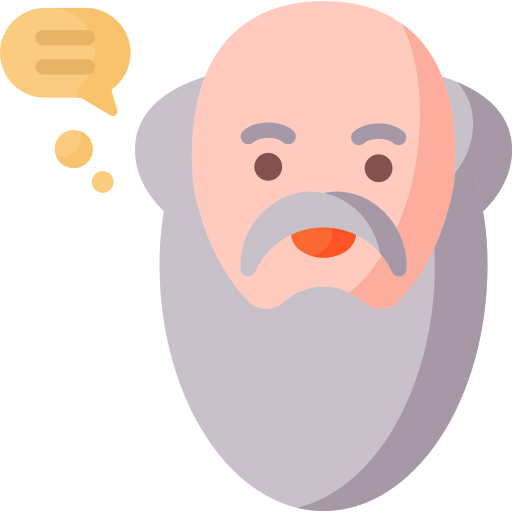
He is old.
O yaşlı.
My grandfather is old.

I have curly hair.
Kıvırcık saçlarım var.
I have short curly hair.
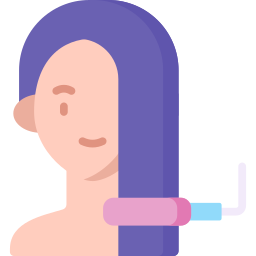
She has straight hair.
Düz saçları var.
She has straight hair, and she loves to wear it down.
*Çoğullar*
Çoğul çoğunlukla isme *-S* eki eklenerek oluşturulur.
Örneğin:
"a girl" - "girls"
"a song" - "songs"
Kelime -s, -sh, -ch, -x veya -z ile bitiyorsa, *-ES*ekleriz
"a bus" - "buses"
Eğer kelime bir ünsüzden sonra *Y* ile bitiyorsa, *Y* 'yi *I* ile değiştiririz ve *-ES*ekleriz
"a strawberry" - "strawberries"
Bazı düzensiz çoğullar da vardır, örneğin:
"a child" - "children"
"a woman" - "women"
"a man" - "men"

brothers
erkek kardeşler
I have two brothers.

children
çocuklar
There are a lot of children in the park.
Do you have children?
Çocukların var mı?

still
hâlâ
She still works there.

because
çünkü
She is happy because she got a new puppy.

a strawberry
bir çilek
How much are the strawberries?

I like strawberries.
Çilek severim.
I like strawberries because they are sweet.

men
erkekler
These two men have curly hair.

horses
atlar
Our neighbours have three horses.

these men
bu adamlar
Do you know these men?

These two men are best friends.
Bu iki adam en yakın arkadaş.

These women are beautiful.
Bu kadınlar çok güzel.
"There is"/ "There are"
Bu ifadeler bir şeyin bir yerde olduğunu ifade eder:
Olumlu bir cümle:
"There is a dog."
"There are two boys."
Soru: "Is there a house?" Cevap: "Yes, there is./No there is not."
Soru: "Are there trees in the garden?" Cevap: "Yes, there are./ No, there are not."
Olumsuz:
"There is not a problem."
"There are no trees in the garden."

a bird
bir kuş
There is a black bird.

a roof
bir çatı
This house has no roof.
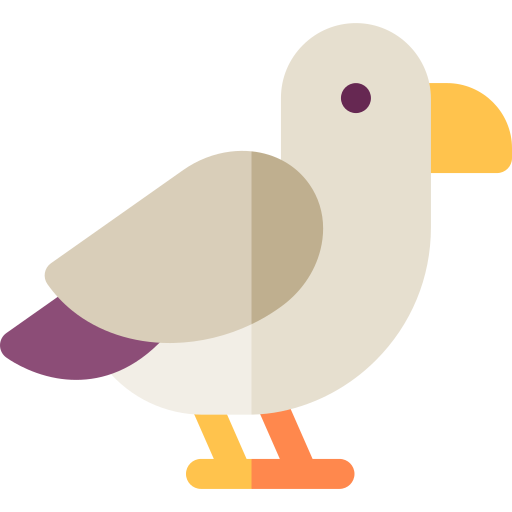
There's a bird on the roof.
Çatıda bir kuş var.

a supermarket
bir süpermarket
I need to go to the supermarket to buy some eggs.

Is there a supermarket around here?
Buralarda bir süpermarket var mı?

an egg
bir yumurta
I like eggs.

a fridge
bir buzdolabı
The food is in the fridge.

There are six eggs in the fridge.
Buzdolabında altı yumurta var.

There's a dog on the street.
Sokakta bir köpek var.

a monkey
bir maymun
There are many monkeys in the jungle.

Are there monkeys in the jungle?
Ormanda maymun var mı?

a room
bir oda
My room is big.

free
ücretsiz
Refreshments will be available for free.

available
mevcut
The book is available at the library.
"SOME" / "ANY"
Olumlu cümlelerde sayılabilir çoğul isimler (tam miktarını bilmediğimizde) ve sayılamayan isimler için "some" kullanırız.
"I have some flowers"
"There is some milk in the fridge"
Olumsuz cümlelerde ve sorularda "any" kullanırız.
"I do not have any flowers."
"Is there any milk?"

I have some news.
Bazı haberlerim var.

Any ideas?
Fikri olan?
I'm not sure what to do next. Any ideas?

I have some ideas.
Bazı fikirlerim var.

He does not have any friends.
Hiç arkadaşı yok.
He hasn't got any friends.

to stay
kalmak
Do you stay at home?

Some students stay at home.
Bazı öğrenciler evde kalıyor.

to want
istemek
I want an apple.

I want some apple juice.
Elma suyu istiyorum.

There are some apples in the kitchen.
Mutfakta birkaç elma var.

Is there any milk left?
Hiç süt kaldı mı?
Is there any milk left in the fridge?

free time
boş vakit
What do you do in your free time?

I do not have any free time.
Hiç boş vaktim yok.
*İşaret zamirleri*
"THIS/THESE"- İşaret edilen nesne yakın olduğunda kullanılır.
"this book"- tekil
"these books"- çoğul
"THAT/THOSE"- İşaret ettiğimiz nesne uzaktayken kullanılır.
"that book"- tekil
"those books"- çoğul

this bag
bu çanta
What's in this bag?

That man is my friend.
O adam benim arkadaşım.

a puppy
yavru köpek
I want a puppy.

to look
bakmak
Look at me.

Look at these puppies!
Şu yavrulara baksana!
Look at these kittens! They're playing with a ball of yarn.

people
insanlar
Those people are funny.

over there
orada
I left my keys over there on the table.

Is the supermarket over there?
Süpermarket şurada mı?
those people
o insanlar
Those people over there are our friends.

those books
şu kitaplar
Are those books new?

to put
koymak
Put it on the table.

these strawberries
bu çilekler
Put these strawberries in the bag.
*Hava durumu konuşması*
Hava durumu, neredeyse her gün değiştiği için sık sık tartışılan bir konudur. Dışarıda neler olduğu hakkında konuşabilmeniz için bazı yararlı ifadelere bakalım!

What’s the weather like today?
Bugün hava nasıl?
I forgot my umbrella! What’s the weather like today?

It's raining.
Yağmur yağıyor.
It's raining, so we should take an umbrella.

an umbrella
bir şemsiye
I need an umbrella because it's raining.

The weather is nice.
Hava güzel.
Today, the weather is nice, so let's go to the park.

It's sunny.
Hava güneşli.
I love it when it's sunny outside.

It’s hot outside.
Dışarısı sıcak.
Don’t forget to bring water; it’s hot outside.
The weather is bad today.
Bugün hava kötü.

It’s cold.
Hava soğuk.
It’s cold outside, so don’t forget your jacket.

It’s snowing.
Kar yağıyor.
Look outside! It’s snowing!

It’s cloudy.
Hava bulutlu.
When it’s cloudy, I like to stay inside and read a book.

It's windy.
Hava rüzgarlı.
It's windy today, so I will wear a jacket.

It looks like it's going to rain.
Yağmur yağacak gibi görünüyor.
*İyelik zamirleri*
*Bağımlı* - bağlı oldukları kelimenin önünde dururlar ve asla bağımsız olarak oluşmazlar.
"my", "your", "his", "her", "its", "our", "your", "their"
"This is my car."
*Bağımsız* - bir cümlede veya bir ismin arkasında tek başına durabilir
"mine", "yours", "his", "hers", "its", "ours", "yours", "theirs"
"This car is mine."

her voice
onun sesi
Her voice sounds amazing.

our son
oğlumuz
Our son likes to play football.

their daughter
onların kızları
Their daughter plays the guitar.

Our son and their daughter are friends.
Oğlumuzla onların kızı arkadaşlar.

What's your address?
Adresiniz nedir?

his fault
onun hatası
This is his fault.

It's not my fault.
Benim suçum değil.

That house is ours.
O ev bizimdir.
That house is ours. We bought it last year.

This drink is mine.
Bu içecek benim.

Is this car yours?
Bu araba sizin mi?

The child is theirs.
Çocuk onların.
*Sahip olunduğunu ifade etmek:*
Eşyalar insanlara ait olduğunda *s* ekleriz ancak hayvanlar, organizasyonlar ve hatta bazı zaman ifadeleri için de kullanılabilir.
"This is my sister's dog."
"What are the government’s plans?"
"Today’s news."
Çoğulda *s* olmadan yalnızca kesme işareti (*'*) ekliyoruz:
"Our sisters' dresses are long."

today's news
bugünün haberleri
We watched today's news.

my sister's dog
kız kardeşimin köpeği
My sister's dog is very friendly.

I play with my sister's dog.
Kız kardeşimin köpeğiyle oynuyorum.
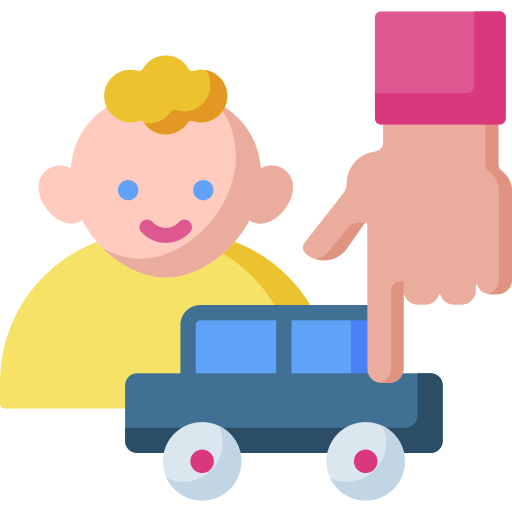
with
ile
They play with my son.
your father's car
babanın arabası
Your father's car is fast.
his friend's book
arkadaşının kitabı
He reads his friend's book.
in my parents' house
aileminkonutunda
I live in my parents' house.