Course for absolute beginnersSpanish words
by DuoCards
*Welcome to the course!!*
In this course you will learn the basics of Spanish. This is also known as "castellano". Spain has 4 official languages: "el castellano", "el catalán", "el gallego" "el vasco/euskera." It also exists "el latinoamericano" used in Latin America.
The most common greeting you will hear from native Spanish speakers is "Hola" which means *Hello*. But there are other options too, for example, "Buenos días" (used until noon) or "Buenas tardes" (used in the afternoon). In the evening/night we use "Buenas noches". To say goodbye (bye) we can use "adiós" or "hasta luego".
There are two ways to say *How are you ?* and there is no difference.
"¿Qué tal?"
"¿Cómo estás?"

¡Hola!
hello
¡Hola, Pedro!

¿Qué tal?
How are you?
Buenos días, ¿qué tal?

Muy bien, y tu?
Very well, and you?

Yo soy Gloria.
I am Gloria.

Mucho gusto.
Pleased to meet you.
Soy Ana, mucho gusto.

gracias
thank you
¡Muchas gracias!

por favor
please
Un café, por favor.

sí
yes
Si, gracias.

no
no
No, no es Pablo.

bien
good
Estoy muy bien.

claro
of course
Claro que sí.

adiós
goodbye
¡Adiós, amigos!
*Gender*
All nouns are either masculine or feminine. In general, masculine nouns end in *-o* and feminine nouns end in *-a*.
*Articles - indefinite:*
In Spanish there are definite and indefinite articles. The articles have to correspond with the number and gender. Now we will look at the indefinite articles.
We use indefinite articles when the noun is not specified, when we mention it for the first time or also when we want to say 'one' or 'some'.
"una chica" (feminine) "un chico" (masculine)
"Él es un chico."
"Tengo un par de botas."
"Un poco de agua."

un niño
a boy/a girl
Tú eres un niño.

una niña
a girl
Las niñas son mis amigas.

una familia
a family
Mi familia es muy pequeña.
y
and
Una niña y una mujer.
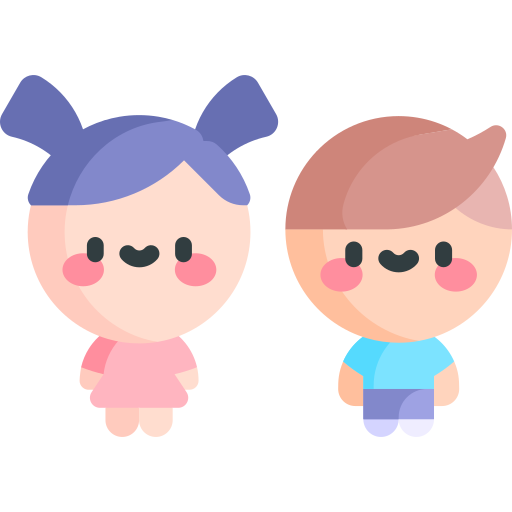
un niño y una niña
a boy and a girl
Un niño y una niña juegan en el parque.

Yo soy una mujer.
I'm a woman.
Yo soy una mujer fuerte.

todo
everything
Todo está bien.

un hombre
a man
Él es un hombre.

o
or
Un hombre o una mujer.

una madre o un padre
a mother or a father
*Articles - definite*
We use the definite article when we refer to something or someone we have already mentioned before or when it is clear from the context what or who are we talking about. Articles have to correspond with number and gender.
"el perro" (masculine - singular) "los perros" (masculine - plural)
"la chica" (feminine - singular) "las chicas" (feminine - plural).

el niño
the boy (child)
Los niños son mis hermanos.

el señor/la señora
the man/women (formal)
El señor es mi padre

La mujer es la madre de un niño.
The woman is the mother of a child.
La mujer es la madre de un niño.

la niña
the girl
La niña es mi hermana.

El niño se llama Juan.
The boy's name is Juan.
¿El niño se llama Juan, y tú?

la casa
the house
La casa es bonita.

la bailarina/el bailarín
the dancer
La niña es una bailarina.
*To be*
In Spanish, there are three expressions for the verb *to be* - "ser" / "estar" / "haber (hay)".
"yo soy" "tú eres" "él/ella es" "nosotros/nosotras somos" "vosotros/vosotras sois" "ellos/ellas son"
"yo estoy" "tú estás" "él/ella está" "nosotros/nosotras estamos" "vosotros/vosotras estáis" "ellos/ellas están"
The main difference:
"ser" is used for *permanent state*
"estar" is used for *temporary state*
"ser"
- characteristic
- time, date
- origin
- occupation
- nationality
- relationship
- possession
"estar"
- location
- state or condition (emotions)
"haber (hay)"
We are going to explain later.

yo soy
I am
Yo soy médico.

feo
ugly
Es un poco feo.

la silla
The chair
La silla es azul.

el hermano / la hermana
the brother / the sister
El niño es mi hermano

el pueblo
the village
Yo vivo en un pueblo.

guapo
handsome
Mi padre es guapo.

Lo siento.
I am sorry.
Lo siento mucho, no quise ofenderte.
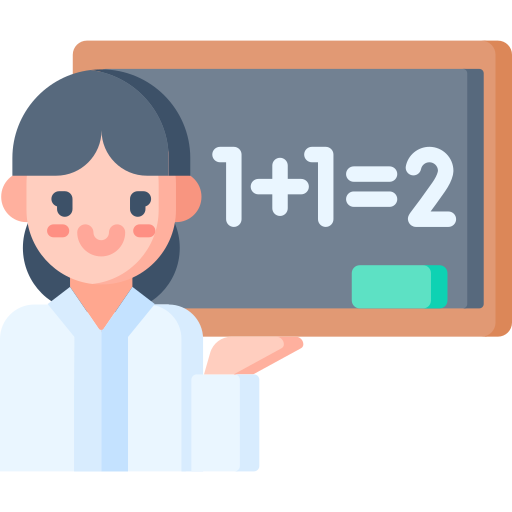
la profesora / el profesor
the teacher
Mi madre es profesora.
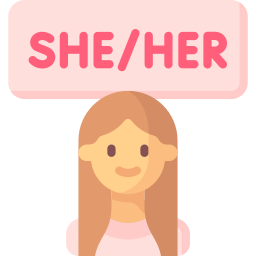
ella está
she is
Ella está en la escuela.

el trabajo
the job
El trabajo es muy difícil.

feliz
happy
Ella está feliz.

un libro
a book
Es un libro interesante.
*Your first conversation*
Let's take a look at some useful expressions that will help you to communicate in Spanish. You can find more in the set *Basic phrases*
Remember that Spanish uses an exclamation point and a question mark at the top and bottom.

Buenos días.
Good morning.

mañana
tomorrow
Nos vemos mañana.

Buenas noches.
Good night.

Hasta luego.
See you later.
¡Muchas gracias!
Thank you very much!
Muchas gracias, señora.

De nada.
You're welcome.
Gracias por venir a mi fiesta. - De nada, la pasé muy bien.

¿Cómo estás?
How are you?

como siempre
as always
Estoy bien como siempre.

Estoy bien, ¿y tú?
I'm fine, and you?

¿Qué haces?
What are you doing?
¿Qué haces? Nada.

algo
something
Debo decirte algo.

¿De dónde eres?
Where are you from?
¿De dónde es? Ella es de Polonia.

República Checa
Czech Republic
La República Checa es conocida por su hermosa arquitectura.
*Other useful phrases used in everyday conversations*
Let's go through some practical sentences that you will use every day.

¡Ayuda!
Help!

¿Cómo te llamas?
What is your name?
¿Cómo te llamas? Yo me llamo Pedro.

¿Dónde vives?
Where do you live?
¿Dónde vives? Yo vivo en Italia.
Nosotras vivimos en España.
We live in Spain. (female)

¡Buen provecho!
Enjoy your meal!
¡Buen provecho! (a una persona que está por comenzar a comer)

¿Qué pasa?
What’s up?
¿Y qué pasa cuando no lo hace?

Encantado
Pleasure, nice to meet
Encantado de conocerte.

¡Salud!
Cheers!

¡Cuídate!
Take care!
¡Cuídate durante el viaje!

¿Entiendes?
Do you understand?

¡Buen viaje!
Have a good trip!
¡Ten un buen Viaje!
*Personal pronouns*
"Yo"
"Tú"
"Él"/ "Ella" / "Usted"
"Nosotros" (just men or both - women and men) / "Nosotras" (just women)
"Vosotros" (just men or both - women and men) / "Vosotras" (just women)
"Ellos" (just men or both - women and men) / "Ellas" (just women) / "Ustedes"
*Usted / Ustedes* are formal expressions to say *you*, e.g. *Usted es su padre. / Ustedes son nuestros padres.*
e.g. "Él es mi padre"
e.g. "Ella es mi madre"
e.g. "Nosotras somos buenas amigas." (just women - we use nosotr*as*)
e.g. "Nosotros somos buenos amigos." (just men or both - we use nosotr*os*)

yo
I
Yo soy Sara.

tú
You
Tú eres simpático.
Ella es mi hermana.
She is my sister.
ellos
They (masculine)
Ellos son hermanos.

Nosotros estamos contentos.
We are happy.
Nosotros estamos contentos porque es nuestro cumpleaños.

nosotras
We (feminine)
Nosotras somos amigas.

Nosotros somos amigos.
We are friends.

Usted es profesor.
You are a teacher. (formal)
*Possessive pronouns*
Dependent - always used with a noun, in the plural, *s* is added.
"mi" "tu" "su" "nuestro" /"nuestra" "vuestro"/"vuestra" "su"
"Mi madre es guapa"
"Nuestras amigas son simpáticas"
Independent - not immediately followed by a noun, in the plural we add *s*.
"mío" / "mía" "tuyo" / "tuya" "suyo" / "suya" "nuestro" / / "nuestra" "vuestro" / / "vuestra" "suyo" / "suya"
Possessive pronouns have to correspond with number and gender.
Difference:
Dependent: "Esto es mi libro."
Independent: "No es tuyo, es mío."

mi
my
Juan es amigo mío

una comida
a meal
La pasta es mi comida favorita.

tu amigo
your friend
Tu amigo baila bien.

la carta
the letter

su carta
his/her/their/your(formal) letter
Esta es su carta.

nuestro
our (singular - masculine)
Nuestro padre tiene el pelo negro.

nuestras amigas
our friends
Ellas son nuestras amigas de París.

vecino
neighbour
Vuestros vecinos son italianos.

suyo
hers/his/theirs/yours
Mi coche es rojo y el suyo es negro.
aquí
here
¿Estás aquí?

el presidente / la presidenta
the president
El presidente de Estados Unidos es Joe Biden.

Usted es nuestro presidente.
You are our president.

triste
sad
Mi hermana está triste porque perdió su gato.
*Prepositions*
Let's look at some of the most commonly used prepositions.
"DE" - of, on, of
One of the most common Spanish prepositions used to express possession, point of origin, part of something and what something is made of.
Ex:
"Ella es de Polonia".
"Está encima de la mesa."
"La mesa es de madera."
"A" - in, a
It is used to express time, to introduce an indirect object, to give a command or to indicate manner and movement.
For example
"Vamos a la escuela."
"Al lado de la silla está Pedro."
"A la una."
Take a look at this grammatical change:
de + el = "DEL"
to + the - = "AL"

de
from
Yo soy de Austria.

alguien
someone
Alguien está en casa.

la playa
the beach
Vamos a la playa.

Nos vemos a la una.
See you at one o'clock.
Nos vemos a la una en el parque.

el cine
cinema
Me gusta el cine.

el teatro
theater

Vais al teatro.
You go to the theatre.
*More prepositions*
Other typical prepositions are "en" and "con".
"EN" - in, on
Is used to describe locations, to express time (e.g. "llegamos en dos horas")
e.g.:
"Vivo en España."
"El dinero está en la mesa."
e.g.:
"CON" - with
"Hablo con mi abuela todos los días."
"¿Puedo venir con mis amigos?"

vivir en
to live in
Vive en América.

Vivo en una casa en la playa.
I live in a house on the beach.

trabajar
to work
Voy a trabajar.

nadie
no one
Nadie está en la playa.

La casa está en el pueblo.
The house is in the village.

los carros
the cars

en el coche
by / in the car
El hombre está en el coche.

Trabajo con mi padre.
I work with my father.
la casa con el jardín
the house with the garden
La casa con un jardín es nuestra.
*Forming plural*
Nouns ending in a vowel - we add *-s*: "el libro" "los libros"
Nouns ending in a consonant - we add *-es*: "el profesor" "los profesores"
Nouns ending in *-s* do not change in plural: "el paraguas" "los paraguas"
Note that the ending of some plural nouns changes. e.g. "la cruz" "las cruces", "la actriz" "las actrices"

los hombres
the men
Los hombres son divertidos.

las mujeres
the women
Las mujeres tienen niños.

La cruce
The cross

Todas las mujeres son guapas.
All women are pretty.

las semanas
the weeks
Las semanas son largas.

las ciudades
the cities
Prefiero las ciudades grandes.

las ciudades grandes
the big cities

Las actrices son María y Olga.
The actresses are Maria and Olga.
*Adjectives*
In Spanish, most adjectives change form according to the gender and number of the noun they refer to.
"el chico simpático"
"la chica simpática"
In plural we add -s
"los chicos simpáticos" / "las chicas simpáticas"
Note that the correct location for descriptive adjectives is after the noun.
viejo
old
Yo vivo en un pueblo viejo.

joven
young
Es un chico joven.

lleno
full
El vaso está lleno.

bonito
beautiful
Ella es muy bonita.

un pueblo viejo
an old village

La iglesia
The church

el día
the day
El mes de junio tiene treinta días.

Hoy es un día bonito.
Today is a nice day.

malo
bad
Eres mala!

bueno
good
Es muy bueno.

el helado
the icecream
El helado está muy bueno.

pequeño
small
Vivimos en una casa pequeña.

bajo
short
Ese hombre es bajo.

la camiseta pequeña
the small t-shirt

nuevo
new
Tengo zapatos nuevos.

la moto
the motorbike, motocycle
¿Has visto mi moto? La dejé estacionada en la calle
*Adjectives ending in -e *
Adjectives that end in -e also change form for singular or plural but they do not change form depending on the gender:
"el chico inteligente" / "la chica inteligente"
"los chicos inteligentes" / "las chicas inteligentes"
"un problema importante" / "unos problemas importantes"

grande
big
Tenemos una familia grande.

caliente
hot
Me ducho con agua caliente.

amable
kind
Tu hermano es amable.

Tus hermanos son amables.
Your brothers are kind.

comprar
to buy
¿Puedes comprar un zumo de naranja?

una camiseta verde
a green t-shirt
Yo tengo una camiseta verde.

Compro una camiseta roja.
I buy a red T-shirt.

el pan
bread
Como el pan.

¿Compras un pan grande?
Do you buy a large loaf of bread?

pobre
poor
Es un hombre pobre.

importante
important
Es una señora importante.
*Demonstrative pronouns*
A demonstrative pronoun replaces the noun and should only be used when it’s already clear what you’re talking about (either from what you’ve previously said or from a gesture, like pointing at something).
"Esa es hermosa." — That is beautiful. (Referring to the house).
"Este es caro." — This is expensive. (Referring to the dress).
Other typical demonstravite pronouns:
"este" (masculine) / "esta" (feminine) something near to speaker
"ese" (masculine) / "esa" (feminine) something near to listener
"aquel" (masculine) / "aquella" (feminine) something far away

este libro
this book
Julia lee este libro.

¿Lees este libro?
Do you read this book?
esa chica
that girl
Esa chica es americana.

Este chico es mi hermano.
This boy is my brother.

¿Cuánto cuestan aquellas flores?
How much do those flowers cost?

el bolígrafo
the pen
¿Tienes un bolígrafo que me puedas prestar?

Ese bolígrafo no es mío.
That pen is not mine.

el gato
the cat
Este gato es muy mimoso.

el perro
the dog
Este perro es muy bueno.

mimoso
cuddly
El gato es muy mimoso.

Ese hombre es bajo.
That man is short.
aquella ciudad
that city
*Present tense - Verbs ending with -ar*
In Spanish all verbs end with "-ar, -er" or -"-ir." There are no exceptions.
First we start with regular verbs ending in "-ar."
e.g. "hablar"
"yo hablo"
"tú hablas"
"él/ella/usted habla"
"nosotros/nosotras hablamos"
"vosotros/vosotras habláis"
"ellos/ellas/ustedes hablan"
In Spanish, there are also verbs ending with *-er* and *-ir*. We'll take a look at them later.
yo bailo
I dance
Yo bailo cada día.
él trabaja
he works
Él trabaja como médico.

Ella cocina muy bien.
She cooks very well.

tú estudias
you study
Estudias francés.

Nosotros aprendemos italiano.
We learn Italian.

una empresa
a company
Trabajo para una empresa internacional.

Mis amigos trabajan en una empresa internacional.
My friends work in an international company.

buscar
search
Nosotros buscamos un hotel.

ella llama
she calls
Ella me llama.

ellos necesitan
they need
¿Necesitan algo?

llevar
to wear
Los guardias llevan uniformes.

ayudar
to help
Pedro me ayuda.

Cantas muy bien.
You sing very well.
*Present tense - Verbs ending with -er*
e.g. "comer"
"yo como"
"tú comes"
"él/ella/usted come"
"nosotros/nosotras comemos"
"vosotros/vosotras coméis"
"ellos/ellas/ustedes comen"

yo bebo
I drink
Yo bebo zumo de naranja.

¿Qué bebes?
What do you drink?

comer
to eat
La chica no come mucho.

tú lees
you read
Tú lees un libro.

correr
to run
Él corre muy rápido.

Corren rápido.
They run fast.
Ellos corren rápido en el parque.

la manzana
the apple
Me gustan las manzanas.

vender
to sell
Venden manzanas en el mercado.

deber
must
Debemos ir.

Yo debo ir.
I must go.

romper
to break
Los niños rompen todo.
*Present tense - Verbs ending with -ir*
e.g. "vivir"
"yo vivo"
"tú vives"
"él/ella/usted vive"
"nosotros/nosotras vivimos"
"vosotros/vosotras vivís"
"ellos/ellas/ustedes viven"

Yo abro la puerta.
I open the door.

escribir
to write
Yo escribo una carta.

ahora
now
Ahora mismo estoy ocupado.

decidir
decide
Ella decide ahora.

tú decides
it's up to you
Decides que vamos a hacer.

Salimos a menudo.
We go out often.

nunca
never

Nunca dormimos en casa de mi abuela.
We never sleep at my grandmother's house.

vosotros vivís
you live
Vosotros vivís en una casa vieja.

la ventana
window
Abrir y cerrar la ventana.

¿Abres la ventana?
Do you open the window?
*Denial*
To create a negative sentence, we add the word "no" before the verb.
"Él no habla español."
"Nosotros no cantamos bien."
In English, double negations are accepted:
"Yo no necesito nada"
"Nunca le compra nada a nadie."

allí
there

la carne
the meat
A mí me gusta comer la carne.

Ella no come carne.
She does not eat meat.

la leche
the milk
Prefiero café con leche.

nada
nothing
No es nada.

Ellos no beben leche.
They don't drink milk.

No entiendo.
I don't understand.
No entiendo lo que dices.

No hablamos alemán.
We don't speak german.
No hablamos alemán, pero podemos comunicarnos en inglés.

No sé.
I don't know.
No sé donde está
No me gustan las manzanas.
I don't like apples.
No me gustan las películas de terror.

Hoy no es un buen día.
Today is not a good day.
Hoy no es un buen día para salir de casa.

No tengo idea.
I have no idea.
No tengo idea de cómo resolver este problema.

Ella no me llama.
She doesn't call me.
Ella no me llama desde hace semanas.