
Basic course
Explanations and vocabulary practice

Sections: 19
- Welcome to the Spanish Basic Course!
- Weather expressions I.
- Using HAY in Spanish
- Interrogative pronouns - pronombres interrogativos
- Country /nationality /language - país/ nacionalidad/idioma
- Like - gustar/encantar
- Present tense - irregular verbs I.
- Present tense - irregular verbs II.
- Present tense - irregular verbs - III.
- Present tense - irregular verbs - IV.
- Other adjectives - otros adjetivos
- Comparison of adjectives - comparación de adjetivos
- Expressions: Tener que / Hay que
- Weather expressions II.
- Numbers I.
- Days of the week - Los días de la semana
- Verbs with preposition A
- To describe a person - Describir una persona
- Adverbs I.
Save words from this page and practise them with flashcards in DuoCards. How does it work?
This course will give you the essentials to feel more confident in Spanish.
We’ll review the present tense with tricky verbs, practice comparing adjectives, and cover practical topics like weather, numbers, nationalities, and more.
But first, let’s start with a quick recap of essential Spanish phrases and words that always come in handy.










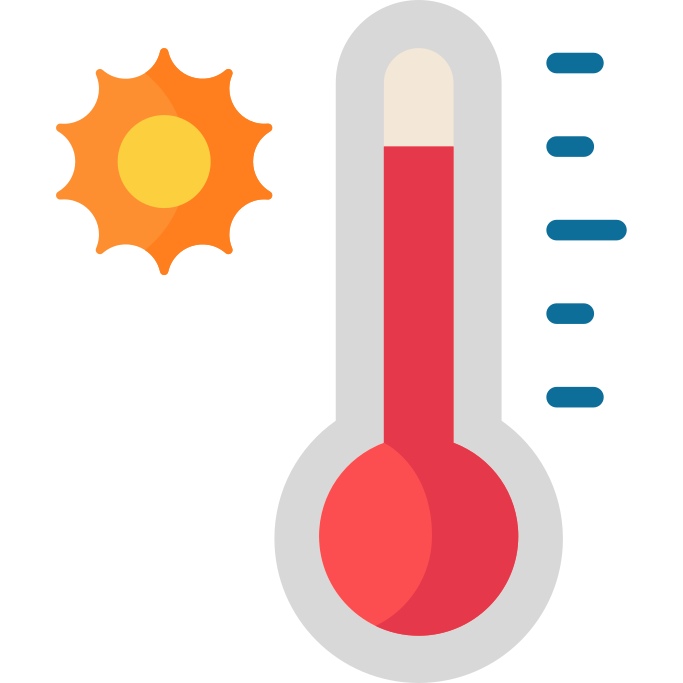
Let's talk about the weather! In Spanish, we use the verb hacer (literal meaning: to do or to make) to describe the weather.
Hace frío.
Hace calor.






Hay means there is or there are. It never changes, whether the noun is singular or plural:
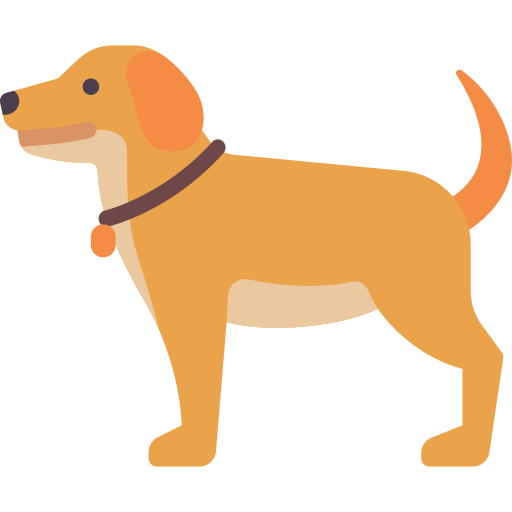
Hay un perro. - There is a dog.
Hay tres perros. - There are three dogs.
You can use it to ask or deny existence:
¿Hay un baño? Is there a bathroom?
No hay leche. There isn’t any milk.
In short, hay is always the same and is only used to say that something exists or is present.
Hay un libro en la mesa.
Hay dos perros en el jardín.









Most used are these:
qué (what)
cómo (how)
cuál (which),
quién (who)
dónde (where)
de dónde (from where)
cuándo (when)
cuánto/a (how much)
cuántos/as (how many)
por qué (why)
Remember that in a question, the pronoun is at the beginning and has an accent.











e.g.:
Brasil / brasileño(a) / portugués
Canadá / canadiense / inglés o francés
Estados Unidos / estadounidense / inglés
Israel / israelí / hebreo
Italia / italiano(a) / italiano
¿De dónde eres? - Yo soy de Chile.
¿Qué lenguas hablas? - Yo hablo italiano, inglés y chino.
In some cases, nationalities and languages are the same words.
e.g.: el italiano (italian language) x italiano (adjective)
Me gusta gusta el italiano.
Este chico italiano es muy simpático.











Gustar is used to express that you like something. It is used only in the third person.
For example A mí me gusta español.
- The verb gustar or encantar must be joined to a pronoun: me gusta ( te gusta,...)
- We use the prepositional phrase a mí ( a tí,...) to give more emphasis on the person who likes the thing.
Forming the sentence:
A mí (tí, él/ella/usted, nosotros/as, vosotros/as, ellos/as) + (me, te, le, nos, os, les) + gusta/gustan + noun or infinitive verb.
A mí me gusta español.
A tí te gusta español.
A él/ella/usted le gusta español.
A nosotros nos gusta español.
A vosotros os gusta español.
A ellos/ellas/ustedes les gusta español.
Whether to use gusta or gustan depends on the words that come after (las cosas que te gusta).
gusta ( encanta) + singular noun or verb
A mí me gusta el coche.
gustan ( encantan) + plural noun
A él le gustan los coches.













First, let's take a look at the three most important irregular verbs in the present tense.
To be - SER
yo soy
tú eres
él/ella/usted es
nosotros/nosotras somos
vosotros/vosotras sois
ellos/ellas/ustedes son
To be - ESTAR
yo estoy
tú estás
él/ella/usted está
nosotros/nosotras estamos
vosotros/vosotras estáis
ellos/ellas/ustedes están
To go - IR
yo voy
tú vas
él/ella/usted va
nosotros/nosotras vamos
vosotros/vosotras vais
ellos/ellas/ustedes van









In Spanish, irregular verbs are grouped according to which letters they modify.
We change:
e to ie (e.g. querer → yo quiero, cerrar → yo cierro)
o to ue (e.g. poder → yo puedo, volver → yo vuelvo)
in the first, second and third person of singular form and in the third person of plural form.
e.g. querer
yo quiero
tú quieres
él/ella/usted quiere
nosotros/nosotras queremos
vosotros/vosotras queréis
ellos/ellas/ustedes quieren
e.g. poder
yo puedo
tú puedes
él/ella/usted puede
nosotros/nosotras podemos
vosotros/vosotras podéis
ellos/ellas/ustedes pueden











e a i (e.g. pedir → yo pido, seguir → yo sigo)
u to ue (e.g. jugar → yo juego,)
in the first, second and third person singular and in the third person plural.
c changes to zc in the first person:
e.g. conocer → yo conozco, conducir → yo conduzco
meet
yo conozco
tu conoces
él/ella/usted conoce
nosotros/nosotras conocemos
vosotros/vosotras conocéis
ellos/ellas/ustedes conocen








Verbs with g in the first person:
e.g. poner → yo pongo, tener → yo tengo, decir → yo digo
yo pongo
tu pones
él/ella/usted pone
nosotros/nosotras ponemos
vosotros/vosotras ponéis
ellos/ellas/ustedes ponen
Other verbs with changes in the first person:
e.g. saber → yo sé, ver → yo veo









Most adjectives that end in a consonant have the same form for masculine and feminine but they change form for singular or plural. In plural we add -es.
e.g.:
la bailarina popular / el bailarín popular
las bailarinas populares / los bailarines populares









Comparative adjectives - comparison of two or more things.
There are two options how to compare two or more things:
más + adjective + que
menos + adjective + que
or
tan + adjective + como
La biología es más interesante que las matemáticas.
Marina es menos rápida que Julia.
Ella es tan guapa como su madre.
Superlative adjectives - the highest level of quality
Forming: definite article + más / menos + adjective
Marta es la más guapa.









Tener que + infinitive - obligation or necessity. This expression can be translated as someone has to do something.
Tengo que ir a la escuela.
Tenemos que comer más.
Tienes que salir más con tus amigos.
Hay que + infinitive - when we want to express that it is necessary to do something.
Hay que estudiar toda la vida.
Hay que hacer más deporte.
Hay que beber menos alcol.










There are also weather expressions that use the verb hay:
Hay humedad.
We can use estar + adjective:
Está nublado.
Or we can use just a single verb:
Llueve. (llover)












0 - cero
1 - uno
2 - dos
3 - tres
4 - cuatro
5 - cinco
6 - seis
7 - siete
8 - ocho
9 - nueve
10 - diez
_____________
11 - once
12 - doce
13 - trece
14 - catorce
15 - quince
16 - dieciséis
17 - diecisiete
18 - dieciocho
19 - dienueve
20 - veinte
If you want to express that tomorrow is your birthday, remember that in Spanish the noun cumpleaños is same in singular and in plural form.








Lunes
Martes
Miércoles
Jueves
Viernes
Sábado
Domingo
In case you want to say on Monday, remember that in Spanish you use el lunes.
The seasons of the year - las estaciones del año
la primavera
el verano
el otoño
el invierno











Ver + a
In the previous course we mentioned some prepositions.
In addition to expressing place (in the sense of to), the preposition a is also used before name or noun that represents a person or a pet.
The preposition in these cases usually is not translated.
Remember if is not a person or a pet we do not use a Veo un libro.
There are other verbs, e.g.:
Aprender + a
Empezar + a







When we are describing a person, we use the verb ser, which expresses a permanent quality. In other cases we use the verb tener.













Spanish adverbs are formed by adding the ending -mente to the feminine form of the adjective, although some adjectives can be used unchanged e.g. rápido.
Irregular adverbs are two: bien and mal.
Comparative adverbs
We construct the comparative using tan … como (equality), más … que (superiority) or menos que (inferiority).
e.g.:
Pedro lee tan claramente como María.
Pedro lee más/menos claramente que María.
Exceptions:
bien mejor
mal peor
e.g.:
Pedro lee mejor/peor que María.










Learning with DuoCards
What is DuoCards?
DuoCards is a language-learning app that helps you build vocabulary with flashcards. You can save words you want to learn and practise them over time.
How do I learn with this course?
Browse the explanations and vocabulary in each section. Select Card picker and choose the words you want to learn. Then create a free account to save your words and practise them.
How do I practise my words?
You'll see a flashcard with a word and a hidden translation. Guess what it means, then tap to check your answer. DuoCards repeats the words you find difficult.
Do I need an account, and is learning free?
You can browse this page without an account. A free account lets you save words and track your progress. The free plan has limits, and Premium offers additional features.