
Basic Course II
Explanations and vocabulary practice

Sections: 18
- The family
- Prepositions - Las preposiciones - I.
- With
- Months - los meses
- Me gustaría vs quiero
- Para vs por
- Clothing I.
- In the shop
- Lo, la, los, las
- Present continuous
- Types of personality
- Animals - los animales
- Types of different shops
- Ir + a + infinitivo
- Professions
- Numbers - II
- Food and drinks II.
- Verb+preposition
Save words from this page and practise them with flashcards in DuoCards. How does it work?
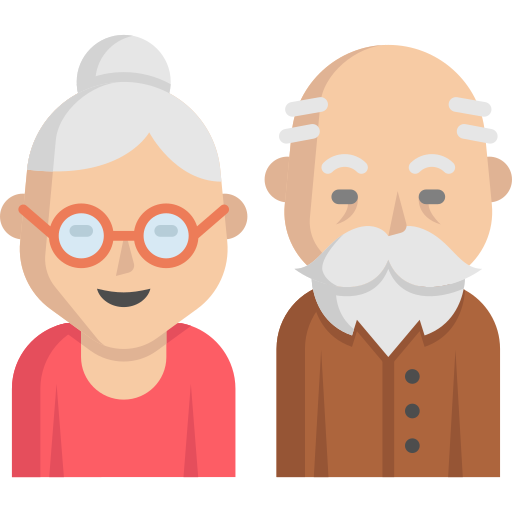
In the previous course you have learned what is el padre, la madre and los hermanos. We are now going to learn more vocabulary connected to family.
La familia can be grande (big) or pequeňa (small).
For example
Tengo una familia grande.
Don't forget that in Spain people have two surnames dos apellidos.
e.g. Pedro Díaz Santiago (Díaz is his paternal surname apellido paternal and Santiago is his maternal surname apellido maternal)
When you address someone by their surname in Spanish cultures, as a general rule you use their paternal surname.
Thus, Pedro Díaz Santiago would be known as Señor Pedro Díaz, not Señor Santiago.
Also, if Pedro marries María Pizarro López (in Spanish culture, women do not change their surname when they marry), their children's names could be, for example, Laura Díaz Pizarro.
If you see a phrase like Esta es la familia Sánchez. it means This is the Sánchez family.










Prepositions do not change to show gender or number like many other Spanish words.
There are different types of prepositions: one-word ( de, en) or multi-word ( a pesar de, alrededor de).
Now we focus on the one-word prepositions.






There are contractions of the preposition con and the prepositional pronouns mí, ti, sí. The third pronoun means self.
When con is followed by the pronoun mí or ti to say with me or with you, is changed to conmigo or contigo.
There is also consigo. However, sí is different in that the subject must be from the third person for this to be correct. Note the difference below:
Juan habla consigo. (Juan talks to himself.)
Juan habla con él. (Juan talks to him.)







enero - January
febrero - February
marzo - March
abril - April
mayo - May
junio - June
julio - July
agosto - August
septiembre - September
octubre - October
noviembre - November
diciembre - December
If you want to express when you were born, you have to use the verb nacer, so e.g. Nací el 1 de enero.
In case we want to express in January, we always use the preposition en.
e.g.: En enero me voy a Italia.




We use these expressions to talk about something we would like to do. However, me gustaría is more polite.
¿Te gustaría dar un paseo?
Me gustaría hacer una pregunta.
Me gustaría hablar con John.





Both por and para mean for and it can be challenging to learn when to use which one.
We use para with an infinitive to talk about why we're doing something.
Tenemos que ir para llegar a tiempo.
Por usually describes the means or cause for something.
Estudio español por mi trabajo.
Por can mean: for, because of, through, by, over, per, instead of, to
Para can mean: for, in order to, by, to, according to







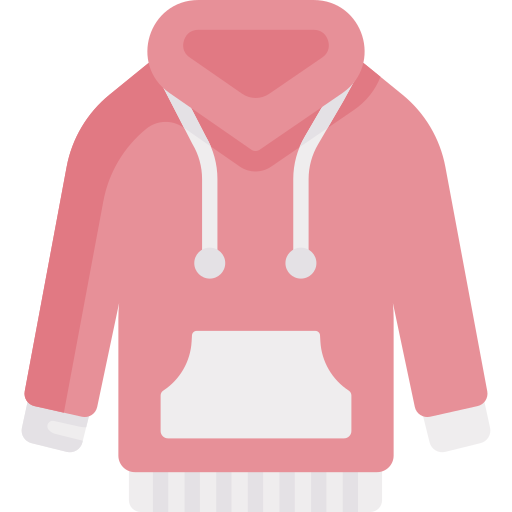
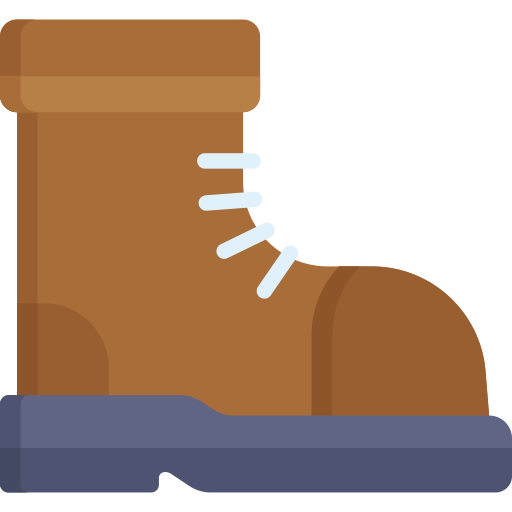
If something looks good on you, you can express it by saying: Me queda bien, using the verb quedar.
If the opposite is the case, use quedar mal, e.g. Estas botas me quedan mal.
Types of fabric:
lana (wool)
algodón (cotton)
seda (silk)
piel (leather)
e.g. Este jersey negro es de lana., Es una camiceta de algodón.
Types of printing:
de cuadros (of squares)
de flores (floral)
de rayas (striped)
e.g.: Es una falda roja de flores., El pantalón de rayas no me gusta.



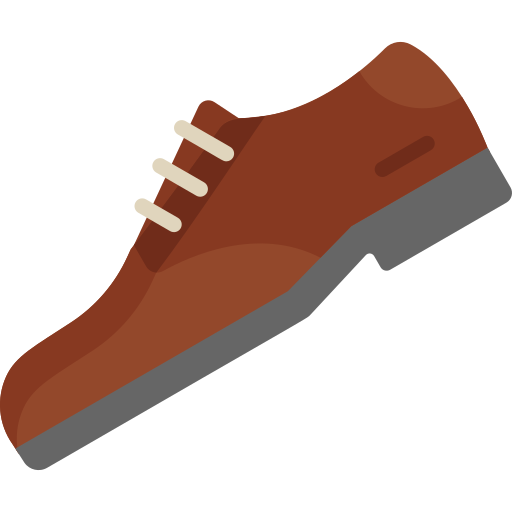

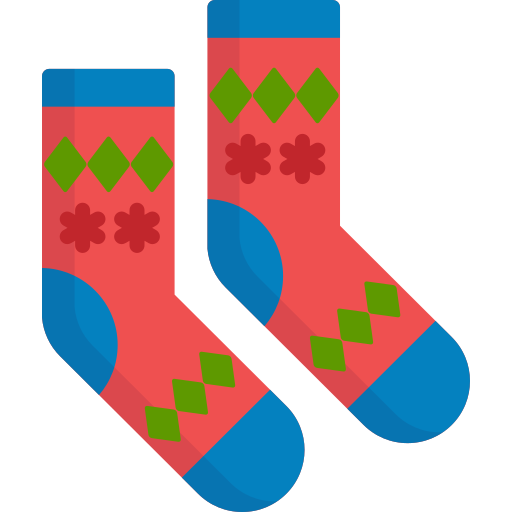



If we want the shop assistant to help us, we can express it with a simple sentence, Me puede ayudar? (Could you help me?)
Typical situation in a shop:
Buenos días! ¿Tienen esta camiseta en otro color? (Good morning, do you have this shirt in another color?)
Si, aquí la tiene en negro. (Yes, here it is in black.)
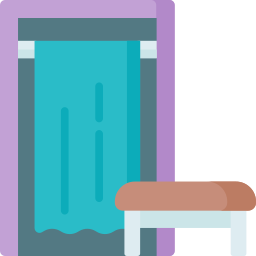
Gracias. ¿Dónde están los probadores? (Thank you. Where are the fitting rooms?)
Están a la derecha. (They're on the right.)
Me queda bien, la quiero. (It fits me, I want it.)
Vale, las cajas están por ahí. (Okay, the checkouts are there.)
______
No me queda bien. ¿Tiene usted una talla más grande? (It doesn't fit me. Do you have a larger size?)
Sí, aquí tiene. (Yes, here you go.)








To avoid repeating the same word over and over again, you can use lo, la, los, or las (depending on the gender and number of the noun). In English, it's like using it and them.
In Spanish these words come before the verb!
Yo lo quiero.
Me gusta esta camisa y la quiero.







To say what you are doing right now, use a form of estar plus a verb ending in -ndo.
For -ar verbs, use -ando.
For -er and -ir verbs, use -iendo
hablar - hablando
comer - comiendo
abrir - abriendo
If there's a vowel before -iendo, the verb ending becomes -yendo.
¿Qué estás leyendo?


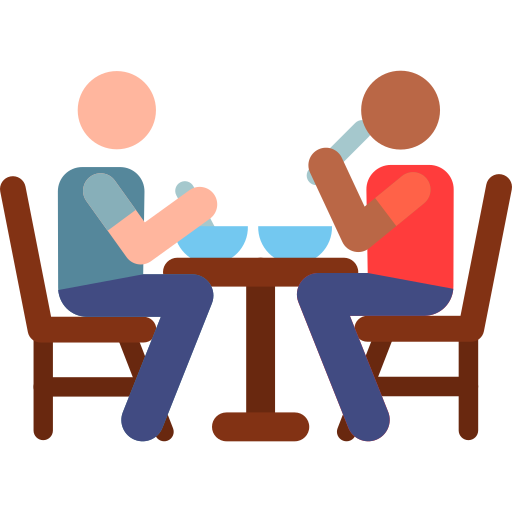








As we said in the previous course, Spanish has more verbs to be ( ser, estar, haber - hay)
When we want to describe a person with a quality that is permanent, we always use the verb ser.
e.g.:
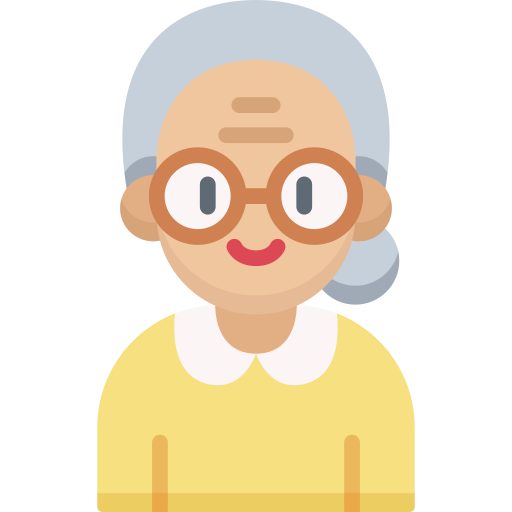
Mi abuela es simpática.
Nuestros padres son majos.
But if we want to express a quality that lasts only a moment and can change, we use the verb estar.
e.g.:
Mi tío está enamorado.
Su abuelo está nervioso.









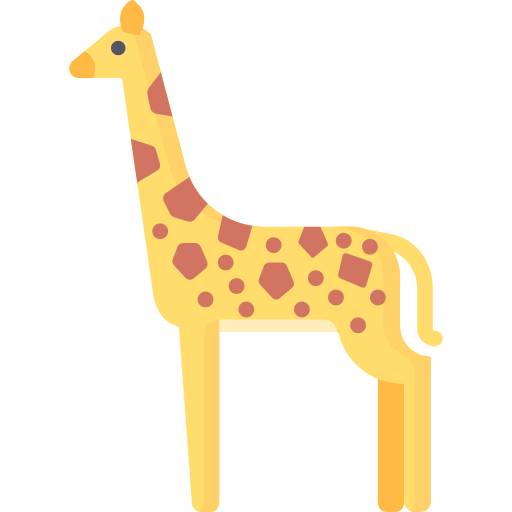
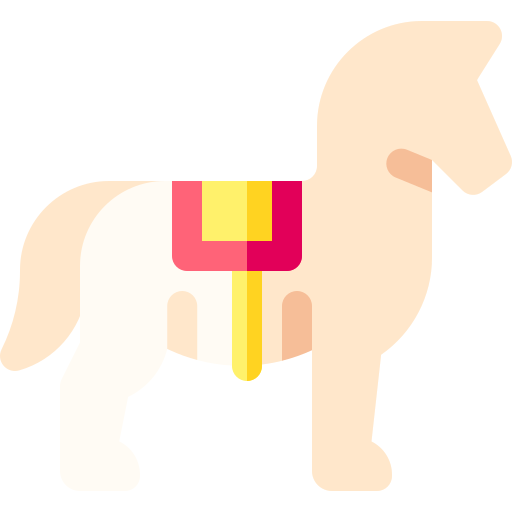
In the previous courses you've learned how to say dog el perro and cat el gato.
Let's learn more animals.
If you want to express a baby animal you have to say:
Perro: el cachorro
Gato: el gatito















In the previous course you learned few buildings typical of the city, let's learn some basic shop types.











This is a simple Spanish formula for expressing the near future like going to in English.
First use the present simple conjugations of the verb ir, include the word a between ir and the infinitive of the verb.
e.g.: Voy a ver una película en el cine.









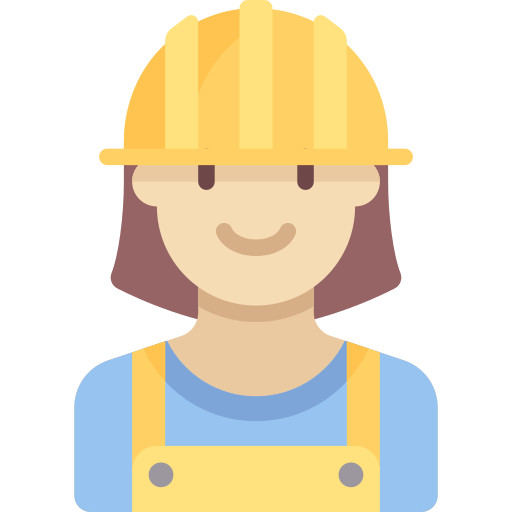
Use these two frases to ask what kind of work do you do:
¿A qué te dedicas?
¿De qué trabajas?
You can reply: Yo soy cantente. (I am a singer) or Trabajo como cantante. (I work as a singer.)
Keep in mind that if the word ends in -o, in the feminine it will end in -a.
e.g:
el ingeniero /la ingeniera
el peluquero/la peluquera
There are exceptions:
el médico (same for male and female)
el/la policía
el/la detective
el/la taxista
el/la dentista








20 - veinte
21 - veintiuno
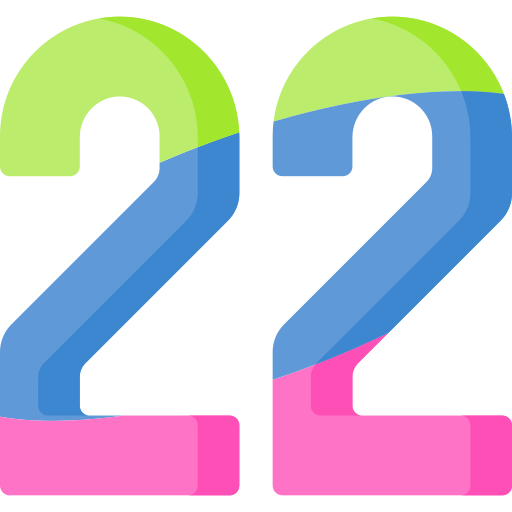
22 - veintidos
23 - veintitres
24 - veinticuatro
25 - veinticinco
26 - veintiseis
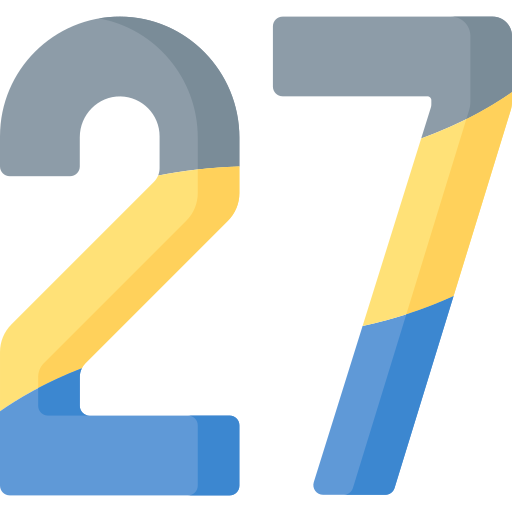
27 - veintisiente
28 - veintiocho
29 - veintinueve
30 - treinta
40 - cuarenta
50 - cincuenta
60 - sesenta
70 - setenta
80 - ochenta
90 - noventa
100 - cien (ciento)
200 - doscientos
500 - quinientos
____
1000 - (un) mil
3000 - tres mil
3555 - tres mil quinientos cincuenta y cinco






In the previous course we mentioned how to say breakfast el desayuno. Let's learn some more vocabulary.
el almuerzo (lunch)
la merienda (the afternoon snack)
la cena (dinner)
If you are in a shop or restaurant and want to ask How much is it, you can say ¿Cuánto cuesta?
e.g.: ¿Cuánto cuestan estas cebollas?
Interesting fact:
Although in other countries tipping is regulated and compulsory, in Spain it is different and you can choose not to leave any extra money. However, although it is not a formal rule, restaurants expect a 10% tip on each final bill, which is significantly lower than in other places. We use the word la propina.











You've already learned that there are some verbs with preposition a however, certain verbs could be used with different prepositions like de, con.
See the change of the preposition with the masculine article (does not apply to the feminine).
Voy del (de + el = del) colegio.
Voy al (a + el = al) colegio.
Remember!
I want TO study. but in Spanish, you can simply say Yo quiero estudiar.









Learning with DuoCards
What is DuoCards?
DuoCards is a language-learning app that helps you build vocabulary with flashcards. You can save words you want to learn and practise them over time.
How do I learn with this course?
Browse the explanations and vocabulary in each section. Select Card picker and choose the words you want to learn. Then create a free account to save your words and practise them.
How do I practise my words?
You'll see a flashcard with a word and a hidden translation. Guess what it means, then tap to check your answer. DuoCards repeats the words you find difficult.
Do I need an account, and is learning free?
You can browse this page without an account. A free account lets you save words and track your progress. The free plan has limits, and Premium offers additional features.