Basic Course IISpanish words
by DuoCards
*The family*
In the previous course you have learned what is "el padre", "la madre" and "los hermanos". We are now going to learn more vocabulary connected to family.
"La familia" can be "grande" (big) or "pequeňa" (small).
For example
"Tengo una familia grande."
Don't forget that in Spain people have two surnames "dos apellidos".
e.g. Pedro Díaz Santiago (Díaz is his paternal surname "apellido paternal" and Santiago is his maternal surname "apellido maternal")
When you address someone by their surname in Spanish cultures, as a general rule you use their paternal surname.
Thus, "Pedro Díaz Santiago" would be known as "Señor Pedro Díaz", not Señor Santiago.
Also, if Pedro marries María Pizarro López (in Spanish culture, women do not change their surname when they marry), their children's names could be, for example, Laura Díaz Pizarro.
If you see a phrase like "Esta es la familia Sánchez." it means *This is the Sánchez family*.

el hijo
The son
Su hijo es muy inteligente.
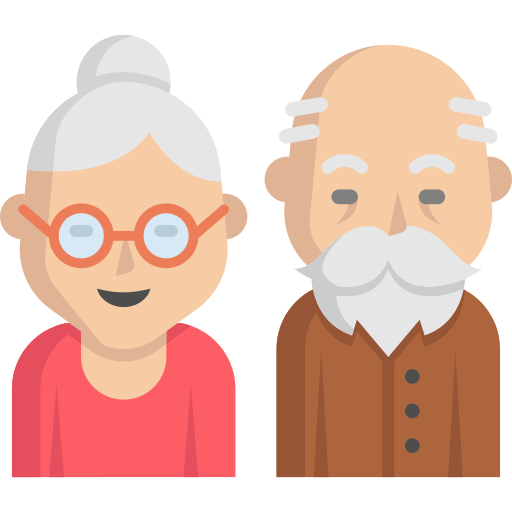
los abuelos
the grandparents
Mis abuelos vivien en el campo.

soltero
single
Mi hermana está soltera.
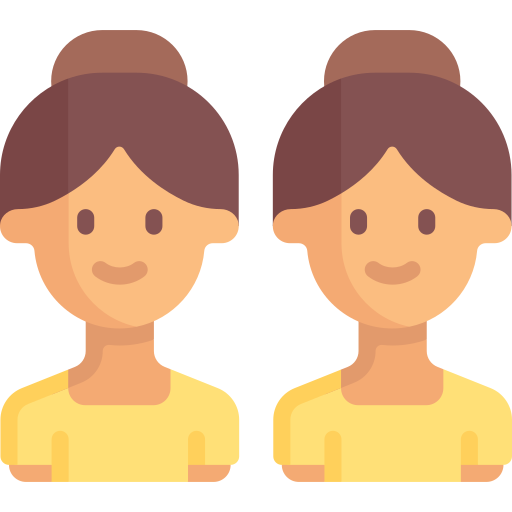
los gemelos
the twins
María y José son gemelos.

divorciarse
to divorce
Mis tíos se divorcian.

la tía
the aunt
Mi tía se llama Lucía.

el tío
the uncle
Mi tío cocina muy bien.

la abuela
the grandmother
Tu abuela tiene pelo blanco.

casarse
to get marry
Se casan la semana que viene.

el abuelo
the grandpa
Mi abuelo es calvo.

casado
married
Estoy casado con María.

la boda
the wedding
La boda será a las once en la iglesia del pueblo.

la hija
the daughter
La hija no es nada tímida.

la pareja
the couple
Son una pareja desde este verano.
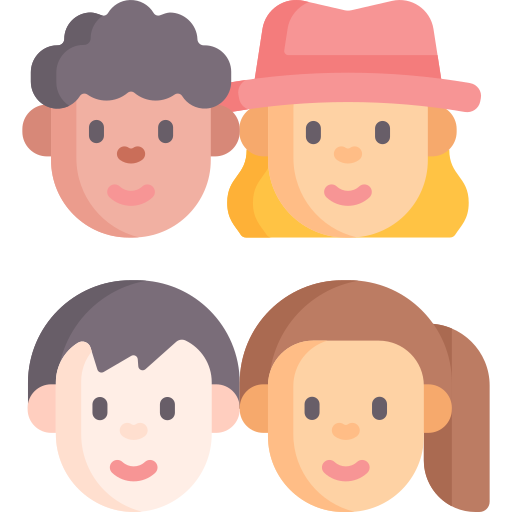
los primos
the cousins
Mis primos son franceses.
*Prepositions - Las preposiciones - I.*
Prepositions do not change to show gender or number like many other Spanish words.
There are different types of prepositions: one-word ("de", "en") or multi-word ("a pesar de", "alrededor de").
Now we focus on the one-word prepositions.

sin
without
Sin tu madre es un poco triste.

sobre
on, about
Sobre el edificio hay una persona.

Un libro sobre la historia.
A book about history.

durante
during
Durante la primavera hay muchas flores.
hasta
until
Me quedo hasta la noche.
bajo
under
Bajo la cama hay una pelota.

desde
since
Desde allí no se puede ir.

contra la pared
against the wall
Va contra la pared.

Vamos a mi casa.
Let's go to my house.

en la caja
in the box
En la caja tengo mis juguetes.
ir a pie
go on foot
Al colegio voy siempre a pie.

barco de papel
paper boat
Me regala un barco de papel.
*With*
There are contractions of the preposition "con" and the prepositional pronouns "mí, ti, sí". The third pronoun means *self*.
When "con" is followed by the pronoun "mí" or "ti" to say *with me* or *with you*, is changed to "conmigo" or "contigo".
There is also "consigo". However, "sí" is different in that the subject must be from the third person for this to be correct. Note the difference below:
"Juan habla consigo." (Juan talks to himself.)
"Juan habla con él." (Juan talks to him.)

conmigo
with me
Ven conmigo.

con tu familia
with your family
Quiero estar más con tu familia.

consigo
with him/her/them/oneself
Trae consigo a su hija.

divertirse (refl.)
to have fun
Ellos se divierten muchísimo con vosotros.
Contigo es todo más fácil.
Everything is easier with you.

cada mes
every month
Viajan con ellos cada mes.

contigo
with you
Hoy voy contigo.

No habla conmigo.
He doesn't talk to me.

traer
to bring
Tengo que traer consigo muchas cosas.
*Months - los meses*
"enero" - January
"febrero" - February
"marzo" - March
"abril" - April
"mayo" - May
"junio" - June
"julio" - July
"agosto" - August
"septiembre" - September
"octubre" - October
"noviembre" - November
"diciembre" - December
If you want to express when you were born, you have to use the verb "nacer", so e.g. "Nací el 1 de enero."
In case we want to express in January, we always use the preposition "en".
e.g.: "En enero me voy a Italia."

enero
January
Enero es el primer mes del año.

en julio
in July
En Julio vamos de vacaciones.

diciembre
December
En diciembre hay nieve.

agosto
August
Agosto es un mes muy caluroso.

mayo
May
En mayo está todo verde.

junio
June
Junio tiene 30 días.

nacer
to be born
Nací en octubre.
*Me gustaría vs quiero*
We use these expressions to talk about something we would like to do. However, "me gustaría" is more polite.
"¿Te gustaría dar un paseo?"
"Me gustaría hacer una pregunta."
"Me gustaría hablar con John."

Me gustaría hablar con él.
I would like to talk to him.

una lemonada
a lemonade
Quiero beber una lemonada.

tomar un café
to have a coffee
¿Te gustaría tomar un café?

hacer una pregunta
ask a question
Quiero hacerte una pregunta.

¿Te gustaría hacer una pregunta?
Would you like to ask a question?

¿Qué te gustaría hacer hoy?
What would you like to do today?

cambiar
to change
Tengo que cambiar de tren.

Me gustaría cambiar mi reserva.
I would like to change my reservation.
*Para vs por*
Both "por" and "para" mean *for* and it can be challenging to learn when to use which one.
We use "para" with an infinitive to talk about why we're doing something.
"Tenemos que ir para llegar a tiempo."
"Por" usually describes the means or cause for something.
"Estudio español por mi trabajo."
*Por can mean:* for, because of, through, by, over, per, instead of, to
*Para can mean:* for, in order to, by, to, according to

para ti
for you
Este regalo es para ti.

mañana
tomorrow
Hablamos mañana.

Necesito terminarlo para mañana.
I need to finish it by tomorrow.

Compro este libro para mi hermana.
I buy this book for my sister.

Salgo para Barcelona mañana.
I leave for Barcelona tomorrow.
pasar por
go through
Pasa por el parque.

para mí
for me
Para mí está bien.

el trabajo
the job
El trabajo intelectual requiere mucha concentración.
Estudio español por mi trabajo.
I study Spanish because of my job.
pasar
to pass
pasar por la calle

Este autobús pasa por el centro.
This bus passes through the centre.
*Clothing I.*
If something looks good on you, you can express it by saying: "Me queda bien," using the verb "quedar".
If the opposite is the case, use "quedar mal", e.g. "Estas botas me quedan mal."
Types of fabric:
"lana" (wool)
"algodón" (cotton)
"seda" (silk)
"piel" (leather)
e.g. "Este jersey negro es de lana.", "Es una camiceta de algodón."
Types of printing:
"de cuadros" (of squares)
"de flores" (floral)
"de rayas" (striped)
e.g.: "Es una falda roja de flores.", "El pantalón de rayas no me gusta."

el abrigo
the coat
Este abrigo es muy cómodo.

la camiseta
the T-shirt
Ponte una camiseta.

la sudadera
the sweatshirt
Quiero una sudadera rosa.
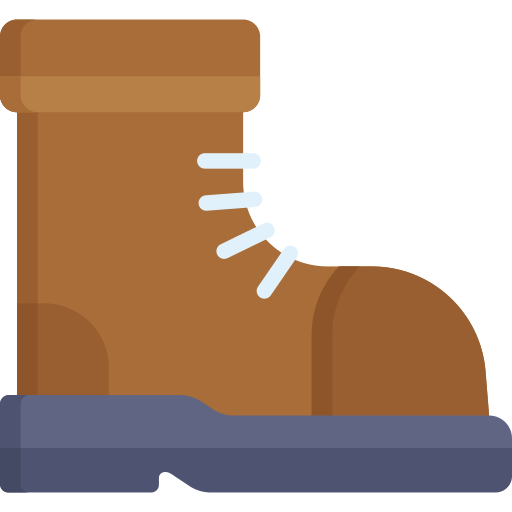
las botas
the boots
Las botas me protegen del frío.

el pantalón
the jeans
Necesita un pantalón nuevo.

los zapatos
the shoes
Usa solo zapatos elegantes.

Un jersey
the jersey
En invierno me pongo un jersey de cuello redondo.

los calcetines
the socks
Pierdo los calcetines a menudo.

el vestido
the dress
Está muy guapa en este vestido.

la falda
the skirt
Esta falda es demasiado corta.

la camisa
the shirt
En verano se pone camisas coloradas.
*In the shop*
If we want the shop assistant to help us, we can express it with a simple sentence, "Me puede ayudar?" (Could you help me?)
Typical situation in a shop:
"Buenos días! ¿Tienen esta camiseta en otro color?" (Good morning, do you have this shirt in another color?)
"Si, aquí la tiene en negro." (Yes, here it is in black.)
"Gracias. ¿Dónde están los probadores?" (Thank you. Where are the fitting rooms?)
"Están a la derecha." (They're on the right.)
"Me queda bien, la quiero." (It fits me, I want it.)
"Vale, las cajas están por ahí." (Okay, the checkouts are there.)
______
"No me queda bien. ¿Tiene usted una talla más grande?" (It doesn't fit me. Do you have a larger size?)
"Sí, aquí tiene." (Yes, here you go.)

el espejo
the mirror
Puede mirarse en el espejo.

los probadores
the fitting rooms
Aqui están los probadores.

las rebajas
the sales
Esta semana hay rebajas en las tiendas.

el tejido
the fabric
Es un tejido de lujo.

la prenda
the piece of clothing
Estas prendan tienen que lavarse.

probarse algo
to try something on
Quiere probar este abrigo.

el dependiente
the shop assistent
El dependiente es muy majo.
pedir una talla más grande
to ask one size larger
Necesitas pedir una talla más grande.

el escaparate
the shop window
Me gusta la falda en este escaparate.

comprar ropa
to buy clothes
Nos encanta comprar ropa nueva.
*Lo, la, los, las*
To avoid repeating the same word over and over again, you can use *lo*, *la*, *los*, or *las* (depending on the gender and number of the noun). In English, it's like using *it* and *them*.
In Spanish these words come *before the verb!*
"Yo lo quiero."
"Me gusta esta camisa y la quiero."

lo amo
I love him
Este vestido, ¡lo quiero!
This dress, I want it!

No las quiero.
I don't want them.

presentar
to introduce
No las quiero presentar.

Estos zapatos, ¿los necesitas?
Do you need these shoes?

mover
to move
Lo mueve con facilidad.

¿Lo ves?
Do you see it?

conocer
to know (someone)
Quiero conocer a tu hermana mayor.

¿Las conoces?
Do you know them (feminine)?

preferir
to prefer
Lo prefiero con patatas.
*Present continuous*
To say what you are doing right now, use a form of *estar* plus a verb ending in *-ndo*.
For *-ar* verbs, use *-ando*.
For *-er* and *-ir* verbs, use *-iendo*
"hablar" - "hablando"
"comer" - "comiendo"
"abrir" - "abriendo"
If there's a vowel before *-iendo*, the verb ending becomes *-yendo*.
"¿Qué estás leyendo?"

Yo estoy estudiando.
I am studying.
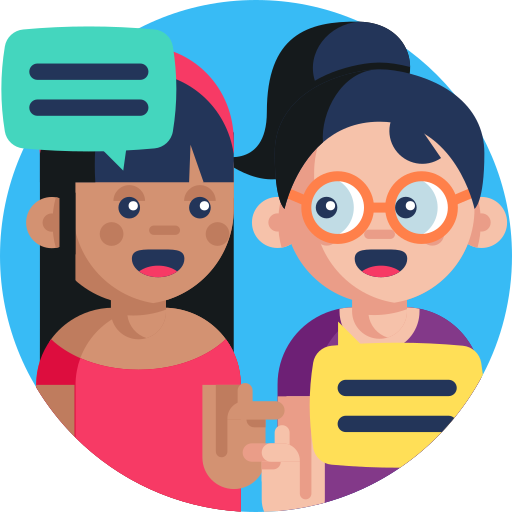
Ellos están hablando.
They are talking.
Ellos están hablando con el profesor.

escuchar música
to listen to music
¿Que música escuchas?

estamos comiendo
we are eating
Estamos comiendo juntos todos los días.

¿Estás escuchando música?
Are you listening to music?

¿Qué estás comiendo?
What are you eating?

están leyendo
they are reading
Están leyendo un libro sobre la guerra.

la ventana
the window
¿Puedes abrir la ventana?

Estamos abriendo la ventana.
We are opening the window.

ahora mismo
right now
¿Estás estudiando ahora mismo?

el programa
the programme
El programa es muy largo.

¿Vais a ver este programa?
Are you going to watch this programme?
*Types of personality*
As we said in the previous course, Spanish has more verbs to *be* ("ser", "estar", "haber" - "hay")
When we want to describe a person with a quality that is permanent, we always use the verb "ser".
e.g.:
"Mi abuela es simpática."
"Nuestros padres son majos."
But if we want to express a quality that lasts only a moment and can change, we use the verb "estar".
e.g.:
"Mi tío está enamorado."
"Su abuelo está nervioso."

tímido
shy
Es un poco tímído.

generoso
generous
Tus padres son siempre muy generosos con nosotros.

simpático
nice
Me encanta la gente simpática.

nervioso
nervous
Antes del éxamen está nervioso.

inteligente
intelligent
Es un chico muy inteligente.

serio
serious
Es una mujer seria.

vago
lazy
No me gustan las personas vagas.
honesto
honest
Es una persona vaga y honesta.

enfadado
angry
Está enfadado conmigo.

majo
nice
Es una pareja muy maja.

trabajadora
hardworking
Es una persona trabajadora.

tonto
foolish
El niño es bastante tonto.
*Animals - los animales*
In the previous courses you've learned how to say dog "el perro" and cat "el gato".
Let's learn more animals.
If you want to express a baby animal you have to say:
Perro: "el cachorro"
Gato: "el gatito"

la jirafa
the giraffe
La jirafa es un animal muy alto.

el oso
the bear
El oso vive en el bosque.

el tiburón
the shark
El tiburón es muy peligroso.

El elefante
the elephant
El elefante africano es mayor que el asiático.

la tortuga
the tortoise
Mi amiga tiene una tortuga.

el toro
the bull
El toro es un animal muy fuerte.

el león
the lion
El león vive en África.

la mascota
the pet
Tenemos muchas mascotas en casa.

la paloma
the pigeon
Las palomas viven en la ciudad.

el cerdo
the pig
El cerdo es un animal muy simpático.

La gallina
the chicken
La gallina produce huevos.

Montar a caballo
horse riding
Quiero montar a caballo.

la mariposa
the butterfly
Las mariposas tienen diferentes colores.

Veo una mariposa roja.
I see a red butterfly.

la vaca
the cow
Las vacas producen leche.

el ratón
the mouse
Mi madre tiene miedo de los ratones.

el zoo
the zoo
En el zoo hay muchos animales exóticos.
*Types of different shops*
In the previous course you learned few buildings typical of the city, let's learn some basic shop types.
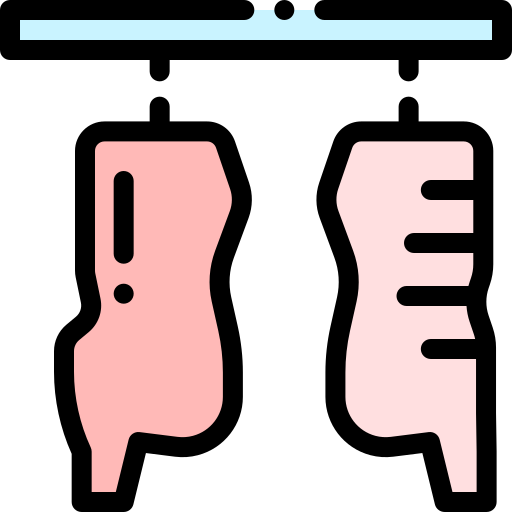
la carnicería
the butcher's shop
En la carnicería compras carne fresca.

La joyería
the jewellery shop
Han robado algo de la joyería.

la peluquería
the hairdressing salon
En las peluquerías se ofrecen también otros servicios de belleza.

la frutería
the greengrocer's shop
Tengo que comprar unas naranjas en la frutería.

la tienda de ropa
the clothes shop
Hay muchas tienda de ropa.

la pastelería
the pastry shop
En esta pastelería tienen unas tartas de chocolate.

la pescadería
the fishmonger
En la mayoría de las pescaderías compras todos tipos de mariscos.

La heladería
the ice cream parlour
Esta heladaría hace unos helados muy ricos.

la panadería
the bakery
El mejor pan fresco lo venden en esta panadería.

la agencia de viajes
the travel agency
Antes tenemos que visitar la agencia de viajes.

el estanco
the tobacconist
En los estancos venden los periódicos.

la charcutería
the delicatessen
Quiero comprar algo en la charcutería.

la juguetería
the toy shop
Los hijos quieren un regalo de la juguetería.
*Ir + a + infinitivo*
This is a simple Spanish formula for expressing the near future like *going to* in English.
First use the present simple conjugations of the verb "ir", include the word "a" between "ir" and the infinitive of the verb.
e.g.: "Voy a ver una película en el cine."

Voy a comer en un restaurante chino.
I'm going to eat in a Chinese restaurant.

discutir
to argue
Siempre discuten.

No van a discutir.
They will not argue.

salir con los amigos
going out with friends
Voy a salir con mis amigos.

sacar el perro
to take the dog out
Vamos a sacar el perro esta tarde.

elegir
to choose
Van a elegir un piso nuevo.

contactar
to contact
Vamos a contactar su colega.

el artículos
the article
El artículo no va a decir nada bueno.

Van a leer unos artículos.
They are going to read some articles.

construir
to build
Quiero construir una casa en el campo.
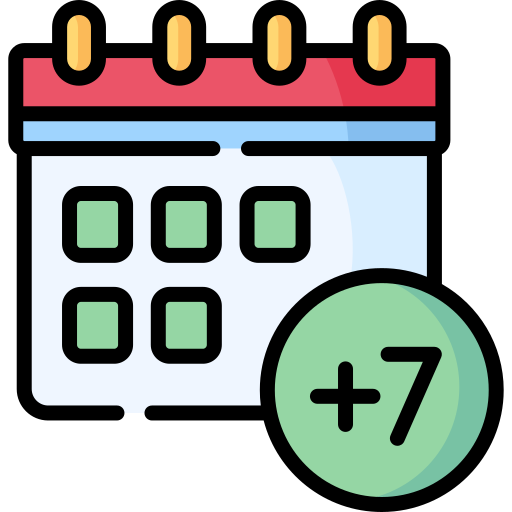
la semana que viene
next week
Voy a verte la semana que viene.
*Professions*
Use these two frases to ask *what kind of work do you do*:
"¿A qué te dedicas?"
"¿De qué trabajas?"
You can reply: "Yo soy cantente." (I am a singer) or "Trabajo como cantante." (I work as a singer.)
Keep in mind that if the word ends in -o, in the *feminine* it will end in *-a*.
e.g:
"el ingeniero /la ingeniera"
"el peluquero/la peluquera"
There are exceptions:
"el médico" (same for male and female)
"el/la policía"
"el/la detective"
"el/la taxista"
"el/la dentista"

el abogado
the lawyer
Ella es una abogada.

el deportista
the sportsman
Ronaldo es un deportista muy famoso.

el soldado
the soldier
La vida de un soldado puede ser dura.

el cocinero
the cook
Ella trabaja como cocinera.

el bombero
the fireman
Ser bombero es muy peligroso.

el director
the director
El director es el más imporante.

el vendedor
the seller
La vendedora nos vende sus productos.

el profesor
the teacher
Es nuestro profesor de español.

el artista
the artist
El artista hace unos cuadros interesantes.

el fontanero
the plumber
Hoy tiene que venir el fontanero.

Su padre trabaja como albañil.
His father works as a bricklayer.
*Numbers - II*
"20 - veinte"
"21 - veintiuno"
"22 - veintidos"
"23 - veintitres"
"24 - veinticuatro"
"25 - veinticinco"
"26 - veintiseis"
"27 - veintisiente"
"28 - veintiocho"
"29 - veintinueve"
"30 - treinta"
"40 - cuarenta"
"50 - cincuenta"
"60 - sesenta"
"70 - setenta"
"80 - ochenta"
"90 - noventa"
"100 - cien (ciento)"
"200 - doscientos"
"500 - quinientos"
____
"1000 - (un) mil"
"3000 - tres mil"
"3555 - tres mil quinientos cincuenta y cinco"

cien
one hundred
Son cien euros.

trescientos
three hundred
Hay trescientos alumnos.

quinientas casas
five hundred houses
En esta ciudad hay quinientas casas.

veintidós
twenty two
Tiene veintidós coches.

cincuenta y cuatro personas
fifty-four people
Veo a cincuenta y cuatro personas.

veintisiete
twenty seven
Hay veintisiete personas.

dos mil
two thousand
Dame dos mil coronas.

treinta y seis
thirty-six
Su padre tiene treinta y seis medallas.
sesenta y seis viajes
sixty-six trips
Hace sesenta y seis viajes cada verano.

Mi abuela tiene noventa años.
My grandmother is ninety years old.
ochenta y uno
eighty-one
Hay ochenta y un edificios.
cincuenta y ocho palabras
fifty-eight words
En este artículo hay cincuenta y ocho palabras.
seiscientos setenta
six hundred and seventy
Son seiscientos setenta dólares.
*Food and drinks II.*
In the previous course we mentioned how to say breakfast "el desayuno". Let's learn some more vocabulary.
"el almuerzo" (lunch)
"la merienda" (the afternoon snack)
"la cena" (dinner)
If you are in a shop or restaurant and want to ask How much is it, you can say "¿Cuánto cuesta?"
e.g.: "¿Cuánto cuestan estas cebollas?"
Interesting fact:
Although in other countries tipping is regulated and compulsory, in Spain it is different and you can choose not to leave any extra money. However, although it is not a formal rule, restaurants expect a 10% tip on each final bill, which is significantly lower than in other places. We use the word "la propina".

la cebolla
the onion
La cebolla se usa con la carne.

el ajo
the garlic
No me gusta el ojo.

el pan
bread
Me gusta el pan fresco.

el jamón
the ham
El jamón es muy salado.

el huevo
the egg
Los peces nacen de huevos.

una copa de
a glass of
Quiero una copa de vino tinto.

el queso
the cheese
Compro el queso manchego para la cena.

el tomate
the tomato
El gazpacho se hace con tomates y pepinos.

la pasta
the pasta
En italia se come mucha pasta.

la fresa
the strawberry
La mermelada de fresas es mi favorita.

un vaso de
a glass of
Un vaso de agua, por favor.

el plátano
the banana
El plátano tiene color amarillo.
*Verb+preposition*
You've already learned that there are some verbs with preposition "a" however, certain verbs could be used with different prepositions like "de", "con".
See the change of the preposition with the masculine article (does not apply to the feminine).
"Voy del (de + el = del) colegio."
"Voy al (a + el = al) colegio."
Remember!
*I want TO study.* but in Spanish, you can simply say "Yo quiero estudiar."

contar con
to count on
Cuento contigo.

soñar con
to dream about
Sueño contigo cada noche.
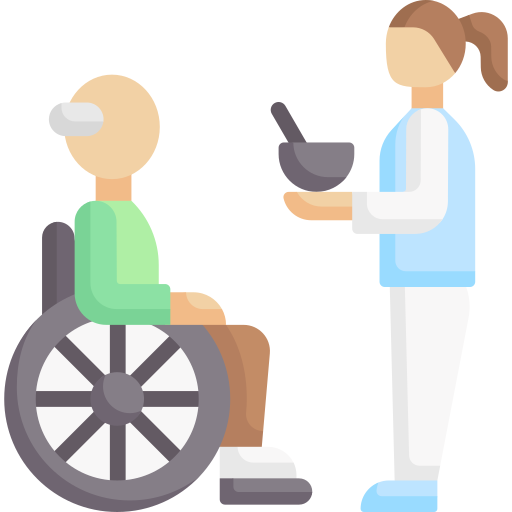
confiar en
to rely on
Confío en mi familia.

enamorarse de
fall in love with
Me enamoro de él facilmente.

pensar en
think about
Piensan en sus hijos cada día.

casarse con
to marry
Se casa con José esta semana.

acabar de
to finish
Acabo de comer.

alegrarse de
to rejoice in
Nos alegramos de cada detalle.

reírse de
to laugh at
Se ríen de mí.

romper con
to break up with someone
No quiero que él rompe con Manuela.

preocuparse por
to worry about
Te preocupas mucho por tu pareja.