Basic Course IIISpanish words
by DuoCards
*What time is it?*
If you want to know what time it is, say "¿Qué hora es?"
Remember, you always have to use the verb *SER*.
Secondly, remember that only when talking about one o’clock, you’ll need to use the third person singular form of ser (es). For all the other eleven hours, you can safely go with the plural form (son).
If it’s half past the hour in Spanish, use the phrase "y media";
If it’s a quarter past the hour, use the phrase "y cuarto";
If it’s a quarter until the hour, use the phrase "menos cuarto".
However, if you want to be a bit more specific, you can use the simplest formula:
*es/son + las + hour + number of minutes*. For example, if you want to say that it’s *2:16*, you’ll say "son las dos y dieciséis".
Difference between "de la mañana/tarde/noche" x "por la mañana/tarde/noche"
"DE" - you know the exact time
"Voy a Zumba todos los días a las seis de la tarde."
(I go to Zumba every day at six in the afternoon.)
"POR" - you don't know the exact time
"Prefieres ducharte por la mañana antes de ir a trabajar."
(You prefer taking a shower in the morning before going to work.)
el reloj
the watch
El reloj marca las 3 de la tarde.

Es la una.
It is one o'clock.

en punto
exactly
Son las tres en punto.

el retraso
the delay
Anunciaron el retraso del vuelo.
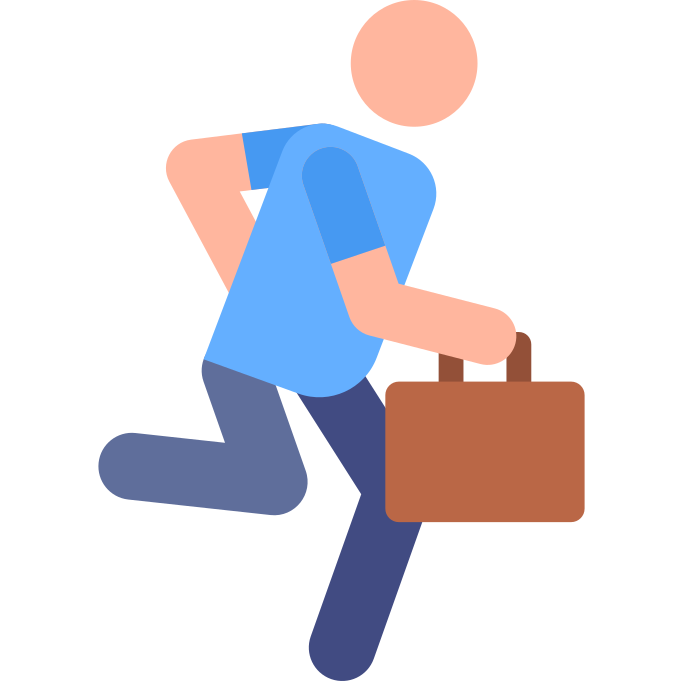
Voy con retraso.
I am behind schedule; I'm late
Voy con retraso, lo siento.
medianoche
midnight
El reloj marcó la medianoche.
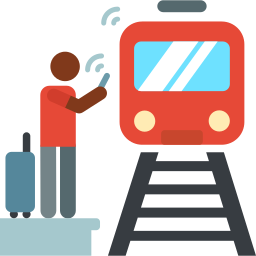
El tren sale a las diez y media.
The train leaves at half past ten.

por la mañana
in the morning
Por la mañana me levanto pronto.

Son las cinco y cuarto.
It's a quarter past five.

mediodía
noon
Me gusta comer al mediodía.
de la tarde
in the evening
Son las dos de la tarde.

¿A qué hora empieza la reunión?
What time does the meeting start?
*Irregular comparatives*
Adjective: "bueno" (good)
Comparative: "mejor" (better)
Superlative: "el/la mejor" (best)
Adjective: "malo" (bad)
Comparative: "peor" (worse)
Superlative: "el/la peor" (the worst)
Adjective: "grande" (big)
Comparative: "mayor" (older; greater)
Superlative: "el/la mayor" (the oldest; the greatest)
Adjective: "pequeño" (small)
Comparative: "menor" (younger; less)
Superlative: "el/la menor" (youngest; least)
Note that when referring to size, "grande" and "pequeño" follow the normal rules for comparative and superlative forms.
"Esta casa es grande." (This house is big.)
"Esa casa es más grande." (That house is bigger.)
The words "joven" and "viejo" are used for non-comparative descriptions of age.
María es la mayor de la familia.
Maria is the eldest in the family.

mejor calidad
better quality
Este jersey es de mejor calidad.

el alumno peor
the worst pupil
Cuál es el alumno peor?

Aquella casa es la más grande.
That house is the biggest.

el pueblo grande
the big village
Mis padres viven en un pueblo grande.

menor cantidad
lower amount
Esta comida es de menor cantidad.

querer ser joven
to want to be young
Mi abuela quiere ser joven.

los cachorros pequeños
the small puppies
Me encantan los cachorros pequenos.

el hermano mayor
the older brother
El hermano mayor tiene un perro.

¡Eres el mejor!
You are the best!
*Parts of the house*
We've already learned how to name different type of buildings or how to say dining room "el comedor". So now let's take a look at the parts of the house.
House is translated as "la casa".
If it´s a flat: "el piso" or "el apartamento". "El piso" means also a floor. (e.g. "tercer piso" = third floor)
la cocina
the kitchen
Me gusta cocinar en la cocina.
el balcón
the balcony
Desde el balcón se puede ver toda la ciudad.
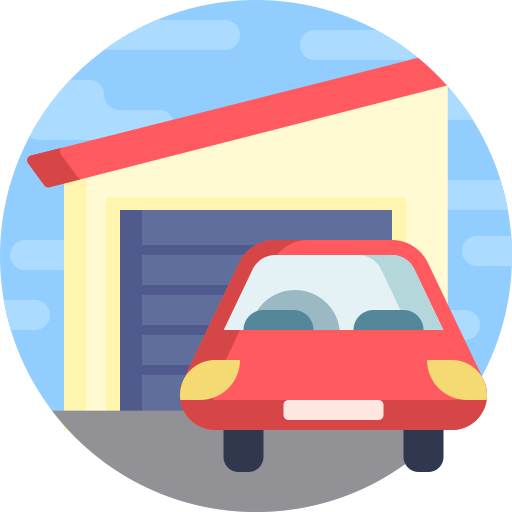
el garage
the garage
Tenemos un coche en el garage.

la sala/el salón
the room
Me gusta pasar tiempo en la sala con mi familia.

el ático
the attic
El ático es un espacio tranquilo.
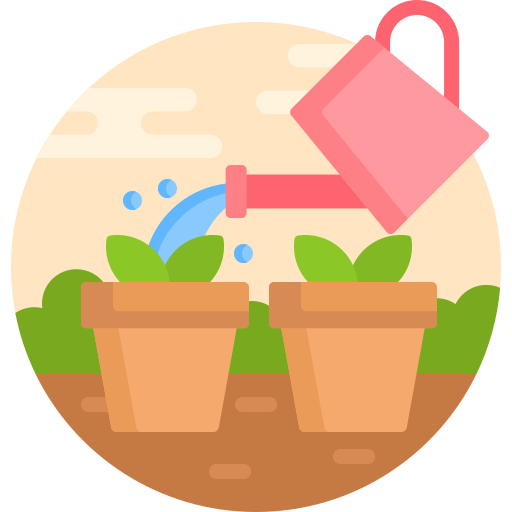
el jardín
the garden
Los niños están jugando en el jardín.
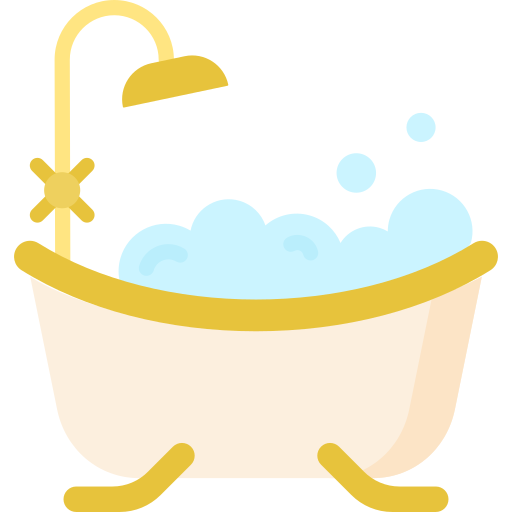
el baño
the bath
Voy al baño.
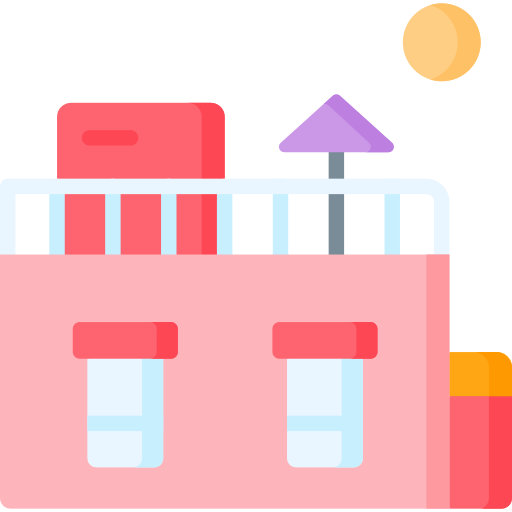
la terraza
the terrace
Vamos a cenar en la terraza esta noche.

el despacho
the office
El despacho de mi jefe es muy grande.

el cuarto / dormitorio
the room / bedroom
El cuarto está muy oscuro.

la lavandería
the laundry
En esa villa tiene una lavandería.

el sótano
the basement
La lavadora está en el sótano.
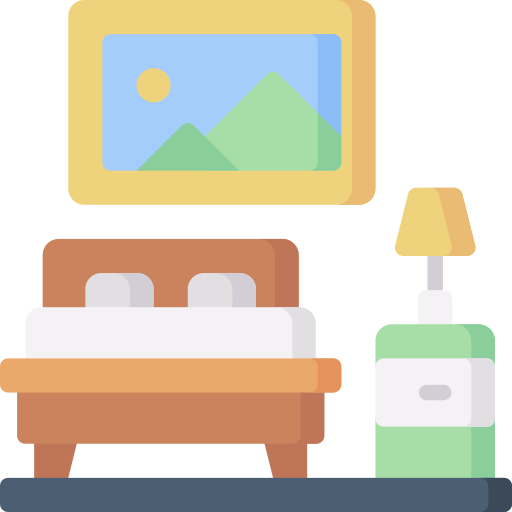
el dormitorio
the bedroom
El dormitorio está en el segundo piso.
*¿Muy o mucho?*
Muy is an adverb and means *very* in English. An adverb is a word that modifies a verb, another adverb, an adjective, or a phrase or sentence. But *NOT* a noun.
For example:
*"Ella es una chica muy amigable."* She is a very friendly girl.
However, we never use the word muy by itself.
*"Tienes hambre?"* Are you hungry?
*"Sí, mucho."* (You can’t say Sí, muy).
Mucho means *a lot/a lot of/ much/many* in English. Can be used as an adjective or as an adverb.
It has 4 forms: *mucho, mucha, muchos, muchas*
When mucho is used as an adjective, it must agree both in gender (masc/fem) and number (singular/plural) with the noun.
*"Hay mucha comida en la nevera"*. There is a lot of food in the fridge.
When mucho is used as an adverb, it doesn't change.
*"Necesito estudiar mucho."* I need to study a lot.

mucho más
much more
Tenemos que estudiar mucho más.
ser listo
to be smart
Él es muy listo.
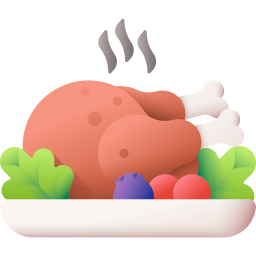
La comida está muy buena.
The food is very good.
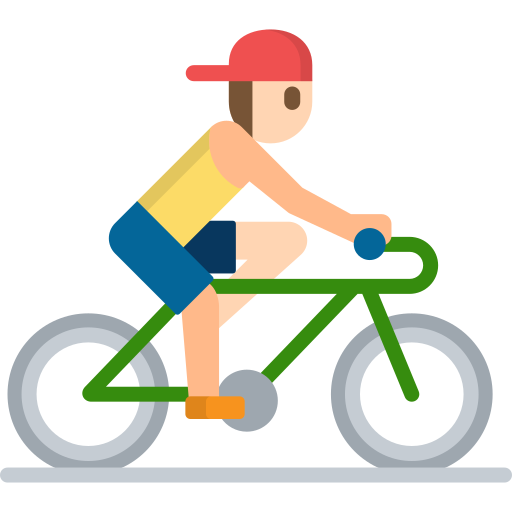
montar en bici
cycling
No sé montar mucho en bici.
la vergüenza
the shame
Me da mucha vergüenza.

la receta
the recipe
Hay muchas recetas de carne.

necesario
needed
Esta persona es muy necesaria.

responsable
responsible
Él es muy responsable en su trabajo.

el ajedrez
the chess
Me gusta jugar mucho al ajedrez con mi abuelo.

la paella
the paella
Sabe cocinar la paella.

¿Tienes muchos amigos?
Do you have many friends?
*Conjunctions*
"Las conjunciones" are words or groups of words that serve to join sentences and give them an appropriate meaning.
Be careful at these changes.
"y" changes to "e" when the word after starts with I/Y. - "Ana es una chica guapa e inteligente." (NOT y inteligente).
"o" changes to "u" wheb the word after starts with O - "No sé si quiero ver a Ana u Olga." (NOT o Olga).
mientras
while
Estudio español mientras ella estudia francés.

entonces
then
Entonces, ¿que quieres comer?

si
if
Si llueve, no salgo.
aunque
even if
Aunque hace frío, no voy a ponerme un abrigo.
ni...ni
neither … nor
Ni brilla el sol ni hace calor.

porque
because
Me gusta el chocolate porque es delicioso.
pero
but
No tengo dinero, pero quiero comprar un regalo.

para
in order to
Lo hago para estar mejor.

sino
otherwise
No quiero ir al cine, sino al teatro.

sin embargo
however
Me gusta mucho el verano, sin embargo, prefiero el invierno.

que
what
No sé qué decir.
*Verbs SER or ESTAR + adjective*
A tricky situation could happen when you realize that different types of adjectives have different meanings depending if you use them with "ser" or "estar".
e.g.:
"Raquel es una interesada." (Raquel is a self-interested person.)
"Raquel está interesada en comprar esa casa." (Raquel is interested in buying that house.)

estar listo
to be ready
¿Estás listo para la reunión?

estar verde
to be unripe
Los plátanos están verdes.

ser malo
to be bad
Su novio es muy malo.

ser vivo
to be lively
Mis hijos son muy vivos.
ser orgulloso
to be an arrogant person
Él es muy orgulloso.
estar despierto
to be awake
Estoy despierto hasta tarde.

ser claro
to be clear
La habitación es muy clara.

estar orgulloso
be proud
Estoy orgulloso de mi hijo.

estar vivo
to be alive
Menosmal, está viva.
estar cerrado
to be closed
Este edificio está cerrado.

estar malo
to be sick
Estoy malo, tengo fiebre.

ser abierto
to be open
Mis amigos son muy abiertos.
*Future tense*
To form the future tense in Spanish "futuro simple", take the infinitive form of the verb and add these endings to it: -é, -ás, -á, -emos, -éis and -án.
e.g.:
"Comer"
"yo comeré"
"tú comerás"
"él/ella/usted comerá"
"nosotros comeremos"
"vosotros comeréis"
"ellos/ellas/ustedes comerán"
1. The simple future is often used to talk about things that may be or are probably true.
"Serán las cinco de la tarde." It must be five o'clock in the afternoon.
2. The simple future is often used to make predictions about the future.
"Ella tendrá tres hijos." She will have three children.
The simple future can also be used in conditional sentences with si (if) to talk about what someone will do. In sentences like this, the verb immediately after si is in the present tense, while the verb in the other part of the sentence is in the simple future.
"Si hoy no llueve, saldré con mis amigos." (If it doesn't rain today, I will hang out with my friends.)
When you see one of these words, you have to use the future, these words we call "los marcadores temporales". Each tense has its marcadores.
e.g.:
"mañana"
"mañana por la mañana/ por la mañana/por la tarde/ por la noche"
"la semana que viene"
"el mes/año que viene"
"dentro de un/dos meses"

tu llamarás
you will call

dentro de un mes
in a month's time
Voy a visitar a mis dentro de un mes.

el futuro
the future
En el futuro será médico.
el chalé
the chalet
Los chalés en esta zona son muy caros.
el sábado que viene
next Saturday
El sábado que viene visitará a su tía.

Viviremos en un chalé cerca de la playa.
We will live in a villa near the beach.

ganar
to earn/to win
Ganarán la lotería.

nosotros cuidaremos
we will look after
Nosotros cuidaremos a nuestros animales.

ella luchará
she will fight
Ella luchará por tu vida.

estar ocupado
to be busy
Estaré ocupado toda la tarde.

Serán las nueve de la noche.
It will be nine o'clock in the evening.
*Important objects in the house I.*
All these objects we can call furniture, in Spanish is "los muebles".
Types of materials:
"de madera" = of wood
"de plástico" = of plastic
"de cristal" = of glass
el sofá
the couch
El gato está durmiendo en el sofá.

la nevera
the fridge
¿Puedes poner la leche en la nevera, por favor?

el lavabo
the sink
Por favor, lávate las manos en el lavabo.

el armario
the cabinet
El armario está lleno de ropa.
la ducha
the shower
Después de hacer ejercicio, siempre me ducho.
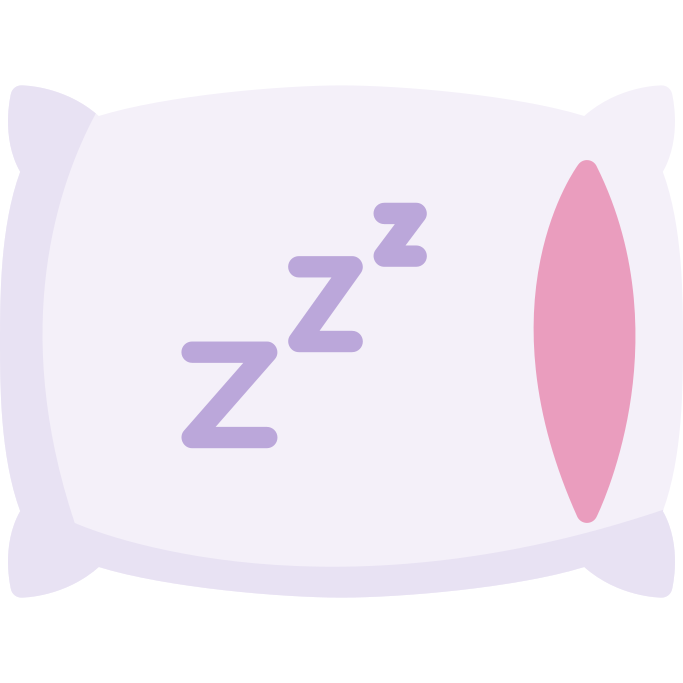
la almohada
the pillow
La almohada está muy suave.
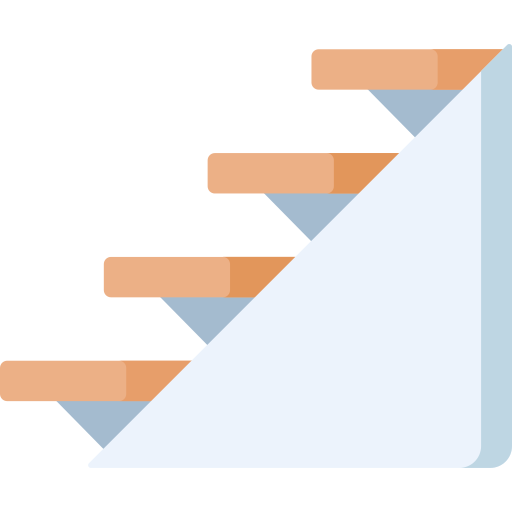
la escalera
the stairs
Voy a subir la escalera.
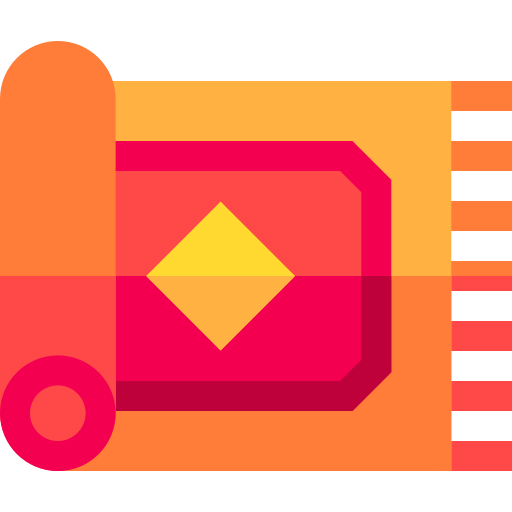
la alfombra
the carpet
La alfombra de mi sala es de color beige.
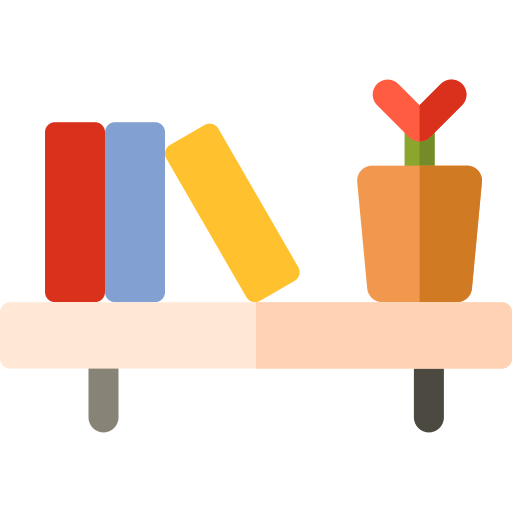
la estantería
the shelf
Los libros están en la estantería.
el váter
the toilet
¿Dónde está el váter?
el fregadero
the sink
Lava los platos en el fregadero.
las sábanas
the sheets
Por favor, cambia las sábanas de la cama.
*Futuro simple - Irregular verbs*
Now we will take a look at some irregular verbs in simple future:
"Tener" = tendr... "tendré"
"Venir" = vendr... "vendré"
"Decir" = dir... "diré"
"Saber" = sabr... "sabré"
"Haber" = habr... "habré"
"Hacer" = har... "haré"
"Valer" = valdr... "valdré"
"Poder" = pondr... "pondré"

Lo haré el mes que viene.
I will do so next month.
solucionar
to sort out/to solve
Él sabrá cómo solucionar tu problema.

vosotros vendréis
you will come
usted dirá
you will say
Usted dirá una mentira.

vosotras pondréis
you will put
Vosotras pondréis estas cosas allí.

ellos valdrán
they shall be worth
Ellos valdrán mucho dinero.
tener problemas
to have problems
Tendremos problemas con esta gente.

ellos querrán
they will want to
Ellos querrán ir a Francia.

Quizás vendrán más tarde.
Perhaps they will come later.
*Verbs that change meaning with pronouns*
In Spanish, some verbs are pronominal, that is, they always have a pronoun in all their verb forms. Normally this pronoun indicates the person or persons on whom the action falls, but in several of these verbs this pronoun causes a change of meaning.
e.g.:
"acordar" x "acordarse"
"aprovechar" x "aprovecharse"

acordarse
to remember
¿Te acuerdas de nuestra primera cita?

echar
to throw
Echa la pelota al otro lado del campo.

dormirse
to fall sleep
Me duermo temprano todas las noches.

dejarse
be left
Me dejé llevar por la emoción.

negar
to deny
Él niega haber robado el dinero.
quemarse
to get burnt
Te vas a quemar.

jugarse
be played
Se jugó todo su dinero en el casino.
quedarse
to stay
Prefiero que nos quedemos en casa.
dejar
to let
Le dejé la moto a Marco.
*Verb SOLER*
The verb "soler" is used a lot in Spanish to talk about actions that happen habitually or frequently, both in the present and in the past. It means the same as tener la costumbre de hacer algo or acostumbrar a hacer algo, but it is used much more than these two verbs.

Suele estar en su piso.
He is usually in his flat.
acostarse
to go to sleep
¿A qué hora te sueles acostar?

Me suelo acostar a las diez.
I usually go to bed at ten o'clock.
suelen mentir
they often lie
En el trabajo suelen mentir.

jugar al golf
to play golf
Los domingos suelo jugar al golf.

acabar
to finish
acabó su famoso cuadro un día antes de morir

marcar
to mark
Debes marcar tu número de teléfono en el formulario.
el alcohol
the alcohol
Me gusta beber alcohol los fines de semana.

la fiesta
the party
Vamos a ir a la fiesta de cumpleaños.
No suelo beber alcohol en las fiestas.
I don't usually drink alcohol at parties.
"Pretérito perfecto compuesto"
We use this verb tense when
1. when we talk about a period of time that has not yet ended at the time of speaking
2. when the result of the action is still felt:
3. when the action is related in some way to the present or the future:
This past tense is called *compound* because it consists of two parts.
the auxiliary verb "haber" + the *past participle.*
The result is a verb form like this
"He hablado con el profesor." = I have spoken to the teacher.
This tense is similar to the English past perfect tense. First, let's look at the verb forms "haber".
I "he"
you "has"
he "ha"
we "hemos"
you "habéis"
they "han"
How is the past participle formed? (Participle)
verbs ending in -ar ⇒ -ado: hablar ⇒ hablando
verbs ending in -er/-ir ⇒ ido: vivir ⇒ viviendo
"Marcadores temporales":
"hoy", "esta mañana", "este mes", "este año", "alguna vez", , "nunca", "todavía", "aún", "últimamente", "por ahora".

he comido
I have eaten
¿Has comido ya?
todavía
yet
Todavía no he terminado mi tarea.

habéis vivido
you have lived
Habéis vivido con ellos.

hemos jugado
we have played
Hemos jugado con sus hermanos.
alguna vez
ever
¿Has visitado alguna vez España?

ya
already
Ya he comido.
esta mañana
this morning
Esta mañana he desayunado huevos.
ellos han esquiado
they have skied
Ellos han esquiado todo el día.
por ahora
for now
Por ahora, ha ido todo bien.
has podido
have been able to
Has podido ayudar a los demás.
hemos calculado
we have calculated
Hemos calculado nuestros gastos.
*Irregular verbs in the past participle*
There are some irregular past participles in Spanish. Here is a list of the most important exceptions:
Decir = to say = "dicho"
Escribir = to write ="escrito"
Hacer = to do = "hecho"
Poner = to put ="puesto"
Morir = to die ="muerto"
Romper = to break ="roto"
Ver= to see ="visto"
Abrir = to open = "abierto"
Volver = to return = "vuelto"
Freír = to fry = "frito"

Ha frito estas patatas.
He fried these potatoes.
la tontería
the nonsense
Has dicho una tontería.

he vuelto
I have got back
A las 11 he vueltro del trabajo.
has puesto
you have put
Has puesto la ropa en la lavadora.

la tarea
the homework
Ha escrito su tarea.

Su coche se ha roto.
Your car has broken down.

un poema
a poem
¿Habéis escrito un poema?
han muerto
have died
Todos han muerto en esa tragedia.

ha hecho
has made
Ha hecho una cosa importante.

Hoy han abierto una tienda nueva.
A new shop opened today.
*Human body I.*
In the previous course we briefly covered how to say when something hurts, we always use the verb "doler". (e.g. "Me duelen las manos.")
Vocabulary to know:
"el cuerpo humano" (the human body)
"los órganos" (the organs)
- "el corazón" (the heart)
- "los pulmones" (the lungs)
- "el cerebro" (the brain)
- "el estómago" (the stomach)
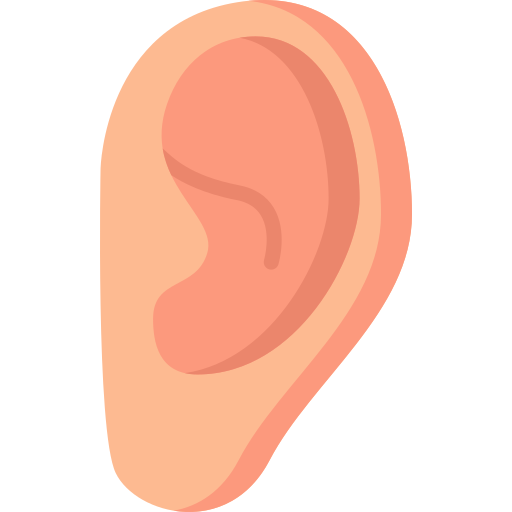
las orejas
the ears
Me duele una de las orejas.
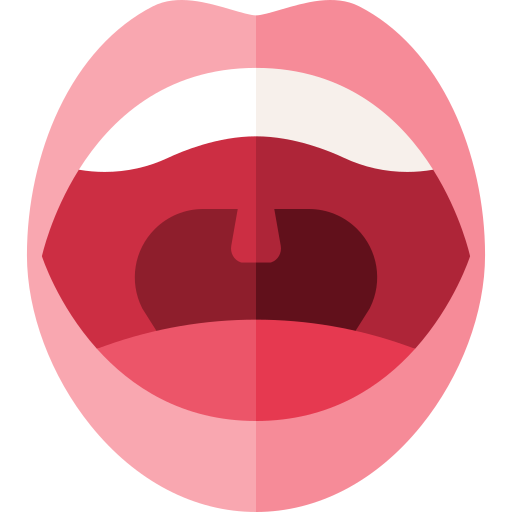
la boca
the mouth
Abre la boca, por favor.

la lengua
the tongue
La lengua es de color rojo.

la cabeza
the head
El león tiene una melena alrededor de la cabeza.
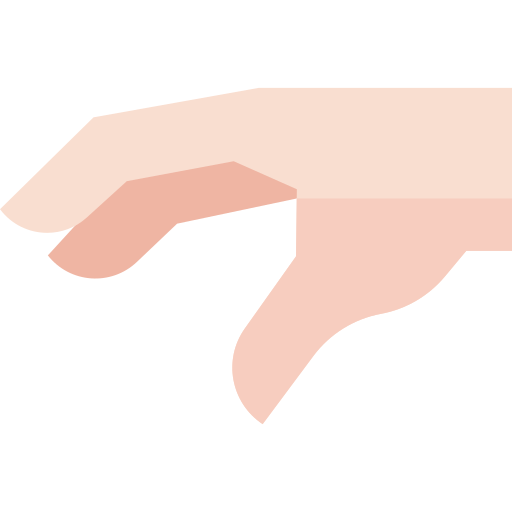
la mano
the hand
Dame tu mano.
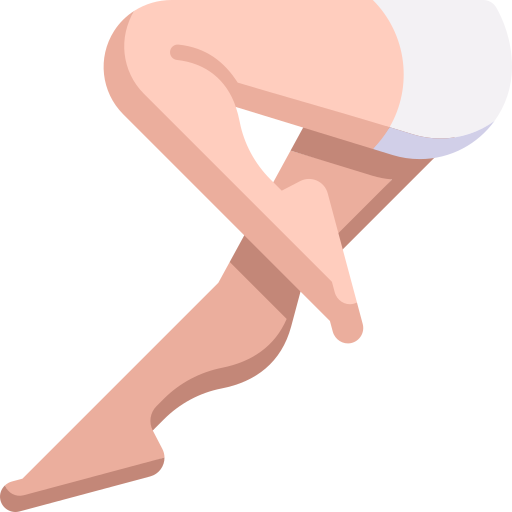
la pierna
the leg
Él se ha roto la pierna.
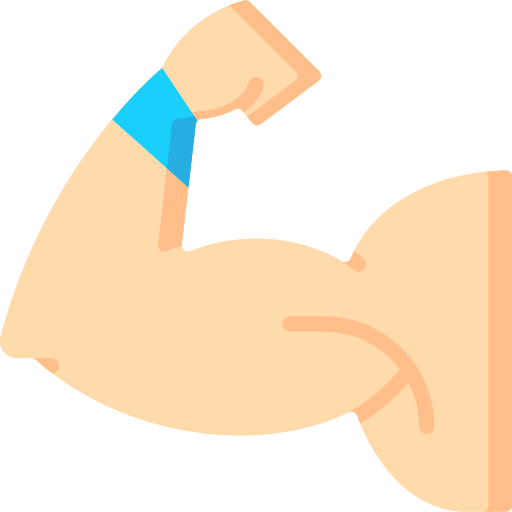
los brazos
the arms
Levanta los brazos para saludar.
los dedos
the fingers
Contar con los dedos es una forma fácil.
la nariz
the nose
Respira por la nariz.

los labios
the lips
Me gusta pintarme los labios de rojo.
los dientes
the teeth
Debes cepillarte los dientes después de cada comida.
*Saber vs Conocer*
In Spanish, there are two verbs that express the idea to know. These two verbs are "saber" and "conocer". The verb you choose depends upon the context in which it is used. These verbs are not interchangeable.
To express knowledge or ignorance of a fact or information about something, use "saber".
To say that one is or is not acquainted with a person, a place, or an object, use "conocer".
*Pedir vs Preguntar*
The same sort of situation exists with respect to the two Spanish verbs "pedir" and "preguntar". They both mean to ask but they are not interchangeable.
We use "pedir" to ask for, or request an object, service or favor.
And "preguntar" to ask a question, or request information
usted sabe
you know
Usted sabe dónde está María.

Asia
Asia
Joel conoce Asia muy bien.

los verbos irregulares
the irregular verbs
María sabe los verbos irregulares.

yo pido
I ask
Yo pido ayuda.

Yo no sé tu número de teléfono.
I don't know your phone number.
los dueños
the owners
No conozco a los dueños.
los secretos
the secrets
Él sabe los secretos.
preguntar los resultados
to ask the results
Pregunta los resultados del exámen.
la salsa
the sauce
Pido más salsa.
Pregunto qué hora es.
I ask what time it is.
*At school*
Be careful at those verbs:
"Estudiar" - to study "Estudio cada día."
"Aprender" - to learn "Aprendes muy rápido."
"Enseñar" or "Dar clases" - to teach "Enseña la literatura." or "Da clases de literatura."

la gramática
the grammar
La gramática francesa es muy difícil.

La asignatura
the subject
Me gusta la asignatura de matemáticas.
la pizarra
the blackboard
El profesor escribe en la pizarra.
la calculadora
the calculator
Por favor, pásame la calculadora.
la geografía
geography
Estoy estudiando la geografía de América Latina.

La química
chemistry
Me gusta mucho la química.
Ir para nota
the note
Voy para nota.

la historia
the history
Nos gusta estudiar la historia de mi país.

las tijeras
the scissors
Las tijeras son muy útiles para cortar papel.

el papel
the paper
Por favor, dame una hoja de papel.

La biología
the biology
Estudio biología en la universidad.
la educación física
the physical education
Los alumnos tienen buenas notas de la educación física.

las matemáticas
the mathematics
Estoy estudiando las matemáticas para mañana.
*Activities*
"¿Qué haces en tu tiempo libre?" (What do you do in your free time?)
If you want to express the word activities you can say "las actividades".
lavar la ropa
to do the laundry
¿Puedes lavar la ropa por mí?
planchar
to iron
Voy a planchar mi camisa para la fiesta.

Limpiar las ventanas
to clean the windows
Hay que limpiar la ventanas de la casa.
Ir de compras
to go shopping
El fin de semana vamos de compras.
sacar la basura
to take out the trash
Voy a sacar la basura ahora mismo.
dar un paseo
to go for a walk
Voy a dar un paseo por el parque.

ir de copas
to go for a drink
Vais a ir de copas después del trabajo.
Pasar la aspiradora
to vacuum
Voy a pasar la aspiradora en la sala.

Cuidar las plantas
to care for plants
Mi abuela cuida sus plantas.

Ir de fiesta
to go to a party
Mi mejor amiga va de fiesta.

desempolvar
to dust off
Necesito desempolvar los muebles.
hacer la cama
to make the bed
Hago la cama todas las mañanas.
Comer fuera
to eat out
Vamos a comer fuera esta noche.
visitar el museo
to go to the museum
Los domingos visitamos el museo.
*Clothing II.*
We can divide clothing into different categories:
"ropa invernal" or "ropa de invierno" (winter clothes)
"ropa de verano" (summer clothes)
"ropa interior" (underwear)
Be careful!
"el traje" means suit, but can also mean a uniform (e.g. military uniform)

la bufanda
the scarf
Mi abuela me tejió una bufanda de lana muy bonita.
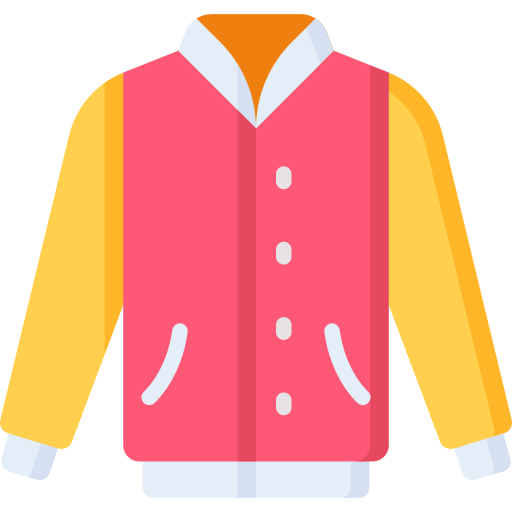
la chaqueta
the jacket
¿Dónde está mi chaqueta?
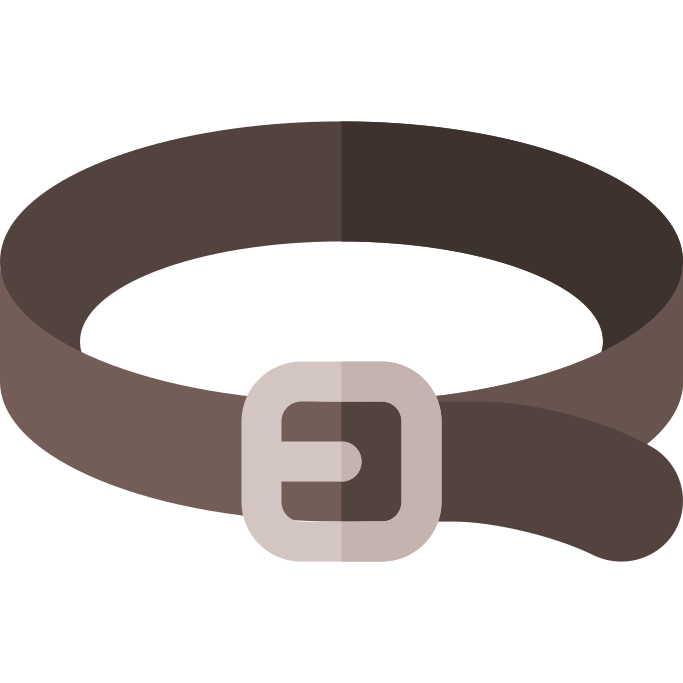
el cinturón
the belt
El cinturón de mi pantalón está muy apretado.

las bragas
the pantie
Me compré unas bragas nuevas en la tienda de ropa interior.

el albornoz
the bathrobe
Lleva el albornoz al spa para relajarse.
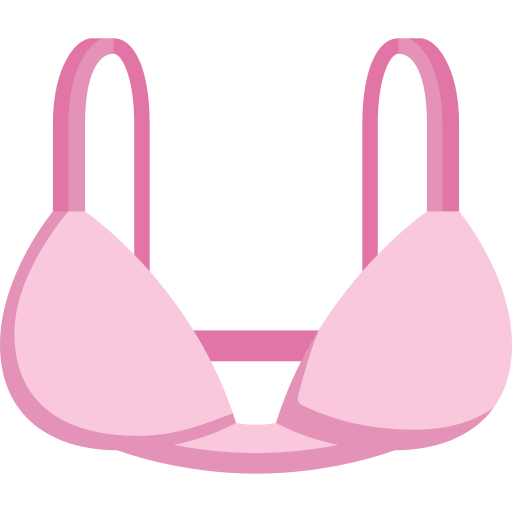
el sujetador
the bra
El sujetador deportivo es ideal para hacer ejercicio.

los calzoncillos
briefs
Siempre me olvido de lavar los calzoncillos.
la blusa
the blouse
Esta tienda tiene una gran selección de blusas de seda.

El traje
the suit
Te compras un traje para la boda de mi hermano.

La cazadora
the hunter (short coat)
Es una cazadora nueva para el invierno.

el gorro
the cap
Me pongo el gorro para protegerme del sol.