Spanish Course B1 I.Spanish words
by DuoCards
*Pretérito Indefinido - verbos IRREGULARES IV.*
*TRAER*
yo "traje"
tú "trajiste"
él/ella/usted "trajo"
nosotros/as "trajimos"
vosotros/as "trajisteis"
ellos/ellas/ustedes "trajeron"
*SABER*
yo "supe"
tú "supiste"
él/ella/usted "supo"
nosotros/as "supimos"
vosotros/as "supisteis"
ellos/ellas/ustedes "supieron"
*DORMIR* (*MORIR* is the same)
yo "dormí"
tú "dormiste"
él/ella/usted "durmió"
nosotros/as "dormimos"
vosotros/as "dormisteis"
ellos/ellas/ustedes "durmieron"
*CONDUCIR* (*TRADUCIR* is the same)
yo "conduje"
tú "condujiste"
él/ella/usted "condujo"
nosotros/as "condujimos"
vosotros/as "condujisteis"
ellos/ellas/ustedes "condujeron"
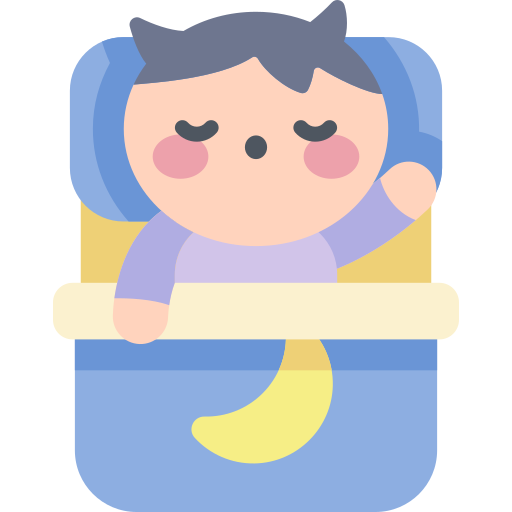
durmió todo el día
he slept all day
Juan durmió todo el día en el sofá.

No supimos nada de ella.
We heard nothing from her.

los colegas
the colleagues
Los colegas de mi trabajo son todos muy simpáticos.

traje a mis colegas
I brought my colleagues
Traje mis colegas para la fiesta.

tradujo unas cuantas cosas
translated a few things
La semana pasada María tradujo unas cuantas cosas.

por la noche no conducimos
we do not drive at night
Por la noche no condujimos porque tuvimos miedo.

el manual
the handbook
En la caja está el manual de este horno.

tradujimos el manual
we translated the handbook
Ayer tradujimos este manual de este juego.

ellos murieron en la guerra
they died in the war
Ellos murieron en la segunda guerra mundial.

El supo cada respuesta
knew every answer
Ayer Pedro supo cada respusta.

condujo muy mal
he drove very badly
Anteayer Eric condujo muy mal.

¿Tú no trajiste nada a la fiesta?
You didn't bring anything to the party?
*The household appliances - Los electrodomésticos*
With the word "la aspiradora" we always use the verb "pasar.
e.g.: "Necesito pasar la aspiradora."
The word "la cocina" has different meanings.
1. "La cocina mexicana" (The Mexican cuisine)
2. "La cocina eléctrica/ de gas" (The electric/gas cooker)
3. "Nuestra cocina es verde" (Our kitchen is green)
4. "Receta de cocina" (Cooking recipe)

la plancha
the iron
Voy a planchar mi camisa para la fiesta.

la cocina de gas
the gas cooker
Usamos la cocina de gas.

la balanza
the balance
La fruta se pesa en la balanza.

la arrocera
the rice cooker
Me encanta usar la arrocera.

la batidora
the blender
Necesito comprar una batidora de mano para hacer la salsa.

el lavaplatos
the dishwasher
¿Puedes poner los platos en el lavaplatos, por favor?
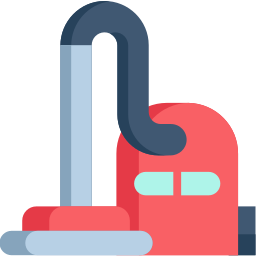
Necesito comprar una aspiradora nueva.
I need to buy a new hoover.

la lavadora
the washing-machine
Voy a poner la ropa en la lavadora.
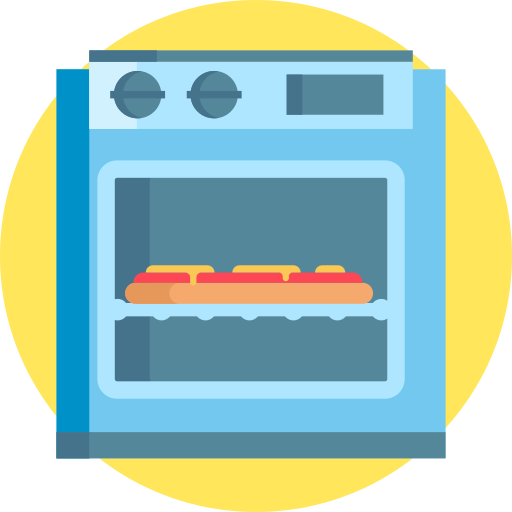
el horno
the oven
Por favor, no toques el horno, está caliente.
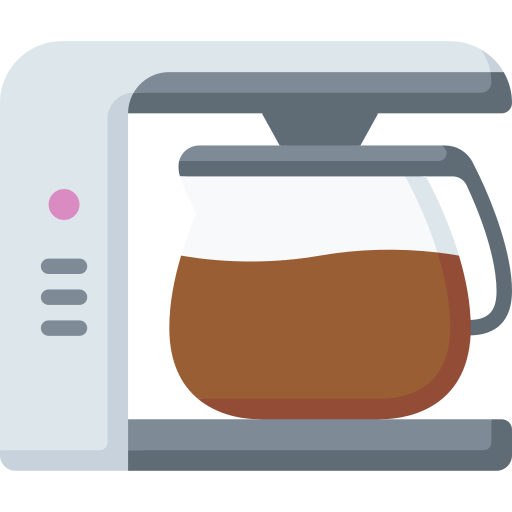
la cafetera
the coffee machine
¿Tienes una cafetera italiana?
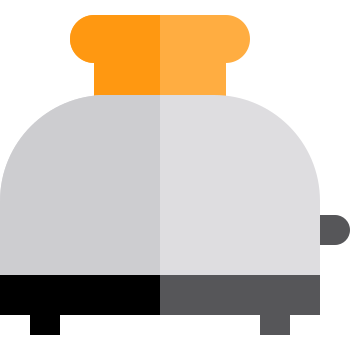
la tostadora
the toaster
Me gusta mi pan tostado en la tostadora.
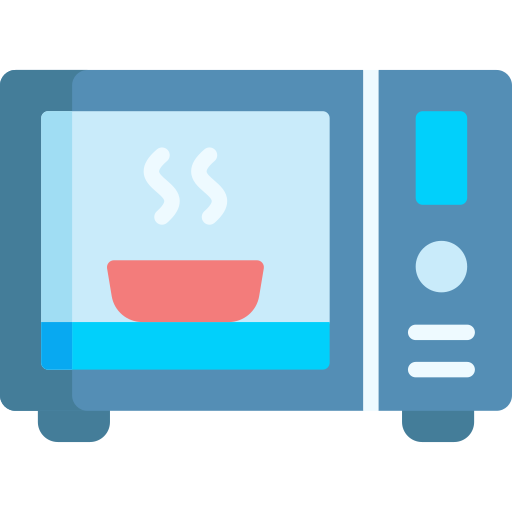
el microondas
the microwave
¿Puedes hacer palomitas en el microondas?
*Recipe*
Let's learn some vocabulary to understand a simple recipe "la receta" of a "paella".
"Paella de marisco"
"Los ingredientes":
"Arroz" 400 gramos
"Calamares" 250 gramos
"Sepia" 250 gramos
"Gambas" 8
"Dientes de ajo" 2
"Cucharada de tomate triturado" 8
"Azafrán"
"Caldo de pescado" 1,5 litros
"Cucharadas de aceite de oliva" 8
"Sal" al gusto
"El azafrán se pone en la paella para darle color amarillo pero a veces se usa el colorante amarillo porqué es más barato."
Verb - "picar"
This verb has different meanings, let´s take a look at some of them:
1. to sting - "Nos picaron unas abejas." (Some bees stung us.)
2. to cut - "Pica la fruta." (Cut the fruits.)
3. to bite - "Me ha picado un bicho en el cuello." (An insect has bitten me on the neck.)
4. to nibble at - "He picado algo antes de comer." (I had a little nibble before lunch.)
5. to chop - "Pica la cebolla muy picadita." (Chop the onion very finely.)

picar
to cut
Picó unos tomates.

el calamar
the squid
Me gusta comer el calamar frito.

la sepia
the cuttlefish
La sepia se tiene que sofreír unos minutos.
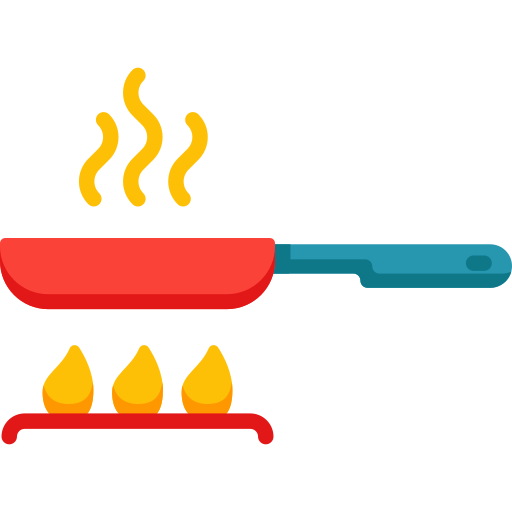
la sartén
the frying pan
Necesitamos una sartén para esta receta.

agregar/añadir
to add
Agrega los ingredientes en la sartén.

sofreír
to stir fry
Yo sofrió las cebollas en aceite.

al gusto
to taste
Prepara la comida al gusto de los invitados.

Se deja cocer la paella a fuego vivo.
Cook the paella over a high heat.

una cucharada
a spoon of
Ponemos una cucharada de aceite.

el caldo de pescado
the fish stock
Ayer mi abuela preparó el caldo de pescado.

el tomate triturado
the crushed tomato
El tomate triturado se vende en latas.

un diente de ajo
a garlic clove
Corta un diente de ajo.
*Common Spanish phrases*
There are a lot of expressions that can´t be translated.
Let´s learn some of them.
"Pintar bien/mal" - literally means to paint something well and bad but the true meaning is that something looks well or bad (situation).
"Los expertos dicen que la situación del covid19 pinta mal para la economía."
(Experts say the Covid19 situation looks bad for the economy.)

No pasa nada.
It's OK.
No pasa nada, todo estará bien.

No te preocupes.
Don't worry.
No te preocupes, por favor.

¿Qué quieres decir?
What do you mean?
¿Qué quieres decir con esto?

¡Guay!
Cool!
¡Guay! Me encanta esta canción.

No tengo ni idea.
I have no idea.
Lo siento, no tengo ni idea.

No importa.
It does not matter.
No importa, sigue.

¿Hay algún problema?
Is there a problem?
¿Hay algún problema contigo?

¡Eso suena genial!
That sounds great!

ni fu ni fa
neither good nor bad
¿Cómo fue la lección? - Ni fu ni fa.

¡Ojalá!
If only!
¡Ojalá podrías venir!
*Objects in the house*
"Hay diferentes tipos de objetos en casa."
"Algunos los podemos instalar solos y con algunos nos tiene que ayudar un profesional."
Do you know what doest it mean "caer por la chimenea"?
Yes, this could mean, that you fell down to the chimney, but in Spanish is it an expression that means that something *fall into someone's lap* - that means it came to them without any effort.
The word "la chimenea" can also be used to express "the fireplace".

las cortinas
the curtains
¿Puedes colgar las cortinas, por favor?

la chimenea
the chimney
La chimenea de la fábrica emite mucho humo.

amueblar
to furnish
Voy a amueblar mi apartamento nuevo.

el jarrón
the vase
El jarrón está en la mesa.

el grifo
the tap
Por favor, cierra el grifo del agua.

las persianas
the blinds
Abre las persianas para que entre la luz.

la calefacción
the heating
¿Puedes encender la calefacción, por favor?
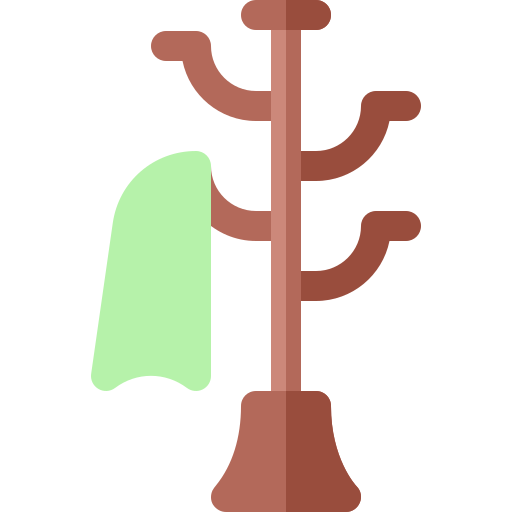
el perchero
the coat rack
El perchero está lleno de sombreros.

la alfombra
the carpet
La alfombra de mi sala es de color beige.

la mesa de café
the coffee table
¿Dónde puedo poner mi taza de té? - En la mesa de café.
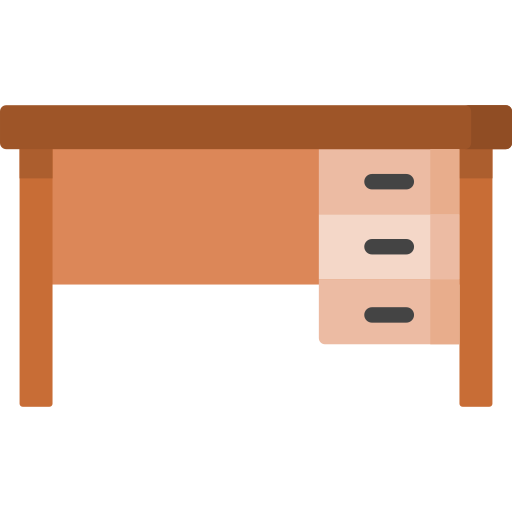
el escritorio
the desk
El lápiz está encima del escritorio.

la escoba
the broom
Por favor, pasa la escoba por el suelo.

el tendedero
the clothesline
Colgué la ropa en el tendedero.
*Adjectives - food*
Take a look at these words:
"Dulce" is an adjective but "un dulce" means a candy.
"Pesado" usually means heavy (food or because of weight) but "una persona pesada" means an annoying person.

Este filete está tierno.
This steak is tender.

Crudo
Raw
El pescado está crudo.
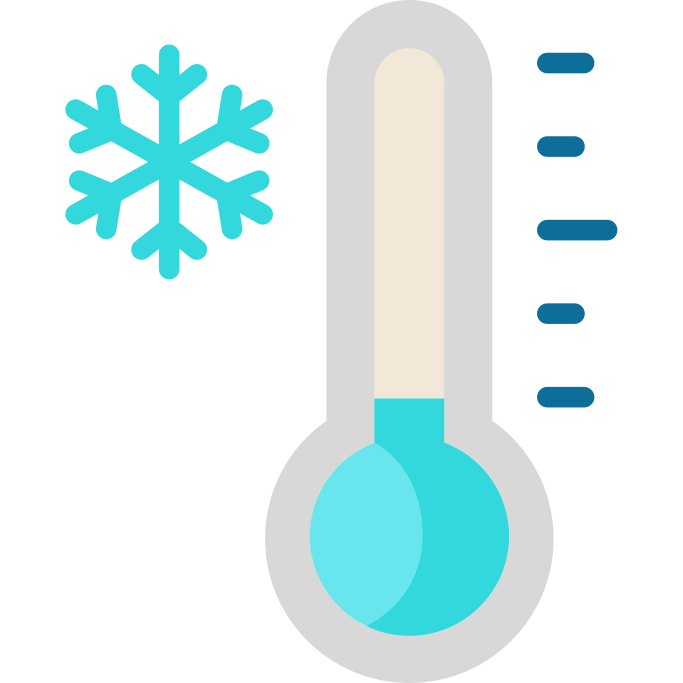
frío
cold
El helado está frío.
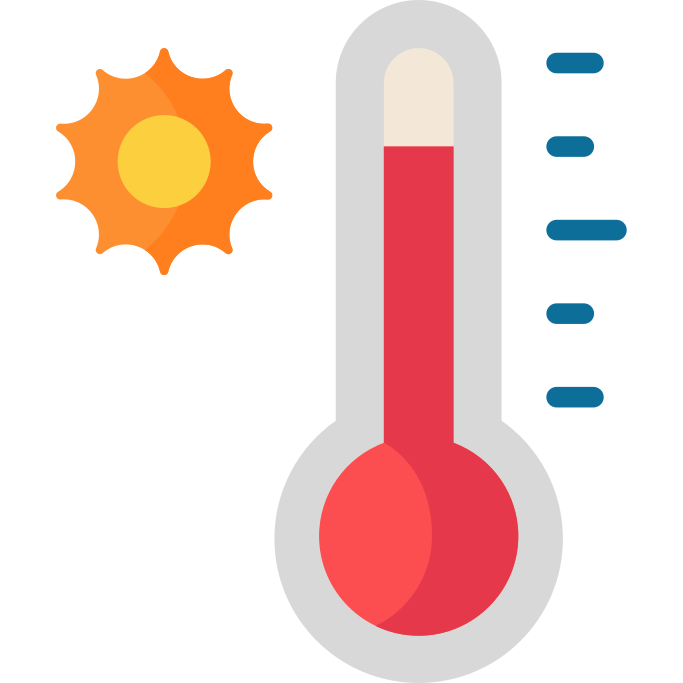
caliente
hot
El café está caliente.

dulce
sweet
El postre es muy dulce.

soso
bland
Esta sopa está muy sosa.
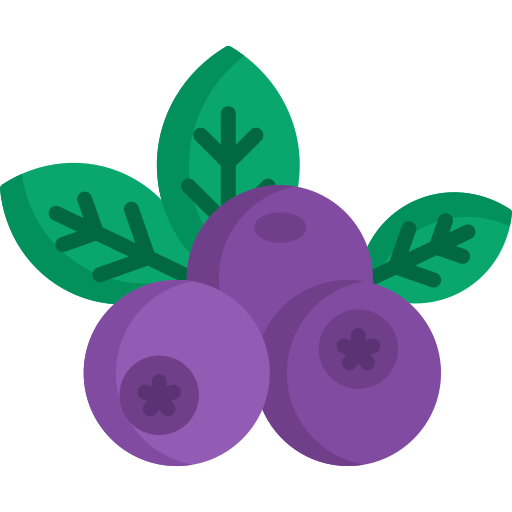
maduro
mature
Esta banana está madura.

El chocolate amargo es uno de mis preferidos.
Dark chocolate is one of my favourites.

jugoso
juicy
La piña está muy jugosa.

pesado
heavy
La fabada es un plato muy pesado.

ligero
light
Esta ensalada es muy ligera.
*Pretérito pluscuamperfecto*
How to form:
*(subject) + verb haber in imperfecto + past participle*
When we use it:
1. The Spanish pretérito pluscuamperfecto (or pluperfect in English) is used to describe events or actions that have happened further back in the past than a past action we are referring to.
e.g.:
When I got home yesterday, my mom had already left for work.
"Cuando llegué a casa ayer, mi madre ya se había ido a trabajar."
Two actions have usually happened. In the example, the first is that my mom had left, and the second is that I got home. My mom had left before I arrived home.
2. There is another special use for the pluscuamperfecto. If you are talking about an experience that you’ve never had before that you are experiencing this very moment, you can use the pluscuamperfecto.
e.g.:
"Nunca había estado en París antes."
(I had never been to Paris before (until now).
You had never been in Paris until now is what the sentence is saying.
Be careful, this should not be confused with a sentence about an experience that you’ve never had.
"Nunca hemos ido a Disneyland."
(We have never gone to Disneyland.)

Cuando llegué a la fiesta, ya se había acabado toda la comida.
By the time I got to the party, all the food was gone.

llegar corriendo
to come running
Llegué corriendo a la estación pero mi tren ya había salido.

ya había visto
had already seen
Laura no ha ido al cine con nosotros porque ya había visto la película.

probar
to try
Nunca había probado una paella tan buena.

habíais trabajado
you had worked
Vosotras habíais trabajado mucho en el proyecto.

mudarse
to move
Ellos habían aprendido español antes de mudarse a España.

había viajado
had travelled
Ella había viajado a muchos países.

Tú ya habías comido cuando llegué.
You had already eaten when I arrived.

habíamos comprado
we had bought
Nosotros ya habíamos comprado ese juego.
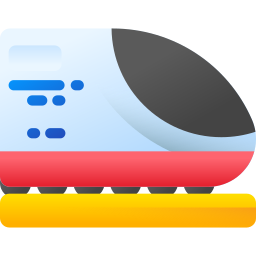
El tren ya se había ido.
The train had already left.
*Adjectives - animals*
You've learned the basic animal vocabulary, let's learn the adjectives that describe the characteristics of animals.
Interesting fact for you, here are some typical phrases associated with animals:
"Ser una monada." (to be beautiful) - from the word "mono" - monkey
"Llevarse como el perro y el gato." (when two people have bad relationship)
"Coger el toro por los cuernos." (to face a problem) "los cuernos" - the horns
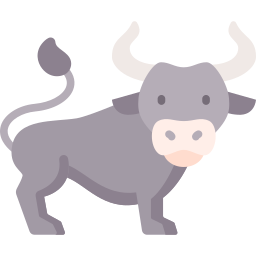
el toro bravo
the fierce bull
Tengo miedo de los toros bravos.
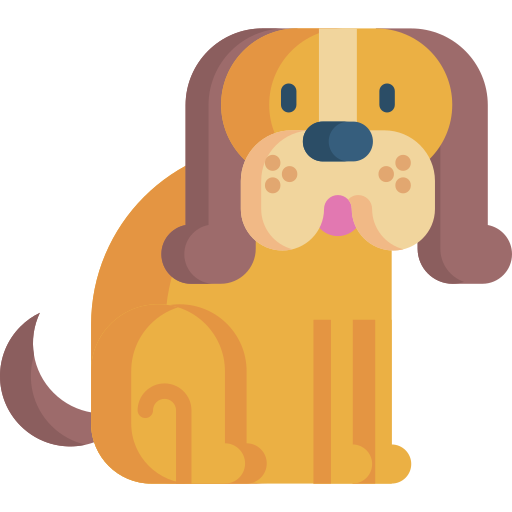
el perro fiel
the faithful dog
Siempre está con su dueño, es un perro fiel.

el hámster perozoso
the lazy hamster
Mi sobrina tiene un hámster muy perozoso.

el zorro astuto
the sly fox
Los zorros astutos están en los cuentos de hadas.

el tigre feroz
the ferocious tiger
Vi una tigre ferroz.
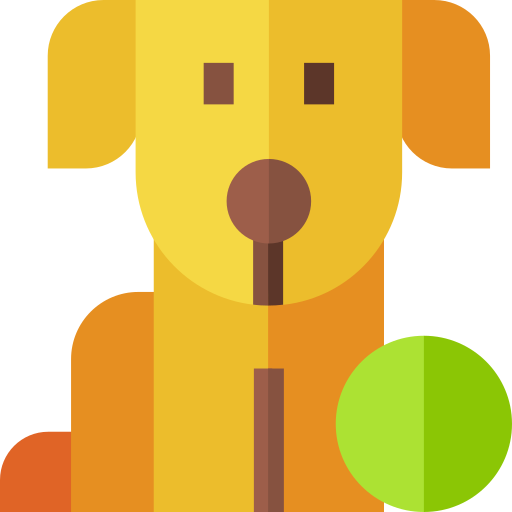
el cachorro juguetón
the playful puppy
El cachorro de mi abuela es muy juguetón.
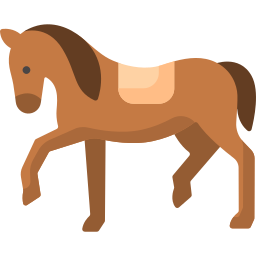
el caballo manso
the tame horse
Quiere comprarle un caballo manso.

El pájaro es débil.
The bird is weak.

el gato peludo
the hairy cat
Me encantan los gatos peludos.
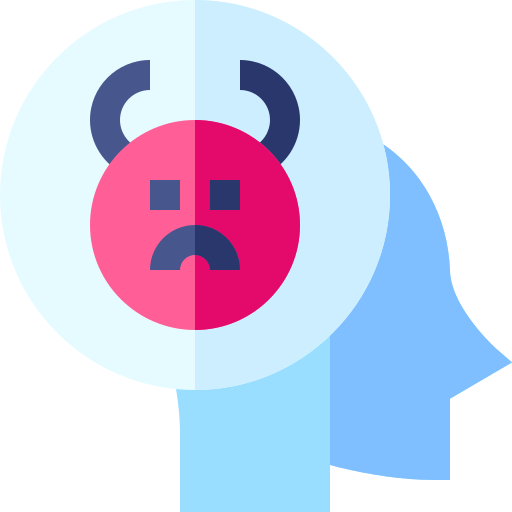
Es un animal cruel.
It is a cruel animal.

el león rabioso
the rabid lion
En la película había un león rabioso.
*Spanish expressions and typical words*
The most common word used between youngs is "tío/a".
Is a very informal way to refer to a person. It's the same as *dude* or *mate* in English.
e.g.:
"Tío, estoy muy cansado. Creo que me iré a la cama."
(Dude, I'm so tired. I think I'll go to bed.)

Pinta muy bien.
It looks very good.
Esa película pinta muy bien.
echar la mano
to help
Echame una mano.

molar
to like a lot
Me mola el cine.

tía
friend
Es una tía muy simpática.

estar sin blanca
to be broke
Estoy sin blanca, no tengo dinero.
cotillear
to gossip
Me gusta cotillear con mis amigas sobre los chicos del colegio.

ligar
to flirt
A Juan le gusta ligar con chicas.

ser majo
to be cool
Es una chica muy maja.

fliparse
to freak out
¡Flipé con la película! Fue increíble.

me suena
it rings a bell
Me suena su cara, pero no recuerdo de dónde la conozco.

pijo
preppy
Él se viste siempre de marca, es muy pijo.
cutre
shabby
Esta tienda tiene ropa muy cutre.

pirarse
to go away
Me voy a pirar de esta fiesta aburrida.
*Pretérito Indefinido - verbos IRREGULARES V.*
*ANDAR*
yo "anduve"
tú "anduviste"
él/ella/usted "anduvo"
nosotros/as "anduvimos"
vosotros/as "anduvisteis"
ellos/ellas/ustedes "anduvieron"
*CABER*
yo "cupe"
tú "cupiste"
él/ella/usted "cupo"
nosotros/as "cupimos"
vosotros/as "cupisteis"
ellos/ellas/ustedes "cupieron"
*SENTIR*
yo "sentí"
tú "sentiste"
él/ella/usted "sintió"
nosotros/as "sentimos"
vosotros/as "sentisteis"
ellos/ellas/ustedes "sintieron"
*PEDIR*
yo "pedí"
tú "pediste"
él/ella/usted "pidió"
nosotros/as "pedimos"
vosotros/as "pedisteis"
ellos/ellas/ustedes "pidieron"
ella no anduvo
she did not walk
Anteayer ella no anduvo al colegio.

me sentí peor
I felt worse
La semana pasada me sentí peor.
¿Con quién anduviste?
Who were you with?

el bolsillo
the pocket
Guardé mi teléfono en el bolsillo.

No cupo en el bolsillo.
it did not fit in the pocket.
(caber)

las copas
the glasses/the drinks
Cuántas copas de vino bebes?

pedimos unas copas
we ordered drinks
En el bar pedimos unas copas para todos.

Sentí que el verano está llegando.
I felt that summer is coming.
*In the forest*
"En el bosque podemos encontrar muchos tipos de animales y plantas."
(In the forest we can find many kinds of animals and plants.)
"Algunas especies de animales están en peligro de extinción o son peligrosas."
(Some animal species are endangered or dangerous.)
"Por el contrario, algunas plantas están estrictamente protegidas o incluso pueden ser venenosas."
(On the other hand, some plants are strictly protected or may even be poisonous.)
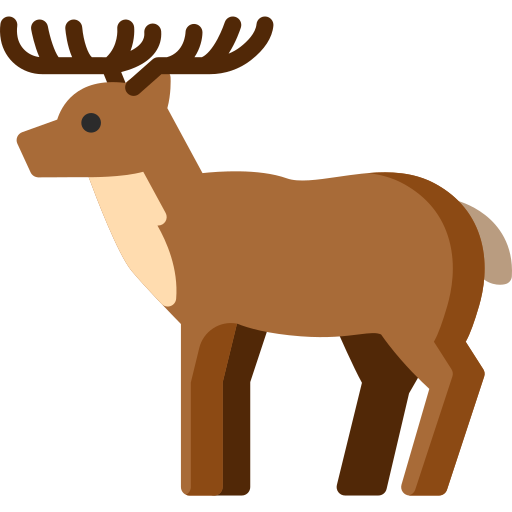
el ciervo
the deer
El ciervo corre por el bosque.

el jabalí
the boar
El cazador mató al jabalí.
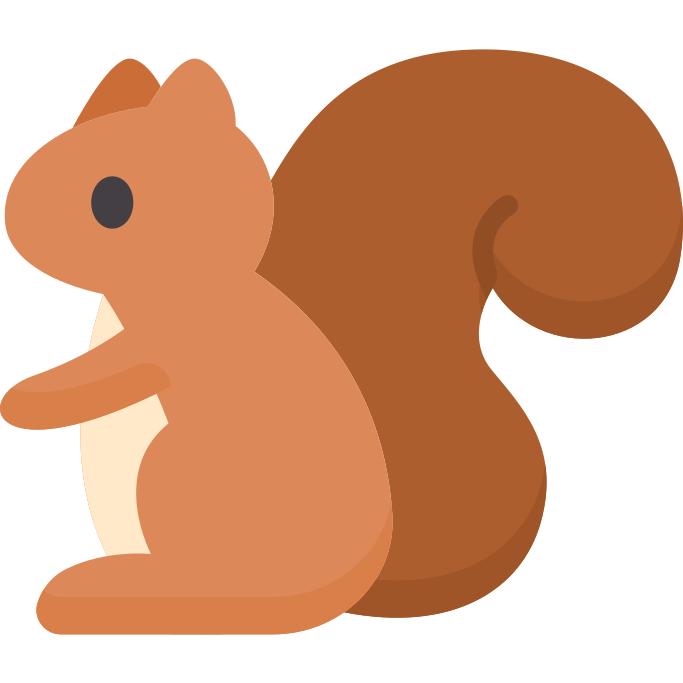
la ardilla
the squirrel
La ardilla corre por el árbol.
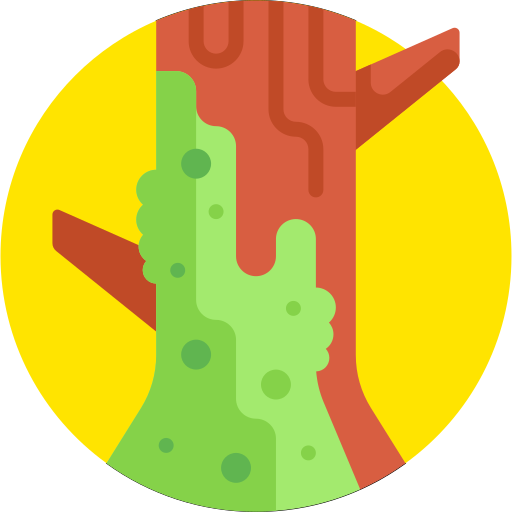
el musgo
the moss
El musgo crece en los árboles del bosque.

el búho
the owl
El búho es un ave nocturna.
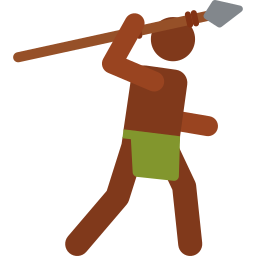
cazar
to hunt
El cazador salió temprano en la mañana para cazar.

la oscuridad
the darkness
Me da miedo la oscuridad.
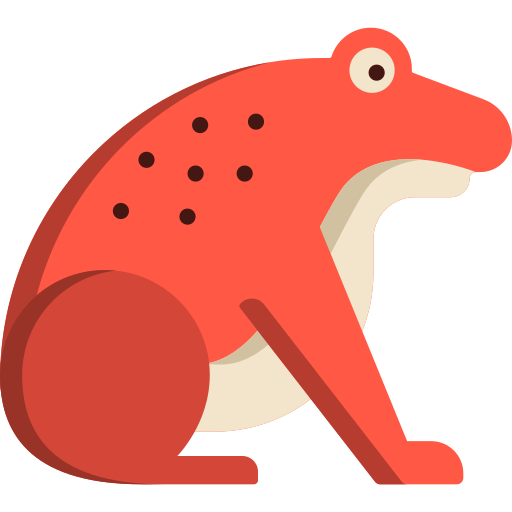
el sapo
the toad
Vi un sapo en el jardín.
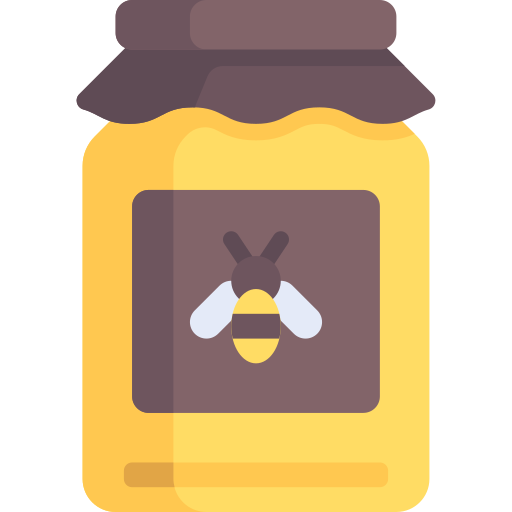
la miel
the honey
Me gusta poner miel en mi té.
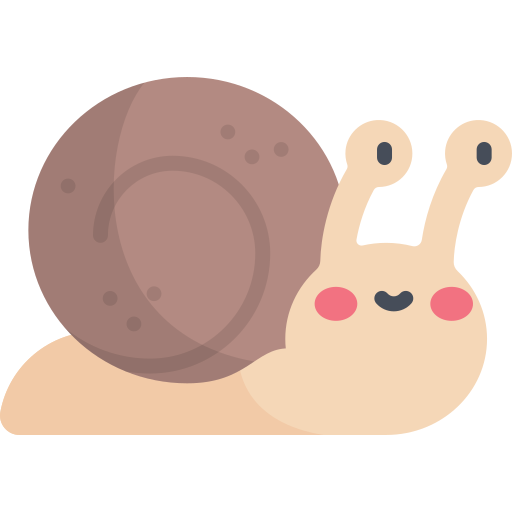
el caracol
the snail
El caracol es un animal lento.

la abeja
the bee
La abeja está volando alrededor de las flores.
*The enviroment*
"El medio ambiente puede definirse como la suma total de todos los elementos vivos y no vivos y sus efectos que influyen en la vida humana."
(Environment can be defined as a sum total of all the living and non-living elements and their effects that influence human life.)
"Mientras que los elementos vivos o bióticos son" (While all living or biotic elements are)
"los animales, las plantas, los bosques, la pesca y las aves" (animals, plants, forests, fisheries, and birds)
"los elementos no vivos o abióticos son el agua, la tierra, la luz solar, las rocas y el aire."
(non-living or abiotic elements include water, land, sunlight, rocks, and air.)
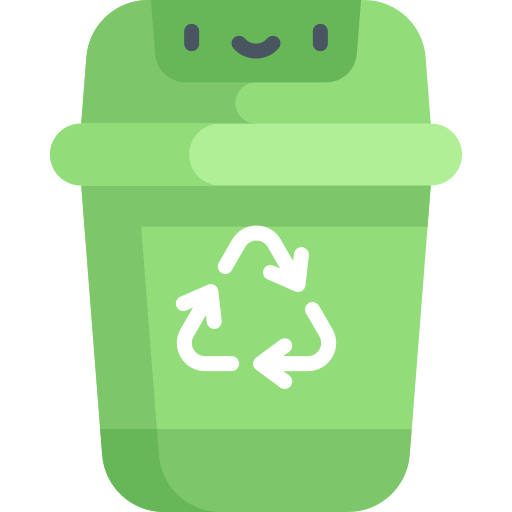
el reciclaje
recycling
El reciclaje es importante para proteger el medio ambiente.

consumir
to consume
Consumo mucha agua durante el día.
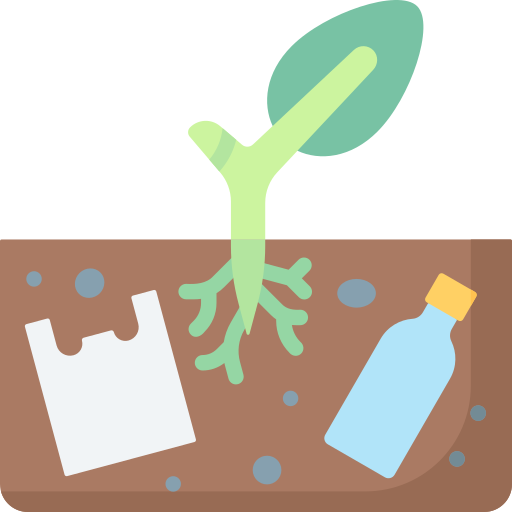
la contaminación
the pollution
La contaminación del aire es un problema.

la ecología
the ecology
Me interesa mucho la ecología.
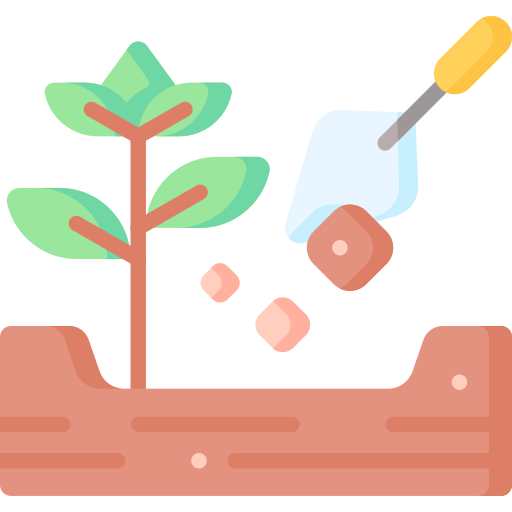
plantar
to plant
Este año quiero plantar un jardín en mi casa.

promover
to promote
La empresa quiere promover su nuevo producto.

los países desarollados
the developed countries
Vivo en uno de los países desarollados.

el vidrio
the glass
El vidrio es frágil.

el plástico
the plastic
Hay demasiado plástico en el océano.

tirar
to throw
Él tiró la pelota.

la bolsa de plástico
the plastic bag
Pon la bolsa de plástico en la papelera.

la basura
the rubbish
Por favor, saca la basura.
*Character of people*
Learn to better describe the character of people (or animals) with new adjectives.
"¿Qué tipo de hombre es Juan?" (What kind of man is Juan?) "Juan es un hombre fiel." (Juan is an loyal man.)
or "¿Qué tipo de persona es Juan?" (What kind of person is Juan?) "Juan es una persona fiel." (Juan is a loyal person.)

puntual
on time
Es importante ser puntual en el trabajo.

increíble
amazing
¡Ella es increíble!

desordenado
untidy
Juan es una persona desordenada.

impaciente
impatient
Estoy impaciente por ver la película nueva.

celosa
jealous
Estoy celosa de mi amiga porque tiene un novio guapo.

despistado
clueless
El niño estaba tan despistado que se perdió en el centro comercial.
cobarde
coward
Él es un cobarde.

valiente
brave
Ella demostró ser muy valiente en la situación difícil.

gracioso
funny
El payaso es muy gracioso.

ingenuo
naive
Es un hombre muy ingenuo.

educado
educated
El perro está muy educado.
*Feelings*
"¿Cómo te sientes?" (How do you feel?)
"Me siento triste." (I feel sad.) / "Me dan asco las personas mentirosas." (People who lie disgust me.)
*Don't forget that*
"adorar" - always use this verb with the preposition "a" if you want to express that you really like a person/animal.

adorar
to adore
Adoro a mi familia.

dar pena
to be pitiful
Me da pena llegar tarde.

dar asco
to put off
Me da asco ver a esa persona.

aguantar
to put up with
No puedo aguantar el dolor de cabeza.

ponerse nervioso
to get nervous
Antes de la clase siempre se pone nervioso.

soportar
to bear / endure
¿Cómo puedes soportar el frío?
estar harto de
be fed up with
Estoy harto de mi trabajo.

dar rabia
to give anger
Me da rabia que no pudo venir.

importar
to matter
¿Te importa si fumo?

engañar
to cheat
Engañó a su pareja.
*Latin American Spanish*
Now, for a change, let’s learn some expressions used in Latin America. Note that some of these are specific to individual countries, not the entire region.
So how to say potatoes?
"las patatas" (castellano) - "las papas" (Latin American Spanish)

manejar
to handle
Yo manejo un coche todos los días.

¿Qué onda?
What's up?
¿Qué onda nenas?

el carro
the car
Me gusta manejar el carro por la ciudad.

el departamento
the flat
Me mudé a un departamento nuevo.

el durazno
the peach
Voy a preparar un postre de duraznos para la cena.
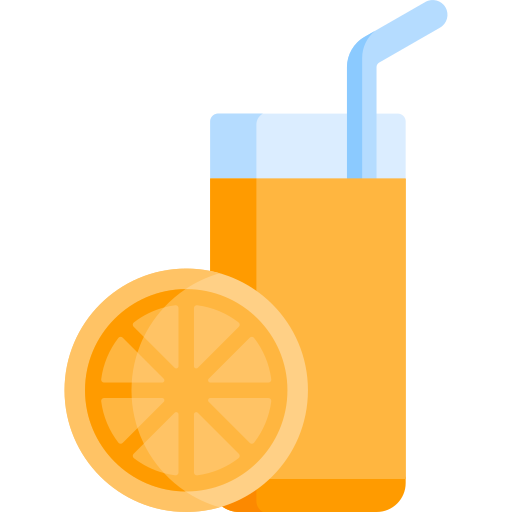
el jugo
the juice
En México, el jugo de tamarindo es muy popular.

las lentes
the lenses
Me olvidé las lentes en casa.

la computadora
the computer
Uso la computadora para trabajar.

celular
the mobile
¿Dónde está mi celular?

¡Orale!
Let's do it!
*Diminutives*
Diminutives are endings (-ito, -illo, -ico) that are added to words to refer to smaller versions of something or to express that something has less intensity. They can be used as a form of endearment or can even have a pejorative tone. Diminutives agree in gender (masculine/feminine) and number (singular/plural) with the words they refer to.

el gatito
the kitten
Me encontré con un gatito en el parque.

la mesita
the table
Por favor, pon el vaso en la mesita.

gordito
chubby
¡Hola, gordito! ¿Cómo estás?

jovencito
young man
Raúl es muy jovencito.

cerquita
near
Cerquita hay un bar muy bueno.

ratito
little while
Voy a descansar un ratito.
el osito
the teddy
Le regaló un osito.

bajita
short
Es una chica bajita.

casita
the cottage
Me encanta mi casita en el campo.

Por favor, tómate este cafecito.
Please, drink this coffee.
*Tenses of the past*
"El Pretérito Imperfecto" for actions in the past with no clear beginning and end.
"El Pretérito Indefinido" for actions in the past with a clear beginning and end.
e.g.:
"Susana trabajaba muy duro."
(Susana worked very hard.) - everyday in her life
"Susana trabajó muy duro."
(Susana worked very hard.) - on Saturday
"Cuando era niña, iba todos los veranos a Italia."
When I was a girl, every summer I went (would go) to Italy.
(The imperfecto is used to describe a repeated action in the past, it happened every summer)
"Un verano, no pudimos ir."
One summer, we couldn’t go.
(We use the pretérito indefinido because it happened just one time – one summer it did not happen)
*Combining both past tenses*
"Mis padres se conocieron cuando estaban en la universidad."
My parents met when they were at university.
(Indefinido is used to show that they met which can only happen once. We use imperfecto to show that they were at university during a period of time that is undefined.)
"Estudiaba, cuando sonó el teleféfoni."
(I studied when the phone rang.)

Mi madre estaba casi siempre conmigo.
My mother was almost always with me.

sonar
to ring
Cuando bebía el café, sonó el teléfono.

encontrarse
to meet
Cuando volvimos a casa, nos encontramos a Marco.

retirar dinero
to withdraw money
Anteayer fui al banco para retirar dinero.

el martes pasado
last Tuesday
El martes pasado no trabajé porque estuve enfermo.
bajar las escaleras
to down the stairs
Cuando bajaba las escaleras, me encontré a un perro.
todos los días
every day
Cuando era pequeño, iba al parque todos los días.

me desperté
I woke up
Ayer me desperté, desayuné y fui al trabajo.
mirar la televisión
to watch television
Cuando mi padre miraba la televisión, mi madre vino y le besó.

el centro comercial
the mall
Ayer fui al centro comercial.

empujar
to push
Cuando la empujó, llamaron a la policía.

Mis padres se conocieron cuando estaban en la universidad.
My parents met when they were at university.
*Skills and abilities*
In the previous course we mentioned different types of professions, but let's learn specific "destrezas y habilidades".
Sometimes it may not be a skill that makes a living, but it can be a hobby ("el pasatiempo/el hobby/la afición").
"La afición" coud mean:
1. *liking*
"He ido desarrollando una afición por los vinos franceses."
(I've gradually developed a liking for French wines.)
2. *love*
"Mi marido pasó todo el fin de semana frente a la TV, embebido por su afición al fútbol."
(My husband spent all weekend in front of the TV, absorbed by his love of soccer.)
2. *hobby*
"La fotografía es mi nueva afición."
(Photography is my new hobby.)
3. *fans*
"Es un gran futbolista y la afición lo adora."
(He is a great soccer player and the fans worship him.)

coser
to sew
¿Puedes coser este botón en mi camisa?

costruir casas
to build houses
Los albañiles construyen casas.

fabricar muebles
to make furniture
Ellos fabrican muebles de madera.

dibujar
draw
A tí te gusta dibujar paisajes en tu tiempo libre.

tejer
to weave
Me gusta tejer, me lo ha enseñado mi abuelo.

hacer artesanías
to make handicrafts
Mi abuelo hacía artesanías toda su vida.

reparar coches
to repair cars
Mi novio sabe reparar coches.

hornear pan
to bake bread
Los panaderos hornean pan cada mañana.
vender productos
to sell products
Los empresarios venden sus productos.
cultivar la tierra
to cultivate the land
Mis abuelos cultivan la tierra en el campo.

cuidar de otros
to care for others
A mi tía le gusta ciudar de otros.

diseñar ropa
to design clothes
Tu sobrina diseña ropa moderna.