Hangul - The Korean Alphabet for BeginnersKorean words
by DuoCards
*Hangul - the Korean alphabet*
Hangul is the only alphabet used in Korean, it contains 40 unique letters (21 vowels and 19 consonants).
All Korean words are made up of syllable blocks, each block can contain from 2 to 4 letters.
When reading Korean literature, or watching the news,
you can sometimes encounter Chinese characters ("한자"), but they are used rarely, so you don´t have to worry too much for now, because over 99% of Korean text is written in Hangul "한글".

안녕!
Hello!
안녕! 어디 가?
한글
Hangul
한글을 배우고 있어요.

입 다물어
shut up
한국어로 말해주세요.

글
a text
글을 읽다
언어
a language
언어를 배우다

같이 한글을 배우자!
Let's learn Korean together!
같이 언어를 배우다!
*basic character block*
Syllable blocks must begin with a consonant.
Alternatively, o is silent when it is in the first position of a syllable block.
For now, let's look at some basic vowels, starting with two-letter syllable blocks.
"ㅣ"From the letter, TEE**

이
this
일, 이, 삼, 사...

오
Ohh (five)
5분
아
Ah
아기

어
Uh (informal yes)
언니

오!
Ooh! excitement
우동

으
Uh...! <int.> (+filler) neutral
은
*Vowels in words*
You have learned the first basic vowels, now we can make words, using only vowels.

아이
Child
아이가 울어요.
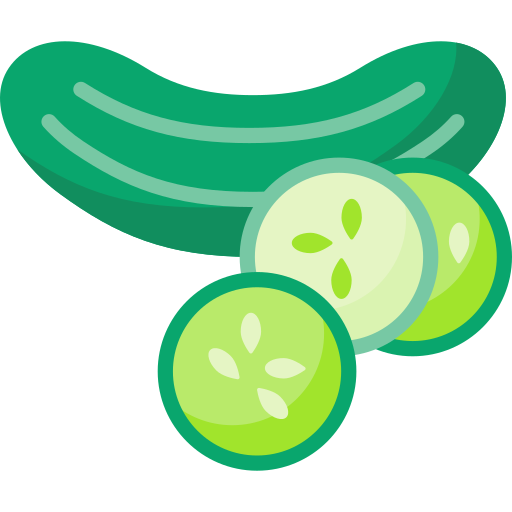
오이
Cucumber
오이가 맛있다

우아!
Wow!
우아! 대박!

아이스 커피
iced coffee
아아"는 한글 단어로, 일반적으로 아픔이나 슬픔을 나타내는 소리입니다
*Consonants in Hangul*
Consonants in syllable blocks are always found on the 1st, 3rd, or 4th positions (vowels on the 2nd position only)!
Let´s learn the basic consonants ㄱ,ㄴ,ㄷ,ㄹ,ㅁ,ㅂ,ㅅ,ㅇ,ㅈ,ㅎ.
The first one is "ㄱ", read as K in KEY, or G in GAME.
The letter "ㄴ", read as N in NICE.
The letter "ㄷ", read as T in TODAY, or D in DAD.
The letter "ㄹ", which will be explained on a different card!
The letter "ㅁ" is pronounced M, as in MAGIC.
The letter "ㅂ" is pronounced B, as in BEER, or P, as in PRETTY.
The letter"ㅈ" is read as J in JACK, or CH in CHANGE.
The letter "ㅅ", also explained more on a different card.
The consonant "ㅇ" is a bit tricky, and will be explained later.

ㄱ
K,G
가다, 게임

ㄴ
N
누나

ㄷ
T,D
돈, 도시

도구
tool
도구를 사용하다

아기
Baby
아기가 자고 있다

누가
Who
누가 왔어요?
*letter d*
The letter "ㄹ"is read as an approximate R (not often used in English).
For example, it can be found in TORTILLA in Spanish or L in LEAF.
R - Makes an R sound when ar comes before a vowel ( "다리"-leg).
L - if two letters r are found consecutively
Both "달러"produce the L sound (-dollar).** *

ㄹ
L
다리, 달러

ㅁ
M
마법, 무, 무기

ㅂ
B, P
바나나, 반

ㅈ
J, CH
맥주, 재미
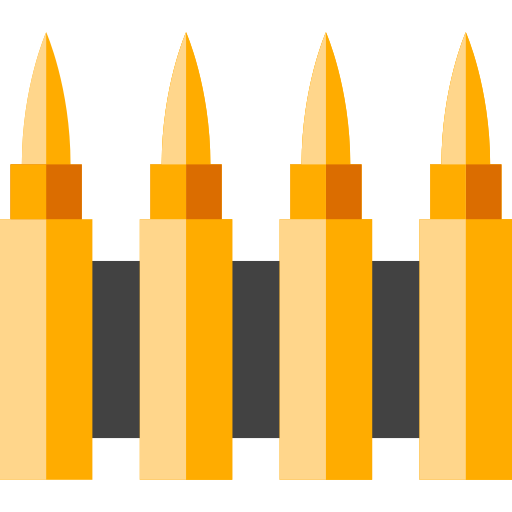
무기
weapon
무기는 없다

주부
housewife
주부와 만나다

머리
head
머리를 잘 쓰네요
*The letter ㅅ*
The letter "ㅅ", is read as S in SWEET.
When it precedes the vowel "ㅣ", it makes a SH (sure) sound.

ㅅ
S, SH
사자, 수시
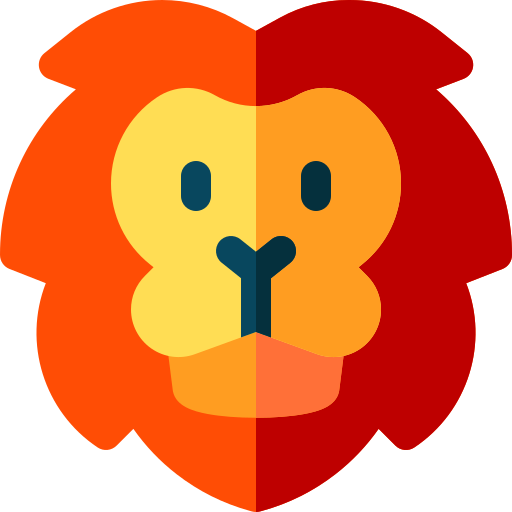
사자
Lion
사자가 무서워.

시간
time
내일 시간이 있다.

씨
Mr., Mrs.
김 씨를 만나다
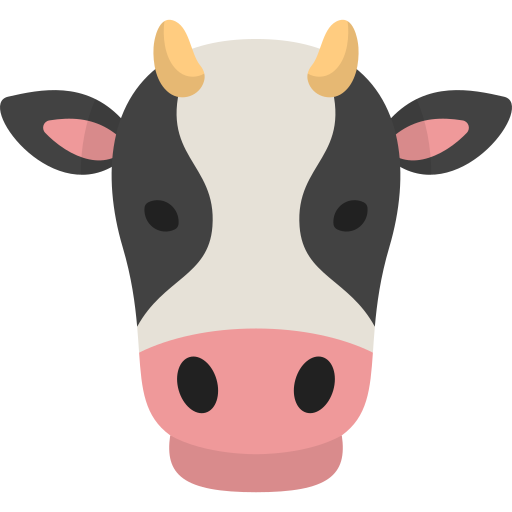
소
cow
소는 동물이에요.
*The letter ㅇ*
The "ㅇ" consonant makes no sound when in the 1st position of a syllable block ("아이"),
but is pronounced -ng, when on the 3rd position ("강","상","빵")

ㅇ
-ng
강, 상
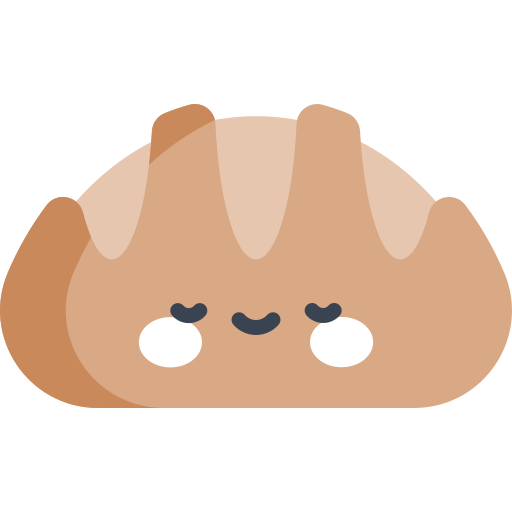
빵
bread
아침마다 빵을 먹는다.
강
River
한강

방
room, class
1A방

상
Prize
상을 받고 싶다.
*Advanced vowels, three-syllable words*
Now you can learn more advanced collections!
Pay attention to your pronunciation, because some vowels can sound very similar!
The letter "에", read as E in EVERY.
The letter "애", read as A in BABY.

- 에
Particle (shows the location/time)
저는 학교에 가요

애
Child
그 애가 머리를 잘 쓴다.

여
Female
여자가 거리를 걷는다.

야
Ya
야, 인마!

요
Yo
Formal ending (e.q.안녕하세요)

유
Yoo
유리, 우유

얘
This
얘, 저 차 좀 봐!

예
Yes
예, 사장님!
*Vowel practise*
Did you memorize all the new vowels?
Let´s slowly start using some words with three-letter syllable blocks!
These can be written in two ways :
Like the word 강, with the vowel next to the 1st consonant, and 3rd below, or
like the word 공, with the vowel below the 1st consonant, and again, the 3rd below.
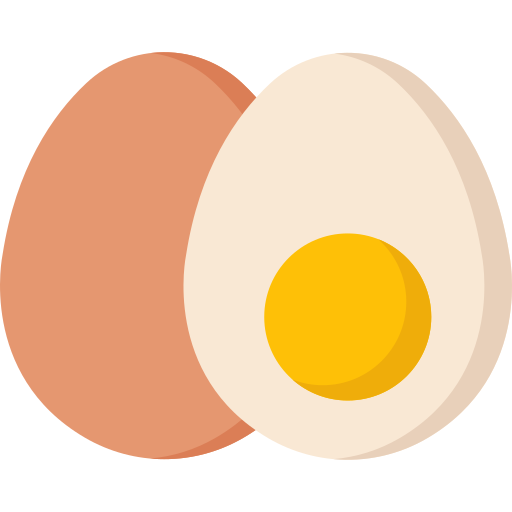
계란
egg

양말
Socks
양말을 신어야 해요!

우유
milk
우유를 마시면 칼슘을 많이 받는다.

여기
here
내일 여기에서 또 만나자.
언제
when
언제 만날까요?

연애
romantic relationship
누구와 연애..?

용
Dragon
용으로부터 뛰어가다.
*Advanced consonants*
Good job!
Now, let´s learn more of the consonants.
They sound similar to some that we already know,
but are accompanied by a CH or H sound at the end!
The letter "ㅎ" is pronounced like H in HAPPY.
The letter "ㅋ" is pronounced similar to C in CRAFT.
The letter "ㅌ" is pronounced similar to T in TIME.
The letter "ㅊ" is pronounced similar to CH in CHANGE.
The letter "ㅍ" is pronounced similar to P in PASSION.
Imagine you are making an additional CH sound at the end, when attempting to pronounce these consonants!

ㅎ
H
수업 후에

ㅋ
Kch
쿠키

ㅌ
Tch
토요일
ㅊ
Ch
아침

ㅍ
Pch
평양
*Consonant practise*
Alright, now pay close attention to the pronunciation of the following words!

쿠키
cookie

아파트
Apartment

컴퓨터
computer

축제
festival

투자
investment
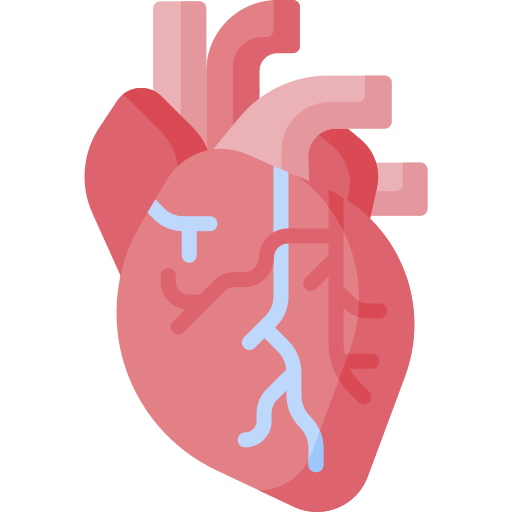
하트
heart
*Compound vowels*
Next up are compound vowels, they are always made up of two different vowels!
Usually, these are pronounced similarly to the two vowels put together, but there are exceptions.
ㅗ + ㅏ = "ㅘ", pronounced "wah"
ㅗ + ㅣ = "ㅚ", pronounced "weh"
ㅗ + ㅐ = "ㅙ", pronounced "wae"
ㅜ + ㅓ = "ㅝ" pronounced "wuh"
ㅜ + ㅔ = "ㅞ" pronounced "weh"
ㅜ + ㅣ = "ㅟ" pronounced "wee"
ㅡ + ㅣ = "ㅢ" pronounced "eui"
Pay close attention to the vowels forming the compound!

ㅘ
wah
왕자, 와트
ㅚ
weh
뇌

ㅙ
wae
왜??

ㅝ
wuh
원

ㅞ
weh
웨딩
ㅟ
wee
귀
ㅢ
eui
의자
*Compound vowels practice*
Let's practice our new knowledge of compound vowels in some words!

왕
king

외국어
Foreign language
외국어를 배우다

왜?
Why?
우리가 왜 헤어져?

원
won
5,000원이에요.

웨딩
wedding
귀
ear
아침에 귀를 씻다

의사
doctor
의사가 수술을 잘 하신다.
의자
chair
의자에 앉아 있어요.
*Double consonants*
As the final type of letters in Hangul, we must look into double consonants. We can write these as two of the same consonant, but smaller and next to each other. You can best learn their pronunciation by listening to words which contain these double consonants.
ㄷ → ㄸ
ㄱ → ㄲ
ㅈ → ㅉ
ㅂ → ㅃ
ㅅ → ㅆ

딸기
Strawberry
딸기를 먹기 좋아요.

꿀
honey
이 차는 꿀맛이 잘 나와요.
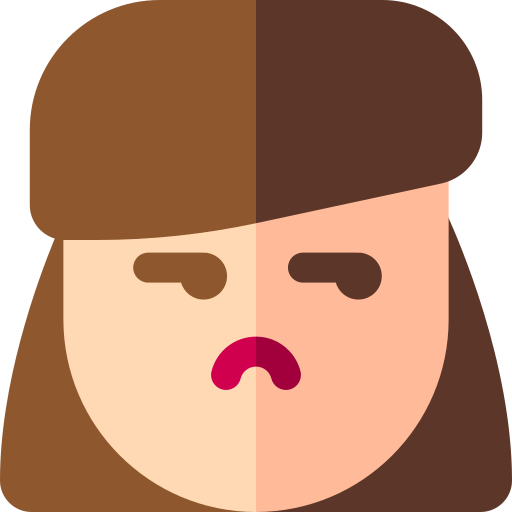
짜증
annoyance
그 사람이 너무 짜증나요.

바쁘다
to be busy
오늘 참 바빠요.
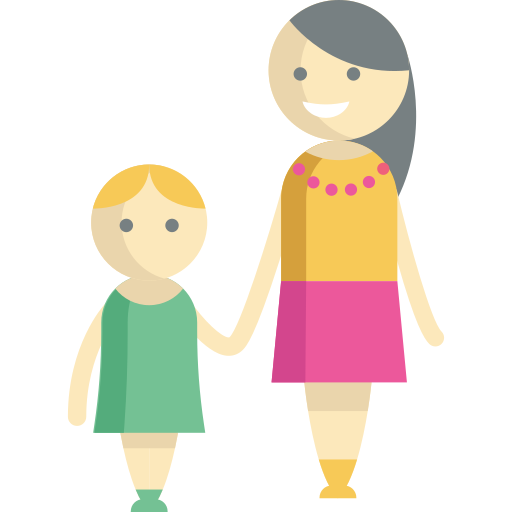
딸
daughter
우리 딸과 동물원에 가자.

쓰기
writing
시험을 쓰기
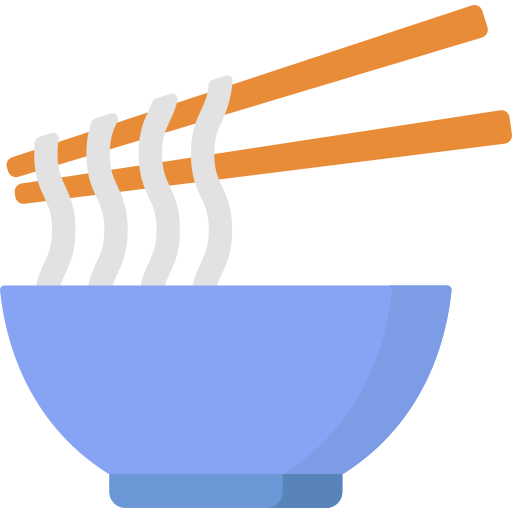
짜장면
Jajangmyeon (black bean paste noodles)
짜장면을 땡겨요.
*Four-letter syllable blocks*
Lastly, let's view and learn some words, which contain four-letter syllable blocks!
These are the rarest but still are used often enough for us to learn them now.

괜찮다
To be okay
괜찮아요?
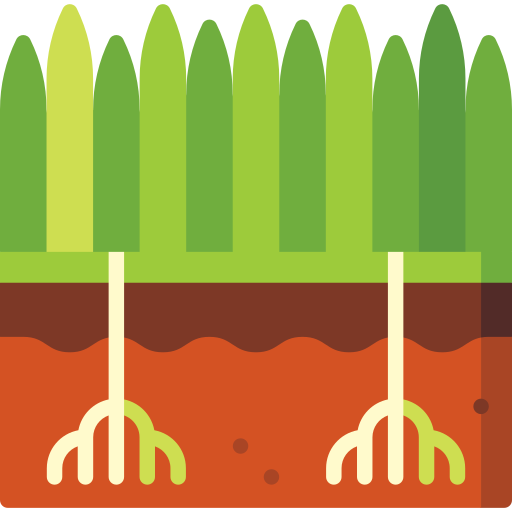
흙
soil
흙으로 만들다

않다
not
밥을 먹지 않아요.

많이
A lot
수지를 많이 좋아해요.

읽다
read
저녁에 책을 읽다
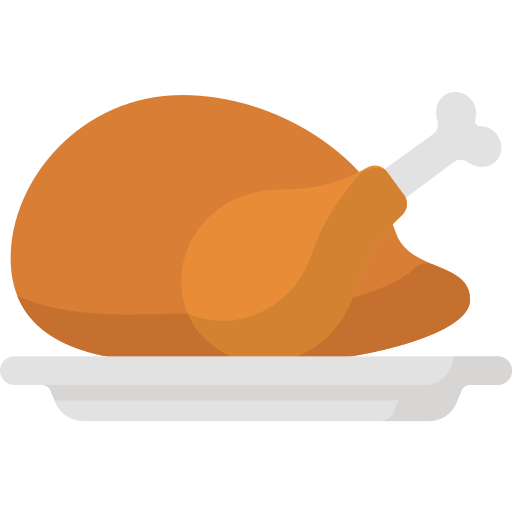
닭
chicken
닭을 먹다

맑다
clear
날씨가 맑다
*Good job, you made it through~*
Good job on learning the basics of Hangul!
Be sure to continue with other Beginner and Easy materials for basic Korean grammar!

수고했어요.
Thanks for your work.
단어를 많이 배웠어요?
Did you learn a lot of words?

한국어 참 쉽죠?
Korean is easy, right?

숙제가 있어요?
Do you have homework?

다음에 다시 보자.
See you next time.