
IELTS - Preparation course
Explanations and vocabulary practice
Sections: 42
- Welcome to the IELTS Mastery Course!
- Section 2
- Section 3
- Great job!
- Section 5
- Section 6
- Section 7
- Section 8
- We can but don't have to use comma while talking about more things
- Section 10
- Generally, do not use commas in front of but/and.
- Congrats! You have made it through the practical part. Now it's time for grammar!
- Beware of 3rd person singular!
- Questions
- Negatives
- Section 16
- Section 17
- We do not use continuous with stative verbs.
- Section 19
- Section 20
- Section 21
- Section 22
- Section 23
- Section 24
- Section 25
- Section 26
- Section 27
- Section 28
- Section 29
- Section 30
- Section 31
- Section 32
- Section 33
- Section 34
- Section 35
- Section 36
- Section 37
- First conditional
- Second conditional
- Section 40
- Section 41
- Section 42
Save words from this page and practise them with flashcards in DuoCards. How does it work?
We’ll cover key vocabulary, grammar tenses, tips, and tricks for high scores. The course begins with speaking and writing, focusing on common mistakes, followed by a review of tenses and new vocabulary. Grammar starts easy and gets more advanced.
Let´s start with the speaking part.💭
Think of it as a conversation - try to stay relaxed and natural.
It’s best to avoid memorized answers, as examiners can usually tell.
Try to speak a little every day, even if it’s just with yourself or an AI - it really makes a difference!
We’ve put together some handy phrases you can use to sound more fluent. Just be careful not to overuse them - balance is key.
Best of luck!







Task 1 is more introductory. In task 2 you need to express your thoughts and perhaps feelings.
Let's see what phrases you could use:






Now, in part 3 of the speaking test, you need to be able to talk about abstract ideas. For this you can use figurative language and idioms to impress your examiners. But use only those you really know, if you make a mistake it will result in more deducted points.



You have learned most common speaking phrases.
To build on that, I will give you a couple of more just to enhance your coherence and communication skills across all speaking tasks.
Make sure to intentionally practice them untill it had become your second nature ^^








One more thing, in speaking it is very important to use hedging language.
You can use hedging expressions to express uncertainty in your speech.
It could be...
This might be...
Beware of strong claims and statements about sensitive topics. Use hedgings to make your speech smoother and more sensitive.
Now we need to address most common mistakes in writing.
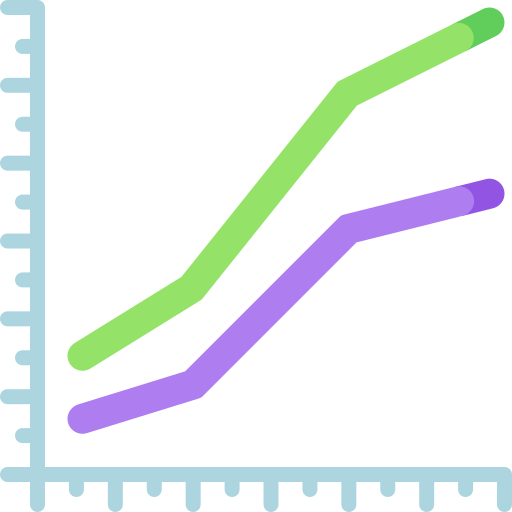
In the writing you might come across bar graphs (graphs, diagrams and charts) which you will have to describe. Many people don't know how and unneccesarily lose points. That won't be you!
Here is some vocabulary to help you pass your writing tasks.









Just a tip: if you want to write this: % in words.
The correct way is per cent

Try to be as cohesive as possible in your writing. Start a new paragraph for each new idea.
Always double check your spelling and grammar. Please do answer the question fully. Do not write about stuff you want to write about or just partially answer the question.
Write about what is required from you.
I will also give you a few tips on punctuation as many people do not know how to correctly use it.
English punctuation is different and sometimes it can save lives!
Time to eat children. vs Time to eat, children.
Can you see what I mean here?
We also use commas before direct speech.
She said, 'hurry up'!
We also always need to use commas after phrases like however, nevertheless, to be honest, etc.







.
I like Eva, Marina, and Nicol. vs I love cats, dogs and horses.
However, sometimes it can be a little bit confusing if you do not add the comma:
I love my parents, Bill Gates and Pamela Anderson.
Unfortunatelly, Bill Gates and Pamela Anderson aren't my parents. Therefore, it is better to use comma between them as well.


The final question: When to use a comma between adjectives?
We use commas between adjectives if we can use and instead of it:
He is a nice and friendly man -> He is nice, friendly man.
But, if we cannot use and between them, then there is no comma:
I adore delicious French croissants.
Here it would not make sense to say delicious and French croissants.




I want to swim in the ocean but I am terrified of sharks.
But we can use a comma in case you want to make a pause. In this case, you need to figure out where to put a comma based on your intuition.
My best friend loves snakes, but not all of my friends like them.
We also use comma when we change the subject of a sentence:
My teacher is very strict sometimes, but that's what I like about her.
Also, if you start with a subordinate clause, you also need to use comma, but we have already talked about that in conditionals.
If you have time, call me.



We are going to start with present simple, it is the most basic grammar, but even advanced English learners still make mistakes in 3rd person singular or in questions, please try to revise at least a little bit.
We use present simple for:
things that are true in the present: I like ice cream
something that happens regularly: I play tennis every Sunday
something that is always true: Water boils at 100 degrees





Examiners will deduct points if you miss it.
he, she, it - likes, wants, does...
When we refer to animals, we use it.
We can use gender with animals only if we have a good relationship with them. My dog is called Miky, I love him!
Be careful with multuple people: My mother and I are ...



We use do/does in questions: Do you play the piano? Does she like him?
We also use it with question words: Where do Anjela and Rita work? What time does he finish?
BUT! Questions with who do not use do/does: Who lives in London? Who plays football?



In speech we can use contractions; however, in formal emails or essays, we have to use the long form.
do not (long form) = don't (short form): I don't like fast food.
does not = doesn't: She doesn't want to come.




Let's continue with present continuous!
We always need present tense of verb be and the -ing at the end of a verb.
We use it to talk about:
Activities happening at the moment of speaking.



But we also use present continuous for future plans and arrangements.
When we know that something is '100% planned' in the future.
Somebody says 90%, somebody 99%...I dare to say 100% unless something tragic happens.


Stative verbs of thinking and feeling: believe, dislike, know, like, love, hate, prefer, realise, recognize, remember, suppose, think (believe), understand, want, and wish
Stative verbs of senses: appear, feel, look, seem, smell, sound, taste
And other stative verbs: agree, be, belong, disagree, need, owe, own, possess?




We also use present continuous to talk about something which is happening before and after a specific time:
At eight o'clock we are usually having breakfast.
With something which we think is temporary.
Michael is at university. He's studying history.
With something which is new and contrasts with a previous state.
These days most people are using email instead of writing letters.
With something which is changing, growing or developing.
The children are growing up quickly.



Present continuous is also used with something which happens again and again (mostly with negative connotation - we normally use 'always'):
It's always raining in London.



We can use present continuous to talk about the past when we are:
Telling a story or summarising a book, film or play.



Now it is time for present perfect!
We construe it with subject + have/has + past participle.
I have intoruduced myself.
We use it to talk about things that happened in the past but influence the present and can, perhaps, continue to the future.





Let's have a look at the difference between gone to and been to:
gone to = the person is still away
been to = the person has experience from that place but had already returned



Now everyone's favourite present perfect continuous.
We form it by using subject + have/has been + -ing
We normally use this to emhasize that something is still continuing in the present.
We only use dynamic verbs with this grammatical tense.



By the way, we can use present perfect for future as well.
Where we would normally use present simple, you can show off your great English skills and use present perfect instead:
We will begin when everyone arrives.
vs
We will gegin when everyone has arrived.





We have checked present tenses, now it's time for the past simple. We use it to talk about:
- something that happened in the past - I crashed my car into a bridge last week.
- something that happened several times in the past - I made jokes about him each time I saw him.
- something that was true for some time in the past - I lacked motivation for my exam, that's why it took me 3 attempts.
- we use expression ago in the past - I met my wife 30 years ago.
In past simple we usually add -ed to verbs. But there are irregular verbs that need extra amount of time to master.
Let's start with those who differ in all three forms:






Now let's give some instances of those irregular verbs with the same forms in the past tense and past participle:








Then we also have all 3 forms unchanged:

And many people confuse the past tense and participle in verbs to lie (to tell a lie), to lie (lying on a surface), and to lay (to lay down):



Many people forget that we can use past simple when reffering to present or future in hypotheses (when you imagine something)
Imagine you won the lottery. What would you do?

Now we are going to brush up on a tense that is not too commonly used. But it is often in tests and you can bump into it in real life too!
We use past perfect simple (had + past participle) to talk about time up to a certain point in the past:
She had published her first book by the time she was ten.
We also use it to show order of two past events. The past perfect shows the earlier action and past simple the later action:
When I got home I realized I had forgotten to buy groceries.
Sadly, the author died before he'd finished the series.
We often use already, still, just, ever, or never with this tense.
She was the most astonishing woman I had ever seen.



We use past perfect continuous for something which started in the past and continued up to a given point in time:
When George died, he and Anne had been married for nearly fifty years.
or for something that happened several times before a point in the past and continued after that point:
He was a wonderful guitarist. He had been playing ever since he was a teenager.
or when when we are reporting our experience up to a point in the past:
My thirtieth birthday was the worst day I had ever had.
and just like with present perfect we use for and since with past perfect.




Now let's get into a tense that is called future continuous (will/won't be + -ing).
We use it to talk about future actions that will be in progress at a specific time in the future:
When you come home, I'll be boarding a plane.
Or something we see as new, different or temporary:
Today we're taking the bus but next week we'll be taking the train.



For the future we also use future perfect (will/won't have + past participle). This tense is used when we talk about something that will be completed before a specific time in the future.{
Will you have gone to bed when I get back?
We can use phrases like by or by the time (at some point before), in or in a day's time/in two months' time/in five years' time (at the end of the period) to give the time period in which the action will be completed.
By the time I finish this course, I will have revised all English tenses.
In three years' time, I'll have graduated from university.





We have now revised all English tenses. However, we have not revised how to combine them in certain situations...under some conditions.
I guess you can see where I am going. Now we are going to revise conditionals because many people make mistakes in them.
I bet you don't want to lose those precious points in your exam so let's get to work!

In English there are 4 main conditionals: zero, first, second, and third...and then there are also mixed conditionals, but let's revise those 'easy' ones first.
Conditionals describe the result of a certain condition. The if clause tells you the condition and the main clause tells you the result.
If you study hard, you will pass the exam.
The order of the clauses does not change the meaning. But beware of punctuation!
Zero conditional is just fact based. There is present simple tense on both sides:
If you freeze water, it becomes solid.
Beware of punctuation! We use it after if clause but not before it!
Water becomes solid if you freeze it.




is used for future situations we believe are possible:
If it rains, we will stay at home.
if/when clause + present simple, will + infinitive
You can also bump into usages like unless, as long as, as soon as, or in case instead of if.
I'll leave as soon as Lucy arrives.
I don't want to do it unless you treat me with respect.
I will show you to the kitchen in case you get hungry.
You can call my sister as long as you stay just friends.


is used for impossible situations that are unlikely to happen:
If we moved to a bigger house, we could get another dog.
Structure: if clause + past simple, would + infinitive
When if is followed by verb be, it is grammatically correct to use it as were: if I were, if she were.
Like this we can express that there is a possibility under certain condition and it comes from Old English.
However, you can commonly use and hear if she/he was and it is also correct.
I wouldn't do that if I were you.
If she was president, she would invest in education more.
If he were a little nicer, I would consider him a good match.



Now it is getting real or maybe...surreal? Let's get into third conditional. It is used to imagine different past. Usually when we regret something or would like to change the past...but it is not possible.
If I had paid more attention, I wouldn't have to study as much.
Structure: if + past perfect, would have + past participle


And now the 'final boss'. Yes, you have guessed it...mixed conditionals.
We can use them when we imagine a past change with a result in the present or a present change with a result in the past.
Do you feel like it does not make sense? Let's check out some examples:
If I hadn't got the job in Tokyo, I wouldn't be with my current partner.
In this case we imagine how a change in the past would result in the present.
Structure: if + past perfect, would + infinitive
It's really important. If it wasn't, I wouldn't have called you on your holiday.
Here the speaker explains how a change in the present situation would influence the change in the past.
Structure: if + past simple, would have + past participle




This is the end of this course! I hope this helped you!
Good luck with your IELTS!!!

Learning with DuoCards
What is DuoCards?
DuoCards is a language-learning app that helps you build vocabulary with flashcards. You can save words you want to learn and practise them over time.
How do I learn with this course?
Browse the explanations and vocabulary in each section. Select Card picker and choose the words you want to learn. Then create a free account to save your words and practise them.
How do I practise my words?
You'll see a flashcard with a word and a hidden translation. Guess what it means, then tap to check your answer. DuoCards repeats the words you find difficult.
Do I need an account, and is learning free?
You can browse this page without an account. A free account lets you save words and track your progress. The free plan has limits, and Premium offers additional features.