
IELTS - Hazırlık kursuİngilizce kelimeler
by DuoCards
*IELTS Ustalık Kursuna Hoş Geldiniz!*
Yüksek puanlar için *anahtar kelime bilgisi, dilbilgisi zamanları, ipuçları ve püf noktaları* ele alacağız. Kurs, *konuşma ve yazma* ile başlayarak *yaygın hatalara* odaklanır, ardından *zamanların gözden geçirilmesi* ve *yeni kelime bilgisi* ile devam eder. Dilbilgisi kolaydan başlayıp daha ileri seviyeye geçer.
*Konuşma kısmıyla başlayalım.💭*
Bunu bir sohbet olarak düşünün - rahat ve doğal kalmaya çalışın.
Ezberlenmiş cevaplardan kaçınmak en iyisidir, çünkü sınav görevlileri genellikle bunu anlayabilir.
Her gün biraz konuşmaya çalışın, bu sadece kendinizle veya bir yapay zeka ile olsa bile - gerçekten fark yaratır!
Daha akıcı konuşmanızı sağlayacak bazı kullanışlı ifadeler derledik. Sadece bunları aşırı kullanmamaya dikkat edin - denge önemlidir.
*Bol şans!*

Let's roll!
Hadi başlayalım!
When the movie was about to start, the director shouted, "Let's roll!

to kick things off
başlatmak gerekirse
To kick things off, I would like to introduce our guest speaker.

on the flip side
öte yandan
I know that the weather is great for a picnic today, but on the flip side, it might be too hot for some people.
it goes without saying
söylemeye bile gerek yok
It goes without saying that you should always wear a seatbelt while driving.
to sum up
özetlemek gerekirse
To summarize, the report highlights the key findings of our research and provides recommendations for future action.

to put it differently
başka bir deyişle
To put it differently, exercise is not just about physical health but also about mental well-being.
in a nutshell
özetle
To put it in a nutshell, we need to work harder to achieve our goals.

to draw a parallel
paralellik kurmak
To draw a parallel, just as exercise strengthens the body, reading regularly strengthens the mind.

to play a crucial role in
...da kilit bir rol oynamak
Dedicated teachers play a crucial role in shaping the future of their students.
to put it simply
en basit tabiriyle
To put it simply, the project was a failure.
to delve deeper into this
bu konunun derinliklerine inmek
To delve deeper into this, one must consider the long-term impacts of climate change on coastal communities.
Görev 1 daha *giriş niteliğinde*. Görev 2'de *düşüncelerinizi ifade etmeniz* ve belki de *duygularınızı* gerekecek.
Hangi ifadeleri kullanabileceğinizi görelim:

in my opinion
bence
In my opinion, this movie is really good.
on one hand, on the other hand
bir yandan, diğer yandan
On one hand, online education offers flexibility and accessibility. On the other hand, it can lack the personal interaction that traditional classrooms provide.

I firmly believe that
Şuna yürekten inanıyorum ki
I firmly believe that investing in healthcare infrastructure is vital for the well-being of a nation.

as far as I'm concerned
bana kalırsa
As far as I'm concerned, the best way to learn English is to practice speaking it every day.
for instance
örneğin
I like to do outdoor activities, for instance, hiking and camping.

an emerging trend is
yeni bir trend de
An emerging trend is the shift towards remote work, which has been accelerated by recent global events.
it's worth noting that
şunu belirtmekte fayda var ki
It's worth noting that bilingual individuals often have cognitive advantages over monolinguals.
striking a balance between
arasında bir denge kurmak
Striking a balance between work and leisure is essential for maintaining mental health and overall happiness.
Şimdi, konuşma sınavının 3. bölümünde, *soyut fikirler hakkında konuşabilmeniz* gerekir. Bunun için sınav görevlilerini etkilemek amacıyla *mecazi dil ve deyimler* kullanabilirsiniz. Ancak sadece gerçekten bildiklerinizi kullanın, hata yaparsanız daha fazla puan düşmesine neden olur.
down in the dumps
dibe vurmuş
I've been feeling down in the dumps since I lost my job.
over the moon
havalara uçmak
I was over the moon when I found out I got the job.
lose track of time
zamanın nasıl geçtiğini unutmak
I was so absorbed in my book that I lost track of time and missed my appointment.
look on the bright side
iyi tarafından bak
I know you didn't get the job you wanted, but look on the bright side - you have a lot of experience now and can apply for other positions.

not my cup of tea
pek bana göre değil
I don't really like horror movies, they're not my cup of tea.
*Harika bir iş çıkardınız!* En yaygın konuşma cümlelerini öğrendiniz.
Bunun üzerine inşa etmek için, tüm konuşma görevlerinde *tutarlılık ve iletişim becerilerinizi* geliştirmek için size birkaç tane daha vereceğim.
*İkinci doğanız haline gelene kadar bunları kasıtlı olarak uyguladığınızdan emin olun ^^*

I couldn't agree more
Size kesinlikle katılıyorum
I couldn't agree more. We need to work together to find a solution.
to wrap things up
toparlamak gerekirse
I'd like to thank everyone for coming today. To wrap things up, I just want to remind you of our next meeting date.
building on that
buna dayanarak
Building on that, we can see how technological advancements not only improve our daily lives but also open up new opportunities for innovation and growth in various industries.

to be well-off
durumu iyi olmak
My neighbor is well-off. He drives a luxury car and has a big house.
to be fed up
bıkmak
I'm fed up with this job. I need to find something new.
a hot potato
ateşten gömlek
The issue of gun control is a hot potato in the United States.
in my personal experience
kendi kişisel deneyimlerime dayanarak
In my personal experience, studying abroad has greatly enhanced my understanding of different cultures and improved my language skills.

in light of these considerations
bu mülahazaların ışığında
In light of these considerations, it is clear that stricter environmental regulations are necessary to combat climate change effectively.
to twist someone's arm
birinin kolunu bükmek
She didn't want to go to the party, but her friends twisted her arm.

without a shadow of doubt
en ufak bir şüphe duymadan
Without a shadow of a doubt, investing in education is one of the best ways to ensure a prosperous future for our society.
Bir şey daha, konuşurken *riskten korunma* dilini kullanmak çok önemlidir.
Konuşmanızdaki *belirsizliği ifade* etmek için hedging ifadelerini kullanabilirsiniz.
"It could be..."
"This might be..."
Hassas konular hakkında güçlü iddialardan ve ifadelerden kaçının. Konuşmanızı daha yumuşak ve daha hassas hale getirmek için korumaları kullanın.
It might well be that...
Şu da ihtimal dahilindedir ki...
It might well be that the rise in remote work will lead to significant changes in how cities are designed in the future..
I am not sure but...
Emin değilim ama...
I am not sure but it seems that learning multiple languages can enhance cognitive abilities and cultural understanding.
As it seems that...
Görünüşe göre...
As it seems that climate change is accelerating, urgent action from all nations is required to mitigate its effects.
It might look...
Şöyle görünebilir...
It might look like a simple solution, but implementing renewable energy on a large scale involves complex planning and significant investment.
Şimdi *yazımdaki en yaygın hatalara* değinmemiz gerekiyor.
Yazarken, açıklamanız gereken *çubuk grafiklerle* (grafikler, diyagramlar ve çizelgeler) karşılaşabilirsiniz. Birçok kişi nasıl anlatacağını bilmez ve gereksiz yere puan kaybeder. *Bu siz olmayacaksınız!*
İşte yazma görevlerinizi geçmenize yardımcı olacak bazı kelimeler.
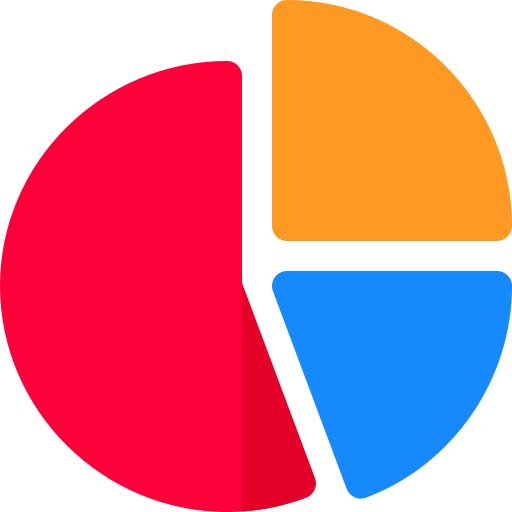
pie chart
pasta grafiği
A pie chart can be used to show the percentage of students in a class who prefer different types of music.
line graph
çizgi grafiği
The line graph depicts the changes in unemployment rates over the last decade.

bar graph
sütun grafiği
The bar graph shows the population of five countries in 2020.
bar chart
sütun grafiği
A bar chart comparing the sales of different products in a store.
to compare
karşılaştırmak
The data compare the performance of students in mathematics and science.
to imply
ima etmek
The results of the study imply that exercise can reduce stress.
to indicate
belirtmek
The data indicated a decrease in sales.
similar
benzer
The two graphs are very similar.
to illustrate
örneklendirmek
The graph illustrates the relationship between education level and income.

to depict
tasvir etmek
The chart depicts the annual rainfall in different regions.
from the graph it is clear
grafikten açıkça görülmektedir ki
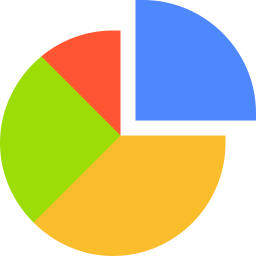
From the graph, it is clear that the majority of respondents prefer digital over print media.
Sadece bir ipucu: eğer bunu yazmak istiyorsanız: kelimelerle *%*.
Doğru yol *yüzde*
per cent
yüzde
10 per cent increase
Yazınızda mümkün olduğunca *tutarlı* olmaya çalışın. Her yeni fikir için yeni bir paragraf başlatın.
Her zaman yazım ve dilbilgisini iki kez kontrol edin. Lütfen *soruyu tam olarak cevaplayın*. Yazmak istediğiniz şeyler hakkında yazmayın veya soruyu kısmen cevaplamayın.
Sizden istenen şey hakkında yazın.
Ayrıca birçok kişinin doğru kullanmayı bilmediği *noktalama işaretleri hakkında birkaç ipucu* vereceğim.
İngilizce *noktalama işaretleri* farklıdır ve bazen *hayat kurtarabilir!*
"Time to eat children. vs Time to eat, children."
Burada ne demek istediğimi görebiliyor musunuz?
Ayrıca doğrudan konuşmadan önce virgül kullanırız.
"She said, 'hurry up'!"
Ayrıca, ancak, yine de, dürüst olmak gerekirse gibi ifadelerden sonra her zaman virgül kullanmamız gerekir.
however
bununla birlikte
She is very talented. However, she lacks confidence.
nevertheless
yine de
I know it's raining. Nevertheless, I'm going for a walk.

to be honest
dürüst olmak gerekirse
To be honest, I didn't like the movie.
firstly
öncelikle
Firstly, I would like to thank everyone for coming today.
first of all
öncelikle
First of all, let's discuss the main issues we need to address.
moreover
dahası
The hotel has a great location. Moreover, the staff is very friendly.
furthermore
ayrıca
I don't think we should go out tonight. Furthermore, it's supposed to rain.
conversely
aksine
Some people believe that money brings happiness. Conversely, others believe that money can't buy happiness.
*Daha fazla şeyden bahsederken virgül kullanabiliriz ama kullanmak zorunda değiliz*.
"I like Eva, Marina, and Nicol." vs "I love cats, dogs and horses."
Ancak, virgül eklemezseniz bazen *biraz kafa karıştırıcı olabilir*:
"I love my parents, Bill Gates and Pamela Anderson."
Ne yazık ki Bill Gates ve Pamela Anderson benim ailem değil. Bu nedenle aralarında virgül kullanmak daha doğru olur.
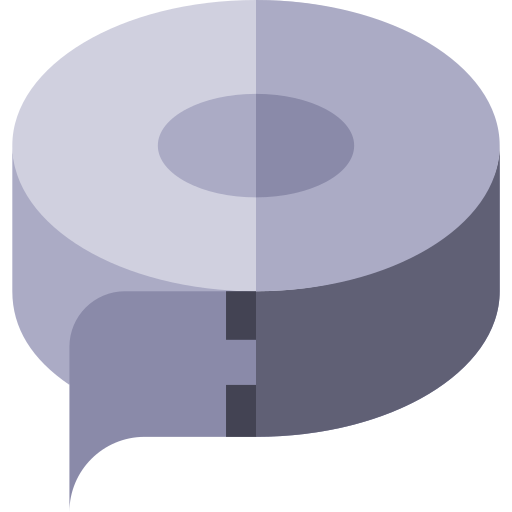
to adhere
yapışmak
The tape adheres well to the wall.
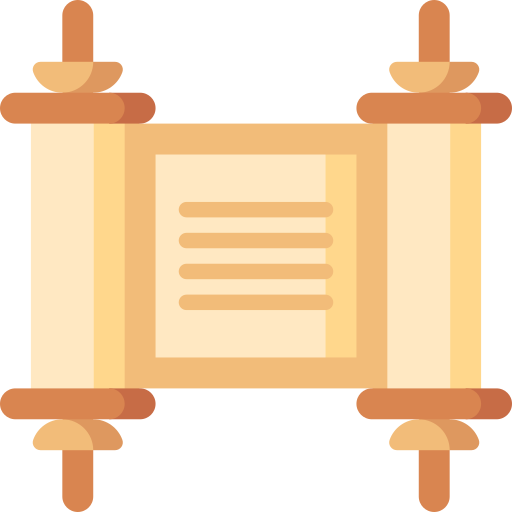
antiquity
antik çağ
In antiquity, people relied on natural remedies and herbs for healing before the advent of modern medicine.
conscious
bilinci açık
She was conscious throughout the surgery.
faulty
kusurlu
The engineer inspected the machine and found several issues: a faulty valve, a broken circuit, and a worn-out gear.
Son soru: *Sıfatlar arasında virgül ne zaman kullanılır?*
Sıfatlar arasında virgül kullanırken eğer *ve* yerine kullanabiliyorsak virgül kullanırız:
"He is a nice and friendly man" -> "He is nice, friendly man."
Ancak, *aralarında ve kullanamazsak, o zaman virgül yoktur*:
"I adore delicious French croissants."
Burada lezzetli ve Fransız kruvasanları demek mantıklı olmaz.
scrumptious
nefis
She cooked a scrumptious meal for us.

to purchase something
bir şey satın almak
I need to purchase some new clothes for the party.

previous
önceki
The previous owner of the house left some furniture behind.
to attend
katılmak
I will attend the school meeting tomorrow.
*Genel olarak, but/and öncesinde virgül kullanmayın.*
"I want to swim in the ocean but I am terrified of sharks."
Ancak, *duraklama yapmak isterseniz* virgül kullanabiliriz. Bu durumda, virgülü nereye koymanız gerektiğini sezgilerinize göre belirlemelisiniz.
"My best friend loves snakes, but not all of my friends like them."
Ayrıca, *cümlede özneyi değiştirdiğimizde* de virgül kullanırız:
"My teacher is very strict sometimes, but that's what I like about her."
Ayrıca, *bağlı bir cümle ile başlarsanız*, virgül kullanmanız gerekir, ancak bu konuyu koşullu cümlelerde zaten konuşmuştuk.
"If you have time, call me."
to elucidate
açıklığa kavuşturmak
Could you please elucidate your point? I'm not sure I understand.

to lament
ağıt yakmak
He sat alone in his room, lamenting his decision to drop out of college.
inexhorable
amansız
The inexorable rise of global temperatures highlights the urgent need for action on climate change.

ephemeral
geçici
The beauty of cherry blossoms is ephemeral.
*Tebrikler! Pratik kısmını başarıyla tamamladınız. Şimdi sıra dil bilgisine geldi!*
Şimdi *geniş zaman* ile başlayacağız, bu en temel dil bilgisidir, ancak ileri düzey İngilizce öğrenenler bile hala *3. tekil şahısta veya sorularda hatalar* yapıyor, lütfen en azından biraz gözden geçirmeye çalışın.
Geniş zamanı şu durumlar için kullanırız:
şu anda *doğru olan şeyler*: "I like ice cream"
*düzenli olarak* gerçekleşen bir şey: "I play tennis every Sunday"
*her zaman doğru olan* bir şey: "Water boils at 100 degrees"
to suffer
acı çekmek
He suffers from anxiety and depression.

The consistent increase in urban population density significantly enhances the demand for public transportation infrastructure.
Kentsel nüfus yoğunluğundaki sürekli artış, toplu taşıma altyapısına olan talebi önemli ölçüde artırmaktadır.
to not mind doing something
bir şeyi yapmaktan çekinmemek
I don't mind walking in the dark. I am not scared.
to research
araştırmak
I need to do some research for my history paper.
to be keen on
meraklı olmak
She is keen on learning new languages.
unless
eğer ... olmazsa
I won't go to the party unless my friend comes with me.
*3. tekil şahsa dikkat edin!* Eğer atlarsanız sınav görevlileri puan kıracaktır.
he, she, it - sever, ister, yapar...
Hayvanlardan bahsederken onu kullanırız.
Hayvanlarla ancak onlarla iyi bir ilişkimiz varsa cinsiyet belirtebiliriz. "My dog is called Miky, I love him!"
Çoklu insanlara karşı dikkatli olun: "My mother and I are ..."

The advanced coating effectively shields the spacecraft from harmful cosmic radiation.
Gelişmiş kaplama, uzay aracını zararlı kozmik radyasyondan etkili bir şekilde korur.
to rotate
döndürmek
The Earth rotates on its axis.
John and I are orphans.
John ve ben yetimiz.

to reflect
yansıtmak
His behaviour reflects his true self.
to alleviate
hafifletmek
The new policy alleviates the financial burden on low-income families.
*Sorular:*
Sorularda *do/does* kullanırız: "Do you play the piano? Does she like him?"
*Soru sözcükleriyle* de kullanırız: "Where do Anjela and Rita work? What time does he finish?"
*BUT! Who ile sorulan sorularda do/does kullanılmaz*: "Who lives in London? Who plays football?"
species
tür
Why do scientists classify different species of plants and animals?
What type of insecticide is most effective against aphids?
Yaprak bitlerine karşı en etkili insektisit türü hangisidir?

vast
devasa
What makes the Sahara Desert such a vast and inhospitable region?
swarm
oğul
What role does communication play in the behavior of a swarm?
proliferation
yayılma
How does the proliferation of technology impact our daily lives?
to refute
çürütmek
How do you refute the claim that renewable energy sources are too costly to implement?
*Negatives:*
Konuşmada kısaltmalar kullanabiliriz; ancak, *resmi e-postalarda veya makalelerde uzun formu kullanmalıyız.*
do not (uzun form) = don't (kısa form): "I don't like fast food."
does not = doesn't: "She doesn't want to come."

to rival
rekabet etmek
The new technology does not rival the efficiency of traditional methods.
to amplify
güçlendirmek
The small speaker doesn't amplify the sound enough for the large room.

male
erkek
He does not exhibit the typical characteristics associated with male behavior in the species.

ostentatious
gösterişli
He doesn't appreciate people who are ostentatious in their behavior.
Devam edelim *şimdiki zaman!*
Her zaman fiilin *be ve -ing* ekine ihtiyacımız var.
Bunu konuşma anında olan aktivitelerden bahsetmek için kullanırız.
to generate
oluşturmak
The wind turbines are currently generating renewable energy for the entire region.
to become
olmak
The company is becoming a leader in renewable energy.

to outlast
daha uzun süre dayanmak
He is outlasting all his competitors in the marathon.

ubiquitous
yaygın
Smartphones are becoming ubiquitous, changing the way we communicate.
Ama aynı zamanda *gelecek planları ve düzenlemeleri* için de şimdiki zamanı kullanırız.
Bir şeyin gelecekte *'%100 planlanmış'* olduğunu bildiğimizde.
Bazıları %90, bazıları %99 der... Ben trajik bir şey olmadıkça %100 demeye cesaret ediyorum.
to hunt
avlanmak
They are going hunting next weekend.
Next week we are preparing survival kits for the camping trip.
Önümüzdeki hafta kamp gezisi için hayatta kalma kitleri hazırlıyoruz.
to harm
zarar vermek
She is advocating for policies that prevent chemicals from harming the environment.
among
arasında
Tensions are rising among the team members as the deadline approaches.
*Durağan fiillerde süreklilik kullanmayız.*
Düşünme ve hissetme durum fiilleri: "believe, dislike, know, like, love, hate, prefer, realise, recognize, remember, suppose, think (believe), understand, want, and wish"
Duyguların durum fiilleri: "appear, feel, look, seem, smell, sound, taste"
Ve diğer statif fiiller: "agree, be, belong, disagree, need, owe, own, possess?"
to prefer
tercih etmek
She prefers tea to coffee.

to suppose
varsaymak
I suppose we should leave now to avoid the traffic.
to owe
borçlu olmak
I owe you an explanation for my behavior.

to belong
ait olmak
These books belong to the library.
Şu anda devam eden bir şeyden bahsetmek için de şimdiki zamanı kullanırız: *belirli bir zamanın öncesinde ve sonrasında:*
"At eight o'clock we are usually having breakfast."
Geçici olduğunu düşündüğümüz bir şeyle.
"Michael is at university. He's studying history."
Önceki bir durumla çelişen yeni bir şeyle.
"These days most people are using email instead of writing letters."
Değişen, büyüyen veya gelişen bir şeyle.
"The children are growing up quickly."

Michael is at university. He's studying history.
Michael üniversitede. Tarih okuyor.
to roar
kükremek
The crowd is roaring with excitement as the concert begins.
gullible
saf
Even before the seminar, people are becoming more gullible, falling for obvious scams.

to persuade
ikna etmek
I am working hard to persuade the committee before the deadline next Friday.
Şimdiki zaman, *tekrar tekrar olan bir şeyle de kullanılır (çoğunlukla olumsuz bir anlamla - genellikle 'her zaman' kullanırız):*
"Londra'da her zaman yağmur yağıyor."
He is always nitpicking at her and they are always arguing.
Sürekli onun açıklarını arıyor ve durmadan kavga ediyorlar.

to inundate
su altında bırakmak
She is always inundating us with unnecessary emails.
conundrum
bilmece
He always finds himself facing the same conundrum of choosing between his career and personal life.

to adapt
uyum sağlamak
We are always adapting our strategies to keep up with the rapidly changing market trends..
*Geçmiş hakkında konuşurken* present continuous kullanabiliriz:
*Bir hikaye anlatırken ya da bir kitabı, filmi ya da oyunu özetlerken.*

The other day I'm just walking down the street when suddenly this man comes up to me and asks me to lend him some money.
Geçen gün yolda öylece yürürken aniden bir adam yanıma yaklaştı ve benden ödünç para istedi.
Well, he's carrying a big stick and he looks a bit dangerous, so I'm wondering what to do …
Şey, elinde büyük bir sopa var ve biraz tehlikeli görünüyor, bu yüzden ne yapacağımı düşünüyorum...
Harry Potter is a pupil at Hogwarts school. One day when he is playing Quidditch he sees a strange object in the sky. He wonders what is happening …
Harry Potter, Hogwarts okulunda bir öğrencidir. Bir gün Quidditch oynarken gökyüzünde tuhaf bir nesne görür. Neler olup bittiğini merak eder…
Şimdi *present perfect* zamanı!
Bunu *subject + have/has + past participle* ile oluştururuz.
"I have introduced myself."
Geçmişte olmuş ama şimdiyi etkileyen ve belki de geleceğe devam edebilecek şeyler hakkında konuşmak için kullanırız.
I have never caught a glimpse of that.
Buna hiç gözüm ilişmedi.
They have been pronounced husband and wife.
Karı koca ilan edildiler.

I have had my share of ups and downs.
Pek çok iniş çıkış yaşadım.
I've just published this research I've carried out.
Yürüttüğüm bu araştırmayı az önce yayımladım.

I haven't given up on him yet.
Ondan henüz ümidimi kesmedim.
Hadi *gone to ve been to arasındaki farklara* bir göz atalım:
gone to = kişi hala uzakta
been to = kişi o yerden deneyime sahip ama zaten geri dönmüş

She has gone to Belgium. She should return in December.
Belçika'ya gitti. Aralık ayında dönmesi gerekiyor.

He has been to many exquisite places.
Pek çok seçkin ve harika yeri ziyaret etti.
voracious
doymak bilmez
She has been to several book fairs, driven by her voracious appetite for reading.
to suggest
önermek
I suggest we go to the new Italian restaurant downtown; I've been to it once, and the food was amazing.
Şimdi herkesin favorisi *present perfect continuous.*
Bunu *subject + have/has been + -ing* kullanarak oluştururuz.
Genellikle bir şeyin *hala devam ettiğini* vurgulamak için kullanırız.
Bu dilbilgisel zamanla sadece dinamik fiilleri kullanırız.

She has been living in whimsical Africa since 1995.
1995'ten beri kaprisli Afrika'da yaşıyor.

I have been painting on this canvas all morning.
Bütün sabah bu tuval üzerinde resim yapıyorum.
She is all sweaty. She has been climbing that oak tree.
Sırılsıklam ter içinde kalmış. O meşe ağacına tırmanıp duruyordu.

They have been cutting down these damaged pine trees.
Bu hasarlı çam ağaçlarını kesiyorlar.
Bu arada, *gelecek için de present perfect kullanabiliriz.*
Normalde present simple kullanacağımız yerde, harika İngilizce becerilerinizi gösterip onun yerine present perfect kullanabilirsiniz:
"We will begin when everyone arrives."
vs
"We will begin when everyone has arrived."
I'll keep on looking until I have found my book.
Kitabımı bulana kadar aramaya devam edeceğim.
I will not stop until I have become the best leader.
En iyi lider olana kadar durmayacağım.

ineffable
anlatılamaz
By the time they finish the project, the team will have created an ineffable masterpiece.
resilient
dayanıklı
By next year, she will have become even more resilient in handling challenges.
anticipate
beklemek
By the time the project is completed, we will have anticipated all potential challenges and addressed them accordingly.
Şimdiki zamanları kontrol ettik, şimdi *geçmiş zaman* zamanı. Bunu konuşmak için kullanırız:
- *geçmişte olan bir şey* - "Geçen hafta arabamı bir köprüye çarptım."
- *geçmişte birkaç kez olan bir şey* - "Onu her gördüğümde onun hakkında şakalar yaptım."
- *geçmişte bir süre doğru olan bir şey* - "Sınavım için motivasyonum eksikti, bu yüzden 3 deneme sürdü."
- geçmişte *önce* ifadesini kullanırız - "Eşimle 30 yıl önce tanıştım."
Geçmiş zamanda genellikle fiillere *-ed ekleriz*. Ancak, ustalaşmak için ekstra zaman gerektiren *düzensiz fiiller* vardır.
Üç formda da farklı olanlarla başlayalım:
to bear (bore, borne)
katlanmak

to blow (blew, blown)
üflemek
The strong wind blew the papers off the table.
to be (was/were, been)
olmak
She was the top performer in last night's talent show.
to shake (shook, shaken)
sallamak
She shook the rug to remove the dust.
to shrink (shrank, shrunk)
çekmek
The sweater shrank in the wash, so now it's too small for me to wear.
to tear (tore, torn)
yırtmak
I accidentally tore my shirt on a nail.
Şimdi geçmiş zaman ve geçmiş ortaçta aynı formlara sahip olan bu *düzensiz fiillerden bazı örnekler verelim:*
to creep (crept, crept)
sessizce sokulmak
I crept up the stairs so as not to wake the baby.
to cling (clung, clung)
yapışmak
The child clung to his mother's hand as they walked through the crowded mall.
to mean (meant, meant)
niyet etmek
I meant to call you yesterday, but I got busy with work.

to seek (sought, sought)
aramak
She sought help from her friends.
to spin (span/spun, spun)
dönmek
The dancer spun gracefully across the stage during her performance.
to sting (stung, stung)
sokmak (soktu, sokmuş)
The bee stung him on the arm while he was gardening.
to breed (bred, bred)
üremek
The farmers bred the cattle for increased milk production.
to light (lit, lit)
ışık yakmak
She lit the candles before the guests arrived.

to sweep (swept, swept)
süpürmek
She swept the leaves from the driveway.
to shoot (shot, shot)
ateş etmek
The basketball player shot the ball into the hoop.
Sonra ayrıca tüm *3 forms unchanged:*
to upset (upset, upset)
üzmek
The news upset him deeply, leaving him in a somber mood all day.

to bid (bid, bid)
veda etmek
She bid farewell to her friends as she left for her new job abroad.
Ve birçok insan, fiillerin geçmiş zamanını ve ortaçlarını karıştırır *to lie (yalan söylemek), to lie (bir yüzeyde uzanmak) ve to lay (yatırmak):*
to lie (lied, lied)
yalan söylemek
He lied about his whereabouts to avoid getting into trouble.

to lie on a surface (lay, lain)
yüzeyde yatmak
The cat lay on the sunny windowsill all afternoon.
to lay (laid, laid)
koymak
She laid the baby down in the crib.
Birçok kişi hipotezlerde (bir şeyi hayal ettiğinizde) şimdiki zamana veya geleceğe atıfta bulunurken geçmiş zaman kullanabileceğimizi unutur
"Imagine you won the lottery. What would you do?"
Imagine you encountered an ancient artifact. How perplexed would you be by its origins?
Antik bir eserle karşılaştığınızı hayal edin. Kökeni karşısında ne kadar şaşırırdınız?
Şimdi çok yaygın olarak kullanılmayan bir zamanı gözden geçireceğiz. Ancak testlerde sıkça karşınıza çıkar ve gerçek hayatta da karşılaşabilirsiniz!
*Past perfect simple (had + past participle)* geçmişte belirli bir zamana kadar olan *zamanı konuşmak için kullanırız:*
"She had published her first book by the time she was ten."
Ayrıca *iki geçmiş olayın sırasını göstermek için* kullanırız. Past perfect daha önceki eylemi, past simple ise daha sonraki eylemi gösterir:
"When I got home I realized I had forgotten to buy groceries."
"Sadly, the author died before he'd finished the series."
Bu zamanla sıkça *already, still, just, ever, or never* kullanırız.
"She was the most astonishing woman I had ever seen."

to scurry
koşturmak
By the time the storm hit, the mice had already scurried into their burrows.
to snuggle
sokulmak
The children had snuggled under the blankets before the power went out.
to neglect
ihmal etmek
She had neglected to water the plants for weeks, and they had all wilted.
By the time the final exam started, the sheer amount of material to review had already overwhelmed the students.
Final sınavı başladığında, gözden geçirilmesi gereken materyalin muazzam miktarı öğrencileri çoktan bunaltmıştı.

to testify
tanıklık etmek
The witness had testified in court before the new evidence was discovered.
Geçmişte başlayıp belirli bir zamana kadar devam eden bir şey için *past perfect continuous* kullanırız:
"When George died, he and Anne had been married for nearly fifty years."
veya geçmişteki bir noktadan önce birkaç kez gerçekleşen ve o noktadan sonra devam eden bir şey için:
"He was a wonderful guitarist. He had been playing ever since he was a teenager."
veya geçmişteki bir noktaya kadar olan deneyimimizi rapor ederken:
"My thirtieth birthday was the worst day I had ever had."
ve tıpkı present perfect ile olduğu gibi, past perfect ile *for and since* kullanırız.

She had been working tirelessly for months, hoping that her efforts would eventually yield significant results.
Çabalarının sonunda önemli sonuçlar vereceğini umarak aylardır yorulmadan çalışıyordu.
to regard
gözüyle bakmak
He had been regarding her with suspicion long before the truth came out.
to sneak
gizlice sokulmak
They had been sneaking out of the house every night to meet their friends.

to meddle
burnunu sokmak
She had been meddling in their affairs for months without their knowledge.
Şimdi *future continuous (will/won't be + -ing)* olarak adlandırılan bir zamana geçelim.
Bunu *gelecekte belirli bir zamanda devam edecek olan gelecekteki eylemlerden* bahsetmek için kullanırız:
"When you come home, I'll be boarding a plane."
Ya da *yeni, farklı veya geçici olarak gördüğümüz bir şeyden* bahsetmek için:
"Today we're taking the bus but next week we'll be taking the train."
to extort
şantaj yapmak
The corrupt officials will be extorting money from local businesses for protection.
to falter
tereddüt etmek
The novice speaker will be faltering during his first big presentation.
to gauge
ölçmek
The scientist will be gauging the reactions of the participants in the experiment.
to grapple
boğuşmak
The team will be grappling with the complex problem throughout the week.
The construction on the main road will be hindering traffic flow for the next few weeks.
Ana yoldaki inşaat çalışması önümüzdeki birkaç hafta boyunca trafik akışını engelleyecek.
Gelecek için ayrıca *future perfect (will/won't have + past participle)* kullanırız. Bu zaman, gelecekte belirli bir zamandan önce tamamlanacak bir şeyden bahsettiğimizde kullanılır. *Will you have gone to bed when I get back?* gibi ifadeler kullanabiliriz. *by* veya *by the time* (belirli bir zamandan önce), *in* veya *in a day's time/in two months' time/in five years' time** (dönemin sonunda) gibi ifadeler kullanarak eylemin tamamlanacağı zaman dilimini belirtebiliriz. *By the time I finish this course, I will have revised all English tenses.* *In three years' time, I'll have graduated from university.*
to inhibit
inhibe etmek
By the end of the year, the new regulations will have inhibited further development in the area.
to lack
yoksun olmak
By the time the project is completed, we will have lacked the necessary resources to achieve the desired results.
to magnify
büyütmek
The telescope will have magnified the distant stars, making them visible to the naked eye.
to laugh
gülmek
By the time the party is over, everyone will have laughed at the hilarious jokes and stories.
By the end of the year, the company will have abandoned its outdated policies in favor of more innovative practices.
Yıl sonuna kadar şirket, daha yenilikçi uygulamalar lehine eski politikalarını terk etmiş olacak.
to outline
taslağını çıkarmak
By the end of the meeting, we will have outlined the entire project plan in detail.
Şimdi tüm İngilizce zamanları *gözden geçirdik.* Ancak, belirli durumlarda onları nasıl birleştireceğimizi gözden geçirmedik...*bazı koşullar altında.*
Nereye varmak istediğimi tahmin edebiliyorsunuzdur. Şimdi *koşullu cümleleri* gözden geçireceğiz çünkü birçok insan bu konuda hata yapıyor.
Bahse girerim sınavınızda o değerli puanları kaybetmek istemezsiniz, o halde işe koyulalım!
Practice makes perfect!
Pratik mükemmelleştirir!
İngilizcede *4 ana koşul vardır: sıfır, birinci, ikinci ve üçüncü*... ve ayrıca *karışık koşullar* da vardır, ancak önce bu 'kolay' olanları gözden geçirelim.
Koşullar, *belirli bir koşulun sonucunu* açıklar. *Koşul cümlesi* size *koşulu* ve *ana cümle* size *sonucu* söyler.
"If you study hard, you will pass the exam."
Cümlelerin sırası anlamı değiştirmez. Ancak noktalama işaretlerine dikkat edin!
If I finish this course, I will be ready for the IELTS exam!
Eğer bu kursu bitirirsem, IELTS sınavı için hazır olacağım!
Sıfır koşullu sadece *gerçeklere dayanır.* *Her iki tarafta* da *geniş* zaman vardır:
"If you freeze water, it becomes solid."
*Noktalama işaretlerine dikkat edin!* Eğer cümlesinden *sonra* kullanırız ama önce kullanmayız!
"Water becomes solid if you freeze it."

to bestow
bahşetmek
If you consistently demonstrate excellence, the organization bestows awards upon you.
to betray
ihanet etmek
If you betray someone's trust, they do not forgive you easily.
You circumvent many common issues if you follow the proper guidelines.
Uygun yönergeleri izlerseniz birçok yaygın sorunun önüne geçersiniz.
to confess
itiraf etmek
If you confess your mistakes, people appreciate your honesty.
to confine
sınırlandırmak
If you confine your creativity, you do not reach your full potential.
*Birinci koşul* *mümkün olduğuna inandığımız gelecek durumlar için kullanılır:*
"If it rains, we will stay at home."
*if/when cümlesi + geniş zaman, will + mastar*
Ayrıca *unless, as long as, as soon as,* veya *in case* yerine *if* gibi kullanımlarla da karşılaşabilirsiniz.
"I'll leave as soon as Lucy arrives."
"I don't want to do it unless you treat me with respect."
"I will show you to the kitchen in case you get hungry."
"You can call my sister as long as you stay just friends."
to deplore
kınamak
If the company implements unfair policies, employees will deplore the management's decisions.
to invoke
çağırmak
If the situation becomes dire, the leader will invoke emergency powers.
If you don't handle the machinery carefully, it might maim you.
Makineleri dikkatli kullanmazsanız, sizi sakat bırakabilir.
to grab
kavramak
If you see a good opportunity, you will grab it without hesitation.
*İkinci koşul* gerçekleşmesi *olası olmayan imkansız durumlar* için kullanılır:
"If we moved to a bigger house, we could get another dog."
Yapı: *if clause + past simple, would + infinitive*
*if'ten sonra fiil be* geldiğinde, *were* kullanmak dilbilgisel olarak doğrudur: "if I were, if she were."
Bu şekilde belirli bir koşul altında *bir olasılık* ifade edebiliriz ve bu Eski İngilizce'den gelir.
Ancak, yaygın olarak *if she/he was* kullanabilir ve duyabilirsiniz ve bu da *doğrudur*.
"I wouldn't do that if I were you."
"If she was president, she would invest in education more."
"If he were a little nicer, I would consider him a good match."
If I were as nimble as a gymnast, I would join the acrobatics team.
Bir jimnastikçi kadar çevik olsaydım, akrobasi ekibine katılırdım.
to salivate
ağzının suyu akmak
If you placed a delicious meal in front of him, he would start to salivate instantly.

to staple
zımbalamak
If we ran out of staples, we would find it difficult to complete our reports efficiently.
to summarize
özetlemek gerekirse
If we had more time, we could summarize the report in greater detail.
Şimdi işler ciddileşiyor ya da belki...gerçeküstü mü? Hadi *üçüncü koşul* konusuna girelim. Bu, *farklı bir geçmişi hayal etmek* için kullanılır. Genellikle bir şeyden *pişman* olduğumuzda veya *geçmişi değiştirmek* istediğimizde...ama bu *mümkün değil*.
"Eğer daha fazla dikkat etseydim, bu kadar çok çalışmak zorunda kalmazdım."
Yapı: *if + past perfect, would have + past participle*
If she had squeezed through the narrow gap, she would have reached the exit in time.
Eğer o dar boşluktan sıkışıp geçebilseydi, çıkışa zamanında ulaşırdı.
to suppress
bastırmak
If the government had suppressed the evidence, the truth would never have come to light.

to tweak
ince ayar yapmak
If she had tweaked the formula slightly, the experiment might have been successful.
to digest
sindirmek
If I had properly digested all the information, I would have understood the topic better.
to evaluate
değerlendirmek
If we had evaluated the risks more thoroughly, we would have avoided the project's major setbacks.
Ve şimdi 'son patron'. Evet, tahmin ettiniz...*karışık koşullu cümleler*.
Onları, *geçmişteki bir değişikliğin şu anki bir sonuca veya şu anki bir değişikliğin geçmişteki bir sonuca* yol açtığını hayal ettiğimizde kullanabiliriz.
Mantıklı gelmiyor mu? Hadi bazı örneklere bakalım:
"If I hadn't got the job in Tokyo, I wouldn't be with my current partner."
Bu durumda, geçmişteki bir değişikliğin şu anki bir sonuca nasıl yol açacağını hayal ediyoruz.
Yapı: *if + past perfect, would + infinitive*
"It's really important. If it wasn't, I wouldn't have called you on your holiday."
Burada konuşmacı, şu anki durumdaki bir değişikliğin geçmişteki bir değişikliği nasıl etkileyeceğini açıklıyor.
Yapı: *if + past simple, would have + past participle*
hawk
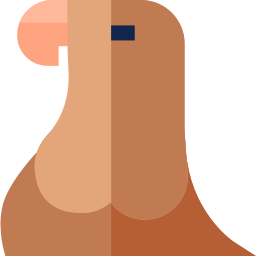
atmaca
If he had studied ornithology, he would be able to identify that bird as a hawk now.

arduous
zorlu
If she had not taken on such an arduous task, she would have more energy now.
If he had been more meticulous with his work, he would be enjoying a promotion right now.
İşinde daha titiz olsaydı, şu an terfisinin tadını çıkarıyor olurdu.
If she were more proactive, her success would have been contingent on her hard work and dedication.
Daha proaktif olsaydı, başarısı sıkı çalışmasına ve azmine bağlı olurdu.
vibrant
enerjik
If she were more outgoing, she would have made a vibrant speech at the conference last week.
Bu kursun *sonuna* geldik! Umarım bu size yardımcı olmuştur!
*IELTS sınavınızda iyi şanslar!!!*

Break a leg!
Şeytanın bacağını kır!
I have a big audition tomorrow." "Break a leg!