
Intermediate Korean Verbs and Grammar
Explanations and vocabulary practice

Sections: 15
Save words from this page and practise them with flashcards in DuoCards. How does it work?
In this course, we we will learn a bit about more difficult grammatical concepts, to help us make better sentences!
Let´s start!








In Korean, we can describe a continuous state of activity with the - 고 있다 grammar, which we simply add to the stem of an action verb (an activity!), and then we conjugate the 있다 at the end.
Sentences created with this grammar are similar to English sentences with verbs ending in -ing, e.q. I'm currently working, let's talk later.









Confirmation - 죠?
The next grammar to learn is the confirmation verb ending 죠. We can compare sentences ending with 죠 to English sentences ending in ..., right?, where we assume that the person we´re talking to should already know this information.
The grammar is added, again, to the stem of the verb, and can be used both in declarative, and interrogative types of sentences.









The Korean 그리고, which can be also shortened to -고, and added to the stem of a verb, can be used to express the word and, thus creating a compound sentence of more than one verb.
그리고 is used at the beginning of a new sentence, however, where the second half of the compound sentence would otherwise be.
Let´s look at the two different forms in example sentences ahead!




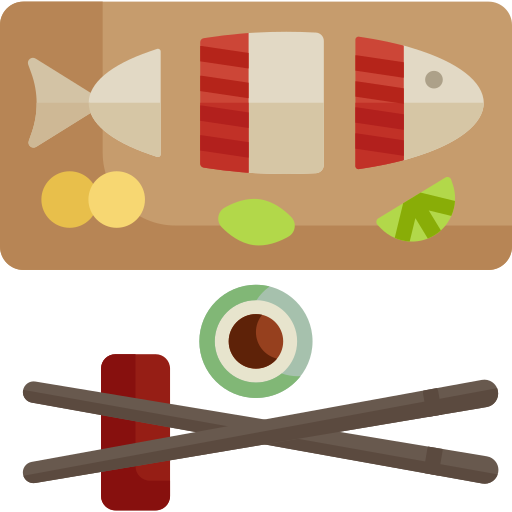





The following grammar is used to describe a means of activity - for example:
How did you travel? = BY train. How did you eat the food? = WITH chopsticks. etc.
It can also be used to describe what job someone currently has:
I work as a doctor = 저는 의사로 일해요..
Here you only need to attach the grammar to the job name.
Let's better show ways to use this grammar in example sentences!












The word 그래서 can be used to form a compound sentence, where the first half is a reason for what has happened in the second half of the sentence.
It is most often used in a shortened version: -서, which is attached to basically a conjugated version of the verb - the biggest difference with 그리고, which is added to the original stem unchanged.
For example:
하다 > 해서
마시다 > 마셔서
가다 > 가서











The grammar 자 can be added to the verb stem at the end of the sentence, making it into a suggestive sentence. A rough translation of the grammar 자 can be Let's do .....(the verb). So naturally, it can only be used with action verbs to describe suggestions of activities.









The ending grammar -잖아요 can be attached to the verb stem to indicate, that the information you are saying should be obvious to the listener! The meaning we are trying to convey is something like You know that ---- this happened/is this way, already!
It is also possible to use this with past, or future conjugated forms of the verb,
like so: 하다 - 하잖아요 - 했잖아요 - 할 거잖아요, or 하겠잖아요










Our next task is learning how to express a need to do an activity, that someone has to (or should) do a task. This is done through the 아/어/여야 하다 grammar, which again is connected to the verb in a conjugated form, e.q.:
하다 - 해야 하다
마시다 - 마셔야 하다
굽다 - 구워야 하다
etc..
Afterward, all we need to do is conjugate the verb 하다 at the end into the wanted tense (or add additional grammar, as we wish).










The particle -(으)면 indicates the if condition in a sentence, we can use it by attaching it to a verb stem in a sentence. The first clause describes the condition, the second clause describes the result.
e.q.: 가게에 가면 옷을 살 수 있어요.
If you go to the store, you can buy clothes.













The grammar - 도 되다 can be attached to a conjugated verb to form a sentence expressing to be able to do something. Then we must conjugate the verb 되다 into the appropriate tense.
The meaning contained in the grammar is similar to be allowed, be permitted, be able to,....












The grammar (으)면 안 되다 can be used to form sentences expressing something is not allowed, forbidden, or preferred not to be done. We can simply attach the grammar (the same way as the particle -면) to a verb stem (of the not allowed activity), and afterward conjugate the verb 되다 at the end.










Another method of expression is by using the verb 금지되다, which means to be forbidden, or 가능하다, which means to be possible!
Let's practice using these verbs along with our grammars.







That's it for this chapter, congratulations on learning 11 new grammars, let´s try on more example sentences for each of them before we close up!
The grammars were:
-고 있다
-죠?
그리고
-(으)로
그래서
-자!
-잖아요
-야 하다
-(으)면
-도 되다
-(으)면 안 되다









Thank you for your participation in the course, see you in the next one!




Learning with DuoCards
What is DuoCards?
DuoCards is a language-learning app that helps you build vocabulary with flashcards. You can save words you want to learn and practise them over time.
How do I learn with this course?
Browse the explanations and vocabulary in each section. Select Card picker and choose the words you want to learn. Then create a free account to save your words and practise them.
How do I practise my words?
You'll see a flashcard with a word and a hidden translation. Guess what it means, then tap to check your answer. DuoCards repeats the words you find difficult.
Do I need an account, and is learning free?
You can browse this page without an account. A free account lets you save words and track your progress. The free plan has limits, and Premium offers additional features.