
Intermediate Course
Explanations and vocabulary practice
Sections: 19
- Welcome to the Intermediate Course!
- Phrasal Verbs
- Types of Adverbs for intermediate level
- Linking verbs
- Comparative adjectives with adverbs
- Past simple
- The different uses of get
- Common phrasal verbs with get
- Cause and Effect
- What comes after a verb?
- More rules
- Hate, like, love, and prefer
- Transitive or intransitive
- Say vs tell
- English can be exciting!
- Prepositional phrases
- Should
- Like or as?
- Wishes about the present or future
Save words from this page and practise them with flashcards in DuoCards. How does it work?
This course will take you one step closer to feeling confident in English! We’ll learn how to compare adjectives, talk about the past, explore phrasal verbs and much more.
But before we get to it, let’s warm up with a few useful words and phrases.










Have you come across phrasal verbs already? Let's take a look at them together!
A phrasal verb is a phrase that has a special meaning. Phrasal verbs have a main verb and another word that is usually either an adverb or a preposition.
For example:
to put on means to get dressed
to work out means to exercise















Adverbs are structures that modify verbs, adjectives, phrases, and other adverbs. Let us examine some of the most common and useful adverbs below!











Linking verbs are verbs that don’t show an action but rather describe the subject. While verbs like walk or jump represent an action, linking verbs like be or seem add more details to the subject, such as he seems nice or she is an architect.






You can use adverbials such as slightly, much, a lot before a comparative adjective. That means you can be more subtle in the comparisons you can make.
The prices are slightly higher than they were last year.
Those who start early will have a much better chance of meeting their goals.
The task is a lot easier than it sounds.
Notice that much better is followed by a noun, however, it can also stand on its own.







As you already know, with most verbs, the past tense is formed by adding –ed:
call - called
like - liked
However, there are a lot of irregular past tense forms in English. You need to remember these.
to get - got - gotten
to break - broke - broken
to bring - brought - brought
catch - caught - caught
to drive - drove - driven
to eat - ate - eaten
forget - forgot - forgotten
to think - thought - thought
to know - knew - known
to speak - spoke - spoken
to understand - understood - understood
forbid - forbade - forbidden










The verb get can seem quite confusing for most English students. You can hear native speakers use it in almost every conversation.
The most common meanings of this verb are the following:
1. Obtain/buy
I need to get some files from the archives.
We must get some milk. There isn’t any left.
2. Take
She gets the train to work every day.
We can get a cab back to the hotel.
3. Receive
Did you get my email yesterday?
She got a beautiful necklace for her birthday.
4. Become
It’s getting colder. Put on your jacket.
You can get better at English by practicing.
5. Arrive
They left at 4:30 and got home at 5:30.
When do you think you’ll get here?
6. Understand
I didn’t get what he said. Did you?
He got the joke but I didn’t.
7. Make something happen
You should get your hair cut. It’s really long.
We’re getting the car checked before our holiday.





There are quite a few phrasal verbs with get that you already know and use without even thinking about it.
For example:
What time do you get up?
Get up means to leave your bed in the morning.
Let’s have a look at some of the most important phrasal verbs with get.






Let's look at some words and phrases that help you join two ideas together. We often use expressions such as because, since, due to, as, thanks to, therefore, so to talk about cause and effect.
Note, that there's a difference between due to and thanks to.
Thanks to has a positive connotation.
Due to is more neutral - it can have both a negative and a positive connotation.






There are many verbs in English and there are many different patterns for what comes after a verb.
Some common patterns are:
Verb + infinitive with to
I decided to take the car to work.
He offered to cook dinner.
Verb + -ing form
It took years but I've finally quit smoking.
After she finished reading the book she turned off the light and went to sleep.
Verb + (that) clause (You can leave out that.)
I understand that you weren't happy with your pay rise.
I suggest that you try the salmon, it's delicious.











Some verbs have different meanings depending on whether they are followed by an -ing form or to + infinitive.
For example:
Stop + -ing means the action is not happening anymore.
Stop + to + infinitive means that someone or something stops an activity so that they can do something else.
I've stopped buying the newspaper because now I read the news online.
He stopped the video to ask the students some questions.











We can use hate, like, love, and prefer with an -ing form or with a to-infinitive.
In American English, the forms with to-infinitive are much more common than the -ing form.
There is a very small difference in meaning between the two forms. The -ing form emphasizes the action or experience. The to-infinitive gives more emphasis to the results of the action or event.
We often use the -ing form to suggest enjoyment (or lack of it), and the to-infinitive form to express habits or preferences.
The -ing form is more common than the to-infinitive form after hate and love.
When we use would with hate, like, love, or prefer, we use the to-infinitive, not the -ing form.









Some verbs always need an object. These are called transitive verbs. Some verbs never have an object. These are called intransitive verbs.
Some verbs can be used with an object (transitively) or without an object (intransitively). Sometimes the meaning is the same.
For example: Please bring coffee. - In this sentence, the verb bring is transitive; its object is coffee, the thing that is being brought.
The sun is shining. - In this sentence, the verb shine is intransitive, it doesn't require an object for the sentence to make sense.












The most important difference between say and tell is that with say, you don’t need to mention who the ideas or information were shared with, but with tell, you do. For example:
Amy said that she likes coffee.
Amy told me that she likes coffee.


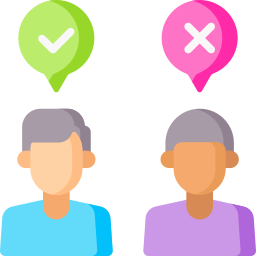

Adjectives ending in -ed express how the subject feels. The subject himself has such a feeling, that something affects him. On the other hand, adjectives ending in -ing say that the subject causes a given feeling in the environment and that others feel that way because of it.
In other words, you can say:
The teacher is boring. and We are bored because of him.




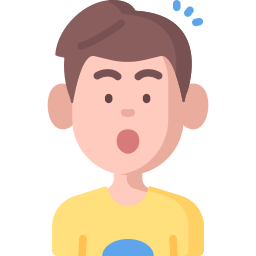


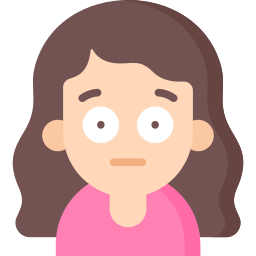

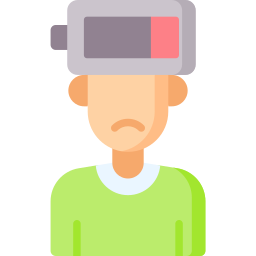


A prepositional phrase is a group of words consisting of a preposition, its object, and any words that modify the object. Most of the time, a prepositional phrase modifies a verb or a noun.
For example:
He arrived in time.
Are you going by bicycle or on foot?




Should is a modal auxiliary verb. We use it mainly to:
give advice or make recommendations: You should get a haircut.
talk about probability and expectation: They should arrive soon.
talk about obligation: You should be wearing your seat belt.





As and like are often confused since they can both be used for comparisons.
Most of the time, like compares two things.
He looks like my brother.
Frequently, as can be replaced by the way.
He can’t play cricket as he used to. ( He can't play cricket the way he used to.)









We can use to wish to talk about something that we would like to be different in the present or the future. We use wish + past simple:
I wish I spoke Italian.
I wish you were here.
I wish I had a big car.







Learning with DuoCards
What is DuoCards?
DuoCards is a language-learning app that helps you build vocabulary with flashcards. You can save words you want to learn and practise them over time.
How do I learn with this course?
Browse the explanations and vocabulary in each section. Select Card picker and choose the words you want to learn. Then create a free account to save your words and practise them.
How do I practise my words?
You'll see a flashcard with a word and a hidden translation. Guess what it means, then tap to check your answer. DuoCards repeats the words you find difficult.
Do I need an account, and is learning free?
You can browse this page without an account. A free account lets you save words and track your progress. The free plan has limits, and Premium offers additional features.