Elementary Japanese
Explanations and vocabulary practice

Sections: 17
- Welcome to the Elementary Japanese course!
- See you!
- Nice to meet you!
- How do I make a sentence?
- Introducing a topic
- Questions
- Possessive and connective particle
- May I?
- Pointing words
- Me too
- Negation
- Verb conjugation - Present tense
- Particles of movement, time, direct objects, and place
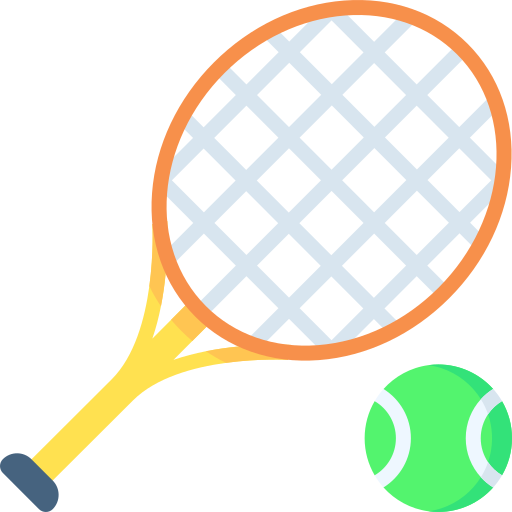
- Shall we play tennis?
- Frequency adverbs
- Having, being.
- Verb conjugation - past tense
Save words from this page and practise them with flashcards in DuoCards. How does it work?
Japanese is a very complex language. It is good to study it step by step to understand how the whole language structure works. In this course, we introduce Greetings, Basic sentence structure, how to ask for things, and how to make suggestions.
Greetings
Do you know how to say Hello or Good morning in Japanese?
Let's learn basic greetings for everyday communication!
In Japanese, we call them あいさつ - aisatsu which means greeting.










In Japanese, there are special phrases we use when leaving or entering:
いってきます literally means I will go and come back. It consists of two verb いく go and くる come.
The literal meaning of いってらっしゃい is Please go and come. This is a response to Off I go.
We use しつれいします when entering or leaving a place (e.g. an office). We can also use it when we end a phone call. Literally, it means Excuse me.
There is a special phrase we use before and after meals as well:
We use いただきます before eating. いただく is a humble form of to receive.
After the meal, you say ごちそうさまでした to show appreciation towards the person who prepared the dish for you and the meal you ate.




Let's learn some basic phrases for self-introduction!
In Japanese, it is called じこしょうかい.
We always use はじめまして at the beginning before we start introducing ourselves. Literally, it means Let me introduce myself.
We say よろしくおねがいします after finishing our self-introduction. Do not forget it, otherwise, your communication partner will be still waiting to hear more from you :)
Depending on the situation よろしくおねがいします can be also used when asking someone (for help, a favor, etc).






Let's look at the basic sentence structure.
Sentences like I am Japanese, It is 9:00 or My brother is at high school will be translated into Japanese using the desired noun and the word です which can be translated as (it) is.
! In Japanese, verbs are always at the end of the sentence !
Note that many sentences in Japanese do not have a subject. Subjects can be omitted whenever it is clear to the speaker what or who they are referring to.






If we want to specify what or who we are talking about, we attach the particle は wa behind the word or phrase we want to talk about. Particle wa indicates a topic.
We will learn about particles later but in general, particles are attached to words or phrases and indicate how these phrases relate to the rest of the sentence.
We always give a few example sentences but feel free to make your own with the words you know! :)






Let's learn how to make a question! It is very easy since you already know how to make sentences with です.
Here we will learn a new particle か ka. To make a question you just add ka at the end of a sentence. See? I told you, it's easy! :)
You can extend your questions with a question word なん (what).
Try to answer these questions!










Let's learn new particles!
Particle の - No connects two nouns. It can act like a possessive, showing ownership, and more generally, as a way to turn any noun into a modifier. Particle の is very versatile.
Particle と has two functions:
One is to connect two nouns meaning and.
Second means with.
See the example sentences to explore other alternatives.












When asking for something, there are two possibilities with the same meaning.
1. (を) ください
2. (を) おねがいします
They both mean Please or May I.
When giving something you say (を) どうぞ There you go
We also included some phrases of how to say that you did or did not understand.









How to say this, that, here or there? Let's look at it together!
First, we introduce pointing words that we use when talking about things that we don't know the names of:
これ this thing here, meaning a thing that is close to you
それ that one, meaning a thing that is close to the communication partner
あれ that one over there, a thing that is neither close to the speaker nor the listener
どれ which
If we want to be more specific, we can use この, その and あの.
Unlike kore, sore and are which always stand alone, these words have to be followed by a noun!
The logic is the same for here, there and over there:
ここ here
そこ there
あそこ over there
どこ where














Time for another particle!
Particle も means too.
It indicates, that that item or person, too, has the given property. We use it instead of the particle は.
Let's have a look at some examples!









We learned how to say (it) is by using です.
To negate a statement we use ではありません instead of です at the end of a sentence. Another alternative is じゃありません.









Here we learn how to conjugate Japanese verbs.
Is it important to keep in mind that there are two categories of verbs that follow regular conjugation patterns. Ru-verbs and u-verbs. It is important to distinguish between them!
First, let's have a look at ru-verbs:
An example verb can be みる miru (dictionary form).
We call them ru-verbs because you add the suffix ru to the verb base (mi, in the above example) to form the dictionary form.
To make a present-tense affirmative form, we add the suffix ます masu to the verb base. Mi-ru = Mi-masu
To make the present-tense negative form, we add the suffix ません masen to the verb base. Mi-ru = Mi-masen
The second category are U-verbs - verbs that end with u:
They are a bit trickier because you add an extra vowel i when you conjugate them. But do not worry, we will show you how to do it!
The dictionary form of an u-verb like のむ nomu can be broken down into the base (nom) and the suffix u.
The long forms like のみます and のみません, then, are formed with the base form plus suffixes imasu and imasen.
Try to make an affirmative or negative from the given verbs!
In Japanese, there are two irregular verbs:
する Affirmative is します, negative is しません
くる Affirmative is きます, negative is きません















Let's learn more particles so we can build sentences with the verbs we learned!
Nouns used in sentences generally must be followed by particles, which indicate the relations that the nouns bear to the verbs.
Particle で indicates where the event described by the verb takes place.
Particle に has many meanings. Here we will learn it as:
1) a goal toward which things move
2) the time at which an event takes place
Particle へ indicates the goal of movement. It can be replaced with に and vice-versa.
Particle を indicates direct objects, the kind of things that are directly involved in, or affected by, the event.











How do you ask someone to go to a cinema with you?
We use 〜ませんか if we want to give a suggestion.
It is made from the present tense negative verb plus the question particle.





Time for some frequency adverbs!
We use the adverbs below with affirmative.
ときどき sometimes
よく often
まいにち every day
These adverbs have to be used with a negative verb at the end!
あまり not much
ぜんぜん not at all, never







How would you say you have a sister, or a TV in your room?
Depending on whether you are a person, an animal or a non-living thing, the following rules apply
ある For non-living things, it is to have/to be.
いる For living things, to have/to be
Both verbs are used with a particle.








Last time we learnt about conjugation in the present tense, this time we will look at conjugation in the past tense.
The past tense looks like this, where ~ is the stem of the verb
Affirmative - I did (present tense - I do)
Negative - I didn't (present tense - I didn't)








Learning with DuoCards
What is DuoCards?
DuoCards is a language-learning app that helps you build vocabulary with flashcards. You can save words you want to learn and practise them over time.
How do I learn with this course?
Browse the explanations and vocabulary in each section. Select Card picker and choose the words you want to learn. Then create a free account to save your words and practise them.
How do I practise my words?
You'll see a flashcard with a word and a hidden translation. Guess what it means, then tap to check your answer. DuoCards repeats the words you find difficult.
Do I need an account, and is learning free?
You can browse this page without an account. A free account lets you save words and track your progress. The free plan has limits, and Premium offers additional features.