Basic course IGerman words
by DuoCards
*Meine Familie!*
German families are generally small - typically, parents will have one or two children. Let's learn some new vocabulary so you can describe your own family in German!
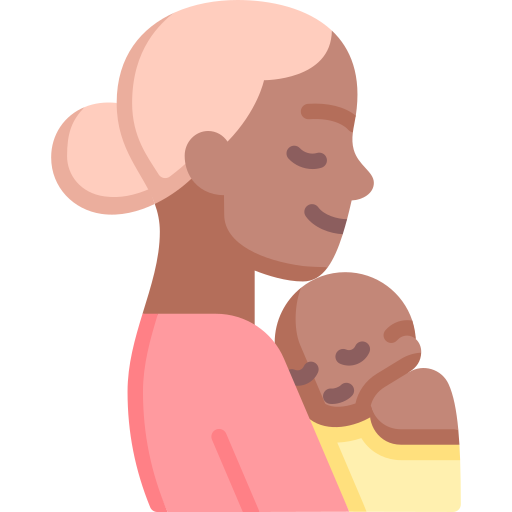
die Mutter
the mother
Meine Mutter heißt Tatiana.

der Vater
the father
Mein Vater arbeitet als Lehrer.

die Eltern
the parents
Meine Eltern sind geschieden.
Hast du Geschwister?
Do you have any siblings?
Ich habe Geschwister

Ich habe keine Geschwister.
I have no siblings.

die Schwester
the sister
Meine Schwester ist jünger als ich.

der Bruder
the brother
Hast du einen Bruder?
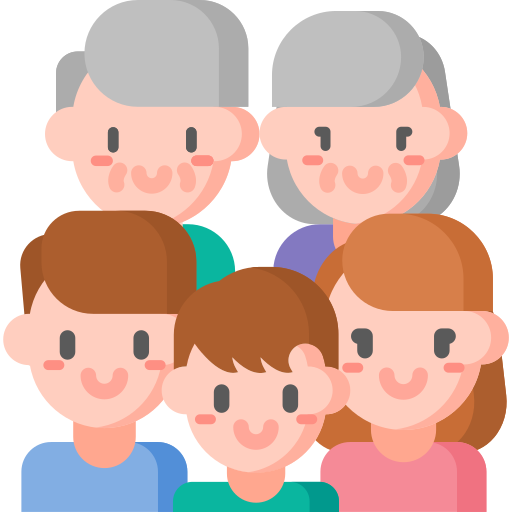
Meine Familie ist groß.
My family is big.
Meine Familie ist groß und laut.

das Einzelkind
the only child
Ich bin ein Einzelkind.
*You are a German student!*
You are your profession! In English, we say *I am an actor*, but in German, we just say *I am actor*. For example: "Ich bin Lehrerin."
Remember that all professions in German have a male and a female version. The female ones end with *-in*!
"der Kellner"
"die Kellnerin"
"der Schauspieler"
"die Schauspielerin"

Ich bin Verkäufer.
I am a salesman.
Er ist ein guter Verkäufer.

der Arzt / die Ärztin
the doctor
Der Arzt verschreibt Medikamente.

Meine Mutter ist Ärztin.
My mother is a doctor.
Ich bin stolz auf meine Mutter, weil sie Ärztin ist.
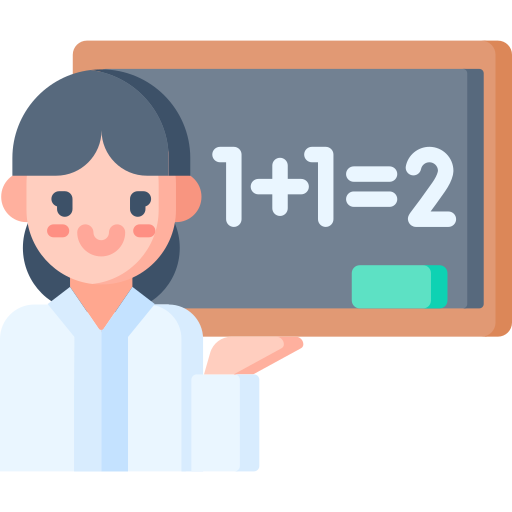
der Lehrer / die Lehrerin
the teacher (m) / the teacher (f)
Die Lehrerin gibt Deutschunterricht.

Sie ist Lehrerin.
She is a teacher.

der Kellner / die Kellnerin
the waiter / the waitress
Die Kellnerin ist sehr lieb.

Er ist Kellner.
He is a waiter.
Der Kellner bringt uns das Essen.

der Beruf
the job
Was bist du von Beruf?
Was machst du beruflich?
What do you do for a living?
Ich bin Lehrer.
*Eins, zwei, drei, let's go!*
How many days are in a week? How many people are in your family? How many apples are in your kitchen?
1 "eins"
2 "zwei"
3 "drei"
4 "vier"
5 "fünf"
6 "sechs"
7 "sieben"
8 "acht"
9 "neun"
10 "zehn"

Ich habe zwei Brüder.
I have two brothers.

Sie hat eine Schwester.
She has a sister.

Ich bin zehn Jahre alt.
I am ten years old.

die Sprache
the language
Ich spreche drei Sprachen.
Ich komme um sieben.
I'm coming at seven.
Ich komme um 7 Uhr.

drei Äpfel
three apples
Ich habe drei Äpfel.

Meine Mutter hat drei Äpfel.
My mother has three apples.

um vier Uhr
at four o'clock
Ich komme um vier Uhr.
die Woche
the week
Ich arbeite fünf Tage in der Woche.
*Wie ist das Wetter?*
Like in English, use "es" to talk about the weather. For example: "Es ist warm."
No matter the weather, *verbs* in a statement stay in second position. But words about *when* something happens can go at the beginning, the end, or right after the verb!
"Heute ist es kalt."
"Es ist heute warm."
"Es ist sonnig heute."

Wie ist das Wetter?
What is the weather like?

die Sonne
the sun
Die Sonne scheint.

Die Sonne scheint.
The sun is shining.

bewölkt
cloudy
Heute ist es bewölkt.

Es ist bewölkt.
It is cloudy.

Heute ist es kalt.
It's cold today.

es regnet
to rain
Regnet es hier oft?

Regnet es hier oft?
Does it often rain here?

schneien
to snow
Es schneit heute.

Es schneit heute.
It is snowing today.
*Akkusativ AKA der vierte Fall*
German has four cases. Let's take a look at the *accusative!*
In English, we say *He* likes me, but I like *him*. *He* becomes *him* because of the role it plays. German does the same thing with words like "ein" and "mein"!
"Ich habe einen Bruder."
When something is on the receiving end of an action - being loved, being seen, etc. - the word is put in the accusative case.
"Ich liebe meinen Mann."
*The good news* is that in the accusative, only *masculine* words change form. Others stay the same!
"Ich sehe meine Mutter im Laden."
"Er wäscht sein Auto regelmäßig."

Ich sehe einen Hund.
I see a dog.

Ich sehe meinen Bruder.
I see my brother.

kaufen
to buy
Ich kaufe acht Äpfel.

Er kauft ein Auto.
He buys a car.

Sie kaufen einen Tisch.
They buy a table.

nehmen
to take
Was nimmst du?

Mein Freund nimmt die Sachen.
My friend takes the things.

Nehmen Sie den Koffer?
Are you (formal) taking the suitcase?

Nimmst du meine Tasche?
Will you take my bag?
*Lernen oder studieren?*
In English, you can study a language, study for an exam, or study at a university. In German, use the verb "lernen" to express the first two meanings. When you use the verb "studieren", it means *to be a university student*.
Ich lerne Deutsch.
I study German.

Was studierst du?
What do you study?

Ich studiere Ökonomie.
I study economics.

an der Universität
at the University
Ich studiere an der Universität.

Sie studieren an der Universität.
They study at the university.

viel lernen
learn a lot
Ich lerne viel.
die Prüfung(en)
the exam
Ich lerne für die Prüfung.

Er lernt für die Prüfung.
He is studying for the exam.

Ich lerne gern.
I like to learn.
*Living in the present*
In German you use the same *verb* form for things you do habitually and things you're doing right now.
"Ich lerne viel." - I learn a lot.
"Ich lerne jetzt." - I'm learning now.
Use the word "jetzt" to describe that something is happening right now.

Jetzt esse ich die Suppe.
Now I'm eating the soup.

Ich esse gern Pizza.
I like to eat pizza.
Ich habe gestern eine leckere Pizza gegessen.

Sie kauft viel Obst.
She buys a lot of fruit.

Was machst du jetzt?
What are you doing now?

Wie oft?
How often?
Wie oft machst du das?

Wie oft lernst du?
How often do you study?

in der Regel
usually
In der Regel gehe ich um 10 Uhr ins Bett.

Lernst du jetzt?
Are you studying now?

jeden Tag
every day
Ich lerne jeden Tag Deutsch.
*Would you like a cup of tea?*
Be polite and use the verb "möchten" to ask someone what he or she would like or to describe what you would like to do. The second verb always comes at the end!
"Ich möchte heute ins Kino gehen."
"Möchtest du etwas zum Trinken?"

Möchten Sie einen Kaffee?
Would You (formal) like a coffee? (Akkusativ)

Ich möchte
I would like
Ich möchte eine Tasse Tee.

Ich möchte etwas essen.
I would like to eat something.

Möchtest du ...
Would you like
Möchtest du etwas essen?
etwas zum Essen
something to eat
Möchtest du etwas zum Essen?
das Wort
the word
Ich möchte neue Wörter lernen.
Was möchtest du machen?
What would you like to do?

mitgehen
go together
Gehst du mit mir?

Willst du mit ihr gehen?
Do you want to go out with her?

Wir möchten schon gehen.
We already would like to go.
*Wo or Wohin?*
Let's learn some local prepositions! With countries and cities, you only need to know three prepositions: "in", "aus" and "nach". Plus, you don't need any article! Well, except for a few countries.
When you want to answer a *Wo-question*, use the preposition "in".
"Wo bist du heute?" - "Ich bin heute in Prag."
"Wo arbeitest du?" - "Ich arbeite in Berlin."
When you want to answer a *Wohin-question*, use the preposition "nach".
"Wohin reist du morgen?" - "Ich reise morgen nach Prag."
When you want to answer a *Woher-question*, use the prepositio "aus".
"Woher kommst du?" - "Ich komme aus England."

nach
to
Wir fahren nach Spanien.
hinfahren
drive to
Wann fährst du hin?

nach München
to Munich
Ich möchte nach München fahren.

der Urlaub
the holidays
Ich mache dieses Jahr einen Urlaub in Spanien.

Griechenland
Greece
Wir machen einen Urlaub in Griechenland.
Kroatien
Croatia
Wir fahren jedes Jahr nach Kroatien.

jeden Sommer
every summer
Wir verbringen jeden Sommer in Spanien.

verbringen
spend
Ich verbringe viel Zeit in Berlin.
Italien
Italy
Warst du schon mal in Italien?
*Countries + definite articles*
Some countries take on *definite articles* when talking or writing about them.
*DIE*: "die Schweiz", "die Türkei", "die Slowakei"
*DER*: "der Iran", "der Irak", "der Libanon", "der Sudan"
*PLURAL*: "die Vereinigten Staaten", "die Niederlande"
Note, that the definite article changes depending on the question.
"Wo wohnst du?" - "Ich wohne in der Schweiz." (dative)
"Wohin reist du?" - "Ich reise in die Schweiz." (accusative)
"Woher kommst du?" - "Ich komme aus der Schweiz." (dative)

die Schweiz
Switzerland
Ich fahre morgen in die Schweiz.

Ich wohne in der Schweiz.
I live in Switzerland.

Ich komme aus der Türkei.
I come from Turkey.

die Vereinigten Staaten
the United States
Wir fliegen im Sommer in die Vereinigte Staaten.

das Meer
the sea
Die Türkei hat ein Meer.

Wohnt er im Iran?
Does he live in Iran?
die Niederlande
the Netherlands
Ich verbringe den Sommer in den Niederlanden.

unterwegs sein
be on the way
Sie ist ständig unterwegs.

Reist du viel?
Do you travel a lot?
*Umlauts are back!*
In German, some verbs with *a or* *au*, such as "laufen" and "fahren", are given an *umlaut* when they are combined with "du" or "er", "sie".
"Wir fahren morgen nach München, aber er fährt schon heute."
Note that the verb "laufen" can be translated both as *run* and as *walk*.
A: "Ich fahre mit dem Auto zur Arbeit."
B: "Ich nicht, ich laufe lieber."
Fährst du mit?
Are you going with me?

Er fährt zurück.
He drives back.
Wir müssen jetzt zurückfahren.
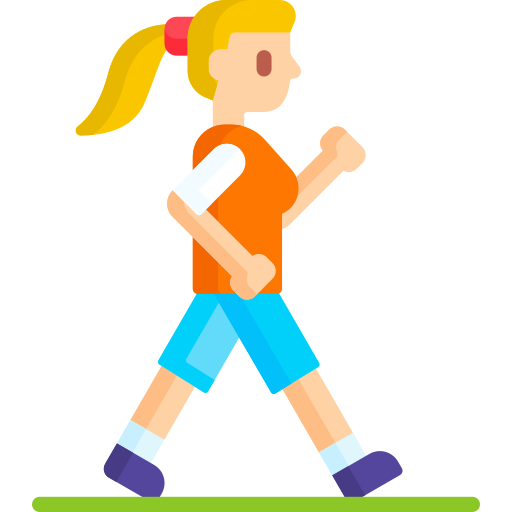
Ich laufe
I walk / I run
Ich laufe zur Bushaltestelle.
Sie geht zum Bahnhof.
She walks to the station.

Wie läuft es?
How's it going?
wie geht es dir

lassen
to let / to leave
Lass mich bitte in Ruhe.
Ich lasse mich überraschen.
Er lässt es sein.
He lets it be

Sie lässt es dich wissen.
She lets you know.
Ich lasse dich wissen, wenn ich fertig bin.
*Do you usually go by car?*
No matter what means of transport you decide to use, in German, you always need the preposition "mit". Note that "mit" goes always *with the Dative!*
"Ich fahre heute mit dem Auto."
"Fährst du lieber mit dem Zug?"

der Zug
the train
Fahren wir mit dem Zug?
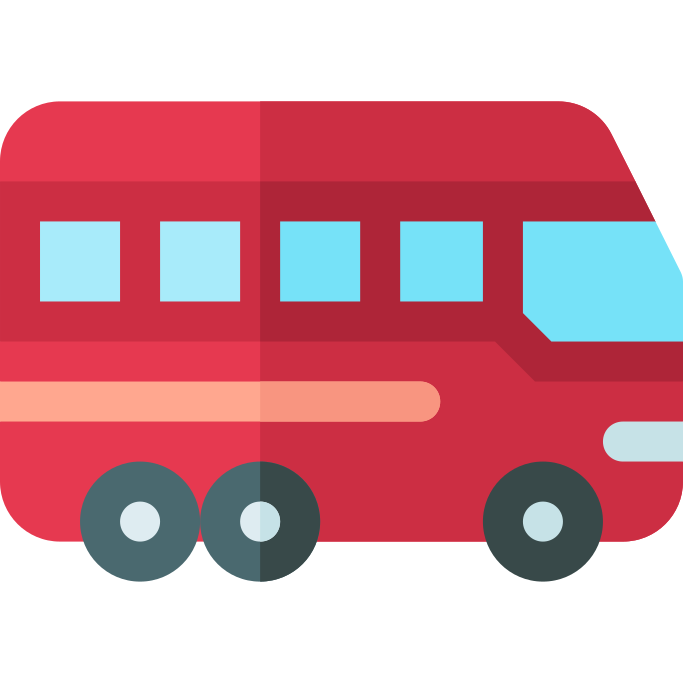
der Bus
the bus
Ich fahre zur Schule mit dem Bus.

mit
with
Mit welchem Verkehrsmittel?

das Verkehrsmittel
means of transport
Welche Verkehrsmittel gibt es hier?
mit dem Auto
by car

fliegen
to fly
Er fliegt mit dem Flugzeug.

die U-Bahn
the subway
Die U-Bahn ist schneller als der Bus.
das Fahrrad
the bike
Ich fahre überall mit meinem Fahrrad.
*The dog is he!*
In English, we say *he* or *she* for people, but use *it* for objects. But in German, everything (both living and nonliving) is described as "er", "sie", or "es"! The *pronoun* you use depends on the *gender* of the noun.
"Der Tisch ist braun." - "Er ist braun."
"Die Katze ist klein." - "Sie ist klein."
*It's time to learn some new verbs!*
In German, some verbs consist of two parts. In the *infinitive*, the two parts stay together as one word, but usually, you have to separate them, that's why they're called "trennbare" verbs.

Ich hole dich ab.
I'll pick you up.
Kannst du mich nach der Schule abholen? - Ja, ich hole dich ab.

abholen (etwas/jemanden)
to pick up (something/someone)
Ich hole das Paket bald ab.

einladen
to invite
Ich lade euch zu meiner Geburtstagsparty ein.
Sie lädt mich ein.
Lädst du mich ein?

Sie lädt mich ein.
She invites me.

Lädst du mich ein?
Are you inviting me?

mitnehmen
to take (something with you)
Nimmst du bitte die Tasche mit?

Ich nehme alles mit.
I take everything with me.
Nimmst du dein Handy mit?
Do you take your mobile phone with you?
aufstehen
stand up / get up
Ich stehe um 7 Uhr auf.
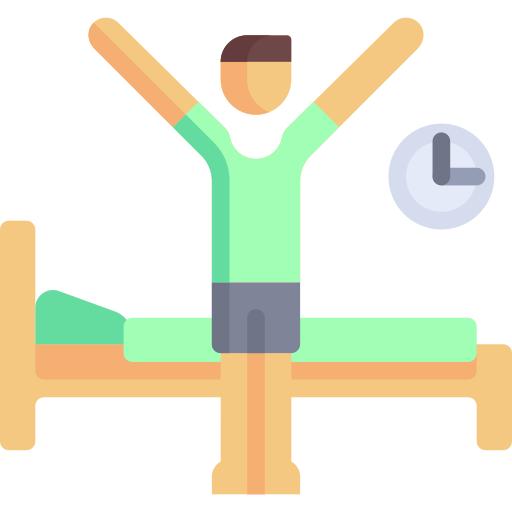
Ich stehe früh auf.
I get up early.
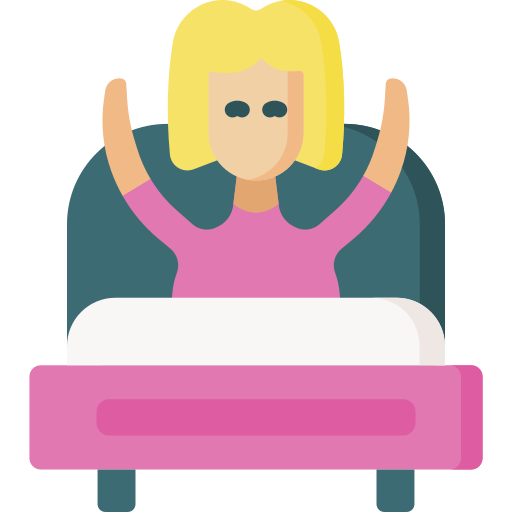
Wann stehst du auf?
when do you get up?
*What does your typical day look like?*
In German, we use the word "Tagesablauf" to talk about our daily routines. Let's learn some temporal adverbs, so you can say, what you usually/often/sometimes or never do!

Ich putze immer meine Zähne.
I always brush my teeth.
immer
always
Du kommst immer zu spät!

Fährst du immer mit dem Auto?
Do you always go by car?

oft
often
Ich räume oft in meinem Zimmer auf.

von zu Hause
from home
Ich arbeite oft von zu Hause.

selten
rare
Mein Vater kocht nur selten.
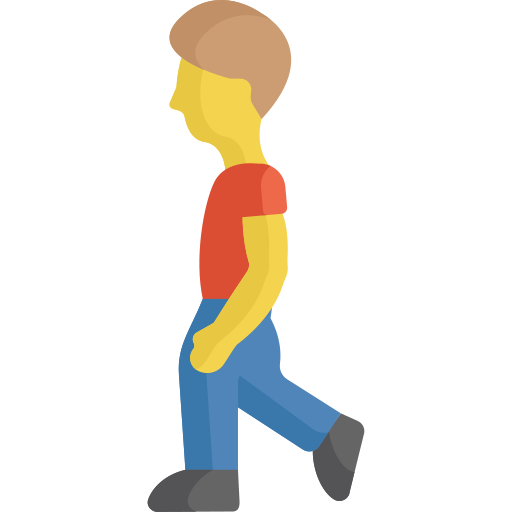
Ich gehe selten zu Fuß.
I rarely walk.

ab und zu
from time to time
Ab und zu regnet es hier.

Ich koche ab und zu.
I cook from time to time.

nie
never
Es ist nie zu spät.

Sie isst nie Fleisch.
She never eats meat.
*Can you do that?*
It's time to learn some modal verbs! Modal verbs are usually accompanied by another verb that expresses the action. In the present and simple past tenses, this other verb is an infinitive at the end of the sentence.
"Ich kann gut singen."
The present tense conjugation of modal verbs is irregular.
"können"
"ich kann"
"du kannst"
"er/sie/es kann"
"wir können"
"ihr könnt"
"sie/Sie können"
"müssen"
"ich muss"
"du musst"
"er/sie/es muss"
"wir müssen"
"ihr müsst"
"sie/Sie müssen"

Ich kann es machen.
I can do it.

du kannst
you can
Du kannst gut tanzen.

Kann er das machen?
Can he do that?

Können wir fernsehen?
Can we watch TV?

müssen
have to
Wir müssen gehen.

ich muss
I have to
Muss ich das machen?

Ich muss lernen.
I have to learn.

Wir müssen arbeiten.
We have to work.

Musst du gehen?
Do you have to go?
"Magst du mich nicht mehr?"
Another modal verb is "mögen". It's the only modal verb, that is regularly used *without an additional infinitive*. Remember, we use the word "gern" to say that we like *to do something*? "Mögen" is used to say that one likes something or someone, rather than liking *to do something*, so it doesn’t require a second verb to complete its meaning.
e. g. "Ich singe gern."
"Ich mag den Film."
"ich mag"
"du magst"
"er/sie/es mag"
"wir mögen"
"ihr mögt"
"sie/Sie mögen"

Ich mag dich.
I like you.

Magst du mich?
Do you like me?

Er mag uns.
He likes us.

Ich tanze gern.
I like to dance.

Kocht er gern?
Does he like to cook?

Magst du kein Fleisch?
Don't you like meat?

nicht mehr
no longer, any more
Ich kann nicht mehr.

Magst du mich nicht mehr?
Don't you like me any more?
*Will is not the future Will?!*
In English we use the word *will* to describe the future, but in German it is just a form of another modal verb! The infinitive form is "wollen".
"ich will"
"du willst"
"er/sie/es will"
"wir wollen"
"ihr wollt"
"sie/Sie wollen"
Note that the 1st and 3rd forms of modal *verbs* are always *the same*!

Willst du mitgehen?
Do you want to come along?

ich will
I want
Ich will etwas essen.

Ich will heute tanzen gehen.
I want to go dancing today.

Willst du noch etwas essen?
Do you want to eat something else?

wir wollen
we want
Wir wollen Spaß haben.

Willst du ins Kino gehen?
Do you want to go to the cinema?

sie will
she wants
Sie will etwas kochen.

Sie will immer schlafen.
She always wants to sleep.

Er will nach Hause gehen.
He wants to go home.
*When do we meet?*
Temporal prepositions are related to time and answer questions like "Wann?" and "Wie lange?".
Use "um" to talk about a precise time.
e. g. "Ich komme um fünf (Uhr)."
Use "am" to indicate days of the week and times of the day.
*But* "in der Nacht"
e. g. "Ich arbeite auch am Samstag."
"Wir kommen am Abend."
Use "von" / "bis" if you are talking about a period of time.
e. g. "Ich arbeite von acht bis vier."

Ich komme am Abend.
I'll come in the evening.

am Morgen
in the morning
Am Morgen habe ich immer Hunger.

Kommst du am Nachmittag?
Are you coming in the afternoon?
Kommst du am Nachmittag?

Am Nachmittag gehe ich nach Hause.
In the afternoon I go home.

Wann gehst du nach Hause?
When are you going home?
Wir beginnen um zwei.
We start at two.

Wann beginnt die Stunde?
When does the lesson start?
Gehst du um drei?
Are you leaving at three?

Er arbeitet von sechs bis zwei.
He works from six to two.

in der Nacht
at night
Es ist in der Nacht passiert.

Sterne leuchten in der Nacht.
Stars shine in the night.

Wie lange bleibst du?
How long are you staying?
Ich bleibe bis acht.
I'll stay until eight.
*Prepositions + Dative*
In English, all prepositions are … just prepositions. But in German there are *4 categories of prepositions* and one of those is *dative prepositions.* These prepositions require nouns in the dative case.
"aus" (from, out of)
"außer" (except for, besides)
"bei" (at, near, by)
"mit" (with, by means of)
"nach" (after, to, according to)
"seit" (since, for)
"von" (from, by, of, about)
"zu" (to)
"gegenüber" (across from)
Here is how the definite article changes in dative:
*die* changes to *der*
*der* changes to *dem*
*das* changes to *dem*

mit dir
with you
Ich gehe mit dir zur Schule.

bei mir
with me / at my place
Du kannst bei mir übernachten.

zum Arzt
to the doctor
Du sollst zum Arzt gehen.

der Bahnhof
the train station
Wir gehen zum Bahnhof.
aus dem Haus
from the house
Heute gehe ich nicht aus dem Haus.

dem Hotel gegenüber
opposite the hotel
Der Laden steht dem Hotel gegenüber.

nach der Arbeit
after work
Was willst du nach der Arbeit machen?

die Kindheit
the childhood
Seit der Kindheit möchte ich Schauspielerin werden.

außer dir
except you
Niemand außer dir versteht mich.

Von mir aus.
For all I care.
Von mir aus gerne!
*Perfekt*
German has two past tenses: *Perfekt* and *Präteritum*. In spoken German, the *perfect tense* is often used so let's take a look at how it works.
All *regular German verbs* have a basic past participle form based on the *third person singular form.* For example, the third person form of the verb "spielen" is (er) "spielt". Add the *ge-* prefix to that and you get the past participle: "gespielt." All regular verbs follow this same pattern.
To form the present perfect tense, you take the *past participle* and use it with an *auxiliary or helping verb* (usually a form of "haben", sometimes "sein").
"Ich habe gespielt." - I played.
"Wer hat es gesagt?" - Who said that?
"Wir haben gestern Pizza gemacht." - Yesterday, we made pizza.

Ich habe nichts gemacht.
I didn't do anything.

gestern
yesterday
Was hast du gestern gemacht?

wirklich
really
Hat sie es wirklich gesagt?

Was hast du gekauft?
What did you buy?
Was hast du im Supermarkt gekauft?
letzte Woche
last week
Letzte Woche haben wir das ganze Haus geputzt.

die Gemüsesuppe
the vegetable soup
Meine Mutter hat eine Gemüsesuppe gekocht.

vor einem Jahr
one year ago
Vor einem Jahr hat die Familie in Spanien gewohnt.

Das küssen
to kiss
Sie haben gestern zum ersten Mal geküsst.

Hast du etwas gelernt?
Have you learnt anything?
Hast du etwas neues gelernt?
*Irregular verbs*
Some verbs in German don't follow this simple pattern and you need to learn their past participle forms by heart. Let's start with the most used verbs!
"gehen" - "ist gegangen"
"fahren" - "ist gefahren"
"verstehen" - "hat verstanden"
"sehen" - "hat gesehen"
"essen" - "hat gegessen"
Have you noticed that we use the verb "sein" with the verbs that express *movement?*
If you want to learn more about the past tense, take a look at the *Past tense course*.

Hast du verstanden?
Did you understand?
Hast du mich gut verstanden?
zu Fuß gehen
to walk
Ich bin zu Fuß gegangen.

die Straßenbahn
the tramway
Wir sind mit der Straßenbahn gefahren.

bereits
already
Hast du bereits alles verstanden?

der Schlüssel
the key
Hast du meinen Schlüssel gesehen?

zum Frühstück
for breakfast
Was habt ihr zum Frühstück gegessen?

Er hat viel gearbeitet.
He has worked a lot.

klopfen
to knock
Jemand hat geklopft.
*What did you do yesterday?*
When the verb has a separable prefix, the *-ge* goes between the prefix and the stem of the verb.
"aufstehen" - "ist aufgestanden"
"anrufen" - "hat angerufen"
"abholen" - "hat abgeholt"
"mitnehmen" - "hat mitgenommen"
"einladen" - "hat eingeladen"
früh
early
Ich bin gestern früh aufgestanden.
spät
late
Wir sind zu spät aufgestanden.

frühstücken
to have breakfast
Was hast du gefrühstückt?

sich anziehen
to get dressed
Ich habe mich angezogen.

die Geburtstagsfeier
the birthday party
Er hat mich zu seiner Geburtstagsfeier eingeladen.

das Paket
the package
Hast du das Paket abgeholt?

der Personalausweis
the identity card
Haben Sie Ihren Personalausweis mitgenommen?

Wer hat angerufen?
Who called?