level 1Romanian words
by deboerivanka

fără
without
Băutura aceasta este fără zahar.
Băutura aceasta este fără zahar.
This drink is sugar-free.

o librărie
a bookshop
Caut o librărie.
I'm looking for a bookstore.
o librărie renumită
a famous bookstore
Nu pot să spun asta.
I can't say that.
să

a se supăra
to get angry, to mind
Am un ceas de mână.
I have a wristwatch.

desigur
of course, sure
un sfert
a quarter
Un sfert înseamnă douăzeci și cinci la sută.
A quarter means twenty-five percent.
jumătate
half
Primesc ajutor de la el.
I get help from him.
Aștept ajutor de la tine.
I'm waiting for your help.
Vă mulțumesc mult pentru ajutor.
Thank you very much for your help.
Ah, cred că închide la zece fără un sfert.
Ah, I think it closes at a quarter to ten.
Nu vă supărați, îmi puteți spune cât este ceasul?
No offense, can you tell me what time it is?
ceainărie
teahouse
din păcate
unfortunately

un avion
a plane

locuri
places
cu regret
regretfully

spre
to
spre București
însă / dar
but
Este ora nouă fără un sfert.
It is a quarter to nine o'clock. (formal)
Mâine mă trezesc la cinci și jumătate.
Tomorrow I wake up at half past five.
Sosim cu trenul la nouă fără un sfert.
We arrive by train at a quarter to nine.
nu te supăra
Excuse me (don't get angry)
Te superi dacă nu mergem azi?
Do you mind if we don't go today?
mereu
always
a ploua
to rain

o vară
a summer
Vara este timpul vacanţelor în familie şi a vremii calde.
Summer is the time for family holidays and warm weather.
zi călduroasă de vară
hot summer day
tabără / tabere
camp / camps
zi caldă
hot day

soarele
the sun
Este prea cald.
It's too hot.
un păcat
a sin
a fi senin
to be fair/ clear (weather)
La munte plouă des.
It rains a lot in the mountains.
Vorbește singur.
He talks to himself. (Lit. talks alone.)
să + fii (2nd pers. sg.) / fiți (2nd pers. pl.)
Să fii bun!
Be good!
Să exersați, da?
Practice, okay?
Să nu uiți de întâlnire.
Don't forget about the meeting.
is used when you want to express regret that something didn't go as planned.
Ce păcat!
That's a shame!

împreună
together
Nu-i is the contracted form of nu e.
Nu-i nimic.
Don't worry.
Nu-i nimic, nu mă deranjează.
Don't worry, I don't mind about it.
cer albastru
blue sky

o revistă
a magazine

un om
a man
Typical adjective word pattern:
word stem + suffix -ist / -os / -ic / -iv / -ar

El este optimist.
He is optimistic.
Tatăl tău este mărinimos.
Your father is generous.
Mi-a plăcut momentul artistic.
I enjoyed the artistic moment.

a lucra
to work

un suflet
a soul
destul de sever
harsh enough
mărinimos
generous
a ajunge
to arrive
Când ajungi la gară?
When do you arrive at the station?
Ai ajuns acasă cu bine?
Did you arrive home safely?

fiecare
every
programarea
the appointment

a (se) trezi
to awake up

a pleca
to leave
Noi plecăm în zece minute.
We leave in ten minutes.
Este prea devreme.
It's too early.

a lua
to take
Să luăm prânzul!
Let's have lunch!

înainte
before

după-amiază
afternoon
Acum este ora două după-amiaza.
Now it is 2 o'clock p.m.(in the afternoon).
Muncesc din greu ziua, aşa că mă relaxez seara.
I work hard during the day, so I relax in the evening.
asfinţit de seară
evening sunset
Seara este răcoare.
In the evening it is chilly.
Terenul de tenis este deschis și seara.
The tennis court is open in the evening, too.
GROUP I ends in -a (present simple tense)
(eu) exersez
(tu) exersezi
(el/ea) exersează / (ei/ele) exersează
(noi) exersăm
(voi) exersați
a exersa
"to practice
GROUP III ends in -e (present simple tense)
(eu) fac / (ei/ele) fac
(tu) faci
(el/ea) face
(noi) facem
(voi) faceți

a face
to do / to make
GROUP IV (present simple tense)
(eu) numesc / (ei/ele) numesc
(tu) numești
(el/ea) numește
(noi) numim
(voi) numiți
a numi
to name
GROUP II ends in -ea (present simple tense)
(eu) văd / (ei/ele) văd
(tu) vezi
(el/ea) vede
(noi) vedem
(voi) vedeți

a vedea
to see
Eu învăț în fiecare zi.
I learn every day.

(eu) mănânc
I eat
(tu) mănânci
you eat
(el/ea ei/ele) mănâncă
he/ she / they eat
(noi) mâncăm
we eat
(voi) mâncați
you eat (plural)

(eu, ei/ele) știu
I / they know
(tu) știi
you know

(el/ea) știe
he / she knows
(noi) știm
we know
(voi) știți
you know (plural)
fac baie
I take a bath
Eu mănânc mai încet decât tine.
I eat slower than you.
a lua cina (formal)
to have dinner (lit. to take the dinner)
a mânca de seară
to have dinner ( lit. to eat for evening)

la fel
the same
Anotimpurile din România nu sunt la fel ca în Statele Unite.
The seasons in Romania are not the same as in the United States.
muncă
job

a face duș
to take a shower

apoi
then

navighez pe internet
surf the internet
nu e fiecare zi la fel
not every day is the same

mă culc
I'm going to bed
Am doar o întrebare.
I have only one question.

doar
only
Pentru o persoană.
For one person.
Înțeleg ce spui.
I understand what you're saying.
Ai înțeles?
Did you understand?
cămaşă cu guler
collared shirt
Bărbatul calcă cămaşa.
The man is ironing the shirt.
camașă de mătase
silk shirt
El vrea să te întrebe ceva.
He wants to ask you something.
devreme
early

rareori
rarely
deci
so

o cană
a mug
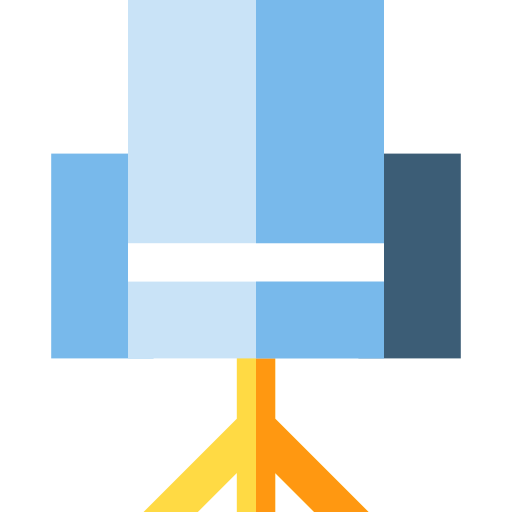
fotoliu
armchair

o copertă
a cover

un tricou
a T-shirt
o casă la mare
a house by the sea
țuică
a typical alcoholic drink in Romania, a brandy-like, transparent drink made out of plum; around 40 percent alcohol
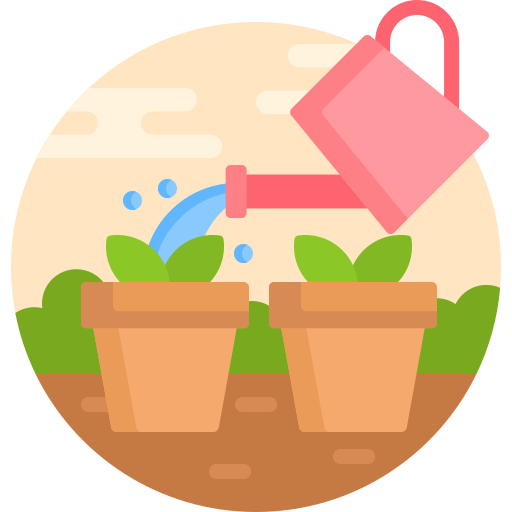
o grădină
a garden
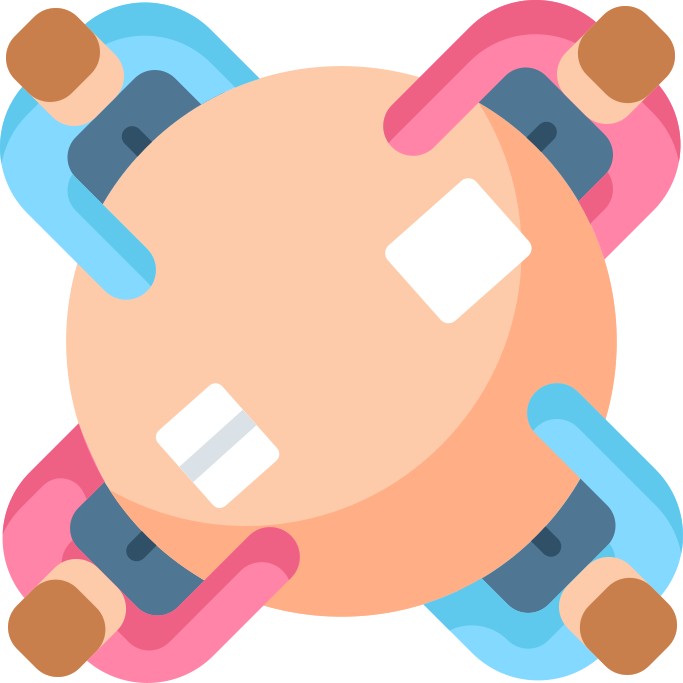
o şedinţă
a meeting

o poveste
a story
Asculți ce spun?
Are you listening to what I'm saying?

o vacanţă
a holiday
grădina parcului
park garden
Ce grădină mare!
What a big garden!

un obicei
a habit
Este un obicei prost.
It's a bad habit.

zoo
zoo
a ieși
to exit, to go

o cușcă
a cage
des
often

des adormit
often oversleep
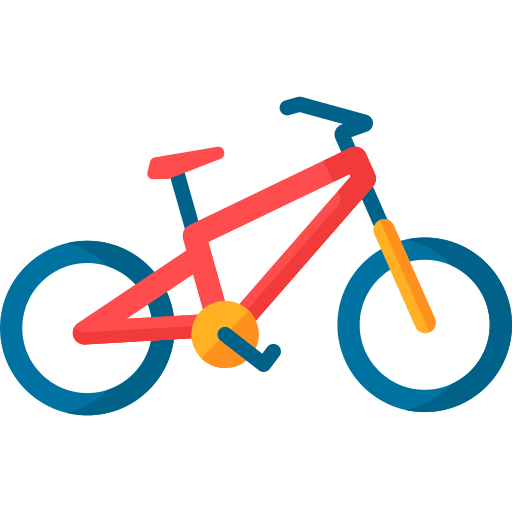
o bicicletă
a bicycle
Cât de des faci sport?
How often do you exercise?
Te întâlneşti cu el des?
Do you meet him often?

dacă
if
fii sănătos
be/keep healthy
uneori
sometimes

niciodată
never
El mereu întârzie la cursuri.
He is always late for class. (lit.: "He always delays at classes.")
Merg rareori la zoo. Dar tu?
I seldom go to the zoo. How about you?
a ieși în oraș
to go out
de obicei
usually ("of habit") / habitually
a zice
to say / to tell

a hotarî
to decide
timpul liber
leisure time

nici
nor / either
Le văd pe aceleași
I see the same ones (them see on the same)
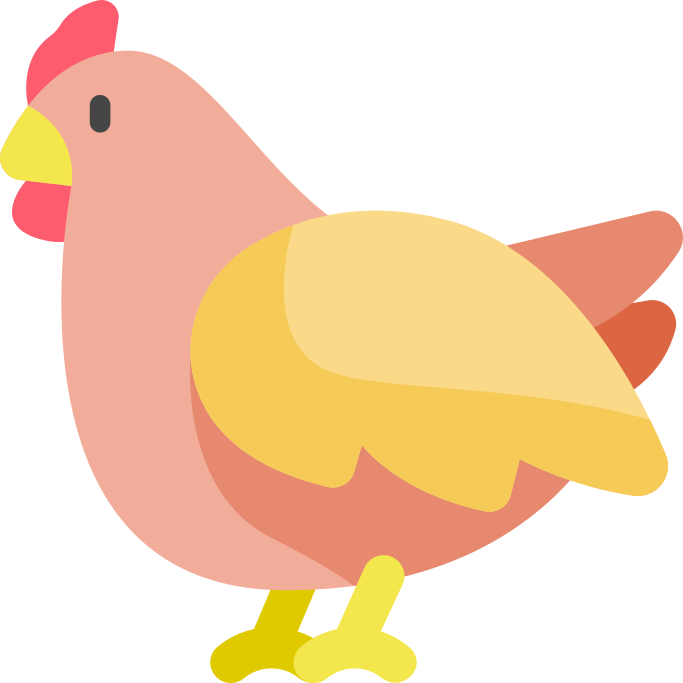
o găină
a chicken

o gâscă
goose
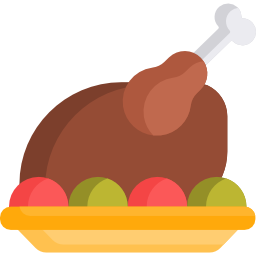
un curcan
a turkey
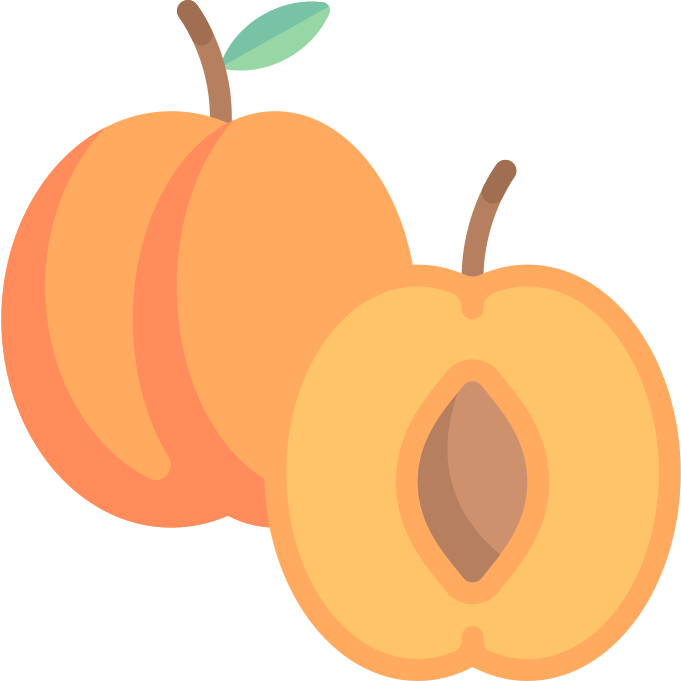
o caisă
an apricot
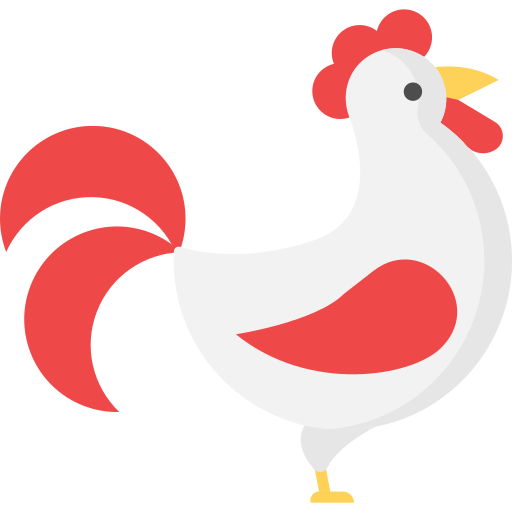
un cocoș
a rooster

bou / boi
ox / oxen
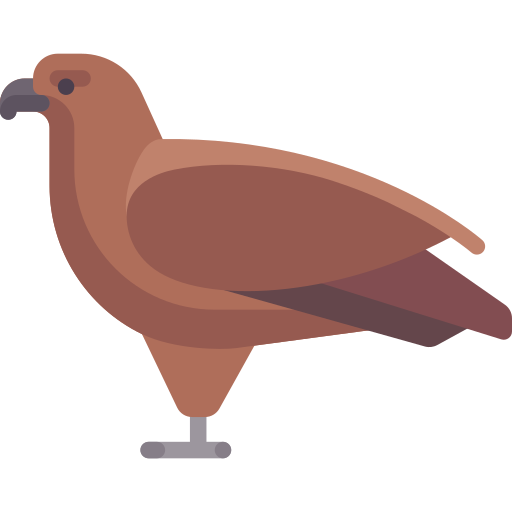
un vultur
an eagle
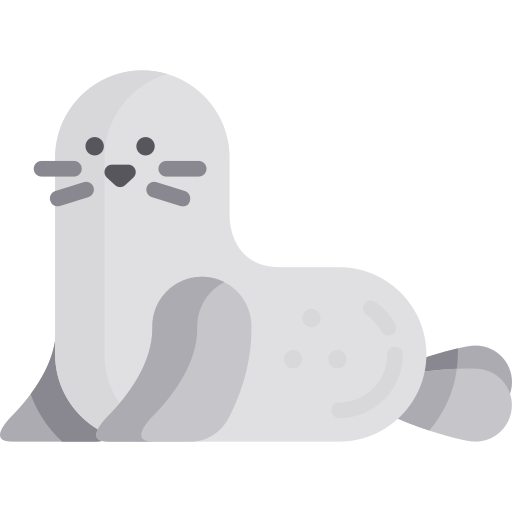
o focă
a seal

un taur
a bull

o capră
a goat
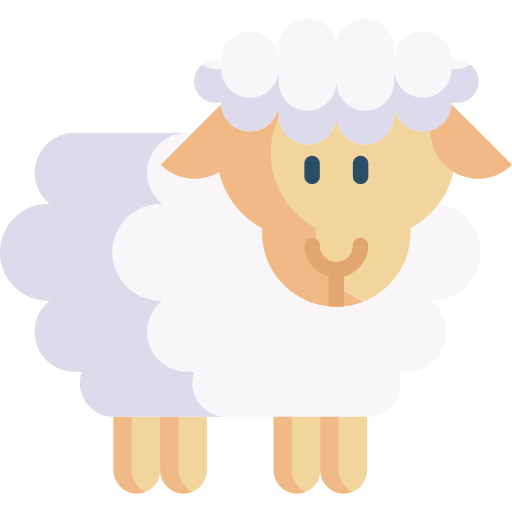
un miel
a lamb

Mă bucur
I'm glad

că
that
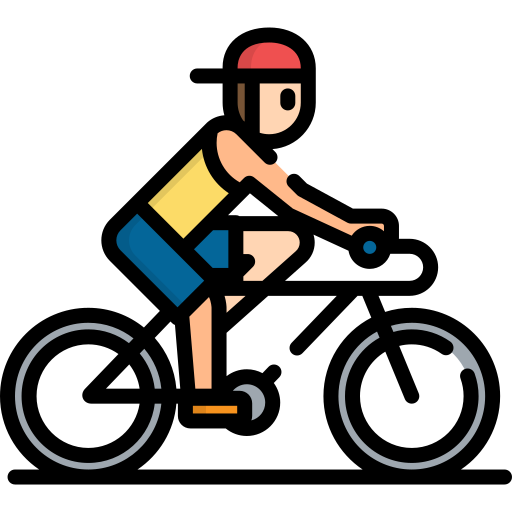
merg pe bicicletă
ride a bike
Mie îmi place și ping-pong-ul (tenis de masă).
I also like ping-pong.
un mod convenabil
a convenient way

prin oraș
around town

roată de bicicletă
bicycle wheel
bicicletă de munte
mountain bike
Astăzi este mai cald decât ieri.
Today is warmer than yesterday.
Îmi place pepenele verde mai mult decât pepenele galben.
I like watermelons more than melons.
joc de fotbal
football game
joacă fotbal
play football
fiecare săptămână
every week

a se bucura
to be glad

a (îi) plăcea
to like
Deja este prea târziu.
It is already too late.
Nu prea joc biliard.
"I don't play billiards that much." (lit. "I don't too play billiard.")
Nu prea îmi plac filmele de acțiune.
"I don't like action movies that much." (lit. "I don't too like movies of action.")

mai
more
decât
than
Desertul este mai dulce decât carnea.
"Dessert is sweeter than meat." (lit. "The dessert is more sweet than the meat.")

site-ul
the website

mouse-ul
the mouse (IT)

card-ul
the card

computerul
the computer
planul
the plan
WiFi-ul nu merge prea bine aici.
WiFi doesn't work too well here.
Internetul există de zeci de ani.
The internet has been around for tens of years." (lit.: "The internet exists for tens of years.")
Because the neologism crema is a feminine noun, the definite article is connected directly to the word without a hyphen
Crema este pe masă.
The cream is on the table.
Muntele Fuji este mai înalt decât Munții Carpați.
Mount Fuji is taller than the Carpathian Mountains.
Mă bucur că...
I'm glad that... ("I rejoice myself that...")

a bucura
to rejoice, to make glad
Mă bucur că pot să exersez limba română cu tine.
I'm glad that I can practice Romanian with you.

Ce înseamnă acest cuvânt?
What does this word mean?
Ce să îi cumpărăm?
What should we buy them?

lui
his

pasionat
passionate, keen
Când ești pasionat de ce faci, timpul trece repede.
When you're keen on what you are doing, time goes fast.
Ne vom căsători.
We're getting married.
nașterea unui copil
the birth of a child
Acesta este cadoul de ziua ta
This is your birthday present
Copiii vor multe cadouri de Crăciun.
Children want many presents for Christmas.
meciul
the match
Ziua Recunoștinței
Thanksgiving Day
Studiez franceza o dată pe săptămână.
I study French once a week.

lună plină
full moon

viitor
next, coming

Nu am nicio idee.
I have no idea.
Stefan Slanic moldova
săptămâna viitoare
next week

alaltăieri
the day before yesterday
ieri
yesterday
astăzi / azi
today / today

poimâine
the day after tomorrow
adineaori
a moment ago
acum
now
mai târziu
later
data viitoare
next time
Ea sosește târziu acasă.
She's arriving late at home.
luni
Monday

marți
Tuesday

miercuri
Wednesday

joi
Thursday

vineri
Friday

sâmbătă
Saturday
duminică
Sunday

ianuarie
January
februarie
February

martie
March
aprilie
April

iunie
June

iulie
July

august
August
septembrie
September
octombrie
October

noiembrie
November
decembrie
December
Marți am o ședință.
I have a meeting on Tuesday.
Festivalul are loc în noiembrie.
"The festival takes place in November." (lit. "The festival has place in November.")
a naște
to give birth
sunt născut pe
I was born on

Când este ziua ta de naștere?
When is your birthday?
pasionat de
keen on, passionate about

a pasiona
to especially interest

o petrecere
a party
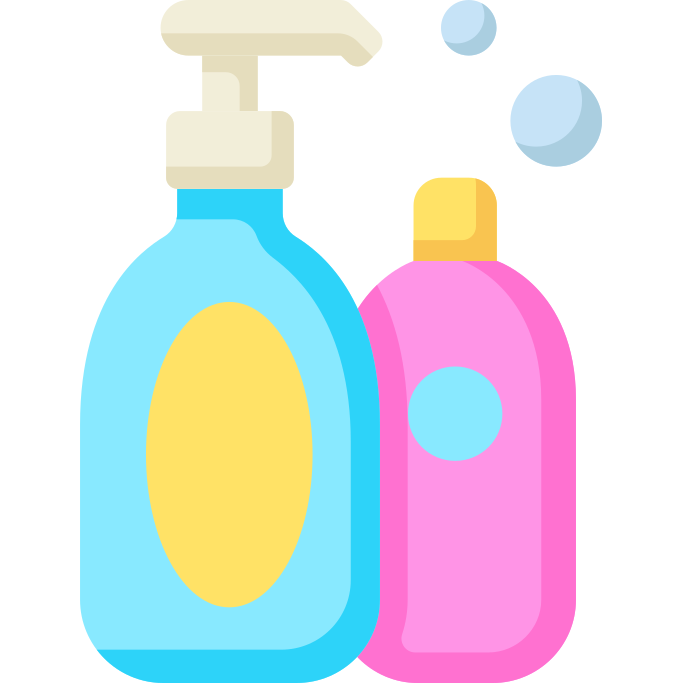
un șampon
a shampoo

o parte
a part

dinte / dinţii
tooth / teeth
Femeia se spală cu şampon.
The woman is shampooing her hair. (The woman washes with shampoo.)
şampon şi aer condiţionat
shampoo and air conditioning
Ce șampon folosești?
What shampoo do you use?

al doilea (masculine) / a doua (feminine)
second
Al doilea câștigă medalia de argint.
The second one wins the silver medal.
Al treilea sosit câștigă medalia de bronz.
The third finisher wins the bronze medal.
culoar
corridor
raft de jos
bottom shelf
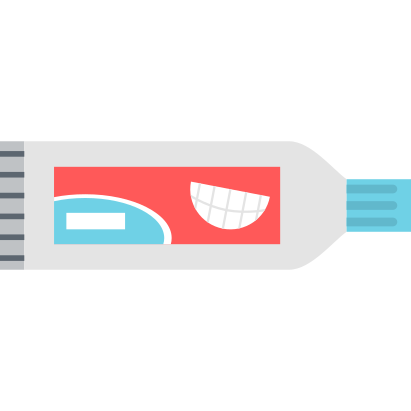
pasta de dinți
toothpaste
a treia de sus
third from the top

Cu mare plăcere.
You're very welcome.
primul / prima
first (masculine) / first (feminine)
În primul rând, eu nu vorbesc spaniolă.
"First of all, I can't speak Spanish." (lit.: "In the first row, I don't speak Spanish.")
Astăzi termin prima pagină.
Today I finish the first page.
A doua oară e cu noroc.
"The second time is lucky." (lit.: "The second time is with luck.")
al treilea / a treia
third (masculine) / third (feminine)
al patrulea / a patra
fourth (masculine) / fourth (feminine)
al optulea / a opta
eighth (masculine) / eighth (feminine)
al nouălea / a noua
ninth ( masculine) / ninth (feminine)
Pâmântul este a treia planetă de la Soare.
Earth is the third planet from the Sun.

clădire
building