
Talking about the Past
Explanations and vocabulary practice
Sections: 12
Save words from this page and practise them with flashcards in DuoCards. How does it work?
Let’s start with the past simple tense. We use it to talk about completed actions that happened in a time period before now.
We distinguish between regular and irregular verbs, which we will look at later.
Regular verbs in the past simple: add -ed to most verbs:
to talk - talked
to finish - finished
to listen - listened
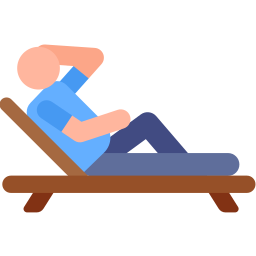
to relax - relaxed
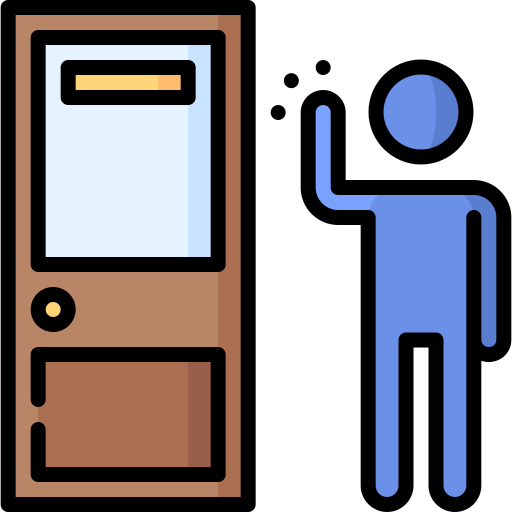
to knock - knocked
to walk - walked







If a short verb ends with a consonant-vowel-consonant, double the last letter and then add -ed.
to stop - stopped
to shop - shopped
However, do not double the last letter if the verb ends in w, x or y.
to play - played
to show - showed






In longer words, if the last syllable of the verb ends with a consonant-vowel-consonant and that syllable is stressed, double the last consonant and then add ed.
to prefer - preferred
to travel - traveled (American English) or travelled (British English)
However, do not double the last letter if the first syllable is stressed.
to enter - entered






If the verb ends in e, just add -d.
to create - created
to live - lived
If the verb ends in a consonant + y, change the y to i and add -ed.
to try - tried
to worry - worried
to carry - carried







There are certain expressions associated with the past simple tense:
yesterday
last week/month/year/...
ago expresses temporal distance and always stands after a temporal determination.
e.g.. one month ago two weeks ago a long time ago the other day








Some verbs that end in -d, change the -d to -t.
to build - built
to send - sent
to bend - bent
to spend - spent
Example: We built this house a long time ago.







Irregular verbs have three specific forms that you need to memorize. While most English regular verbs use the ending -ed for the past tense and participle forms, irregular verbs each have their own unique tense forms and past participles.
The three forms are:
1. Base form (the verb you find in the dictionary)
2. Past simple form (the one you are learning in this course)
3. Past participle form (we will learn how to use this later)
It is important and much easier to learn all three forms at the same time. Let's start with the most important ones:
to be - was/were - been
to go - went - gone







Now let's take a look at some other irregular verbs and their past forms.
to have - had - had
to eat - ate - eaten
to come - came - come
to think - thought - thought
to give - gave - given
to forget - forgot - forgotten












A question is formed in the past tense by adding the auxiliary verb did (past tense of do) to the beginning of the sentence. This auxiliary verb takes over all grammatical functions, so the semantic verb will already be in the present tense.
did + subject + verb (infinitive without TO) + the rest of the sentence
Did you like the concert?
Let's take a look at some more irregular verbs:
to know - knew - known
to pay - paid - paid
to sleep - slept - slept
to keep - kept - kept
to mean - meant - meant








When we want to express a negation in the past tense, we use the phrase did not after the subject, and the semantic verb (a verb that shows an action or event) remains in its basic form.
subject + did not + verb (infinitive) + rest of the sentence
He did not do it.
We did not go there.
Note that didn't is a short form of did not.
Let's take a look at some more irregular verbs:
to feel - felt - felt
to tell - told - told
to wear - wore - worn









Sometimes the past tense form is the same as the infinitive form. Let’s look at these verbs so you don’t get confused!
to let - let - let
to set - set - set
to put - put - put
to cut - cut - cut
to cost - cost - cost
Notice that these verbs can have different meanings depending on how they are used. We are going to learn some of them.











Let's wrap up this course with some more commonly used irregular verbs that will help you expand your vocabulary.
to choose - chose - chosen
to write - wrote - written
to take - took - taken
to see - saw - seen
to buy - bought - bought












Learning with DuoCards
What is DuoCards?
DuoCards is a language-learning app that helps you build vocabulary with flashcards. You can save words you want to learn and practise them over time.
How do I learn with this course?
Browse the explanations and vocabulary in each section. Select Card picker and choose the words you want to learn. Then create a free account to save your words and practise them.
How do I practise my words?
You'll see a flashcard with a word and a hidden translation. Guess what it means, then tap to check your answer. DuoCards repeats the words you find difficult.
Do I need an account, and is learning free?
You can browse this page without an account. A free account lets you save words and track your progress. The free plan has limits, and Premium offers additional features.