
Polish for absolute beginners
Explanations and vocabulary practice

Sections: 20
- Cześć! Let’s start your journey with Polish language!
- Conversation for beginners: Introducing yourself
- Polish personal pronouns - singular
- Polish personal pronouns - plural
- Polish letters part I.
- Numbers from 0 to 5
- Polish letters part II.
- Greetings in Polish
- Polish Genders
- Important verb - TO BE - singular
- Important verb - TO BE - plural
- What is a digraph?
- Polish digraphs part II.
- Verb TO HAVE in singular
- Uses of the verb HAVE
- Have - Plural verb to have
- Asking questions in Polish
- Form of courtesy
- Family members
- Palatalization in the Polish language
Save words from this page and practise them with flashcards in DuoCards. How does it work?
This course will enable you to learn the basics of Polish – crucial words and phrases along with some easy grammar.
We will introduce also polish own letters, which will help you to pronounce in a right way.
Are you ready? Let’s start with basic greetings and some useful words.












Let's learn how to introduce ourselves and ask simple questions.









In Polish, just like in English, we use different pronouns depending on who we’re talking about.
ja – I
ty – you
ona – she
on– he
ono - it



















In Polish, plural pronouns change depending on who you're talking about. Here's how they work:
my – we
wy – you (plural)
oni – they (a group of men or a group of men and women)
one – they (a group of women or a group of kids, animals or things)










At the beginning of your adventure with the Polish language, you'll notice that it has its own letters and uses digraphs. First, let's learn the letters. We'll start with the first four:
ą – nasal vowel o, called 'a' with a tail. Listen carefully to the example: ząb.
ć - letter c with an accent. Example: dziewięć, ćwiczyć.
ę – this is a nasal e. Called e with a tail. Listen to the example: pięć, podręcznik, męski.
ł - sounds similar to the letter 'w' in English - would, wound. Example: łatwy.
Let’s practice with a few common words!







Let's learn numbers from 0 to 5 and see examples of the letters ć and ę and the digraphs cz and rz.
0 zero
1 jeden
2 dwa
3 trzy
4 cztery
5 pięć

















Good job! Now we will continue with: ó, ń, ś, ż, ź
ó - This is not o but u with an acute accent. Ó and u sound the same in Polish. You pronounce it like 'oo' in English. Example: łódź.
ń - n with an acute accent. It sounds like a soft 'n'. Listen closely to the example. Example: dzień.
ś - s with an acute accent. Let´s look at the example: sześć, wieś.
ż - z with a dot. Example: żart.
ź - z with an acute accent. Example: źródło.














You should greet others from the morning till the evening by saying dzień dobry – good day. There is no division into good morning and good afternoon.
From the evening you should day dobry wieczór – good evening.
Proszę has several uses:
-please -to ask someone to do something politely fe. Proszę, przestań - Please, stop.
-there you are - when handing something to other person,
-you're welcome - as a reply to thank you.
You should use poproszę, which means please, when you are ordering something in a restaurant, café, or buying something in a shop fe. Poproszę herbatę. - Tea, please.












In the Polish language, there are three genders for nouns: feminine, masculine, and neuter.
The basic rules regarding genders in Polish are as follows:
Masculine nouns usually end in consonants - rower (bicycle), chłopiec (boy).
There are a few exceptions- some masculine nouns end in -a: mężczyzna (man), kolega (colleague/friend).
Feminine nouns usually end in -a - kobieta (woman), dziewczynka (girl). There are a few exceptions e.g., miłość (love).
Neuter nouns end in -o, -e, -ę, or -um dziecko (baby), morze (sea), kocię (kitten), muzeum (museum).
The form of a noun changes depending on conjugation and gender. Also, the form of adjectives, verbs, and numbers changes depending on the gender of the noun.

















It is now time for the most important verb.
To be is one of the irregular verbs - the infinitive być differs from the reflexive forms.
Let's start with the singular form:
ja jestem - I am
ty jesteś - you are
ona/on/ono jest - he/she/it is
I or you are usually omitted from the sentence. The verb form is specific to these personal pronouns.
We write first and third person personal pronouns in lower case.
Tip! When addressing someone in an email or text message, write the second person personal pronoun with a capital letter - Ty (you in singular), Wy (you in plural). This is written to show respect or politeness. In ordinary texts or informal speech it may be written in lower case.














As in English, you can use 'to be' to introduce yourself, describe your condition and formulate questions.
my jesteśmy - we are
wy jesteście - you are
oni/one/one są - they are
You can say we are and you are in a sentence without using a pronoun, because the verb itself shows the person. In Polish, pronouns are usually omitted. But in the third person, we always use a pronoun, since the verb form is the same.
Jesteśmy tutaj - We are here.











A digraph is two letters that together form a different sound. There are seven digraphs in the Polish language: ch, cz, dz, dż, dź, rz, sz. We will introduce the first three!
ch - It sounds exactly like h. There are two types of h in Polish and they sound the same. There are a few rules to learn - for example: we usually use ch at the end of words and before consonants. Examples: hałas, chyba (exception), chłodny.
cz - as in czekolada.
dz - Listen carefully to the examples: dzwonek, jedzenie.
Let's practice!
















Congratulations on mastering the first three Polish digraphs. Let's take a look at the other four:
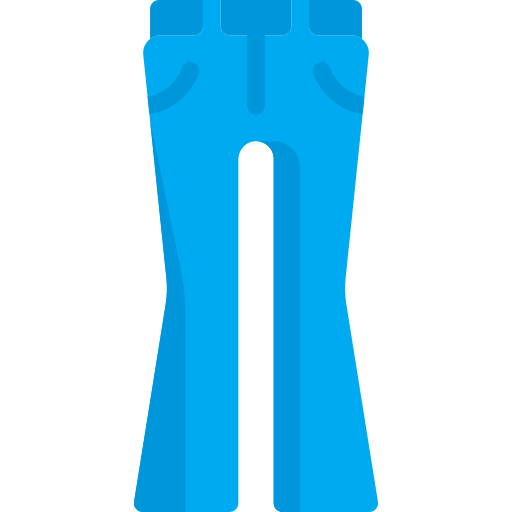
dż - sounds like the English letter j in jeans. Examples: Dżinsy, dżem.
dź - there is no similar sound to this in English, so let's listen: wiedźmin, dźwięk.
rz - Here we have a similar situation as with ch and h - we have rz and ż which sound the same. One rule is that we always use rz before the consonants p, b, d, t, j, w, ch, g, k for example: drzemka. We use ż after the consonants l, r, ł and n - inżynier.
There are other rules for ch / h and rz / ż, but these are more advanced. We will explain them later in upcoming courses.
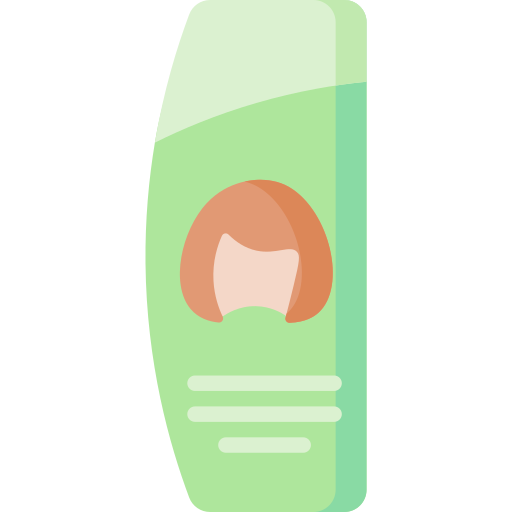
sz - sounds like sh in English. Examples: szampon, szybko, szef.








To have mieć is another example of irregular verbs - you can certainly see the difference between the infinitive and other forms.
First the singular form:
ja mam - I have
ty masz - you have
ona/on/ono ma - he/she/it has








1. You use mieć as a verb to describe possession.
2. Mieć is also used to describe age. In Polish you would say that you 'have' years.
3. You will also use mieć to say what is your name- In Polish you will say 'Mam na imię John'.
4. You can use mieć to ask how someone is - Jak się masz?
There is also a very interesting example of using mieć. This is not completely grammatically correct in Polish. It's the same construction as the English 'have to', but it doesn't quite make sense in Polish, however it is used in everyday language.
Teraz nie mogę, mam ugotować obiad.
- I can't now, I have to make dinner.
Mam to zrobić teraz? Do I have to do it now?
This is also an example of the use of the imperative mode:
Macie natychmiast odrobić lekcje. - Do your homework immediately!









Time for the plural form of the verb to have.
my mamy - we have
wy macie - you have (plural)
oni/one mają - they have (m/f)












Questions are formed by adding special question words at the beginning of an affirmative sentence.
Below are the most important question words.
Co? - what/which?
Gdzie? - where?
Kiedy? - when?








You should always use the form of politeness with strangers, people older than you, at work with people higher up the hierarchy. You can only use the informal form 'you' with people you know and with people you work or study with.
Pani - Ms. In Polish there is no distinction between Miss and Mrs - You should always use Pani when addressing a woman.
Pan - Pan
Państwo - You in a polite way.
Państwo also means a country. The names of countries are written with a capital letter. Most countries have the feminine form, a few have the plural form. There are of course some exceptions, e.g. Kazakhstan (m) etc.









There is also a polite way to address family members. You can say you to your siblings, cousins, brothers-in-law, etc. - to all family members who are your age.
If you are addressing your parents, grandparents, aunts and uncles - older generations, you also use the second person, but you should add Mamo, Tato, Babciu, etc.
This works in the same way as the polite form in English - Sir, can I ask you something - you use the second person form, but adding the title makes it more polite.
In Poland it is very important to address elderly family members with respect.







Palatalization refers to the softenings in the Polish language. You already know a few examples, like ś, ć, etc. Those letters have pairs, which sound exactly the same, and of course, there are a few rules when to use one or the other... (laughs in Polish).
Let’s see the pairs – a palatalization through the acute accent - ć,ś etc. and through i.
Ć – ci Dź – dzi Ń – ni Ś – si Ź – zi
Rules:
We use palatalization through the acute accent:
1- before the consonants: ćma, śmieć, źródło
2- at the end of the word: miś, słoń, odpowiedź
We use palatalization through i:
3- before the vowels: cicho, dział, niebo, siatkówka, zimno
Be proud of yourself because you are learning one of the most difficult languages in the world. DON’T GIVE UP! Polish people are eager to help with learning Polish – so don’t hesitate to ask for help ☺













Learning with DuoCards
What is DuoCards?
DuoCards is a language-learning app that helps you build vocabulary with flashcards. You can save words you want to learn and practise them over time.
How do I learn with this course?
Browse the explanations and vocabulary in each section. Select Card picker and choose the words you want to learn. Then create a free account to save your words and practise them.
How do I practise my words?
You'll see a flashcard with a word and a hidden translation. Guess what it means, then tap to check your answer. DuoCards repeats the words you find difficult.
Do I need an account, and is learning free?
You can browse this page without an account. A free account lets you save words and track your progress. The free plan has limits, and Premium offers additional features.