BeginnersJapanese words
by DuoCards
*Welcome to the Beginner Japanese course!*
In this course, we will introduce new grammar parts that will improve your skills!
"い" *Adjectives*
In Japanese, adjectives are similar to verbs, also being *able to conjugate* for tense, polarity, etc.
There are *two types* of adjectives and it is good to distinguish between them from the beginning.
The first type is called *い-adjectives*.
They are a little bit trickier than na adjectives. Let's have a look at the conjugation together!
*Present affirmative*: "たかいです"
*Present negative*: "たかくないです" or "たかくありません"
*Past affirmative*: "たかかったです"
*Past negative*: "たかくなかったです" or "たかくありません"
As you see, you work with the ending い, which changes into:
"くない" in the present negative
"かった" in past affirmative
"くなかった" in the past negative, followed by です to preserve the polite form.
Be careful, there is one exception with the adjective "いい" - good:
"いいです"
"よくないです"
"よかったです"
"よくなかったです"
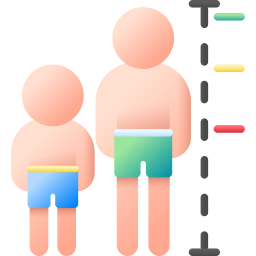
高い
Tall, expensive
このとけいは高いです。

難しい
Difficult
テストは難しかったです。

優しい
Easy, kind
あの人は優しくないですね。

安い
Cheap
こうくうけんは安くなかったです。

寂しい
Lonely
さいきんとても寂しいです。

短い
Short
こんかいのりょこうは短いですか。

てんき
Weather
今日は暑いてんきですね。
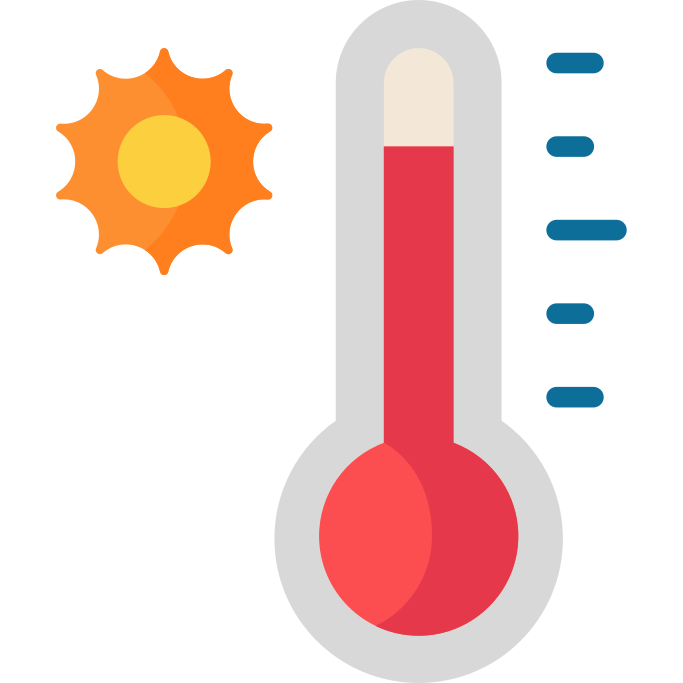
暑い
hot
きょう暑いですね。

かき氷
Shaved ice (usually served with flavored simple syrup)
冷たいかき氷を食べました。

寒い
Cold (weather)
にほんのあきは寒くないです。

大きい
Big
大きかったです。

ふゆ
Winter
今年の冬はとても寒かったです。

小さい
small
その犬は小さい。

面白い
Interesting
この映画はぜんぜん面白くなかったです

やちん
Rent
このアパートのやちんは安くないです。

新しい
New
あたらしい車ですか。

せいかつ
Life
私のせいかつはとても忙しいです。

忙しい
Busy
あしたは忙しくありません。

難しい宿題
Difficult homework
宿題は難しかったです。
優しい友達
Kind friend
優しい友達がたくさんいます。

もり
Forest
夜の森は怖かったです。

厳しい
strict
私の先生は厳しくないです。

面白い話
Interesting story
今日の話はおもしろくなかったですよ。

パーティー
Party
昨日のパーティーはとても楽しかったです!

長い道
Long road
長い道を歩きました
"な" *Adjectives*
The second type is *な-adjectives*.
The conjugation is easier:
*Present affirmative*: "ひまです"
*Present negative*: "ひまではありません" or "ではないです"
*Past affirmative*: "ひまでした"
*Past negative*: "ひまではありませんでした" or "ひまではなかったです"
With *な-adjectives*, the final syllable "な" is dropped and the stem is followed by "です" conjugated in the desired way.
Both "い" and "な" are the adjectives' last syllables when they modify nouns.

ひまな
Free
きょうひまですか。

しゃちょう
Director
新しい社長がちょっと嫌いです。

しずかな
Quiet
このまちは静かではありません。

げんきな
Fit, lively, healthy
お元気ですか。

きれいな
Clean, pretty
きれいですね。

ミュージカル
musical
ミュージカルが好きではありません。

すきな
Favorite
こどもの時サラダが好きではありませんでした。

まち
Town
東京はとてもにぎやかな町でした。

きらいな
Hate
すうがくがきらいでした。

賑やか (な)
Lively
東京はいつも賑やかです。

ひまな時間
Leisure time
最近はひまな時間がたくさんあります。

きょねん
Last year
去年あまり暇ではありませんでした。

簡単な問題
Easy question/problem/subject
宿題は簡単ではありませんでした。

じょうずな学生
Skilled student
学生は上手でした。

むすこ
Son
妹は元気な息子がいます。

好きな音楽
Favourite music
音楽が好きではありません。

かれし
boyfriend
彼氏と大切な話をしました。

真面目な
Serious person
真面目な人ですね。
*I like, I dislike*
With knowing how to conjugate adjectives, it is easy to express what one likes or dislikes by using the adjectives "すきな" and "きらいな".
To do so, we have to keep two things in mind.
1) The person that likes or dislikes something is followed by the particle "は"
2) The person or object that is being liked or disliked is followed by the particle "が":
My father likes cars. = ちち"は"くるま"が"すきです。
My little sister dislikes maths. = いもうと"は"すうがく"が"きらいです。
The whole conjugation of *like* and *dislike* goes as follows:
アニメ"がすきです"。I like anime.
アニメ"がすきではありません"。I do not fancy anime.
アニメ"がきらいではありません"。I do not mind anime.
アニメ"がきらいです"。I dislike anime.
To express that you *love* or *hate* you can use the intensified forms:
アニメ"がだいすきです"。I love anime.
アニメ"がだいきらいです"。I hate anime.
For *expressing that you neither like nor dislike something*, you can usually use:
好き"でもきらいでも"ありません。I neither like nor dislike.

すきです
I like
チョコがすきです。

きらいです
I dislike
なっとうがきらいです。

すきではありません
I do not like
かいものがすきではありません。

きらいではありません
I do not mind
べんきょうがきらいではありません。

だいすきです
I love
りょこうが大好きです。

だいきらいです
I hate
しゅくだいが大きらいです。

すきでもきらいでもありません
I neither like nor dislike
すしがすきでもきらいでもありません。

ビール
Beer
ビールが好きです。

ラーメン
Ramen
ラーメンが好きではありません。

何がきらいですか。
What do you dislike?
運動がきらいです。

スイーツ
Sweets
スイーツが大好きです。
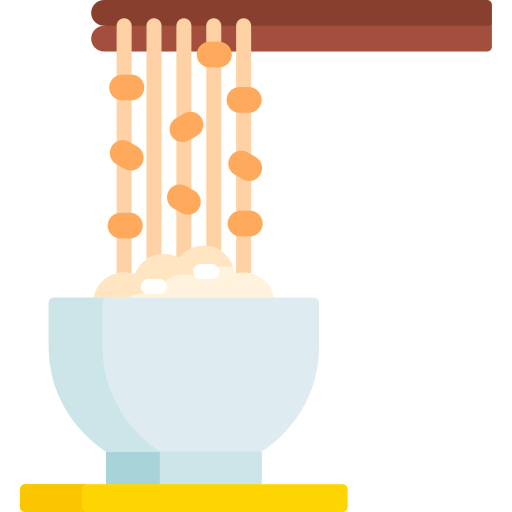
なっとう
Natto
なっとうが好きでもきらいでもありません。
*Location words*
Let's learn how to *describe where things are*!
To describe the location of an item relative to another item, we use this formula:
ほん"は"かばん"の"なかです。The book is inside the bag.
If you want to say, that something is *between* something else, the sentence goes as follows:
テレビ"は"本"と"ラジオ"の"あいだです。
Here you put the particle "と" between the respective nouns.

みぎ
Right
えきはゆうびんきょくの右です。

ひだり
Left
ペンはほんのひだりです。

まえ
In front of
バスはスーパーの前です。

うしろ
Behind
こうえんはホテルの後ろです。

中
Inside
ねこはへやの中です。
上
On, above
ケーキはさらの上です。

(した)下
Under, beneath
いぬはテーブルの下です。

そば
Near
デパートはコンビニのそばです。

隣
Next to
ぎんこうはがっこうのとなりです。
(あいだ)間
between
ソファはテーブルとドアの間にあります。

友達の隣
Next to a friend
友達の隣に座りました。

テーブルの下
Under the table
本はテーブルの下にあります。

本と花の間
Between books and flowers
本と花の間にラジオがあります。

かばんの中
Inside a bag
かばんの中に財布があります。

ドアの後ろ
Behind the door
ドアの後ろに隠れてください。
*Te forms - verbs*
In this chapter, you will learn how to form sentences such as *Please sit down and* *May I have a cup of tea*.
*Te-forms* are mainly used for
1. *forming sentences that describe two or more activities*
2. *making a request*
3. *giving or asking for permission*
4. to tell *someone* not to *do something*.
You can form *te-forms* from both verbs and adjectives.
The following explains how to form them from verbs first. Depending on the ending of each verb, te-forms can be formed differently:
For the *verb ru*, take the ending "る" and add "て" instead.
"みる" = "みて"
*U* verbs are trickier, but their conjugation is considerably more complex:
"う"Verbs ending in "つ", "る":
"会う" = "あって"
"持つ" = "もって"
"切る" = verbs ending in "きって"
"む", "ぶ", "ぬ":
"住む" = "すんで"
"呼ぶ" = "よんで"
"死ぬ" = verbs ending in "しんで"
"く":
"聞く" = "きいて"
Never mind verbs ending in "行く" = "いって"
"ぐ":
"泳ぐ" = Verbs ending in "およいで"
"す":
"話す" = "はなして"
*Describes two or more activities*
The *te-form* can be used to *combine two or more verbs* to describe a *series of events or* actions (e.g. I woke up, had a coffee, and went to work). Put simply, the *te-form* does *the* work of the verb *and* works with the verb (you cannot add "と" to connect two verbs, as you can with nouns!) .
As an example: "起きて、コーヒーを飲んで、仕事に行きました。" I woke up, had a coffee, and went to work.

たべて
Eat!
どうぞたべてください。
きいて
Listen!
せんせいをきいてください。

はなして
Speak!
もっとはなしてください。

かって
Buy!
新しいゲームをかってきました。

およいで
Swim!
およいで、楽しいよ!
一人で
Alone / Oneself
私は一人で映画を見ました。

待って
Hold!
ちょっと待ってください。

ならんで
Alongside
ならんで待ってください。

わかって
Understand!
ちょっと私のことをわかってください。

しんで
Die!
死んでないでください。

いって
Go!
友達と遊びにいってもいいですか?
*Describing two or more activities*
*Te-forms* can be used for *combining two or more verbs* to describe a *sequence of events or actions* (fe. I woke up, had a coffee, and went to work). Simply said, the *te-form* does the work of *and* with verbs.
Note, that you cannot connect two verbs by adding "と" as in the case with nouns!
Example:
"起きて、コーヒーを飲んで、仕事に行きました。" I woke up, had a coffee, and went to work.

起きて、食べます。
Get up and eat.
まいにち起きて、あさごはんを食べます。

飲んで、寝ます
Drink and go to bed.
お茶を飲んで、寝ます。

かりて、かきます。
I will borrow and write.
本をかりて、レポートをかきます。

行って、みます。
Go and see
えいがかんに行って、えいがをみます。

のって、行きます。
Ride on and go.
バスに乗って、がっこうに行きます。
*Making requests*
To say *Please, sit down* or *Please, explain it to me*, you also use the *te-form* and "ください".
Example:
"すわってください。" *Please, sit down.*
"おしえてください。" *Please, explain it to me.*
きいてください。
Please listen.
みんな、きいてください!大事なことがあります。

食べてください
Please eat.
おいしい料理を食べてください。

やめてください。
Plase don't. Please stop.
大きな声で話さないで、やめてください。

かんがえてください。
Please think about it.
この問題について、かんがえてください。

わかってください。
Please understand.
私の気持ちをわかってください。

見てください。
Please have a look.
この本を見てください。

読んでください。
Please read.
メールを読んでください。
*May I?* *You must not*.
By using *te-form* you can also *give or ask for permission* as well as say that something is *forbidden*.
"てもいいです" *You may...*.
"てもいいですか" *May I...?*
"てはいけません" *You must not*.
見てもいいですか。
Can I have a look?
あなたの絵を見てもいいですか?

借りてもいいです。
You can borrow it.
ペンを借りてもいいですか?

およいではいけません。
Do not swim.
ここではおよいではいけません。

はなしてはいけません。
You must not talk.
試験中は、はなしてはいけません。

出かけてもいいですか。
Can I go out?
今、出かけてもいいですか?

覚えてもいいです。
You can remember.
この単語を覚えてもいいです。
*Explaining a reason*
To explain why you did something or why something happened, you simply add "から" at the end of the sentence.
Example:
"しゅうまつにべんきょうします。らいしゅうテストがありますから。"
*I will study this weekend. (Because) I have a test next week.*
"ホテルをよやくします。りょこうに行きますから。"
*I will make a hotel reservation. (Because) I am going on vacation.*
You can also connect the two sentences into one. In this case, you change the order, and the sentence which is stating the reason will come first, followed by "から".
"らいしゅうテストがありますから、しゅうまつにべんきょうします。"
*I will study this weekend. (Because) I have a test next week.*
"りょこうに行きますから、ホテルをよやくします。"
*I will make a hotel reservation. (Because) I am going on vacation.*
おちゃを飲みます。さむいですから。
I will drink tea. Because it's cold.
はやく起きます。朝から仕事がありますから。
I get up early. Because I have work from the morning.

りゅうがくに行きますから、じゅんびします。
Because I'm going to study abroad, I will get ready.

毎日いそがしいから、時間がありません。
Because I am busy every day, I do not have time.

夏にアメリカに行きます。休みがあるから。
I will go to the USA in the summer. (Because) I have holiday.

べんきょうしませんでしたから、しっぱいしました。
Because I didn't study, I failed.
*Te forms - adjectives*
As mentioned, we use *-te forms* for verbs and adjectives. In the case of *adjectives*, when connecting them together, we can form *longer sentences* to say more things about a person, object, or situation.
We can use *-te forms* both for *い, な adjectives * and nouns. We do not have to use the *-te forms* only for one category, but we can combine them together.
In the case of *affirmative*, the *-te form* goes as follows:
"い" adjectives: "たかい" = "たかくて" Exception in "いい" = "よくて"
"な" adjectives: "きれいな" = "きれいで"
noun + "です": "先生です" = "先生で"
An example of using these in a sentence could be:
"山田さんは背が高くて、きれいで、先生です。"
The *negative* forms would be the following:
"い" adjectives: "たかい" = "たかくなくて" Exception in "いい" = "よくなくて"
"な" adjectives: "きれいな" = "きれいではなくて"
noun + "です": "先生です" = "先生ではなくて"
おそろしい
frightening
戦争は恐ろしくて、ひどいです。

せんそう
War
戦争が長くて、怖かったです。

りょうり
Cousine, food
日本料理が美味しくて、安いです。
からい
Spicy
インド料理は辛くて、好きではありません。

わるい
Bad
プレゼンは悪くて、面白くなくて、失敗しました。

しっぱい
failure
昨日の失敗は恥ずかしくて、泣きました。

べんりな
Convenient
飛行機は便利で、早くて、よく使います。

ひこうき
Airplane
ひこうきが早くて、便利です。

たいせつな
essential
日本語の文法は大切で、楽しくて、毎日勉強します。

じょうずな
Skillful
田中先生は教えるのは上手で、頭が良くて、好きです。

ほうほう
method
この問題を解くほうほうは簡単で、すぐ終わりますよ。

まじめな
Diligent
ひなたさんはまじめで、いい学生です。
*Describe the consequences of ongoing actions and changes.*
To form sentences such as ' *I* am reading a book' or ' *My sister got married* ', use the auxiliary verb "いる" after the *-te form*.
Verbs *describing* ongoing actions
"勉強しています" He/she is reading.
"食べています" He/she is reading.
"見ています" He/she is looking.
Verbs *describing* the result of a change:
"結婚しています" He/she got married.
"知っています" He/she knows.
"痩せています" He/she has lost weight.

勉強しています
(he's) studying
あいかさんは家で勉強しています。

はなしています
(he's) talking
吉田さんは今みき先生とはなしています。

みずうみ
Lake
弟は今湖で泳いでいます。

まっています
(he's) waiting
ルリさんは友達をまっています。

歌っています
(he's) singing
みずきさんはカラオケで歌を歌っています。

うた
Song
彼女は美しいうたを歌っています。

住んでいます
(he's) living
木村さんは東京に住んでいます。

けっこん
marriage
この夫婦は結婚しています。
結婚しています
is married
ちえみさんは10年間結婚しています。

ねこ
Cat
うちの猫を毎日探しています。
太っています
is fat
うちの猫は太っています。

誰にも
anybody
妹は誰にも聞いていません。

持っています
I have
彼氏は早い車を持っています。
*Describing physical attributes*
The Japanese language has a specific way of describing somebody or something.
"象は鼻が長いです。" Elephants have long trunks. (=As for elephants, they have long trunks)
"木村さんは耳が大きいです。" Kimura has big ears.
"光さんは頭がいいです。" Hikari is smart.
The particle "は" is used for the subject and the particle "が" describes the subject.

鼻が長い
long nose
象は鼻が長いです。

あたま
Head
彼はあたまがいいです。

あし
Legs
彼は足が速いです。
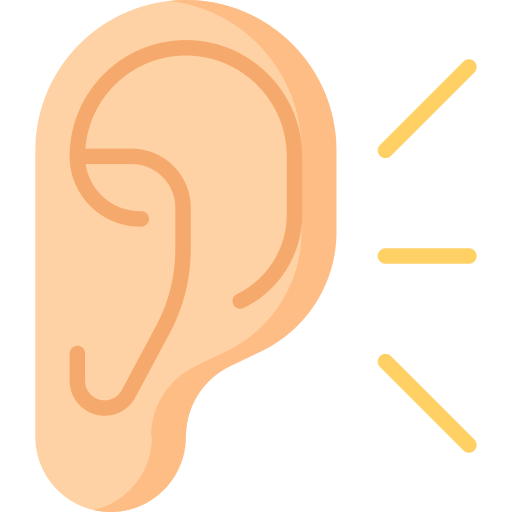
耳が大きい
large ears
木村さんは耳が大きいです。
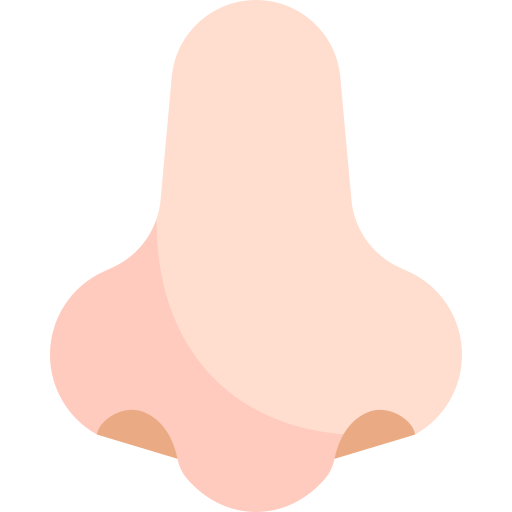
はな
Nose
弟は鼻が大きいです。

頭がいい
smart
光さんは頭がいいです。

め
Eye
彼は目が優しいです。
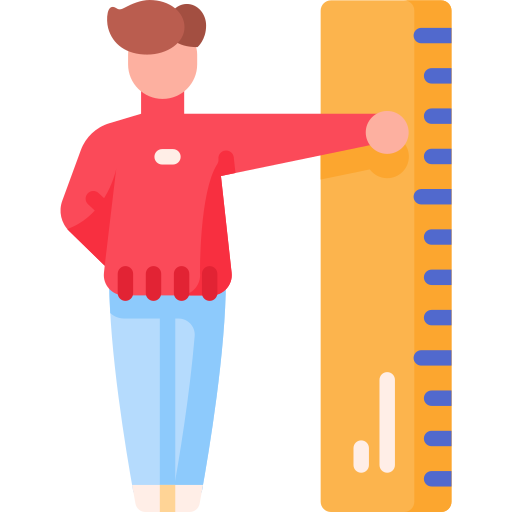
背が低い
short (of a person)
もみこさんは背が低いです。
みみ
Ear
おじいさんは耳が良いです。
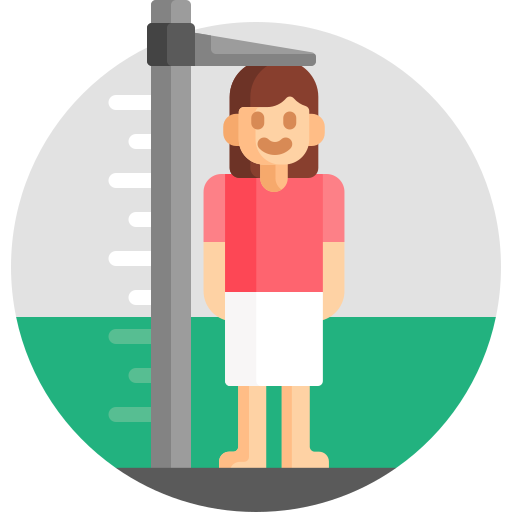
背が高い
tall
ひなたくんは背が高いですね。
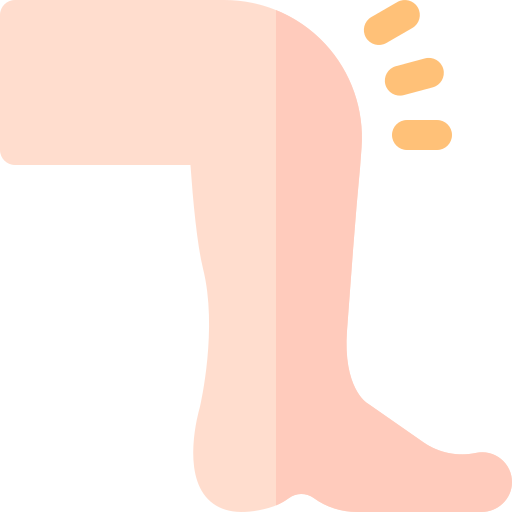
ひざ
Knee
お年寄りは膝が弱いです。
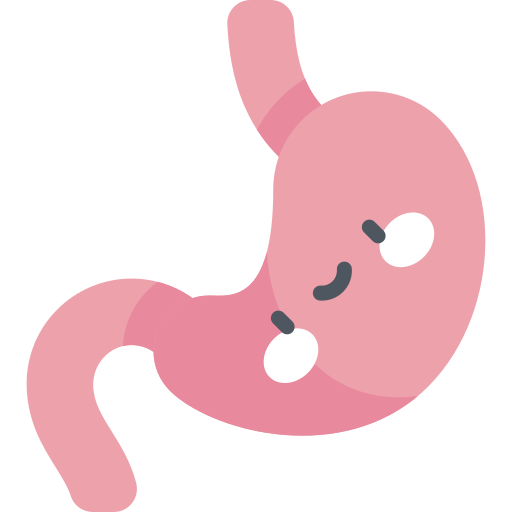
おなか
Stomach
おなかがいっぱいです。

髪が短い
having short hair
子供たちは髪が短いです。

は
Tooth
歯が悪い人が多いいです。
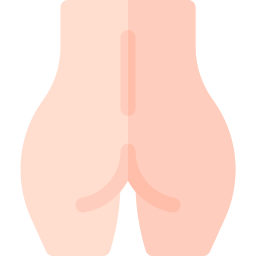
おしり
Buttocks
おしりが痛いです。
*Short forms - present tense*
So far, we have learned the long/polite forms both for verbs and adjectives ending with "です" or "ます".
*Short forms* are used in represented or quoted speech (*I think*, *He said*, *I heard*...), in *casual conversations* (as signs of intimacy), or in making negative requests (*Please don't*).
Before we start learning them, there are a few rules worth remembering:
→ *Verbs* and *い-adjectives* in the affirmative are the same as their dictionary forms
→ *な-adjectives* and *noun + です* in the affirmative replace "です" with "だ"
→ *い and な-adjectives* and *noun + です* in the negative replace "ありません" with "ない"
*Negative Short Forms*
*ru-verbs*: Take the final "る" off and add "ない"
Ex: "食べる -> 食べない"
*u-verbs*: Take the final "う" off and add "あない"
Ex: "よむ -> よまない"
Be careful! The negative short forms of verbs that end with "う" are "わない" instead of "あない"
*Irregular verbs*: "する -> しない"、"くる -> こない"
*Exception*: "ある -> ない"
To have everything in one place, we created an easy overview for you:
(The short form is on the left and the long form is on the right)
*Present tense, affirmative:*
"食べる → 食べます"
"行く → 行きます"
"高い → 高いです"
"いじわるだ → いじわるです"
"先生だ → 先生です"
*Present tense, negative:*
"食べない → 食べません"
"行かない → 行きません"
"高くない → 高くないです"
"いじわるではない → いじわるではありません"
"先生ではない → 先生ではありません"
Below you will find some examples of *informal speech*.
Let's practice!

のむ
Drink
よくお茶を飲む?

あらわない
Don't wash
手を洗わない。
でんしゃ
train
日本のでんしゃは早い。

のる
ride
毎日電車に乗る?

すまない
Do not live
プラハにすまない。

はいしゃ
Dentist
僕のはいしゃはとても優しい。
しない
Do not do
スポーツをしない。
みない
Do not watch
テレビをぜんぜん見ない。

よくない
not good
今日は天気がよくないよ。

そうじ
cleaning
土曜日にそうじをした。

かわいい
cute
この子がかわいい。

そうだん
Consultation
先生にそうだんしない。

おもしろくない
not interesting
えいごがあまりおもしろくない。

医者だ
(He) is a doctor.
あには先生だ。
なつ
Summer
今年のなつはとても暑い。

たいへんではない
not difficult
この問題は大変ではない。
*Quotations*
As mentioned, we use short forms also to be able to say *I heard*, *She said*, *I read* or *I think*.
In this case, we use a *clause ending with a predicate in the short form* and add:
"と思います" *I think* (that) ...
"と言っていました" (She) *said* (that) ...
"と聞きました" *I heard* (that) ...
"と読みました" *I read* (that) ...
"と" is a quotation particle, which does the job of both the English word *that* in the indirect quotation and of *quotation marks* in the direct quotation.
今日雨がふると思います。
I think it will rain today.
明日晴れると思います。

きり
Fog
霧が出てきた。
おおあめ
heavy rain
今日はおおあめが降っています。
あらし
Storm
あさってはあらしが来ると聞きました。

つゆ
Rainy season
梅雨に入った。

この人がこわいと聞きました。
I heard that this person is scary.
彼女がこわいと友達が言っていました。
友達は料理が上手じゃないと言っていました。
Friends said they were not good cooks.
彼はスポーツが上手じゃないと言っていました。

せかいちゅう
All over the world
来年世界中の旅行をする。

もんだい
Problem
このもんだいは難しいです。

世界中問題が多いと読みました。
I read that there are many problems all over the world.
最近、環境問題が多いと感じています。

まりこさんは寿司を食べないと思います。
I think Mariko does not eat sushi.
彼は肉を食べないと思います。
彼氏はあまり料理をしないと言っていました。
She said her boyfriend does not cook much.
彼氏はあまり映画を見ないと言っていました。

チェコの山はあまり高くないと聞きました。
We were told that the Czech mountains are not very high.
彼はフランスの山はあまり高くないと言っていました。

明日暇だと知りました。
I learned that I am free tomorrow.
明日暇だと知ったので、友達を誘いました。
*Please don't...*
We can use a *negative verbal short form* plus "でください" to request that someone refrain from doing something:
"食べないでください" Please don't eat.
"行かないでください" Please don't go.
"話さないでください" Please don't speak.
"しないでください" Please don't do.

窓に座らないでください
Do not sit at the window.
ここに座らないでください。

ここで写真を撮らないでください。
Do not take photos here.
美術館で写真を撮らないでください。

ぼうし
Hat
教会で帽子をかぶらないでください。

宿題を忘れないでください。
Don't forget your homework.
先生は「宿題を忘れないでください」と言いました。

レストランでタバコをすわないでください。
Do not smoke in restaurants.
公園でタバコをすわないでください。

明日仕事に行かないでください。
Do not go to work tomorrow.
風邪をひいたから、仕事に行かないでください。

おおごえ
Large voice
おおごえで話さないでください。

オフィスでテニスをしないでください。
Do not play tennis in the office.
オフィスで大声で話さないでください。

かいぎ
Meeting
明日のかいぎは午後3時に始まります。遅れないでください。

遅れないでください。
Do not come late.
会議に遅れないでください。

メガネ
Glasses
人と話す時めがねをかけないでください。
*Do you like swimming?*
*Short forms* can also helps us to construct sentences like *I like swimming*, *Tom is good at cooking* or *He hates driving*.
To do so, we use *short forms* in constructions where verbs and adjectives are to be treated as nouns.
How to do it? Just add "の" to a verbal short form to express the idea of *doing something*:
"運転するのがきらいです。" (I) hate driving.
"歌を歌うのが好きです。" (I) love singing.
"料理するのが上手です。" (He) is good at cooking.
"絵をかくのが下手です。" (We) are not good at drawing.

およぐのが好きですか。
Do you like to swim?
日本語を話すのが上手です。
I am good at speaking Japanese.

写真を撮るのが下手です。
I am not good at taking pictures.

へたな
Clumsy, bad at
彼は料理するのがへただから、いつも外食します。

掃除をするのがきらいです。
I hate cleaning.
掃除をするのがきらいな子供が多いです。

せんたく
Washing
せんたくするのが好きではありません。

ねるのが大好きです。
I love to sleep.
本を読むのが大好きです。
やせる
Lose weight
最近、やせるのが簡単ではありません。

車を洗うのが大きらいです。
I hate washing my car.
勉強するのが大きらいです。

つとめる
Work
30年間会社に勤めるのが大変です。

買い物をするのが好きでもきらいでもありません。
I neither like nor dislike shopping.
スポーツをするのが好きでもきらいでもありません。
*Short forms - past tense*
Here we discuss the *past tense of short forms*. The predicates can be used in the same way as the present tense forms.
*Points to remember:*
→ *Verbs*: replace "て/で" in te-forms with "た/だ"
→ *い-adjectives* in the affirmative and all categories in the negative replace the final "い" with "かった"
→ *な-adjectives* and *noun+です* in the affirmative replace "だ" with "だった"
→ *Two irregularities*: "いく" → "いった" and "いい" → "よかった、よくなかった"
*Let's have a look at each of them:*
(For comparison, the short form is on the left and the long form is on the right)
"見た" → "見ました"
"飲んだ" → "飲みました"
"買った" → "買いました"
"高かった" → "高かったです"
"いじわるだった" → "いじわるでした"
"先生だった" → "先生でした"
"見なかった" → "見ませんでした"
"飲まなかった" → "飲みませんでした"
"買わなかった" → "買いませんでした"
"高くなかった" → "高くなかったです"
"いじわるではなかった" → "いじわるでした"
"先生ではなかった" → "先生でした"

昨日テレビ見た?
Did you watch TV yesterday?
昨日のサッカーの試合、テレビで見た?
小学校の先生はあまりしんせつではなかった。
Primary school teacher was not very kind.
彼の先生はあまり優しくなかった。

今週のテストはけっこう難しかったと思う。
I think this week's test was quite difficult.
彼の話はけっこう長かったと思う。

旅行の天気は良くなかったと言っていました。
She said the weather on the trip was not good.
旅行の天気は良くなかったから、キャンセルした。

もうせんたくした?
Have you done the laundry yet?
友達が来るから、もうせんたくした?

この映画は面白かったよ。
This film was interesting!
このアニメは面白かったよ。

あまり寝なかったが、眠くないと思う。
I didn't sleep much, but I don't think I'm sleepy.
今日はあまり食べなかったが、お腹は空いていないと思う。

母はばんごはんを作らなかった。
My mother didn't cook the dinner.
父は仕事を終わなかった。
きょねん日本の夏は暖かくなかったと聞いた。
We heard that the summer in Japan was not warm last year.
彼は夏休みに旅行に行くと聞いた。
パーティーに行った?
Did you go to the party?
昨日のパーティーに行った?
ふつかよい
Hangover
昨日飲みすぎたから、ふつかよいだ。

しあい
game
サッカーのしあいを見に行った。

ねぶそく
Lack of sleep
寝不足がこたえてきた。